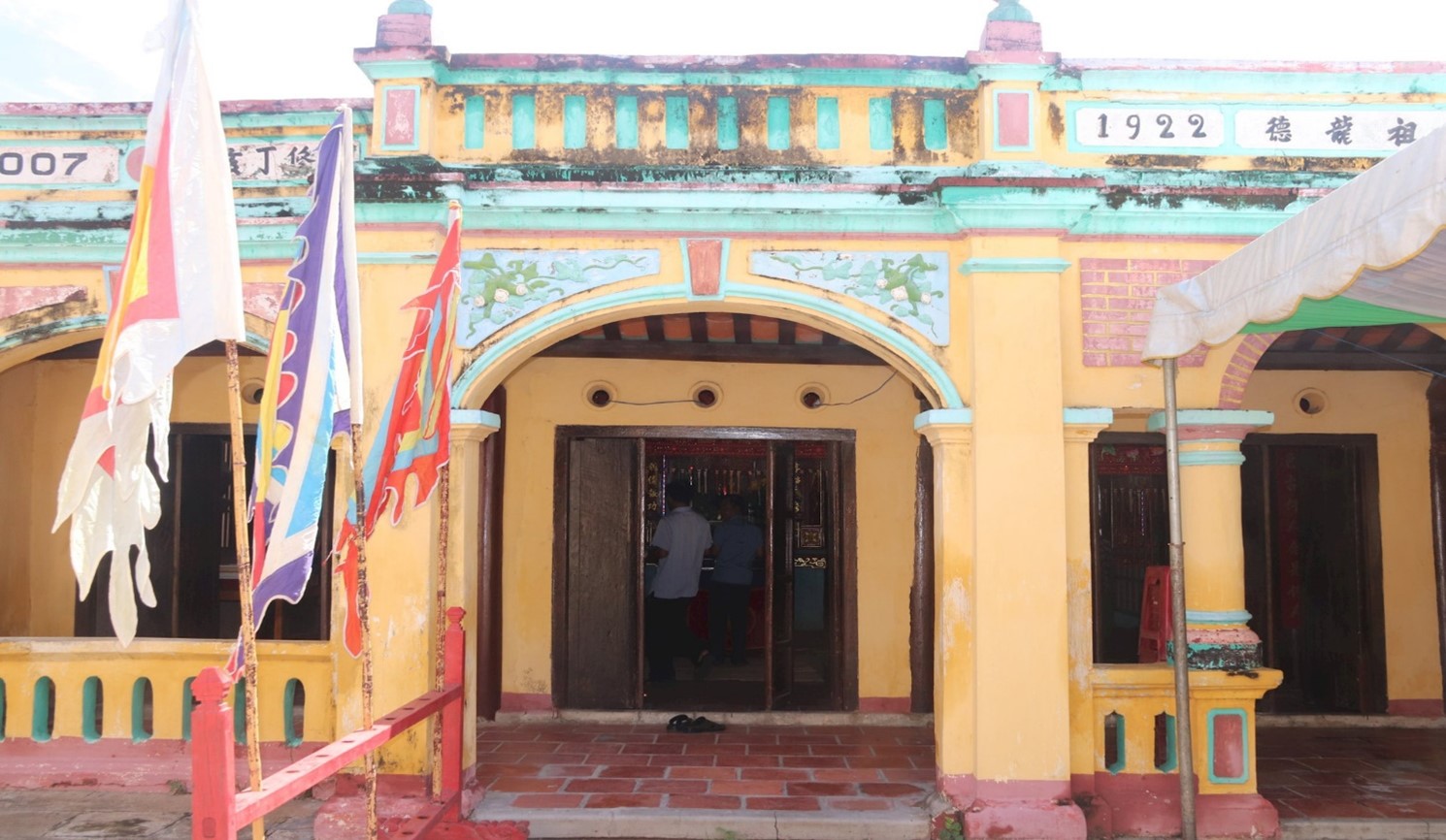
Address: Tu Luong Street, Tien Thanh Ward, Lam Dong Province, Vietnam.
Tu Luong Village Communal House is an old communal house closely associated with the settlement, land reclamation and formation of coastal communities in the Phan Thiet area. More than a place of worship dedicated to the local tutelary deity and the village’s early settlers, the communal house has long served as a community cultural space, preserving traditional architecture, woodcarving, Vietnamese Sino-Nom heritage and local religious practices.
Established in the early 19th century and extensively restored in 1871, Tu Luong Village Communal House is one of the historic communal houses associated with the development of coastal communities in Vietnam’s South Central Coast.
History and Development
Tu Luong Village Communal House was established in the early 19th century by early settlers who migrated southward from the Thuan and Quang regions. As they cleared the land, established settlements and formed villages, the communal house developed as an important religious institution where residents worshipped the village tutelary deity and honored those who had contributed to reclaiming the land and building the community.
In 1871, during the 24th year of Emperor Tu Duc’s reign, villagers contributed funds for a major restoration. This extensive renovation gave the communal house a more substantial appearance and established much of the architectural layout that remains associated with the site today.
Over the following decades, the building underwent further repairs in 1925, 1957 and 1989, followed by additional conservation work after 2000. These efforts focused on reinforcing the wooden structural system, tiled roofs, altars and other important architectural components.
Recognizing its historical, architectural and artistic values, Tu Luong Village Communal House was recognized as a National Architectural and Artistic Monument in 2001, under Decision No. 38/2001/QD-BVHTT.
Religious Space and Traditional Festivals
The communal house is dedicated to the local tutelary deity, as well as the village’s Tien Hien and Hau Hien, or early and later benefactors who contributed to land reclamation, settlement and community development.
The worship space also reflects the beliefs of coastal communities. Prayers traditionally express hopes for divine protection, peace and favorable conditions for people whose lives are connected with the sea.
Two traditional annual ceremonies remain important parts of the community’s religious calendar: the Spring Ceremony and the Autumn Ceremony.
The Spring Ceremony is generally held around the second lunar month, commonly on the 12th and 13th days. It is an occasion to pray for favorable weather, good harvests and safe, successful journeys for fishermen.
The Autumn Ceremony takes place around the middle of the eighth lunar month. It is a time to give thanks to the tutelary deity, honor ancestors and early settlers, and bring families and descendants together to participate in traditional village rituals.
Incense offerings, ceremonial offerings and traditional rites are performed with solemnity. Beyond religious devotion, these ceremonies express the community’s hopes for peace, favorable weather and a prosperous life.
Traditional Architecture and Historic Artifacts
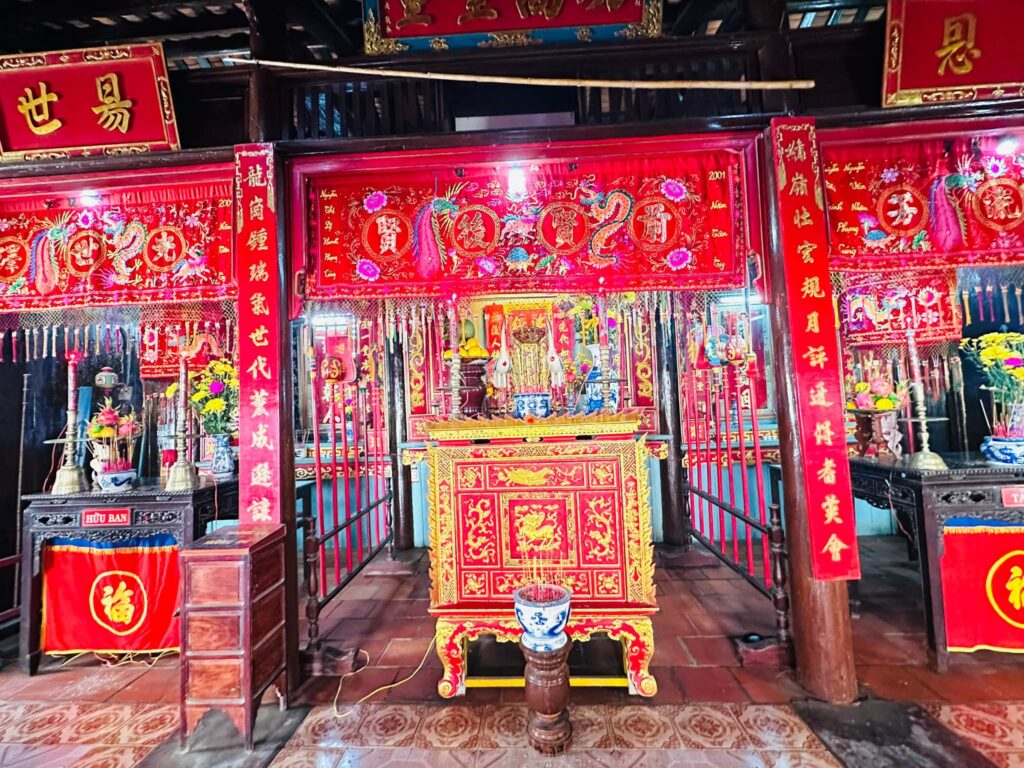
One of the most important values of Tu Luong Village Communal House lies in its traditional wooden architecture and decorative woodcarving.
Major structural components, including columns, beams and roof trusses, were constructed from durable timber suited to the traditional communal-house architecture and the coastal environment.
The wooden framework is assembled using traditional mortise-and-tenon techniques. Decorative carvings feature cloud patterns, stylized flowers and other motifs characteristic of traditional Vietnamese craftsmanship.
The communal house preserves a notable collection of ritual objects, including six long altars or shrine cabinets, four incense tables, three carved ornamental screens and two traditional writing tables.
The carved surfaces feature familiar traditional themes such as Two Dragons Facing the Moon, the Four Sacred Animals of Dragon, Unicorn, Tortoise and Phoenix, and the Four Seasons represented by Pine, Chrysanthemum, Bamboo and Apricot Blossom. Many of these works retain traces of traditional red lacquer and gilding.
Particularly valuable is the communal house’s collection of Sino-Nom documents, including 10 imperial decrees issued by Nguyen dynasty emperors in recognition of the Tu Luong village tutelary deity.
The collection also includes 20 horizontal lacquered boards and 16 traditional parallel couplets bearing Chinese characters. Their inscriptions record praise for the landscape, the merits of earlier generations and the spiritual traditions of the community.
The communal house also preserves two large bronze bells, cast in the late 19th century and historically used during ritual ceremonies and traditional ceremonial music.
Together, these architectural elements and artifacts form a valuable heritage system, offering insights into the history of the village, its religious life and the artistic traditions of the Tu Luong community across generations.
Tu Luong Village Communal House and Community Life
From its origins as a religious institution, Tu Luong Village Communal House gradually became an important community cultural space.
During traditional ceremonies, residents from different places return to the communal house to honor their predecessors, reunite with relatives and participate in rituals that have been passed down through generations.
The communal house is also associated with traditional cultural activities such as classical Vietnamese theater and ceremonial music. These activities help preserve local customs, rituals and collective memories of the settlement and development of the village.
The significance of Tu Luong Village Communal House therefore extends beyond its wooden structures, imperial decrees, horizontal boards, parallel couplets and ritual objects. Its intangible cultural heritage remains equally important, sustained through the continued participation of the local community.
For local residents, returning to the communal house during traditional festivals is a way of reconnecting with their roots and remembering the people who reclaimed the land and established the community.
For visitors, the site offers an opportunity to learn about village tutelary worship, the history of settlement and the communal-house culture of coastal communities in the Phan Thiet region.
Visiting Tu Luong Village Communal House
As a religious and cultural heritage site, the communal house should be visited respectfully. Visitors are encouraged to dress appropriately, maintain a quiet atmosphere and respect the worship space and historic artifacts.
Outside festival periods, some interior areas may be closed to protect the artifacts and preserve the worship space. Visitors wishing to enter the main interior or offer incense should contact the caretaker or local ceremonial committee.
The most culturally vibrant times to visit are during the Spring and Autumn Ceremonies, when traditional rituals, ceremonial music and community activities bring the communal house to life.
Tu Luong Village Communal House is an important landmark in the story of coastal settlement and community formation around Phan Thiet. Through its traditional architecture, imperial decrees, Sino-Nom heritage and continuing religious ceremonies, the communal house preserves memories of generations who reclaimed the land, established villages and built a shared cultural identity.
Quick Facts
| Item | Information |
|---|---|
| Name | Tu Luong Village Communal House |
| Type | National Architectural and Artistic Monument |
| Location | Tu Luong Street, Tien Thanh Ward, Lam Dong Province |
| Established | Early 19th century |
| Major restoration | 24th year of Emperor Tu Duc’s reign, 1871 |
| Worship | Local tutelary deity, Tien Hien, Hau Hien and other deities |
| Traditional festivals | Spring Ceremony and Autumn Ceremony |
| Notable artifacts | 10 imperial decrees, 20 horizontal boards, 16 parallel couplets, 6 shrine cabinets, 4 incense tables, 3 ornamental screens, 2 writing tables and 2 large bronze bells |
| Recognition | National Architectural and Artistic Monument |
| Year recognized | 2001 |
| Decision | No. 38/2001/QD-BVHTT |
Location: Tu Luong Village Communal House, Tu Luong Street, Tien Thanh Ward, Lam Dong Province, Vietnam.