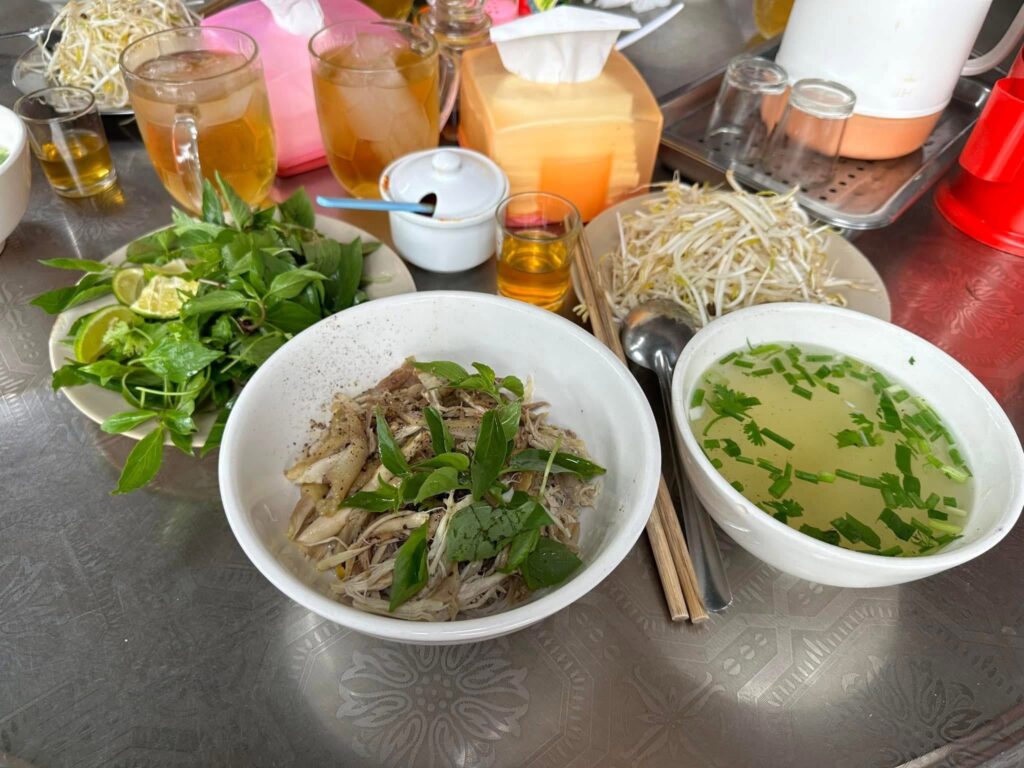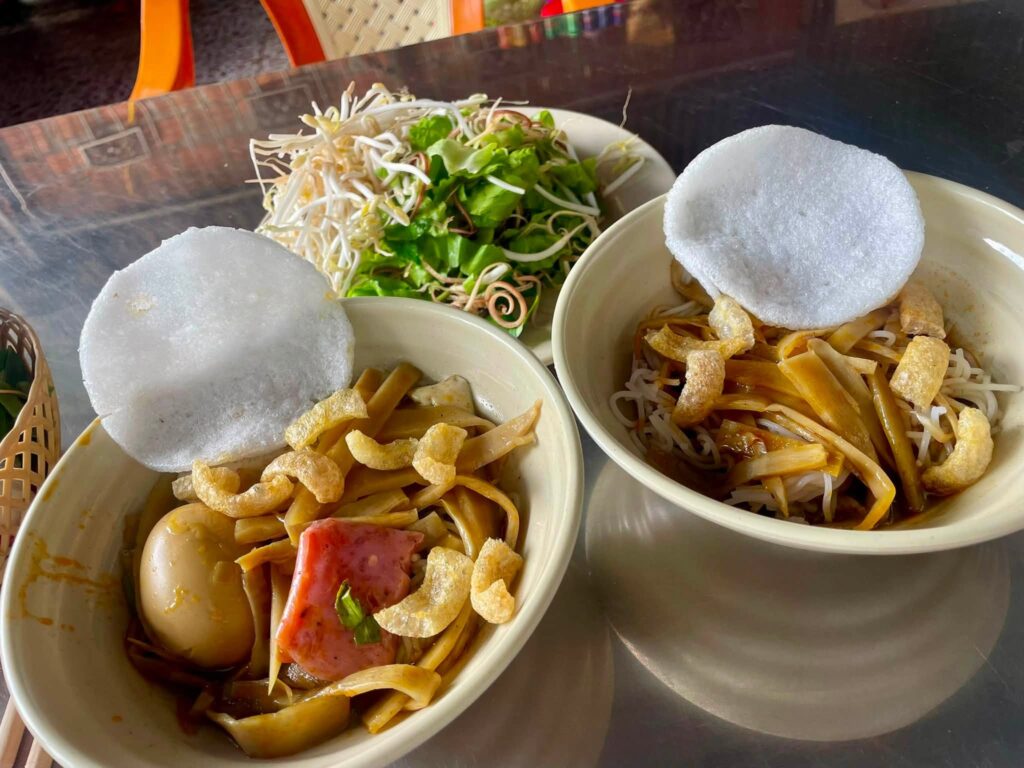
Hue has long been known as a land of rich culinary traditions, where humble dishes can become distinctive expressions of an entire cultural region. Among the many noodle dishes associated with Hue, bún, or Vietnamese rice vermicelli, holds a special place. It appears in dishes such as bún bò Huế, bún hến, bún nghệ, bún giấm nuốc and bún chả cá.
Behind these dishes is a traditional craft that has been practiced for generations: the making of Van Cu fresh rice vermicelli. The village of Van Cu lies along the Bo River and is now part of Kim Tra Ward, Hue City.
Located approximately 10 kilometers northwest of the historic Imperial City area when measured from Dong Ba Market, Van Cu has become known for its fresh vermicelli, whose ivory-white strands and subtle aroma of freshly milled rice have made them a familiar ingredient in Hue cuisine.
Van Cu and a Story of More Than 500 Years
According to Ô Châu cận lục by Duong Van An, Van Cu has a history of more than 500 years. The village was originally known as Dao Cu and belonged to Dan Dien District, where brick making was once the principal occupation.
Later, residents turned to vermicelli making, and the village acquired the popular name Bun Village, reflecting the close association between the community and its new craft.
Van Cu also preserves a folk story about the origins of its vermicelli-making tradition. According to the legend, a group of people from northern Vietnam followed Lord Nguyen Hoang southward and settled in Co Thap Village, in Huong Dien District.
Among them was a beautiful and skillful young woman who became beloved by the villagers. While most residents made their living through farming, she began producing vermicelli from the local rice. Because she made it exceptionally well, people affectionately called her Co Bun, meaning the vermicelli maker.
When the village suffered three consecutive failed rice harvests, some villagers spread the belief that the spirits were angry because Co Bun had dared to soak, grind and process the “heavenly rice grains.” She was pressured either to abandon vermicelli making or leave the village.
She chose to leave in order to preserve her craft.
The villagers allowed her to choose the direction of her journey and assigned five strong young men to help carry her heavy stone mill. The group traveled eastward until the fifth man finally collapsed under the weight of the mill.
Co Bun regarded this as a sign of fate. Seeing the lush vegetation and a clear, cool river nearby, she decided to settle there. She then taught the local people how to make vermicelli, and the craft of vermicelli making gradually took root in Van Cu.
Traditional Vermicelli Making and Its Simple Tools
In the past, making vermicelli was a demanding and labor-intensive occupation. Artisans needed a pestle and mortar for pounding rice, a mold for pressing the vermicelli strands, a fire stove for boiling them, as well as bamboo baskets and trays for holding the finished product.
Every stage required physical strength and precision. From processing the rice and preparing the flour to shaping the strands and cooling the vermicelli, artisans had to carefully control each step to achieve the desired texture and form.
The craft therefore required not only physical endurance but also experience. Artisans needed to understand their ingredients and adjust the process according to practical conditions in order to maintain consistent quality.
The Secret Begins with Khang Dan Rice
According to the source, traditional Van Cu vermicelli is made from Khang Dan rice, locally known in Hue as gao ruong. This type of rice is commonly used for cooking relatively dry rice and is considered suitable for vermicelli production.
The rice is thoroughly washed several times to remove the outer bran before being soaked for approximately two days. After soaking, the originally dry grains become soft and absorb water.
A distinctive traditional practice is to add raw coarse salt after soaking. According to the source, the salt helps reduce sourness during the production process while also contributing a subtle savory taste to the vermicelli.
The soaked rice is then pounded and filtered into flour. After the flour is cooked, the vermicelli maker kneads and beats it by hand until it becomes a smooth paste before placing it into the pressing mold.
From the Mold to the Ivory-White Vermicelli Strands
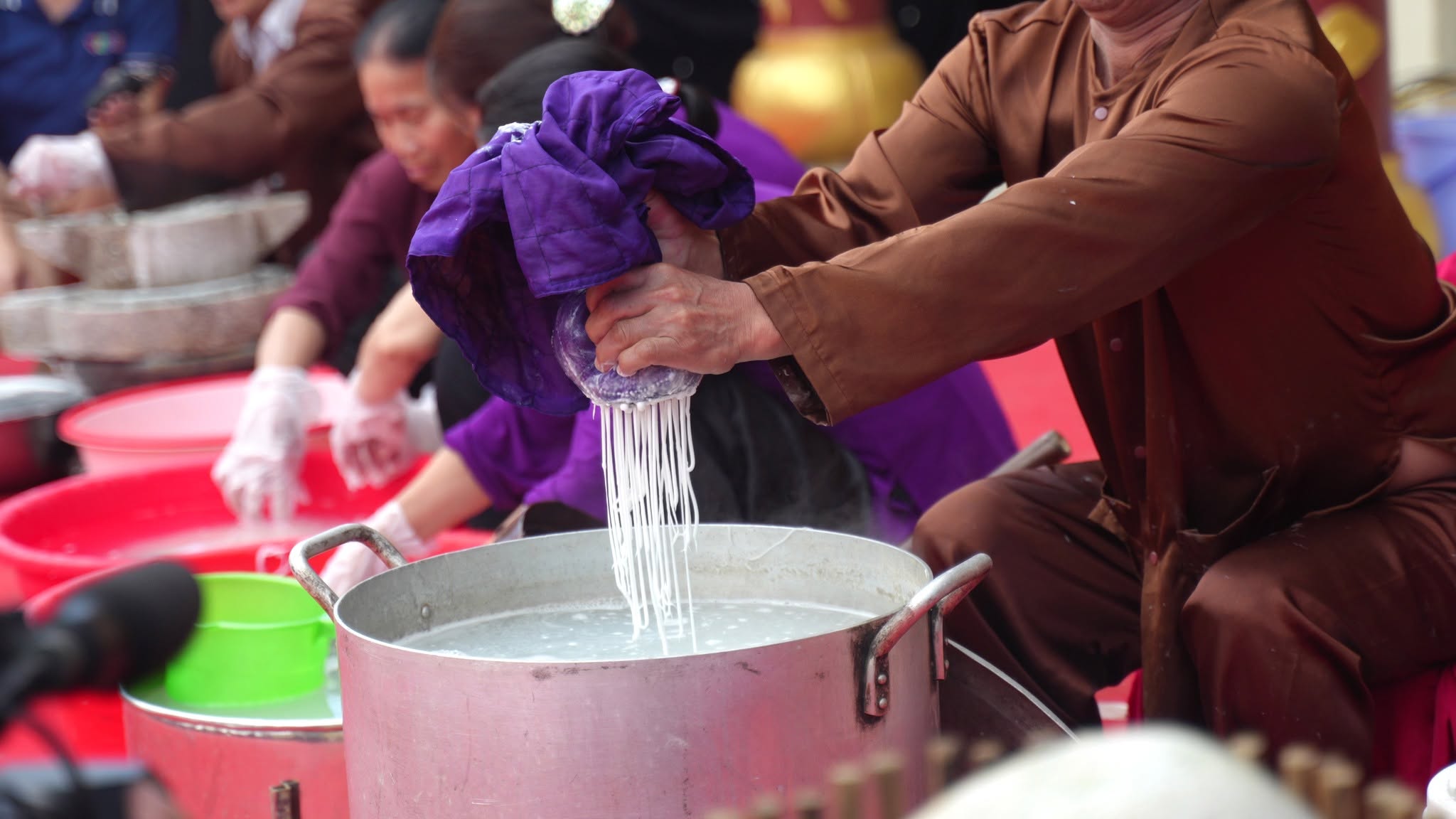
Once the dough has been placed into the mold, pressure forces it through small openings, forming long strands. The strands are immediately dropped into boiling water, where they cook and take their characteristic shape.
The vermicelli is then rapidly cooled in cold water. This step helps stabilize the strands and gives them the desired texture.
To prevent the vermicelli from becoming either too soft or excessively chewy, artisans also add tapioca starch. There is no fixed formula for the amount used. Instead, the proportion depends largely on the experience of each craftsperson.
This is one of the aspects that demonstrates that vermicelli making is not simply a mechanical process. Even with the same ingredients, differences in mixing and processing techniques can affect the texture and quality of the finished strands.
Combining Modern Machinery with Traditional Knowledge
Today, in response to growing market demand, Van Cu residents have introduced machinery and technical equipment into various stages of production. Mechanization has helped increase productivity, support food hygiene and safety, and reduce the physical burden on local workers.
Nevertheless, some traditional techniques are still maintained in order to preserve the distinctive aroma and texture of Van Cu vermicelli. Practical knowledge and the experience of the artisans continue to play an important role in processing ingredients and adjusting the finished product.
The combination of modern technology and traditional knowledge allows the craft to adapt to contemporary demand without completely abandoning the methods that established Van Cu’s reputation.
From Three Traditional Types to Today’s Vermicelli
According to the source, Van Cu vermicelli traditionally came in three main forms: bún con, bún lá and bún mớ. Today, the two remaining common forms are bún con and bún mớ.
Bún con consists of bundles of vermicelli strands wound together, roughly the length of a handspan and convenient for serving. Bún mớ, also known locally as bún ngảo or kilogram vermicelli, is the type commonly consumed by Hue residents today.
The finished vermicelli has an ivory-white color and a distinctive fragrance reminiscent of freshly milled rice. Its flavor can be appreciated even with very simple accompaniments. According to the local description, sometimes a small bowl of fish sauce mixed with lime, garlic and chili is enough to highlight the taste of Van Cu vermicelli.
Vermicelli That Helps Define Hue Cuisine
Van Cu vermicelli is produced and sold fresh each day. Local distributors and buyers take the product to markets, eateries and restaurants throughout the province, where it becomes an important ingredient in Hue’s culinary traditions, most notably bún bò Huế.
Unlike many traditional craft products that can be stored for long periods and sold as souvenirs, fresh vermicelli has a very short shelf life. Production and distribution therefore need to take place continuously.
This characteristic makes the craft closely connected with the rhythm of everyday life and the local food market.
The value of Van Cu lies not only in its vermicelli strands. It also reflects the diligence of generations of craft workers, the practical knowledge passed down over time and the community’s contribution to the distinctive culinary heritage of Hue.
Van Cu Vermicelli Making Recognized as National Intangible Cultural Heritage
Van Cu Fresh Vermicelli Craft Village, formerly located in Huong Toan Commune, Huong Tra Town, is now part of Kim Tra Ward, Hue City. It was recognized by the provincial People’s Committee as a Traditional Craft Village of Thua Thien Hue Province under Decision No. 717/QD-UBND dated April 14, 2014.
More recently, the traditional craft of Van Cu Vermicelli Making was included in the National Intangible Cultural Heritage List under Decision No. 3979/QD-BVHTTDL dated December 10, 2024, issued by the Ministry of Culture, Sports and Tourism.
The recognition acknowledges not only the value of a traditional craft but also the important place of vermicelli making in the cultural, economic and culinary life of the Van Cu community.
Basic Information
| Item | Information |
|---|---|
| Craft | Van Cu Fresh Rice Vermicelli Making |
| Village | Van Cu |
| Current location | Kim Tra Ward, Hue City |
| Former location | Huong Toan Commune, Huong Tra Town |
| Village history | More than 500 years, according to the source |
| Main products | Bún con and bún mớ |
| Traditional varieties | Bún con, bún lá and bún mớ |
| Main ingredients | Khang Dan rice, tapioca starch and salt |
| Market | Markets, eateries and restaurants within the province |
| Craft village recognition | Traditional Craft Village of Thua Thien Hue Province |
| Craft village decision | No. 717/QD-UBND, April 14, 2014 |
| National heritage | Van Cu Vermicelli Making |
| Heritage decision | No. 3979/QD-BVHTTDL, December 10, 2024 |