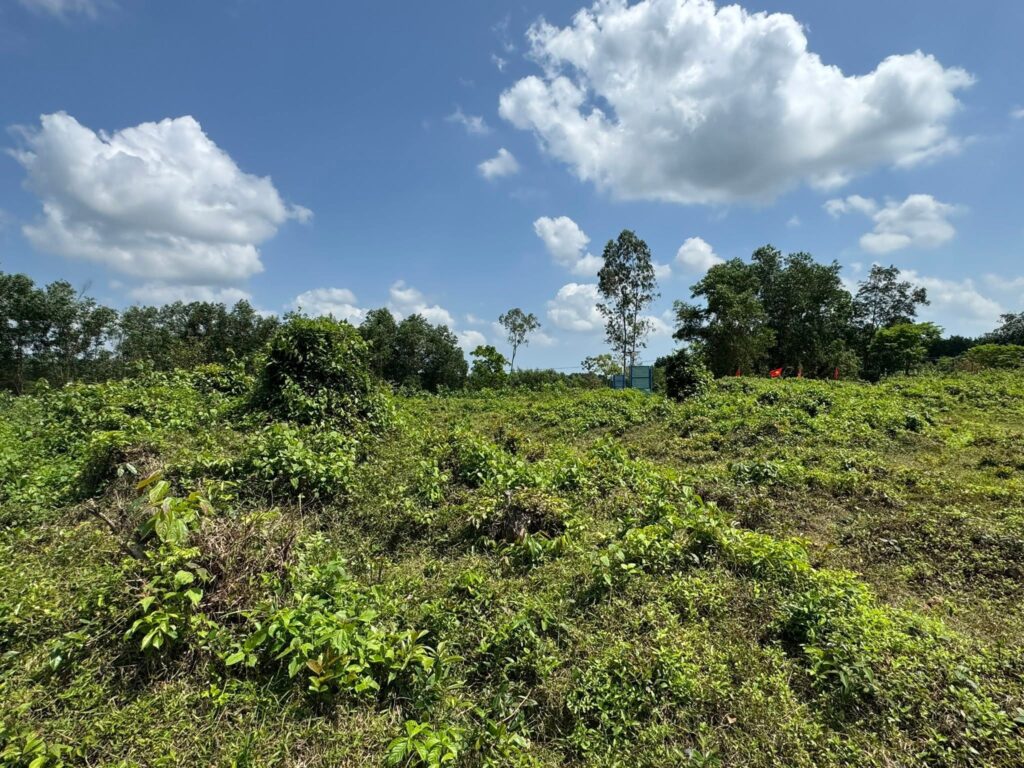
The Vĩnh Trinh Massacre Memorial Site is located on a pine-covered hill in Vĩnh Trinh Hamlet, Thu Bồn Commune, Da Nang City, Vietnam. It commemorates the massacre that took place on the night of January 21, 1955, when 37 revolutionary cadres, soldiers, and local residents were killed at the Vĩnh Trinh Reservoir. According to the memorial site’s historical account, the number commemorated is 38, including a female revolutionary who was pregnant at the time.
Featuring a monument, relief sculptures, memorial steles, and a lotus pond, the site serves as a place to honor the victims, preserve historical memory, and educate younger generations about a tragic period in local history.
Historical Background
Following the Vietnamese victory at Điện Biên Phủ on May 7, 1954, the Geneva Accords were signed on July 21, 1954, establishing arrangements to end hostilities and restore peace in Indochina. While resistance forces regrouped and moved to the North in accordance with the agreements, the political and security situation in southern Vietnam remained complex.
In Quảng Nam, after years of resistance against French colonial rule, local residents hoped to enjoy peace. However, following the establishment of Ngô Đình Diệm’s administration in the South, campaigns of arrests, repression, and persecution targeted people who had participated in the resistance.
According to local historical records, in Duy Xuyên District, many communal houses, pagodas, and religious sites were used as places of detention, interrogation, and torture. Numerous people were arrested on suspicion of having connections with the revolutionary movement. The atmosphere of fear and repression during this period caused profound suffering among local communities.
Against this backdrop, the massacre at Vĩnh Trinh Reservoir on the night of January 21, 1955, became one of the most painful events in local history. It shocked the community and was subsequently brought to the attention of domestic and international audiences.
The Vĩnh Trinh Massacre on January 21, 1955
Vĩnh Trinh was a reservoir located near the boundaries of the former Duy Hòa, Duy Châu, and Duy Trinh communes. At the time of the massacre, the surrounding area was sparsely populated, with hills, narrow paths, and deep water. According to local historical accounts, these geographical conditions contributed to the site’s selection as a place where prisoners could be killed and their bodies concealed.
Most of the victims were local revolutionary cadres who had participated in the resistance against French colonial rule and had previously been arrested and detained. Shortly before the Lunar New Year of 1955, families were told that their imprisoned relatives would be released to celebrate Tết at home. However, according to surviving historical accounts, this announcement was a deception intended to remove the prisoners from their places of detention before killing them.
On the evening of January 21, 1955, those whose names appeared on the list were called out under the pretext of being released. They were then bound and taken to Vĩnh Trinh Reservoir. There, the victims were tortured and killed. Stones were tied to their bodies before they were thrown into the reservoir in an attempt to conceal the crime.
Among those taken to the site was Tào Tri, former chairman of Duy Tiến Commune. Local historical accounts state that he shouted slogans denouncing the perpetrators and expressing his loyalty to President Hồ Chí Minh before jumping into the reservoir. Another victim, Lê Bài, managed to escape by taking advantage of the darkness and confusion. He later became a living witness to the massacre.
The victims were members of local families. The tragedy was especially devastating because many relatives waited for their loved ones to return home for Tết, unaware that they had been taken to Vĩnh Trinh and killed.
Different Figures Recorded in Historical Accounts
The number of victims in the Vĩnh Trinh massacre is not consistent across all surviving accounts and documents. Some sources refer to 37 people who disappeared and were killed, while other records mention 47 victims. Still other accounts refer to a figure of 52.
According to the historical information presented at the memorial site, 38 people are commemorated: the 37 victims recorded in the principal list and one female revolutionary who was pregnant at the time. This is symbolized by the 38 lotus flowers in the memorial pond, including one unopened lotus bud representing the unborn child.
The differences in reported figures reflect the difficulties of collecting information in the aftermath of the massacre. Visitors researching the site should therefore distinguish between the figures recorded in different sources while recognizing the commemorative significance of the memorial’s design.
Discovery of the Massacre and Efforts to Expose the Crime
After the massacre, the victims’ bodies were reportedly submerged in the reservoir with stones tied to them to conceal the evidence. However, after several days, some bodies resurfaced when the bindings broke or the stones proved too light.
On the fourth day of the Lunar New Year, relatives and local residents began searching the reservoir. Heartbreaking scenes unfolded as families identified their loved ones through surviving details on clothing and personal belongings.
According to local historical records, following the incident, the Duy Xuyên District Party Committee convened a meeting to assess the situation and determine its next steps. Cadres were assigned to find ways to submit complaints to the International Commission for Supervision and Control, gather information, compile lists of missing people, and encourage victims’ families to speak out.
The records also describe attempts to obstruct investigations, including pressure on bereaved families and efforts to conceal evidence at the scene. Despite these difficulties, news of the massacre spread and became part of the broader campaign to expose abuses during the politically turbulent period following the Geneva Accords.
The incident left a deep wound in the Duy Xuyên community and became a significant episode in the local struggle during the years after 1954.
The Vĩnh Trinh Memorial Complex
After the liberation of the homeland, local authorities and residents built a memorial near the site of the massacre to honor those who lost their lives. Construction began in early 1985 and was completed in late 1986.
The memorial complex covers approximately 7,200 square meters and occupies a hill surrounded by other hills, a reservoir, and valleys. Its quiet, solemn setting is well suited to remembrance and reflection.
A series of steps leads visitors toward the central memorial area. Along the pathway stand concrete pillars designed in the shape of incense coils, creating a distinctive architectural feature.
The complex consists of two square enclosures. The outer wall is built of stone, with white-frangipani planters arranged along its sides. Two stone relief panels depict scenes associated with the massacre, helping visitors understand the historical event commemorated at the site.
The Soldier Monument and Lotus Memorial Pond
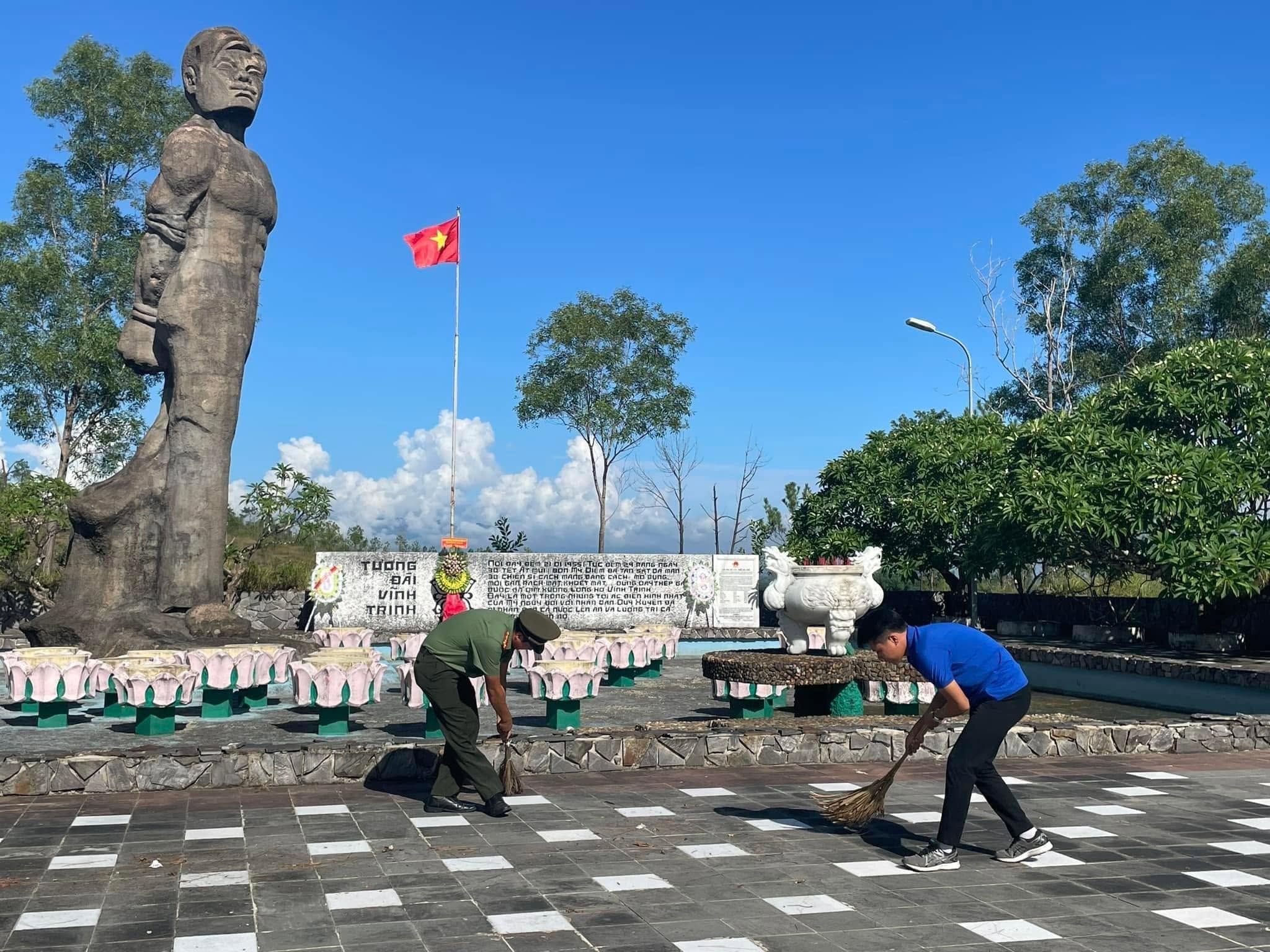
At the heart of the complex is a square pond measuring approximately 18.5 meters on each side. Thirty-eight lotus flowers rise above the water, symbolizing those who lost their lives in the massacre. One unopened lotus bud represents the unborn child of the pregnant female revolutionary.
At one corner of the pond stands a soldier monument approximately 10 meters tall. The figure stands upright with his head held high and his hands bound behind his back, symbolizing the resilience and defiance of those who faced violence and sacrificed their lives for their revolutionary ideals.
In front of the monument is an incense burner placed on a heart-shaped concrete base, providing a place for visitors to offer incense in remembrance. Behind the monument stands a large stele recording the events of the night of January 21, 1955, and honoring the victims.
Together, the monument, lotus pond, relief sculptures, and memorial stele form a powerful commemorative ensemble. Each element helps preserve the memory of those who died and reminds future generations of the value of peace, independence, and freedom.
Historical Significance and Educational Value
The Vĩnh Trinh Massacre Memorial Site commemorates the victims of a tragic event in the history of Quảng Nam. It preserves the memory of the suffering endured by local residents during the turbulent period following the Geneva Accords and reflects the community’s efforts to establish the truth and honor those who sacrificed their lives.
Today, the site welcomes delegations, students, young people, and other visitors who come to pay their respects and learn about local history. The stories preserved here help younger generations understand the sacrifices made by earlier generations and encourage a deeper appreciation of peace and national independence.
In recognition of its historical significance, the Vĩnh Trinh Massacre Site was designated a National Historical Relic by Vietnam’s Ministry of Culture, Sports and Tourism under Decision No. 309/QĐ-BVHTTDL, dated January 26, 2011.
The memorial is not only a place to honor the deceased but also a reminder of the responsibility to preserve historical memory, uphold patriotic traditions, and pass the lessons of the past on to future generations.
Quick Information
| Item | Information |
|---|---|
| Name | Vĩnh Trinh Massacre Memorial Site |
| Location | Vĩnh Trinh Hamlet, Thu Bồn Commune, Da Nang City, Vietnam |
| Date of the event | Night of January 21, 1955, corresponding to the 29th day of the last lunar month of the Year of the Goat |
| Main features | Memorial monument, soldier statue, lotus pond, relief sculptures, and historical stele |
| Area of the memorial complex | Approximately 7,200 m² |
| Historical significance | Commemorates the victims of the Vĩnh Trinh massacre and preserves local historical memory |
| Heritage designation | National Historical Relic |
| Recognition decision | Decision No. 309/QĐ-BVHTTDL, dated January 26, 2011 |