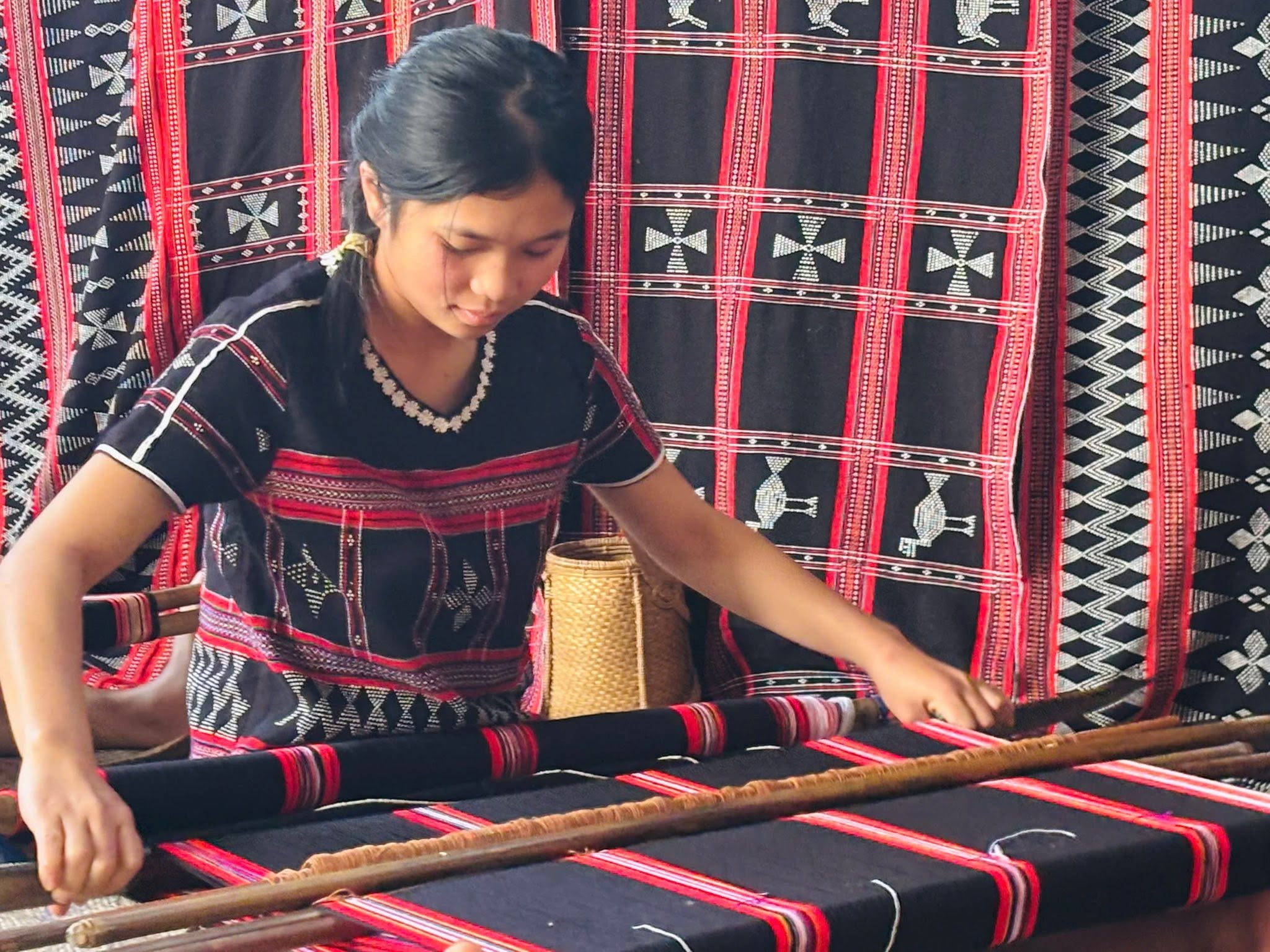
Dèng weaving is a distinctive traditional handicraft practiced by the Tà Ôi, Pa Cô and Vân Kiều communities in the highland area of A Lưới. Each Dèng textile serves both practical and artistic purposes, providing everyday materials while expressing the distinctive cultural identity of the communities who have preserved this craft across generations.
Dèng textiles are therefore more than woven fabrics. Their colors, patterns and beadwork embody traditional knowledge, craftsmanship and symbolic representations associated with community life and the natural environment of the highlands.
From Upland Cotton to Hand-Spun Yarn
The traditional materials used to make Dèng begin with cotton grown by local people in their upland fields. After harvesting, the cotton is dried and processed through a series of manual steps, including separating the fibers, fluffing, rolling, twisting, spinning and stretching them into yarn.
Once the yarn has been prepared, it is dyed using leaves, bark, roots and tubers collected from the surrounding forests. Traditional colors mainly include black, red and white. The dyed yarn is then dried and wound into bundles before being prepared for weaving.
This process requires patience and experience. From the cultivation of cotton to the preparation, spinning and dyeing of yarn, each stage relies on practical knowledge passed down from one generation to the next.
Weaving and the Art of Bead Inlay
One of the distinctive features of Dèng lies in the way patterns are created on the fabric. After the textile has been woven, women carefully add beads and other natural materials to the surface, creating decorative motifs that are both visually striking and rich in symbolic meaning.
Tà Ôi decorative patterns are traditionally grouped into three main themes: animals, plants, nature and objects. These motifs are stylized into characteristic patterns, with beads attached to the surface of the Dèng forming an especially recognizable feature.
This bead-inlay technique distinguishes Dèng from many other traditional brocade textiles. The patterns are not simply decorative. They also convey elements of community life, the surrounding natural environment and the cultural worldview of the people who create them.
Dèng in Community Cultural Life
For hundreds of years, Dèng weaving has been preserved and transmitted within local communities. Colorful Dèng textiles, with their distinctive patterns and beadwork, have become an important part of the cultural life of the people of the A Lưới highlands.
The value of the craft lies not only in the finished textile but also in the entire body of traditional knowledge associated with it. This includes growing cotton, preparing fibers, spinning yarn, producing natural dyes, weaving fabrics and creating decorative motifs.
Each stage requires accumulated experience and skilled manual practice. The knowledge embedded in these techniques reflects the close relationship between craft, community life and the natural environment.
The decorative patterns, weaving techniques and bead-inlay techniques of the Tà Ôi people have been recognized by the Ministry of Culture, Sports and Tourism as national intangible cultural heritage. This recognition provides an important basis for preserving, teaching and promoting the traditional craft in contemporary life.
From Traditional Looms to Contemporary Fashion
Dèng textiles from A Lưới have increasingly been introduced to domestic and international audiences through Hue Traditional Craft Festivals, trade fairs and exhibitions. The textiles have also appeared on fashion stages through collections created by fashion designers.
According to the source, designer Minh Hạnh has introduced Dèng textiles in Japan, France and other promotional activities. The material has also been incorporated into contemporary products such as shoes, handbags, wallets, hats and other fashion accessories featuring traditional brocade elements.
The expansion into new applications has given the traditional craft additional opportunities to develop in modern life. Textiles once closely associated with community life can now enter new creative fields while retaining the distinctive identity of traditional weaving and beadwork.
A Traditional Craft and Cultural Preservation
Maintaining Dèng weaving means preserving not only handmade products but also a system of traditional knowledge and skills belonging to the Tà Ôi community. Techniques for preparing fibers, producing natural dyes, weaving fabrics and attaching beads represent knowledge accumulated over generations and transmitted through practical instruction.
At a time when many traditional crafts face the risk of decline, introducing Dèng into cultural activities, fashion, exhibitions and tourism creates additional opportunities for the craft to remain part of contemporary life. Its value therefore extends beyond the textile itself, connecting cultural heritage with community life and livelihoods.
A Roàng Dèng Weaving Recognized as a Traditional Craft
A Roàng Dèng weaving, formerly practiced in A Roàng Commune, A Lưới District, and now located in A Lưới 4 Commune, Hue City, was recognized as a traditional craft village under Decision No. 2954/QD-UBND dated December 7, 2022, issued by the People’s Committee of Thừa Thiên Huế Province.
The recognition acknowledges the cultural value of A Roàng Dèng weaving and provides a basis for preserving and promoting the traditional craft, linking cultural heritage with community livelihoods and the promotion of the highland culture of A Lưới.
Basic Information
| Item | Information |
|---|---|
| Craft | A Roàng Dèng Weaving |
| Location | A Lưới 4 Commune, Hue City |
| Communities practicing the craft | Tà Ôi, Pa Cô and Vân Kiều |
| Main materials | Cotton, yarn, natural leaves, bark, tubers and roots, beads |
| Key techniques | Dèng weaving, natural dyeing and bead inlay |
| Products | Dèng textiles, clothing, fashion products and accessories |
| Cultural values | Traditional craftsmanship, decorative art and indigenous knowledge |
| Traditional craft recognition | Decision No. 2954/QD-UBND dated December 7, 2022 |
| Related heritage | Tà Ôi decorative patterns, Dèng weaving and bead-inlay techniques are recognized as national intangible cultural heritage |