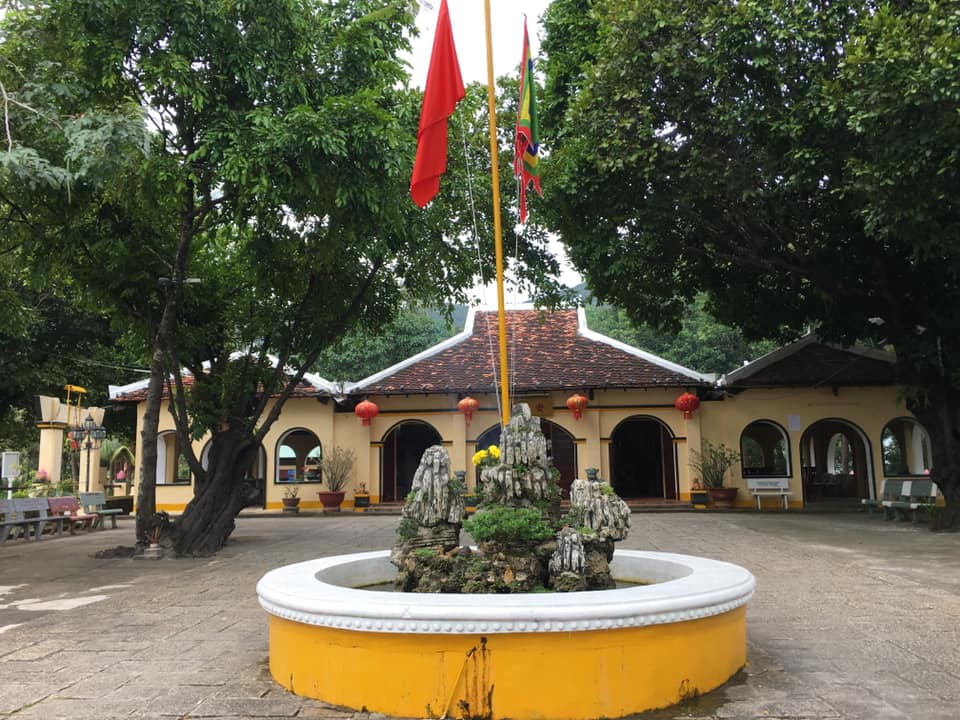
The Ba Temple – Nuoc Man Trading Port Festival is one of the oldest and most significant traditional festivals in the former Binh Dinh region, with a history dating back approximately four centuries. Held annually at Ba Temple in An Hoa Hamlet, Phuoc Quang Commune, Gia Lai Province, the festival is closely associated with the history of Nuoc Man Trading Port and the worship of Thien Hau Thanh Mau, the Holy Mother of the Sea.
More than a religious gathering, the festival preserves memories of a once-thriving commercial port where Vietnamese residents lived and traded alongside Chinese merchants from Guangdong and Fujian. As Nuoc Man gradually changed due to river and coastal sedimentation, the festival continued to be held at Ba Temple, serving as a cultural link between the history of the ancient port and the community’s present-day life.
The History of Nuoc Man Trading Port and the Origins of the Festival
Around 400 years ago, the area that is now An Hoa Hamlet was home to Nuoc Man Trading Port, an important commercial center in the Binh Dinh region. According to local historical accounts and traditions, Chinese merchants, particularly those from Fujian and Guangdong, arrived in the early 17th century to trade and settle alongside Vietnamese communities, contributing to the formation of a bustling urban and commercial center.
From Nuoc Man, commercial activities expanded into the areas of Tuy Phuoc, An Nhon and Quy Nhon. Within this trading environment, communities of different origins lived, worked and exchanged goods and cultural practices. Ba Temple, also known as Thien Hau Temple, and Ong Temple, or Quan Thanh De Temple, became important religious spaces for the local Chinese community.
Ba Temple is dedicated to Thien Hau Thanh Mau, a revered figure in Chinese folk belief who is believed to protect sailors and rescue ships in danger at sea. As the worship of Thien Hau became integrated with Vietnamese traditions of Mother Goddess worship, a distinctive form of religious and cultural interaction emerged. This fusion became one of the foundations of the Nuoc Man Festival.
Over time, Nuoc Man Trading Port gradually became buried by sediment. Changes in river channels and coastal geography transformed the landscape, and the old commercial town eventually lost its former appearance. Unlike Hoi An, where much of the historic urban fabric has survived, Nuoc Man has become a peaceful rural area. Ba Temple, however, remains, and the festival continues to preserve memories of a trading port that once played an important role in the economic and cultural life of the region.
Ba Temple and the Vietnamese-Chinese Cultural Encounter
One of the festival’s distinctive values lies in the interaction between religious belief, commercial history and community life. The worship of Thien Hau, brought by Chinese communities, developed within a Vietnamese cultural environment and gradually absorbed local beliefs and practices.
The presence of Ong Temple and Ba Temple within the former trading-port landscape also reflects the shared life of Vietnamese residents and Chinese merchants who once lived and conducted business in Nuoc Man. These religious sites were not only places of worship but also spaces that connected communities, where people prayed for peace, successful business and safety on journeys by water.
According to local accounts, Ba Temple was built during the period when Nuoc Man Trading Port was flourishing. Although the temple now stands farther inland because of the gradual accumulation of sediment, memories of the former port continue to be preserved through the festival.
Stories about Nuoc Man, together with objects discovered in the surrounding area, including artifacts associated with boat mooring and maritime activity, continue to evoke the image of a once-busy trading port along the waterways of the region.
Traditional Rituals of the Nuoc Man Festival
The Ba Temple – Nuoc Man Trading Port Festival is generally held during the first days of the second lunar month, featuring a series of traditional rituals and community activities.
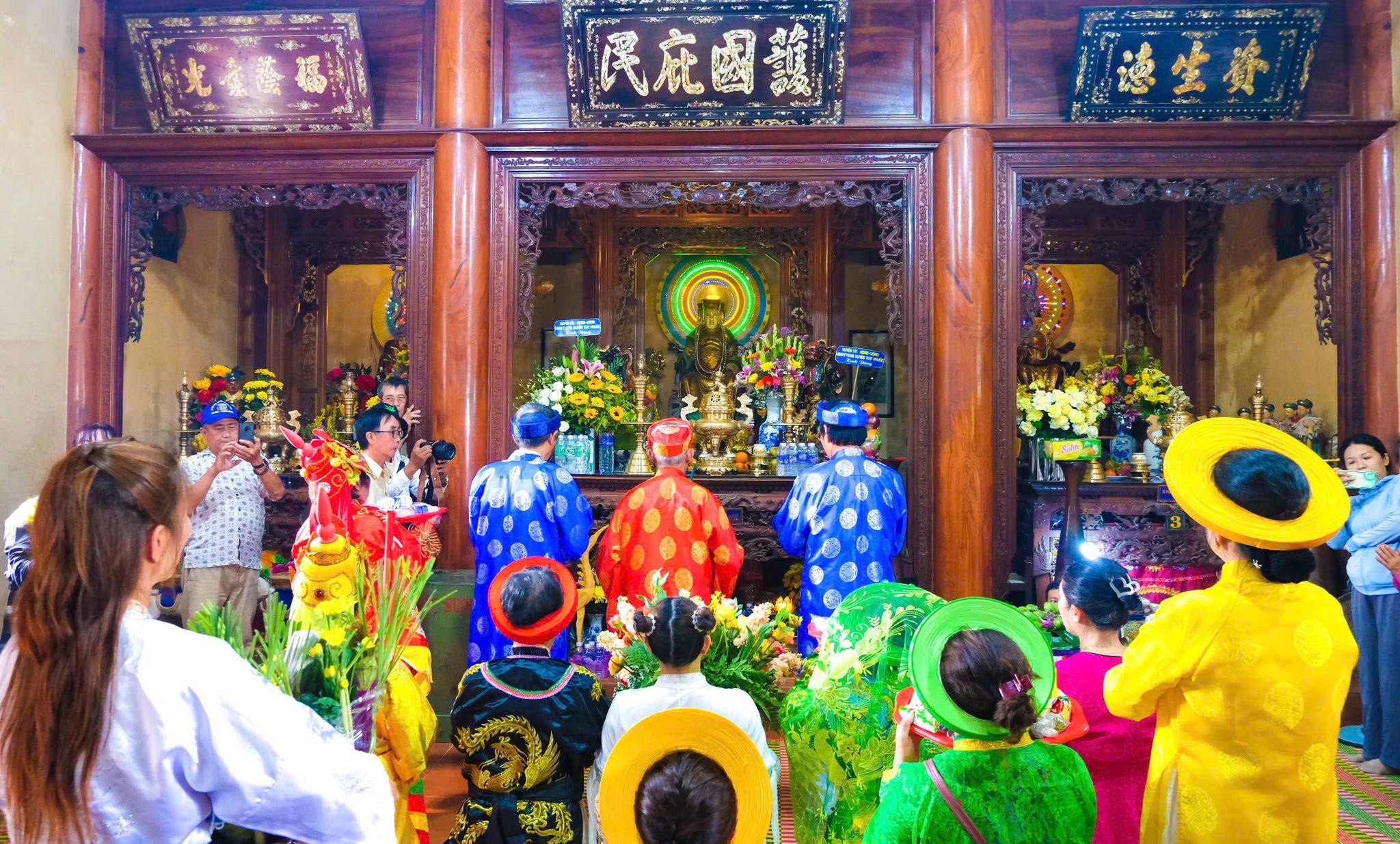
One of the most distinctive ceremonies is the tao bo ritual and the procession of the royal decree through important religious sites in the area. The procession passes five locations, including Quan Cong Temple, Ba Temple, Ba Hoa Shrine, the village Tutelary Deity shrine and the Twin Tiger Deities shrine.
Participants wear traditional festival costumes and recreate images of the different groups who contributed to the development of the Nuoc Man area, including woodcutters, farmers, herders and fishermen. Together, they carry offerings and palanquins through village roads, creating an atmosphere that is both solemn and strongly communal.
The procession is not only a religious ceremony but also evokes the history of settlement and land reclamation in the riverside and coastal environment. It recalls generations of people who cleared land, cultivated crops, raised livestock, fished the waterways and participated in trade.
Prayers for peace, offerings to Thien Hau and ceremonies dedicated to local deities express the community’s hopes for a peaceful year, favorable weather, successful harvests and a stable life. For communities historically connected with waterways and commerce, prayers for safety during journeys and maritime activities have remained an important part of spiritual life.
Lanterns and the Tradition of Welcoming Visitors
A distinctive feature of the festival is the lighting of lanterns during the celebration. After nightfall, lanterns illuminate Ba Temple and the surrounding residential areas, creating a warm and colorful festival atmosphere.
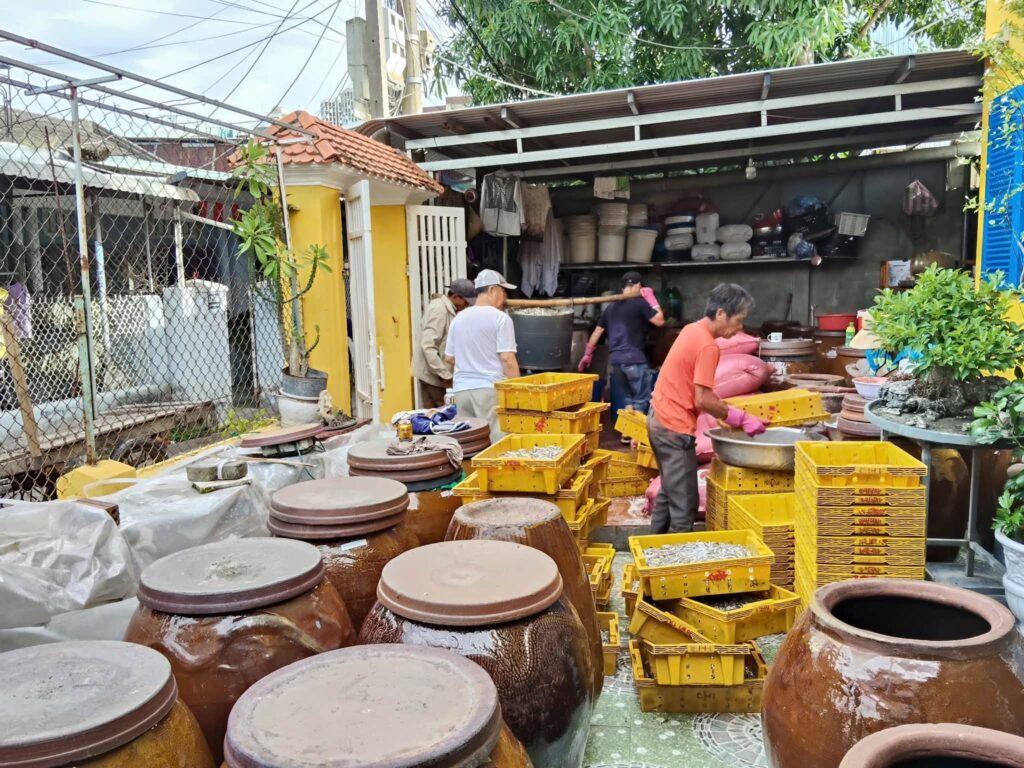
During the festival, local families traditionally prepare food and drinks to welcome visitors from other communities. Hospitality is an important part of the celebration, reflecting the openness and communal spirit of the people of Nuoc Man.
For many families, the Ba Temple Festival is regarded as a kind of “second Tet” of the year. It is a time for relatives to return home, neighbors to meet, families to visit the temple together, and people to share traditional food and stories about their homeland.
In this way, the festival extends beyond the temple grounds into the surrounding village. Roads, homes and communal spaces all become part of the celebration.
Folk Culture and Traditional Performances
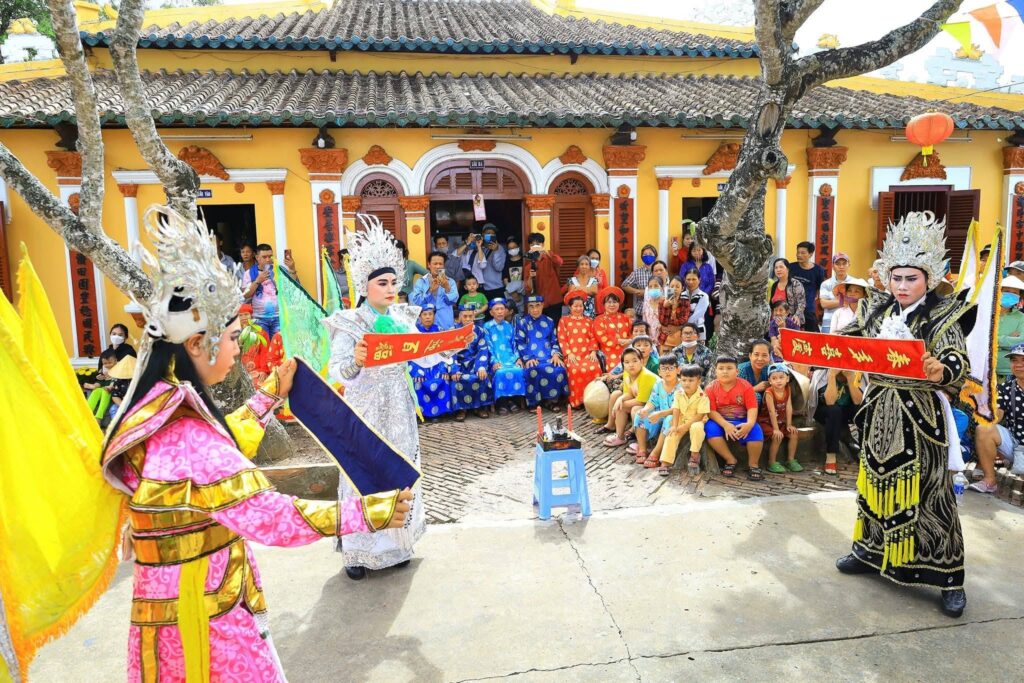
Following the solemn religious ceremonies, the Ba Temple – Nuoc Man Trading Port Festival continues with a variety of folk cultural and traditional artistic activities. Visitors can enjoy classical tuong theatre, bai choi singing, traditional martial arts, lion-dragon dances and folk games.
These activities create a balance between the sacred atmosphere of the rituals and the lively spirit of the festival. While the ceremonies express religious devotion and respect for the deities, the cultural activities provide opportunities for social interaction, entertainment and the transmission of traditional knowledge to younger generations.
Traditional martial arts, tuong theatre and bai choi are all closely associated with the cultural identity of the former Binh Dinh region. Their presence at the festival contributes to a diverse cultural landscape in which the history of the trading port, religious traditions and folk arts come together.
Seeking Blessings from Thien Hau Thanh Mau
Before and during the festival, large numbers of residents and visitors come to Ba Temple to offer incense, pray for peace and seek blessings from Thien Hau Thanh Mau.
For the local community, visiting Ba Temple is more than a religious ritual. It is also an opportunity to express hopes for family well-being, health, successful work and a peaceful year ahead.
People come to pay their respects, pray for good health, favorable business and harmony within their families. These beliefs have been passed from one generation to another, helping sustain the festival as an important part of community life.
Memories of an Ancient Trading Port
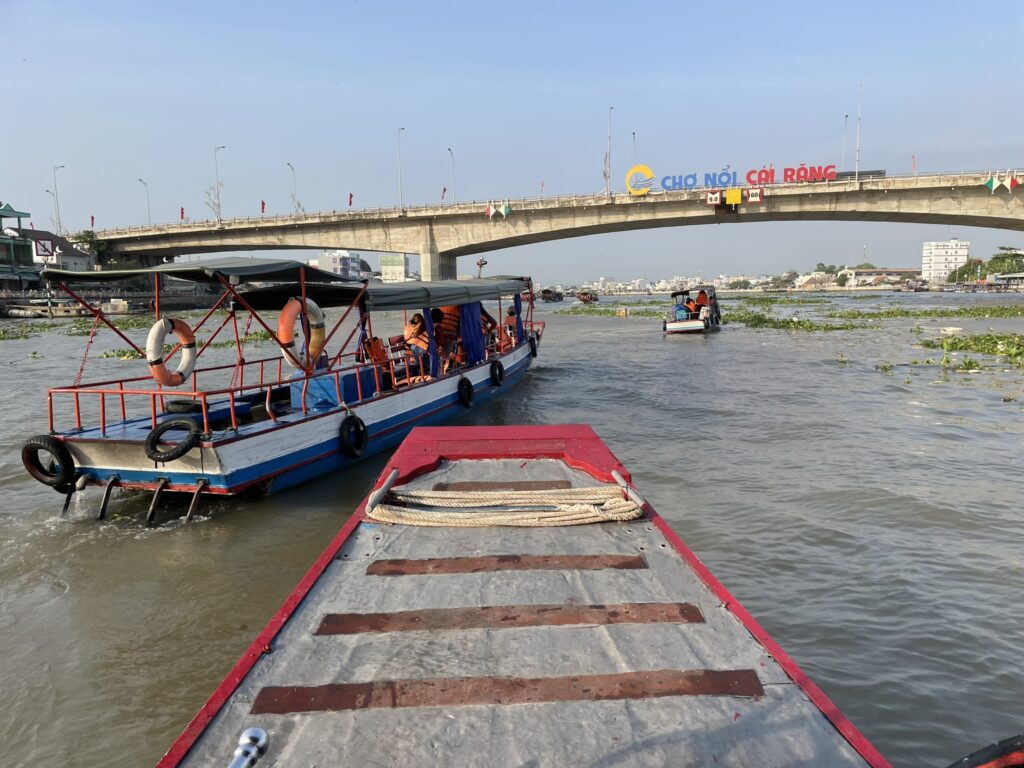
Over the centuries, the landscape of Nuoc Man Trading Port has changed dramatically. The area, once shaped by rivers, tidal waters and the sea, was gradually reclaimed and developed by generations of residents into a busy commercial port. Later, sedimentation and changes in waterways transformed the landscape, making the physical remains of the former urban center increasingly difficult to recognize.
Yet the disappearance of a town does not necessarily erase its memory.
The Ba Temple Festival continues to preserve stories of Nuoc Man through its rituals, lanterns, procession, traditional performances and community customs. The sounds of drums, tuong theatre, bai choi, martial arts and folk games all bring elements of the former port town back into the cultural life of the present.
The Ba Temple – Nuoc Man Trading Port Festival is therefore not simply a religious celebration. It is also a cultural memory of maritime trade, urban development and Vietnamese-Chinese cultural interaction in the historic Binh Dinh region.
The ancient trading port may have disappeared beneath centuries of geographical change, and the surrounding landscape may now be peaceful and rural. Yet every year, when the festival returns in early spring, Ba Temple once again becomes a meeting place between past and present, preserving the memory of Nuoc Man and the community that once grew around its bustling port.
Basic Information
| Item | Information |
|---|---|
| Festival name | Ba Temple – Nuoc Man Trading Port Festival |
| Other names | Nuoc Man Festival, Ba Temple Festival |
| Location | Ba Temple, An Hoa Hamlet, Phuoc Quang Commune, Gia Lai Province |
| Festival period | Annually, during the first days of the second lunar month |
| Origins | Associated with Nuoc Man Trading Port and the worship of Thien Hau Thanh Mau |
| History | Approximately 400 years |
| Cultural setting | Ba Temple, surrounding shrines, temples and villages of the former Nuoc Man area |
| Main rituals | Tao bo, royal-decree procession, offerings to Thien Hau, prayers for peace and ceremonies honoring local deities |
| Cultural activities | Tuong theatre, Bai Choi, martial arts, lion-dragon dances and traditional folk games |
| Key values | Trading-port history, religious traditions, Vietnamese-Chinese cultural interaction and community heritage |
| Heritage status | The festival is documented within the local cultural heritage system and associated with the area’s historical heritage according to the provided source |