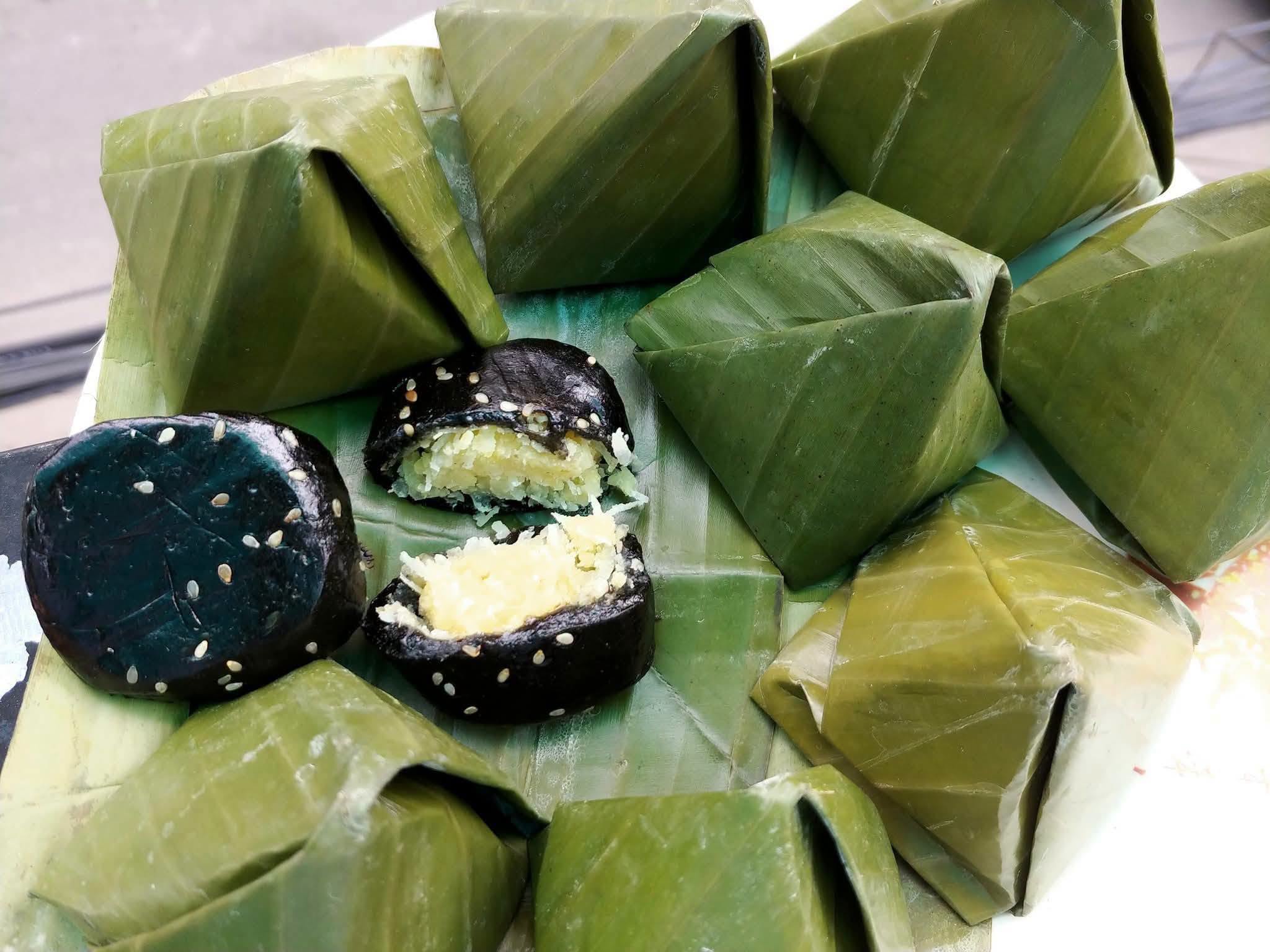
Bánh ít lá gai is a traditional specialty closely associated with Binh Dinh cuisine and the culinary culture of Central Vietnam. Made from glutinous rice flour, ramie leaves, mung beans, and coconut, the cake has a distinctive dark color, chewy texture, and fragrant, mildly sweet flavor.
The cake is traditionally shaped with a pointed top and square base, giving it a distinctive appearance. In Binh Dinh, bánh ít lá gai is not only a familiar delicacy but also a traditional gift often associated with family gatherings, celebrations, and local hospitality.
- Vietnamese name: Bánh ít lá gai
- English name: Binh Dinh Ramie Leaf Cake
- Locality: Binh Dinh
- Type: Traditional local specialty
- Main ingredients: Ramie leaves, glutinous rice flour, sugar
- Filling: Mung beans, grated coconut, sugar, ginger
- Wrapper: Banana leaves
- Shape: Square base with a pointed top
- Typical occasions: Family gatherings, festivals, celebrations, and gifts
Ramie Leaves, Glutinous Rice, and a Traditional Filling
The distinctive dark color and characteristic flavor of bánh ít lá gai come from ramie leaves, known in Vietnamese as lá gai.
The leaves are boiled and finely pounded before being mixed with glutinous rice flour and sugar. The mixture creates a smooth, pliable dough with a deep dark color and a characteristic fragrance.
The filling is made from mung beans and grated coconut. Sugar and ginger are added to create a sweet, fragrant mixture. The coconut is cooked slowly over low heat before being combined with the mung bean paste. The filling is cooked until it becomes sufficiently dry and can be shaped into small portions.
The combination of the chewy glutinous rice exterior and the rich mung bean and coconut filling gives the cake its distinctive texture and flavor.
Shaping and Steaming the Cake
After the dough and filling are prepared, the filling is placed inside portions of the ramie leaf dough and carefully shaped by hand.
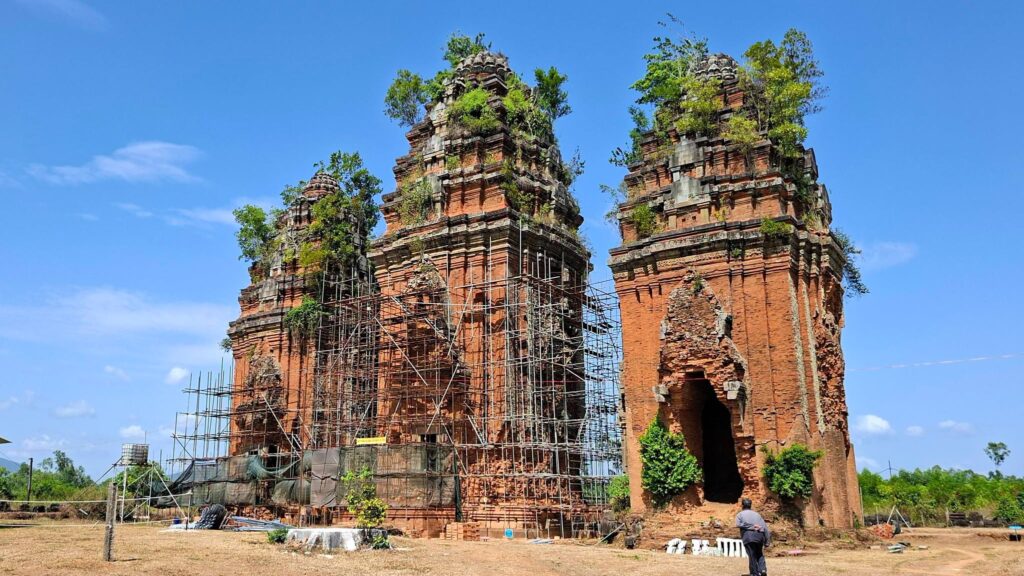
Bánh ít lá gai traditionally has a pointed top and a square or rounded base. The finished shape is sometimes associated with the architectural forms of the ancient Cham towers found throughout Binh Dinh, although this is best understood as a cultural association rather than a documented origin of the cake’s shape.
Each cake is wrapped in a banana leaf before being steamed.
The finished cake has a smooth, dark exterior and a soft, elastic texture. When properly prepared, the dough remains pleasantly chewy without becoming excessively sticky.
The Distinctive Flavor of Bánh Ít Lá Gai
The flavor of bánh ít lá gai comes from several ingredients working together.
The ramie leaves contribute a subtle herbal bitterness, while glutinous rice provides fragrance and chewiness. Sugar gives the cake its sweetness, and mung beans and coconut add richness. A small amount of ginger contributes warmth and aroma.
The result is a cake that is sweet but not one-dimensional, with a combination of herbal, fragrant, creamy, and chewy notes.
Bánh ít lá gai is often enjoyed with tea, whose mild bitterness helps balance the sweetness of the cake.
Bánh Ít Lá Gai in Binh Dinh Culinary Culture
Bánh ít lá gai has become one of the familiar traditional specialties associated with Binh Dinh. It appears in everyday food culture as well as on occasions when families prepare traditional foods for relatives and guests.
The cake is also commonly purchased as a local gift. Its compact size, distinctive appearance, and recognizable flavor make it a convenient specialty for visitors looking to bring a taste of Binh Dinh home.
A well-known Vietnamese folk verse reflects the connection between bánh ít lá gai and Binh Dinh:
“Muốn ăn bánh ít lá gai
Lấy chồng Bình Định sợ dài đường đi.”
The verse has helped reinforce the image of bánh ít lá gai as a culinary symbol of the land and people of Binh Dinh.
Enjoying Bánh Ít Lá Gai in Binh Dinh
For travelers exploring Binh Dinh, bánh ít lá gai is a simple but memorable local specialty to try or bring home as a gift.
Its dark appearance, chewy glutinous rice shell, mung bean and coconut filling, and subtle fragrance of ramie leaves make it immediately recognizable among Vietnam’s traditional cakes.
More than a sweet treat, bánh ít lá gai reflects the way local cuisine transforms familiar agricultural ingredients into foods connected with family life, hospitality, and regional identity.