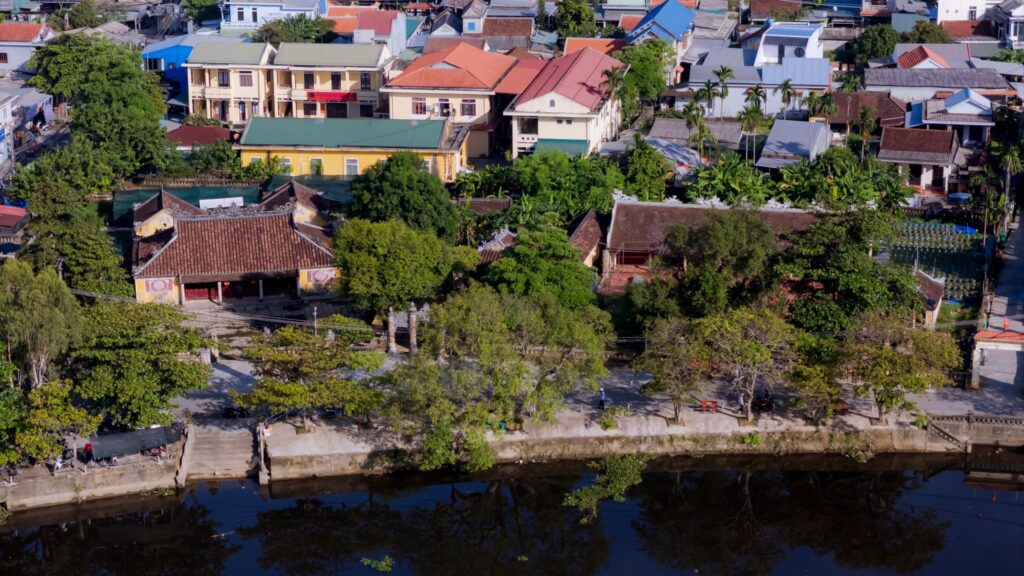
Banjiro’s Tomb is a historical site associated with the history of Japanese merchants in Hội An, particularly the period when Japanese traders came to settle and conduct business in the port town from the late 16th to the early 17th century. The tomb is believed to belong to a Japanese merchant who died in Hội An and still preserves a number of original architectural features and historical inscriptions.
The site is located in Hội An Đông Ward, Đà Nẵng City, along the route from Hội An Ancient Town toward An Bàng Beach. Among its most notable features are the original tomb structure and a tombstone dated 1629, together with a concrete inscription erected in 1928 documenting the restoration of the tomb by members of the Japanese community in Indochina.
A Historical Trace of Japanese Merchants in Hội An
From the late 16th to the early 17th century, during the period of the Red Seal Ship trade, Japanese merchants expanded their commercial activities into Southeast Asia, and Hội An became one of their important trading destinations.
According to historical records, Japanese merchants were permitted by the Nguyễn lords to establish a separate residential area in Hội An, commonly known as Nihon-bōjin-dinh (Nhật Bổn Dinh) and popularly referred to as the Japanese Quarter.
The presence of this community was an important part of Hội An’s development as an international trading port and reflected the close commercial and cultural contacts between Vietnam and Japan.
In 1635, following Japan’s restrictions on overseas trade and travel, Japanese merchants gradually returned to Japan. The Japanese Quarter in Hội An subsequently declined.
Within this historical context, Banjiro’s Tomb is an important physical piece of evidence of the Japanese presence in Hội An, particularly the fact that Japanese merchants once lived, conducted business, and died in the town.
Tomb Architecture and Historical Inscriptions
Banjiro’s Tomb was constructed using a traditional composite material made from lime, sand, tree-bark water, molasses, and other binding materials. The tomb mound has a distinctive saddle-shaped form, faces northeast, and measures approximately 190 × 85 cm.
In front of the tomb is a stone stele measuring approximately 80 × 6.4 × 8 cm. The inscription identifies the tomb and includes smaller inscriptions on both sides recording its historical date and dedication.
According to the archaeological description, the tombstone dates to 1629.
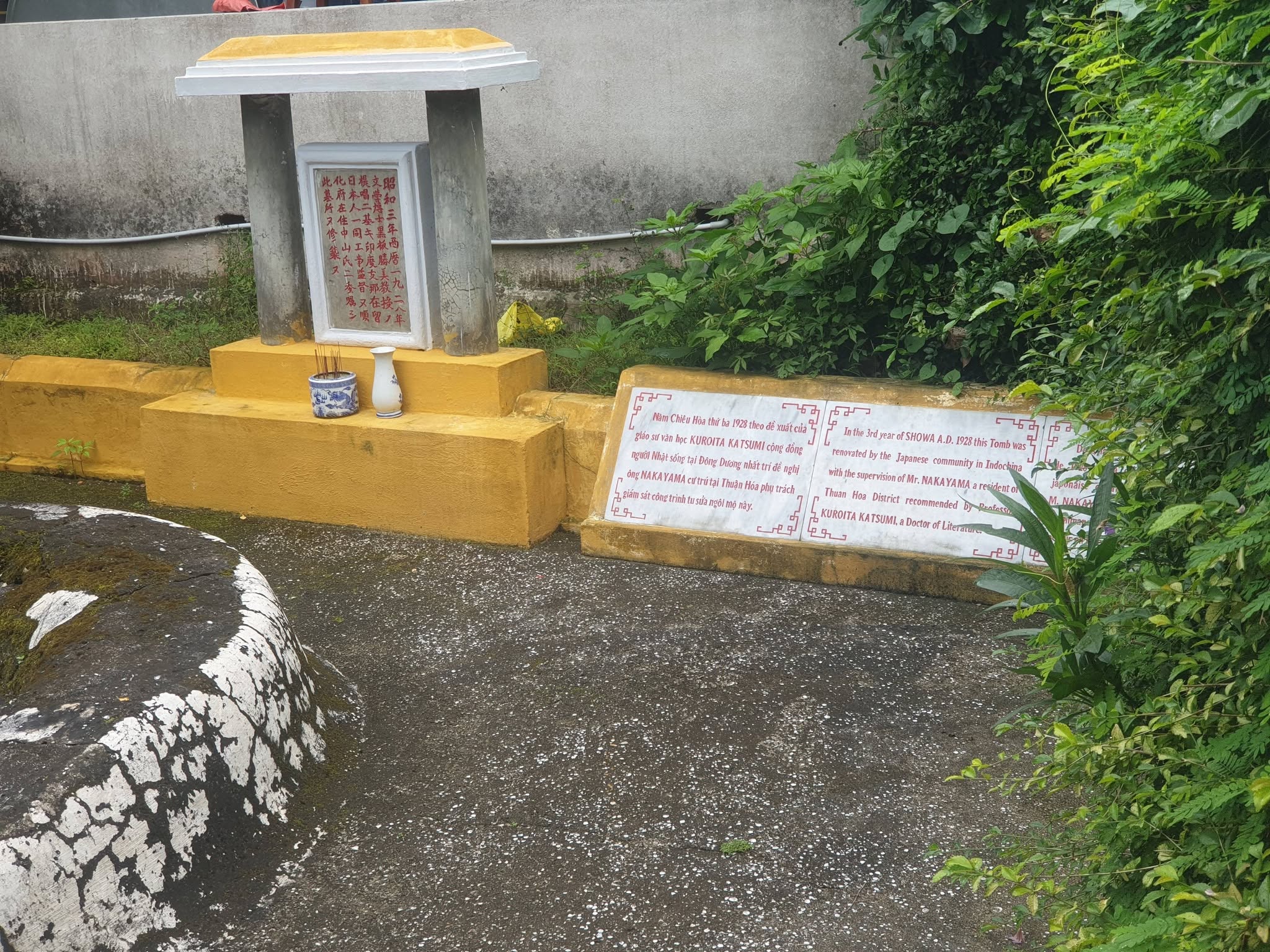
The tomb is surrounded by a circular enclosure. Approximately 1.5 metres to the south stands a concrete stele erected in 1928, during the third year of the Shōwa era.
The inscription records that, at the initiative of Professor Kuroita Katsumi, a Japanese scholar, Japanese residents living in Indochina agreed to entrust Nakajama with supervising the restoration of the tomb.
This inscription is particularly valuable because it demonstrates that decades after the decline of the Japanese trading community in Hội An, the tomb continued to receive attention from members of the Japanese community.
The inner structure of the tomb remains largely intact. However, parts of the circular enclosure have been damaged, while sections of the surrounding wall were previously removed to create a passageway.
Historical Significance and Vietnam-Japan Cultural Exchange
Banjiro’s Tomb contributes to the understanding of the formation and development of Hội An Ancient Town, particularly during the period when Japanese merchants arrived in Hội An for trade.
The site provides valuable field evidence for researchers studying the Japanese presence in Hội An, the development of the Japanese Quarter, and the history of economic and cultural exchange between Vietnam and Japan.
Its structure and decorative characteristics also contribute to the study of ancient tombs in Hội An, demonstrating another aspect of the cultural diversity that developed in a trading port connected to different parts of Asia.
The 1928 Inscription and Conservation
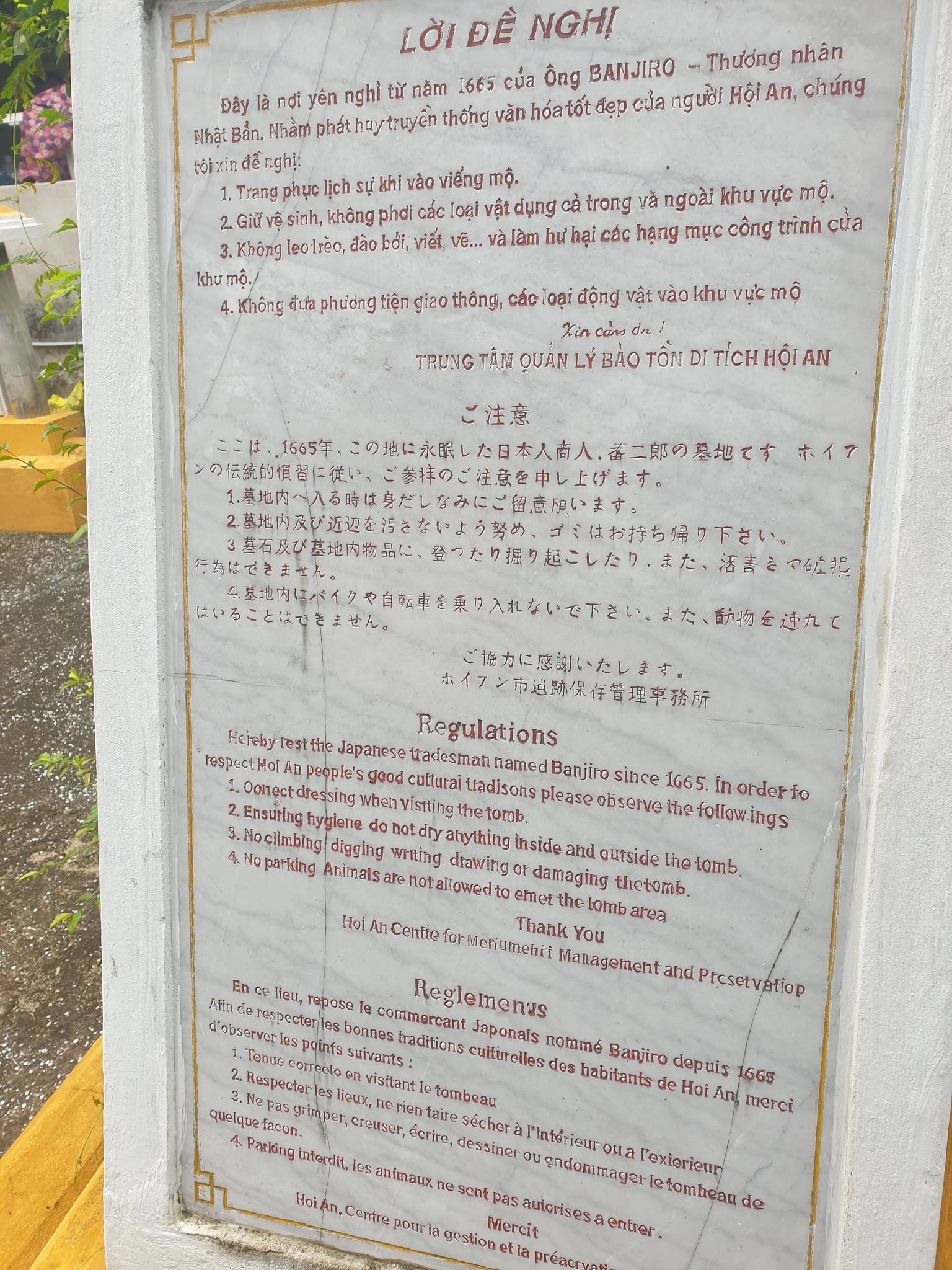
In the past, Banjiro’s Tomb did not have regular caretakers or systematic maintenance. Following the recognition and conservation of Hội An Ancient Town, the site came under greater attention from the Hội An heritage management authorities.
In 1985, the Hội An Monument Management Board, together with the Central Monument Conservation and Restoration Enterprise, conducted a survey and prepared documentation for the site. Conservation proposals were subsequently developed, including the possibility of seeking support from Japan for restoration work.
According to the source material, the tomb is currently cared for by the family of Nguyễn Nước, who regularly maintain the site and burn incense.
Conservation efforts remain important in protecting the surviving elements of the tomb and preserving this small but meaningful trace of Vietnam-Japan historical relations in Hội An.
Visiting Banjiro’s Tomb
Banjiro’s Tomb is located along the route from Hội An Ancient Town toward An Bàng Beach. From Hội An Stadium, visitors can follow Nguyễn Công Trứ Street toward Ông Cọp Temple, then turn onto Trà Quế Road and continue for approximately 1 km to reach the area of the site.
The site can be reached by bicycle, motorbike, or car.
Although the tomb is much smaller than the better-known architectural monuments of Hội An Ancient Town, its historical significance lies precisely in its modest scale. It is a surviving trace of a period when Hội An was an international trading port where merchants and communities from different parts of Asia lived, traded, and interacted.
For visitors interested in the history of Hội An’s trading port, Vietnam-Japan relations, and the former Japanese Quarter, Banjiro’s Tomb offers an opportunity to explore a quieter layer of Hội An’s multicultural history.
Quick Information
| Item | Information |
|---|---|
| Name | Banjiro’s Tomb |
| Current location | Hội An Đông Ward, Đà Nẵng City |
| Type | Tomb |
| Person commemorated | Banjiro, a Japanese merchant who died in Hội An |
| Tombstone | Dated 1629 according to the archaeological documentation |
| Restoration inscription | 1928, third year of the Shōwa era |
| Historical connection | Japanese merchants and the former Japanese Quarter of Hội An |
| Construction material | Composite material made from lime, sand, tree-bark water, molasses, and other materials |
| Tomb form | Saddle-shaped |
| Orientation | Northeast |
| Notable artifacts | Tombstone dated 1629 and restoration inscription dated 1928 |
| Placed under heritage protection | 1985 |
| Significance | Trading history, Vietnam-Japan cultural exchange, and ancient tomb architecture in Hội An |
| Heritage status | National relic in 1991, according to the source material |
Location: Banjiro’s Tomb, Hội An Đông Ward, Đà Nẵng City.