

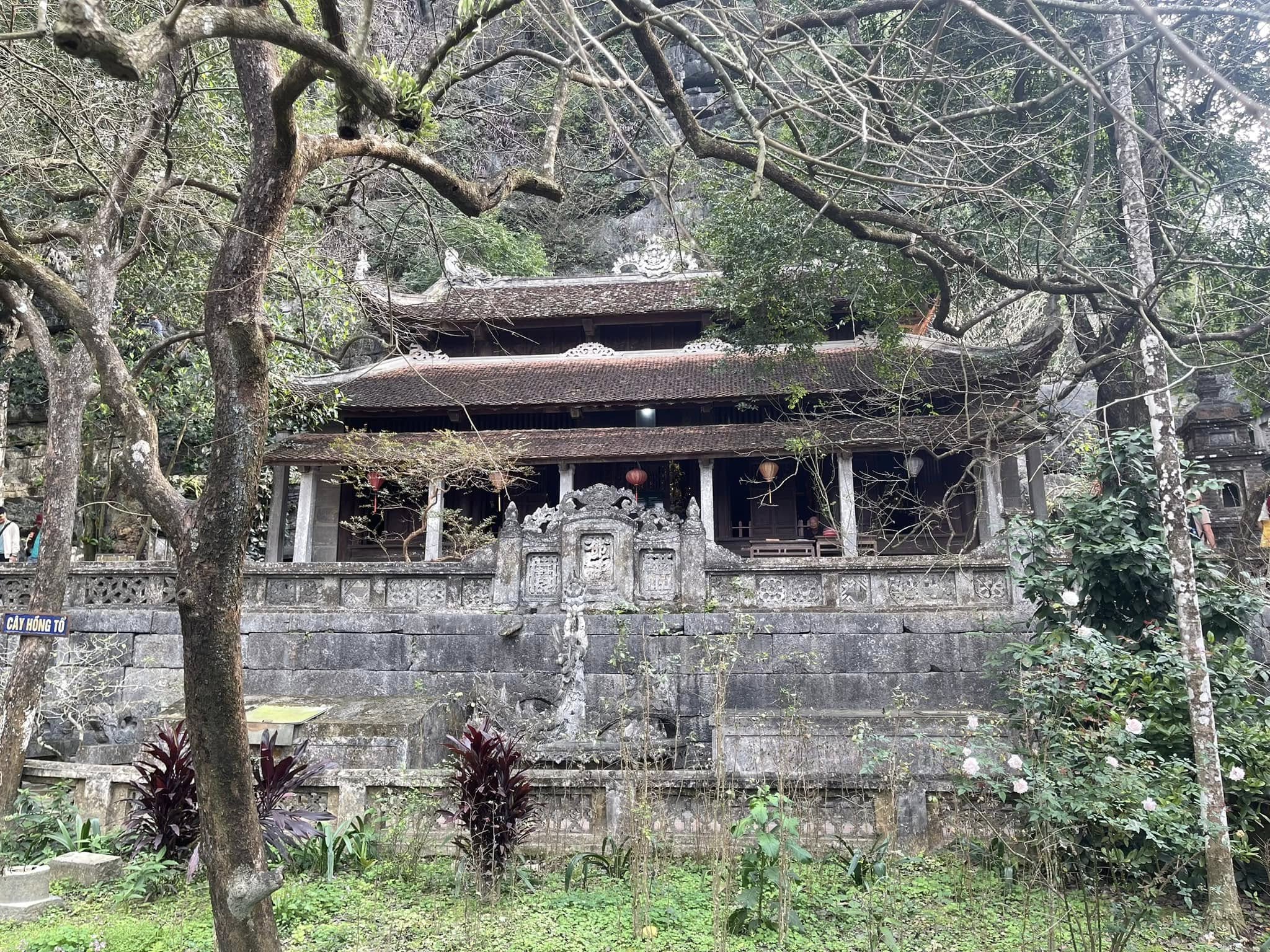
Bich Dong Pagoda is one of the most remarkable ancient Buddhist temples in Ninh Binh Province, Vietnam. Located in Nam Hoa Lu Ward, the pagoda is nestled among the limestone mountains of the Tam Coc – Bich Dong scenic area, where centuries-old architecture, natural caves, lotus ponds, and peaceful valleys come together to create an extraordinary cultural landscape.
The pagoda forms part of the Trang An Landscape Complex, which was recognized as a UNESCO World Cultural and Natural Heritage Site in 2014. Beyond its religious significance, Bich Dong Pagoda preserves valuable architectural, historical, and artistic traditions associated with Buddhism in the ancient capital region of Hoa Lu.
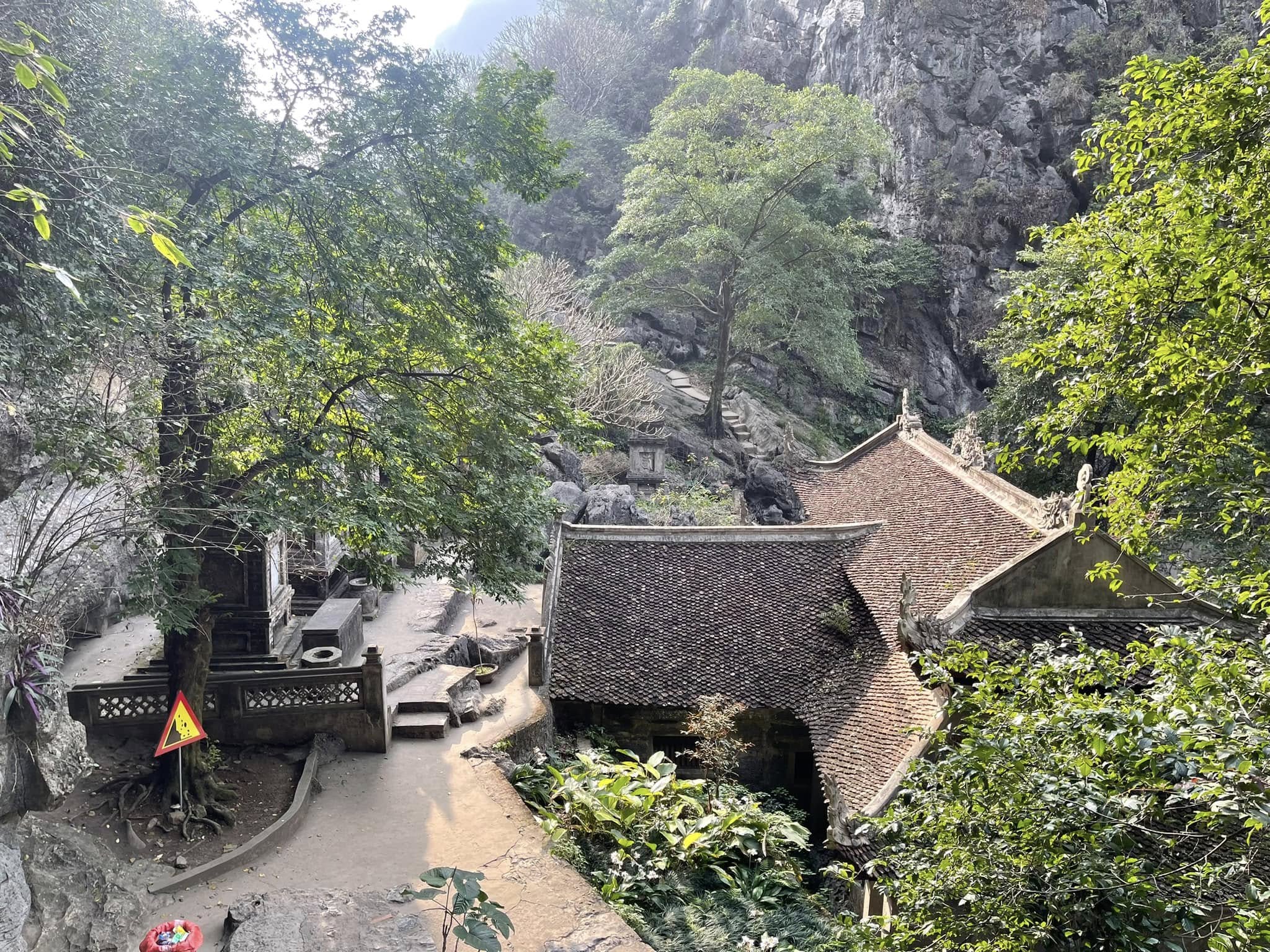
Often celebrated as “Nam Thien De Nhi Dong”, meaning the Second Most Beautiful Cave in the Southern Sky, Bich Dong has long been admired for its spectacular scenery and harmonious relationship between human architecture and nature. Unlike conventional temples built on flat ground, the pagoda consists of three separate structures arranged at different elevations along a limestone mountainside, creating a distinctive spiritual journey from the foot of the mountain to its upper slopes.
History and Origin of the Name Bich Dong
According to local historical accounts and traditions, Buddhist worship at Bich Dong may date back several centuries, with some references suggesting that an early temple existed around 1428, during the beginning of the Later Le Dynasty. However, the architectural development of the present complex is primarily associated with major construction and expansion undertaken in the early 18th century.
In 1705, during the reign of Emperor Le Du Tong, two Buddhist monks, Tri Kien and Tri The, arrived in the area and chose the peaceful limestone mountains as a place for religious practice. Impressed by the natural setting, they mobilized donations and organized the construction of Buddhist worship spaces, gradually developing the three-level pagoda complex that visitors recognize today.
In 1707, the two monks commissioned a large bronze bell, which is associated with the Dark Cave area and remains an important historical artifact connected with the pagoda’s early development.
Before receiving its present name, the temple was known as “Bach Ngoc Thach Son Dong”, a poetic name suggesting a beautiful, pure, jade-like stone sanctuary hidden deep among the mountains. The name reflected the peaceful atmosphere and exceptional natural surroundings that made the area suitable for Buddhist contemplation.
In 1774, Lord Trinh Sam visited the region during a journey to the south. Captivated by the green mountains, lush vegetation, and tranquil waters, he renamed the site Bich Dong, meaning Green Grotto or Jade Grotto.
According to local historical accounts, in 1775, Nguyen Nghiem, father of the celebrated Vietnamese poet Nguyen Du, was instructed to inscribe the two Chinese characters for “Bich Dong” onto the rock face, together with an inscription identifying the calligrapher.
These historical associations demonstrate that Bich Dong was admired not only as a Buddhist sanctuary but also as a scenic destination appreciated by rulers, scholars, and literary figures.
Over the centuries, the pagoda has retained its historic character and become one of the most recognizable cultural landmarks of Ninh Binh.
Architecture of Bich Dong Pagoda: Three Temples Along a Limestone Mountainside
The defining feature of Bich Dong Pagoda is its architectural arrangement in the shape of the Chinese character “Tam” (三), meaning three. The complex consists of three separate pagodas positioned at different heights along the same limestone mountain: Ha Pagoda (Lower Pagoda), Trung Pagoda (Middle Pagoda), and Thuong Pagoda (Upper Pagoda).
Rather than modifying the natural terrain extensively, the builders adapted the temples to the mountain’s slopes, rock formations, and existing caves. This approach created an architectural landscape in which traditional Vietnamese Buddhist structures appear to emerge naturally from the limestone cliffs.
The journey begins at a stone bridge crossing a lotus pond, one of the most photographed scenes in the Tam Coc – Bich Dong area. The three-span bridge leads toward an ancient three-entrance gate with weathered tiled roofs, framed by the green mountains rising behind it. During the lotus season, the pond becomes particularly attractive as broad green leaves and pink blossoms surround the reflection of the traditional gateway.
Beyond the entrance, a stone pathway leads toward the mountain, passing historic structures and ancient funerary stupas associated with generations of Buddhist monks. The peaceful surroundings prepare visitors for a gradual ascent through the three levels of the pagoda, each offering a different combination of religious architecture, natural caves, and panoramic scenery.
Ha Pagoda: The Lower Temple at the Foot of the Mountain
Ha Pagoda is the first major worship structure within the complex, standing on an elevated stone foundation at the foot of the limestone cliff. The building consists of five compartments and follows the traditional Vietnamese Dinh-shaped (丁) architectural layout, a form commonly found in historic temples and communal houses.
Its roof features two tiers and eight gracefully curved roof sections, creating a balanced appearance that combines elegance with structural strength. One of the building’s most impressive features is its system of stone columns, some reportedly exceeding four meters in height and carved from single blocks of stone.
Producing and installing such large monolithic columns would have required considerable craftsmanship, particularly during a period when construction relied heavily on manual techniques.
The stone elements are complemented by a traditional timber framework, creating a harmonious combination of natural materials and historic architectural methods.
Inside the temple, Buddhist statues and altars are arranged in several levels. According to the supplied description, the principal images include the Buddhas of the Three Times, the Western Pure Land Trinity of Amitabha, Avalokiteshvara, and Mahasthamaprapta, along with representations of Avalokiteshvara and the Nine Dragons scene associated with the birth of Shakyamuni Buddha.
These statues and religious objects reflect the artistic traditions and devotional practices of Vietnamese Buddhism.
From the courtyard of Ha Pagoda, visitors can admire the towering limestone cliffs and the stone steps winding upward toward Trung Pagoda.
Trung Pagoda: A Temple Partly Hidden Inside a Natural Cave
From Ha Pagoda, visitors follow a pathway toward the northern side of the mountain and climb approximately 80 stone steps to reach Trung Pagoda, one of the most distinctive architectural features of Bich Dong.
The temple is built directly into a natural limestone recess, with part of its roof and facade extending into the open air while the main worship space is sheltered beneath the rock formation.
This semi-enclosed arrangement creates the impression that the temple and the mountain are part of a single structure.
Trung Pagoda contains three worship compartments dedicated to Buddhist figures, while an additional shrine on the left is associated with the worship of the Mother Goddess, reflecting the interaction between Buddhist traditions and Vietnamese folk beliefs.
The rock face near the temple bears the famous inscription “Bich Dong”, traditionally associated with the naming of the scenic site by Lord Trinh Sam and the later inscription attributed to Nguyen Nghiem.
Ancient Chinese characters and decorative details around the temple contribute to its historical atmosphere, while the exposed limestone formations provide a dramatic natural backdrop.
From the temple’s elevated position, visitors can look down toward the lower courtyard, lotus pond, and surrounding agricultural landscape, gaining a clearer appreciation of how the entire complex was designed around the mountain’s natural contours.
Dark Cave: Ancient Buddhist Artifacts and Limestone Formations
Behind Trung Pagoda lies Dark Cave, known in Vietnamese as Dong Toi, a natural limestone cavern that forms an important part of the Bich Dong experience.
The cave is reached by ascending from the middle temple through a passage surrounded by rock formations. According to the reference material, the cave extends nearly 60 meters into the mountain and maintains a cool atmosphere throughout much of the year.
With limited natural light, its interior has a mysterious quality, enhanced by the shapes of the stalactites and stalagmites formed over long geological periods.
Near the cave entrance is an ancient bronze bell traditionally dated to 1707, associated with the Buddhist monks Tri Kien and Tri The. The bell is a significant reminder of the pagoda’s early 18th-century development.
Inside the cave are Buddhist worship spaces and stone religious figures, including representations associated with Amitabha Buddha and Buddhist bodhisattvas.
Some natural rock formations have inspired local names and interpretations, including shapes resembling a giant turtle and stones traditionally compared with bells or wooden percussion instruments because of the sounds they can produce.
These features illustrate how geological formations have become part of the cultural imagination and spiritual traditions surrounding Bich Dong.
Visitors should take care when walking through the cave, as surfaces may be damp and lighting conditions can be limited. Touching or striking stalactites, historic objects, or religious sculptures should be avoided to help preserve the site.
Thuong Pagoda: The Upper Temple Near the Mountain Summit
Continuing from the Dark Cave area, visitors climb approximately 40 additional stone steps to reach Thuong Pagoda, the highest of the three main temples.
According to the supplied architectural description, the upper temple stands approximately 60 meters above the courtyard of Ha Pagoda and faces southeast.
Unlike the larger lower structures, Thuong Pagoda is a modest two-compartment temple nestled against the limestone cliff, surrounded by vegetation and natural rock formations.
Its principal worship space is dedicated to Avalokiteshvara Bodhisattva, widely revered in Vietnam as Quan Am, the Bodhisattva of Compassion.
Small shrines nearby are associated with the worship of the Earth Deity and Mountain Deity, illustrating the relationship between Buddhism and traditional Vietnamese beliefs concerning the spiritual guardians of natural landscapes.
Near the temple is a natural rock hollow that collects water, traditionally known as the Cam Lo Water Basin, a name associated with the sacred nectar of compassion in Buddhist imagery.
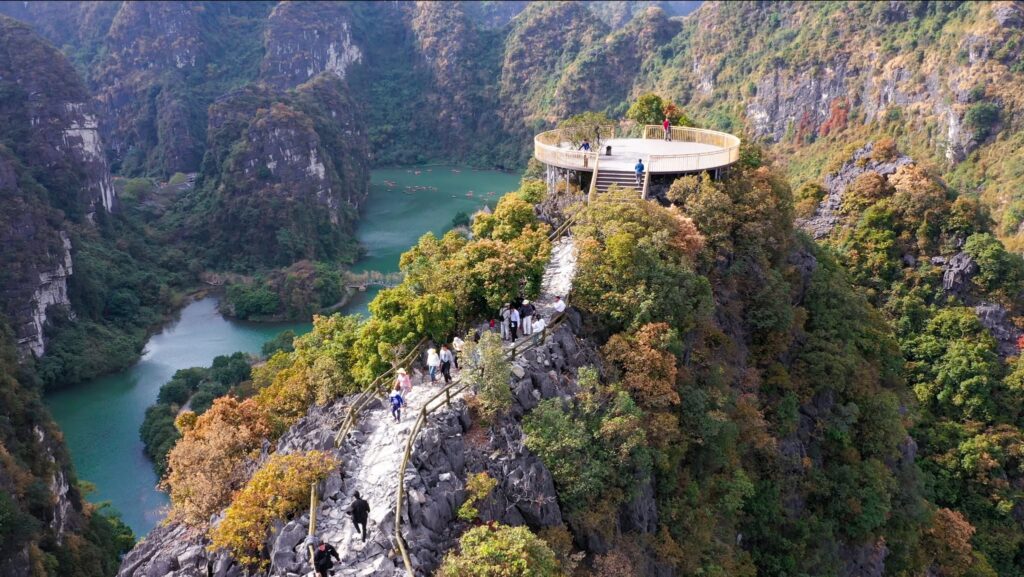
From the upper courtyard, visitors can enjoy expansive views of the surrounding limestone mountains, valleys, and rice fields.
This elevated perspective reveals the distinctive beauty of the Tam Coc landscape and offers a rewarding conclusion to the ascent through the pagoda complex.
Xuyen Thuy Cave and the Underground Waterways of Bich Dong
In addition to the three temples built along the mountainside, the Bich Dong area is associated with Xuyen Thuy Cave, a natural water cave running through the limestone mountain.
According to the reference material, the cave extends for approximately 350 meters, with a vaulted ceiling and sections of varying height.
Water flowing through the cave has contributed to the formation of a distinctive underground landscape, characteristic of the karst terrain found throughout Ninh Binh.
The region’s limestone mountains have been shaped by water erosion over immense geological timescales, creating caves, underground passages, valleys, and natural waterways.
Boat excursions in the wider Tam Coc – Bich Dong and Thung Nang areas allow visitors to experience these remarkable landscapes from the water, passing beneath limestone formations and through peaceful valleys.
However, boat routes, access to individual caves, and embarkation points depend on current tourism operations. Visitors should confirm the available itineraries rather than assume that a boat service provides direct access to the Bich Dong Pagoda grounds.
Together, the dry caves, water caves, and limestone scenery contribute to the geological and cultural significance of the wider landscape.
Historical, Architectural, and Cultural Significance
Bich Dong Pagoda represents an important combination of Buddhist heritage, traditional Vietnamese architecture, and the natural landscape of Ninh Binh.
Historically, the complex preserves memories of Buddhist religious life in the Hoa Lu region, particularly through its expansion in the early 18th century and its associations with monks Tri Kien and Tri The, Lord Trinh Sam, and scholar Nguyen Nghiem.
Its ancient inscriptions, bronze bell, Buddhist sculptures, and traditional buildings provide valuable material for understanding the cultural and religious history of the area.
Architecturally, the pagoda demonstrates how Vietnamese builders adapted religious structures to challenging limestone terrain. Instead of creating a conventional temple complex on level ground, they arranged three distinct worship buildings along the mountainside, using natural rock formations and caves as integral elements of the design.
The curved tiled roofs, stone columns, wooden structural elements, and cave sanctuaries create a distinctive architectural composition that reflects both craftsmanship and respect for the natural environment.
Culturally, Bich Dong remains a place of Buddhist worship and contemplation. Its religious spaces also reflect the interaction between Buddhism and local traditions, including the veneration of protective deities and the Mother Goddess.
The pagoda’s wider significance is strengthened by its location within the Trang An Landscape Complex, which UNESCO inscribed on the World Heritage List in 2014 as a mixed cultural and natural property.
The combination of limestone karst landscapes, archaeological and historical sites, traditional religious architecture, and living cultural practices makes the region one of Vietnam’s most remarkable heritage destinations.
Within this landscape, Bich Dong Pagoda stands out as a particularly beautiful example of architecture harmoniously integrated with nature.
Visiting Bich Dong Pagoda: Best Time and Travel Tips
Bich Dong Pagoda is located in Nam Hoa Lu Ward, Ninh Binh Province, close to the famous Tam Coc tourist area. Its convenient location makes it a rewarding addition to an itinerary exploring the natural scenery and historical attractions of the former Hoa Lu capital region.
The period from January to March is often suitable for spring visits and Buddhist pilgrimages, when the weather is generally more comfortable for walking and exploring the temples.
Meanwhile, May and June are particularly attractive for travelers interested in photography and natural scenery. During this period, lotus flowers may bloom in the pond near the entrance, while rice fields around Tam Coc often turn golden as the harvest season approaches. The exact timing of the lotus bloom and rice harvest varies with weather and agricultural conditions.
According to the supplied visitor information, ordinary entry to the pagoda is generally free, although parking fees and charges for separate boat excursions or tourism services may apply. Visitors should check current arrangements before traveling, as access and service charges may change.
Exploring all three temples involves climbing uneven stone steps, some of which are steep and can become slippery in wet weather. Comfortable walking shoes with good grip are recommended, while high heels and slippery footwear should be avoided.
As Bich Dong remains an active Buddhist place of worship, visitors should dress modestly, maintain a respectful atmosphere, and avoid disturbing religious activities.
Inside caves and worship spaces, particular care should be taken around historic objects, sculptures, and natural limestone formations.
To fully appreciate the site, visitors are encouraged to follow the traditional route from Ha Pagoda to Trung Pagoda, Dark Cave, and Thuong Pagoda, rather than stopping only at the entrance bridge and lotus pond.
Each level reveals a different perspective on the architecture and surrounding scenery, making the journey an experience of both cultural discovery and natural beauty.
Bich Dong Pagoda: A Timeless Sanctuary in the Trang An Heritage Landscape
Surrounded by the limestone mountains of Ninh Binh, Bich Dong Pagoda has preserved the quiet beauty of an ancient Buddhist sanctuary for generations.
From its stone bridge and lotus pond to its weathered temple roofs, cave shrines, and mountain pathways, the complex reveals a remarkable relationship between human creativity and the natural world.
Its reputation as the Second Most Beautiful Cave in the Southern Sky reflects centuries of admiration for the scenery, but the site’s appeal extends far beyond its picturesque appearance.
The three-level temple arrangement, historic Buddhist artifacts, and natural caves offer visitors an opportunity to explore the architectural and spiritual traditions of northern Vietnam.
As part of the UNESCO-listed Trang An Landscape Complex, Bich Dong Pagoda continues to contribute to the cultural identity and heritage significance of Ninh Binh.
For travelers interested in Buddhist history, traditional architecture, limestone landscapes, and peaceful cultural destinations, Bich Dong Pagoda is one of the most memorable places to visit in the region.
Quick Facts About Bich Dong Pagoda
| Information | Details |
|---|---|
| Official name | Bich Dong Pagoda |
| Vietnamese name | Chùa Bích Động |
| Former name | Bach Ngoc Thach Son Dong |
| Location | Nam Hoa Lu Ward, Ninh Binh Province, Vietnam |
| Scenic area | Tam Coc – Bich Dong |
| World Heritage association | Trang An Landscape Complex |
| Traditional title | Nam Thien De Nhi Dong, the Second Most Beautiful Cave in the Southern Sky |
| Type | Historic Buddhist pagoda and natural cave complex |
| Major construction period | Early 18th century, particularly from 1705 |
| Historical figures | Monks Tri Kien and Tri The, Lord Trinh Sam, Nguyen Nghiem |
| Renamed Bich Dong | 1774 |
| Architectural layout | Three-level arrangement resembling the Chinese character Tam (三) |
| Main temples | Ha Pagoda, Trung Pagoda, Thuong Pagoda |
| Notable caves | Dark Cave and Xuyen Thuy Cave |
| Important historical artifact | Bronze bell traditionally dated to 1707 |
| Approximate elevation of Upper Pagoda | 60 meters above the Lower Pagoda courtyard, according to reference material |
| Suggested visiting seasons | January–March and May–June |
| Admission | Generally reported as free for ordinary worship visits, subject to current arrangements |
| Main heritage values | Buddhist history, traditional architecture, limestone cave landscapes, and religious culture |