“Marry me and you will never go hungry / Put charcoal in the forge and there will be rice tomorrow” is a traditional verse that generations of people from Cau Vuc’s blacksmithing community continue to recall with pride. The saying reflects the close connection between the craft, livelihood and everyday life of the village.
Cau Vuc blacksmithing, now located in Huong Thuy Ward, Hue City, was established by a group of people who migrated from Hien Luong in Phong Dien District. According to the genealogy of the Hoang The lineage and other families from Hien Luong, the craft has been passed down through seven to eight generations, spanning more than 200 years.
A blacksmithing hamlet gradually developed beside Cau Vuc Bridge, giving rise to the name Vuc Blacksmithing Village. Over time, the area became an important center of blacksmithing in Huong Thuy, with local livelihoods closely connected to the forge, charcoal and the skills of traditional metalworking.
From a Blacksmithing Hamlet Beside Cau Vuc
The formation of Cau Vuc’s blacksmithing community is closely associated with the migration and settlement of people from Hien Luong. After moving to the new area, the craftsmen continued their traditional occupation and transformed blacksmithing into a long-term livelihood.
Along with the craft itself, the community has maintained customs, traditions and ways of life associated with a traditional handicraft village. Blacksmithing has provided tools for everyday life while creating a working environment in which practical knowledge, techniques and production skills are passed from one generation to the next.
The quality of its products has been an important factor in sustaining the craft. The village has traditionally specialized in making hand tools for agriculture, construction and household use.
Tools Forged in the Village Workshops
Cau Vuc blacksmithing produces a diverse range of products, from familiar agricultural tools to implements used in construction and everyday life.
Traditional products include hoes, shovels, plowshares, knives, machetes, scissors, woodworking planes, sickles and bicycle frames. Each type requires different skills in shaping, treating and finishing metal, leading artisans to develop specialized knowledge for particular products.
Over time, a degree of specialization emerged within the village. Some families focused on scissors, others specialized in machetes, while individual craftsmen concentrated on knife making. This specialization allowed artisans to develop deeper expertise in specific product categories.
Products from Vuc Blacksmithing Village are sold not only in Hue and other central Vietnamese markets but also in major markets such as Hanoi and Ho Chi Minh City. They are also used in Da Nang and the Central Highlands.
Preserving the Craft Through Change
According to the source, 26 households in Vuc currently participate in blacksmithing, accounting for approximately 20 percent of the households in the residential area. After facing various challenges over the years, the craft has shown signs of development in recent times.
Production has gradually been organized in accordance with legal requirements, while social activities related to the craft have also been established. Workshops have paid greater attention to environmental hygiene and other requirements associated with production.
Maintaining the craft today depends not only on traditional skills but also on the ability to respond to market demand, improve productivity and enhance product quality.
Introducing Modern Machinery into the Forge
Since 2008, with support from the Department of Industry and Trade, the Department of Agriculture and funding from the former Huong Thuy Town People’s Committee, several blacksmithing workshops in Vuc have invested in new machinery and equipment.
These improvements have helped enhance product quality, production volume and designs while strengthening the workshops’ ability to compete in the market. Modern technology has been introduced particularly into some physically demanding stages, while traditional blacksmithing techniques continue to be applied where appropriate.
The combination of modern machinery and traditional craftsmanship has created a new direction for the village, reducing the physical burden of heavy operations while retaining the important role of skilled artisans in shaping and finishing the products.
Combining Modern Technology with Traditional Blacksmithing
Traditional blacksmith artisan Huynh The Tien, owner of Truong Tien Blacksmithing Workshop, said that his workshop used financial support to invest in a product display area and new equipment.
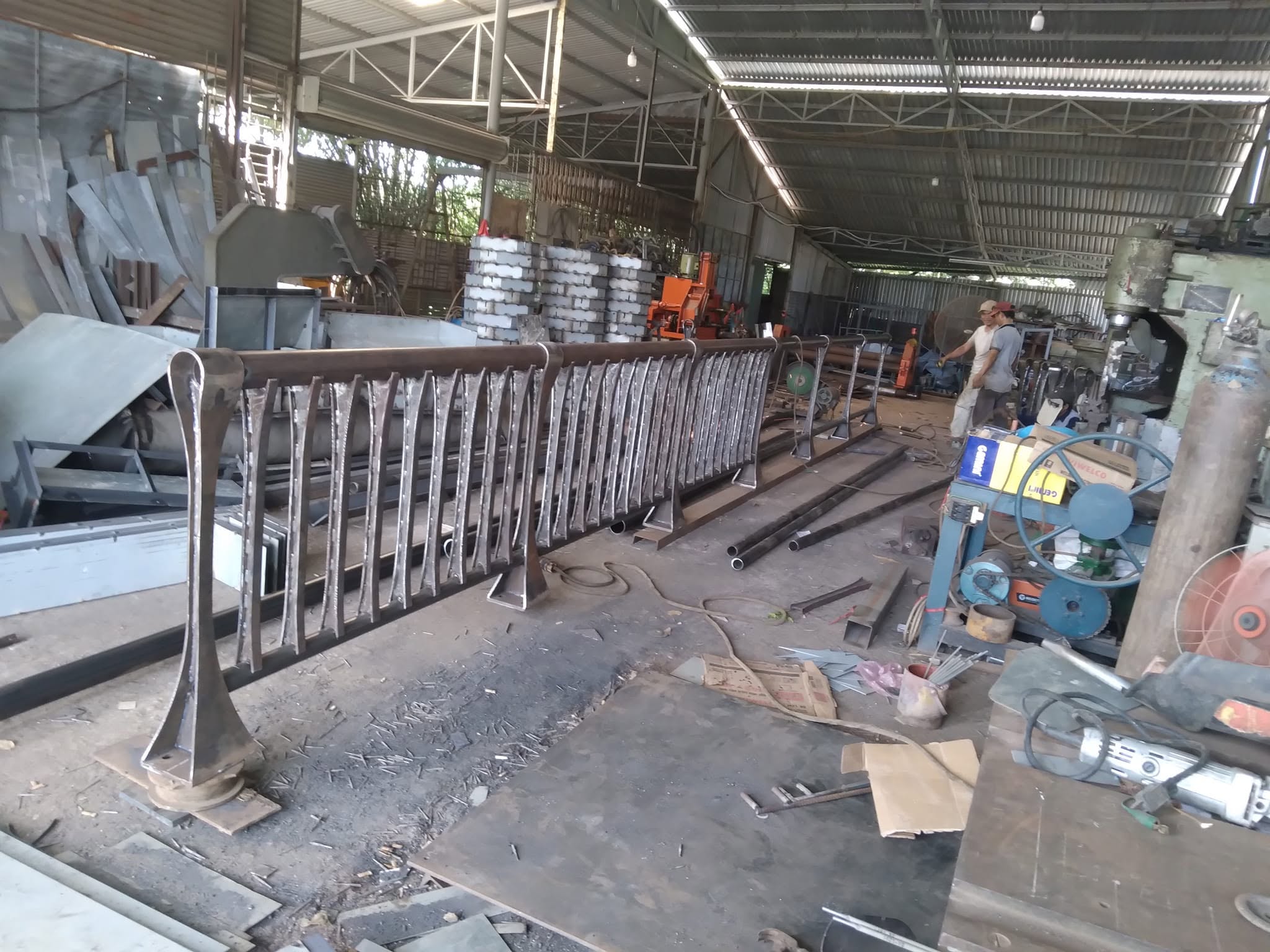
The machinery includes a crankshaft forging machine, rolling machine, drilling machine and pneumatic power hammer. These machines support the rough forging stage, one of the most physically demanding steps in the production process.
Combining modern technology with traditional forging methods has helped improve the appearance and quality of products, while also reducing production costs and strengthening their competitiveness.
From traditional charcoal-fired forges beside Cau Vuc to workshops equipped with modern machinery, the craft demonstrates how a long-established handicraft can adapt to changes in economic life while maintaining its traditional foundation.
Cau Vuc Blacksmithing Recognized as a Traditional Craft
Cau Vuc blacksmithing, located in Huong Thuy Ward, Hue City, was recognized by the People’s Committee of Thua Thien Hue Province as a traditional craft of Thua Thien Hue Province under Decision No. 628/QD-UBND dated April 1, 2014.
The recognition acknowledges the long history and development of Cau Vuc blacksmithing and provides a basis for continuing to preserve traditional techniques, develop its products and maintain the livelihoods of the local craft community.
Basic Information
| Item | Information |
|---|---|
| Craft | Cau Vuc Blacksmithing |
| Current location | Huong Thuy Ward, Hue City |
| Community origin | People from Hien Luong, Phong Dien District |
| History | More than 200 years, approximately 7–8 generations |
| Products | Hoes, shovels, plowshares, knives, machetes, scissors, planes, sickles, bicycle frames, etc. |
| Participating households | 26 households, according to the source |
| Markets | Hue, Da Nang, the Central Highlands, Hanoi and Ho Chi Minh City |
| Development approach | Combining traditional forging techniques with modern machinery |
| Recognition | Traditional Craft of Thua Thien Hue Province |
| Decision | No. 628/QD-UBND, April 1, 2014 |