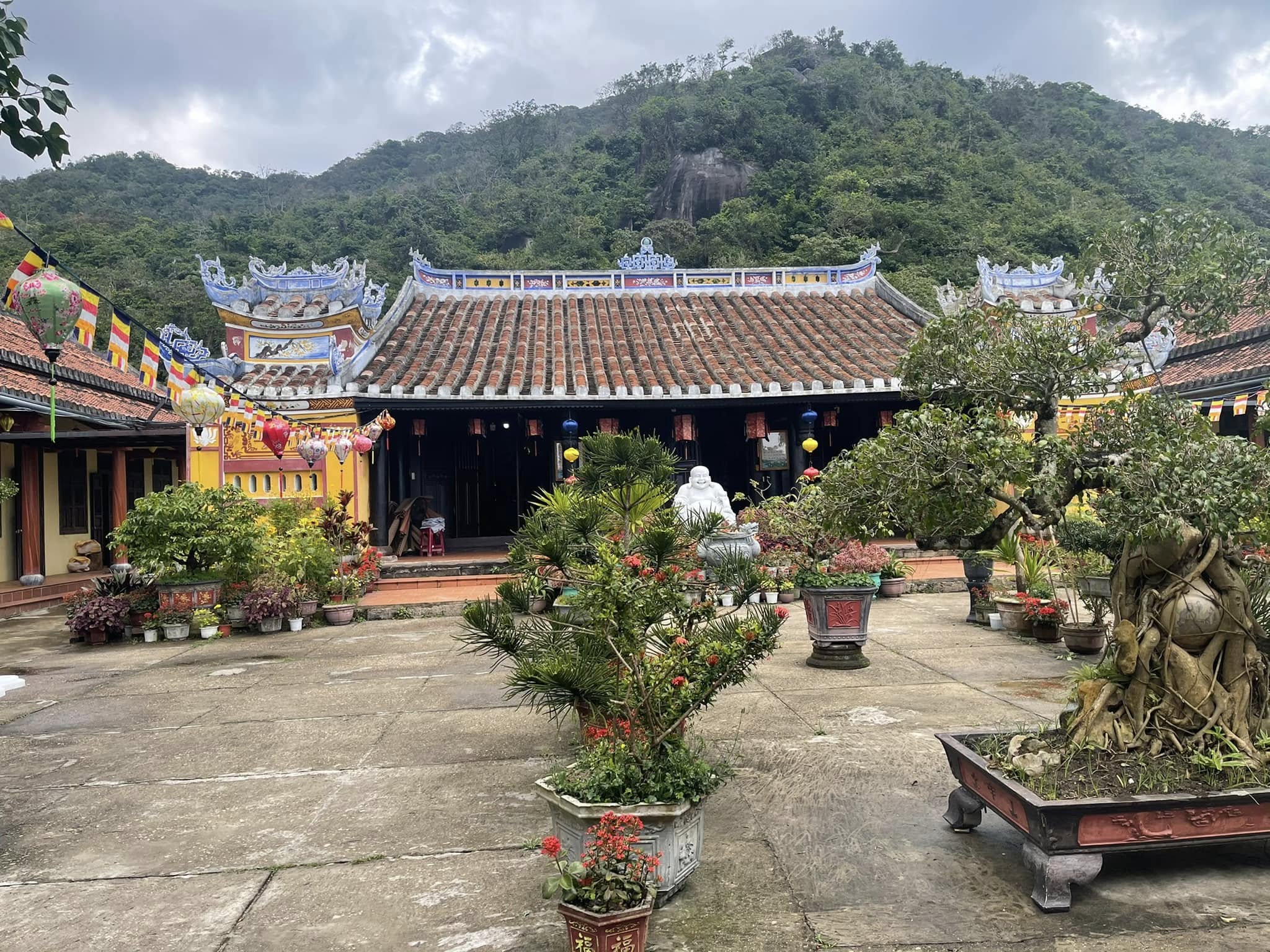
Hai Tang Pagoda is one of the oldest and most significant religious and cultural landmarks on the Cham Islands (Cu Lao Cham), Da Nang City, Central Vietnam. Originally established in 1758, the pagoda preserves centuries of architectural heritage, Buddhist traditions, and spiritual practices closely connected to the island community.
Located in Xom Cam, Bai Lang Village, Tan Hiep Commune, Hai Tang Pagoda rests at the foot of Hon Lao Mountain, overlooking a peaceful valley and a green rice field. Surrounded by unspoiled natural scenery, its moss-covered roofs and ancient stone walls create a tranquil atmosphere that reflects the island’s enduring cultural identity.
More than a Buddhist place of worship, Hai Tang Pagoda is an important destination for travelers exploring the Cham Islands. Visitors can discover traditional Vietnamese religious architecture, learn about the spiritual life of island residents, and experience a quieter side of this beautiful archipelago.
Location and Natural Setting of Hai Tang Pagoda
Hai Tang Pagoda is situated in Xom Cam, Bai Lang, Tan Hiep Commune, Da Nang City, on Hon Lao Island, the largest island in the Cham Islands archipelago.
The pagoda stands at the foot of a mountain, facing a small valley and a rice field that forms a distinctive feature of the island landscape.
According to traditional Vietnamese geomantic principles, its location is considered favorable, with the mountain providing a natural backdrop and an open landscape stretching out in front.
Unlike Buddhist temples surrounded by busy urban streets, Hai Tang Pagoda offers a peaceful setting where ancient architecture blends with the natural environment.
Its weathered stone walls, traditional yin-yang roof tiles, and surrounding greenery create an atmosphere well suited to meditation, worship, sightseeing, and cultural exploration.
From Bai Lang Pier, visitors can follow a village path to the pagoda. The short walk passes local houses and cultivated land, offering a glimpse into the everyday life of the island community.
History and Origins of Hai Tang Pagoda
According to local historical accounts, Hai Tang Pagoda was originally founded in 1758, during the reign of King Le Canh Hung.
Local traditions attribute its establishment to the Buddhist monk Huong Hai, who is said to have created a small hermitage for religious practice.
In its earliest days, the site reportedly consisted of a simple shelter where the monk and a few disciples lived and practiced Buddhism.
Later, during the generation of the monk’s fourth successor, contributions from island residents enabled the hermitage to be expanded into a more substantial religious complex.
The name Hai Tang combines two Vietnamese words: Hai, meaning “sea,” and Tang, referring to the Buddhist scriptures or canon.
In local interpretation, the name evokes a vast treasury of Buddhist teachings, as boundless and profound as the ocean.
The Legend Behind Hai Tang Pagoda
Alongside historical accounts, the origins of Hai Tang Pagoda are associated with a traditional legend passed down through generations of Cham Islands residents.
According to the story, a merchant vessel carrying timber was sailing through the waters around the Cham Islands when it encountered a severe storm.
Unable to continue its journey, the ship remained stranded for several days.
The merchants prayed for divine assistance and were reportedly told in a dream that the timber on board should be left on the island to build a pagoda.
Following this spiritual message, they used the timber to construct a place of worship.
The legend recounts that the weather then improved, the sea became calm, and the vessel was able to continue its voyage.
Although this story belongs to local folklore rather than documented historical fact, it reflects the strong spiritual beliefs of maritime communities and the important role of religious sanctuaries in their lives.
Relocation and Reconstruction in 1848
Hai Tang Pagoda was originally built at another location on the island.
Over the following decades, exposure to strong winds, storms, and harsh coastal conditions gradually damaged the structure.
In 1848, island residents and merchants contributed labor and financial resources to relocate and rebuild the pagoda at its present site.
The new location at the foot of the mountain offered a more sheltered setting and greater convenience for local worshippers.
Since then, the pagoda has undergone several restoration projects while retaining much of its traditional architectural character.
According to local heritage descriptions, Hai Tang Pagoda forms part of the Cham Islands heritage sites recognized at the national level in 2007.
Traditional Architecture of Hai Tang Pagoda
Hai Tang Pagoda displays characteristic features of traditional Buddhist architecture in Central Vietnam.
Its design combines a harmonious layout, locally familiar construction materials, and decorative details associated with historic Vietnamese religious buildings.
The pagoda follows a front hall and rear sanctuary arrangement, with the entrance hall serving ceremonial functions and the principal worship area located farther inside.
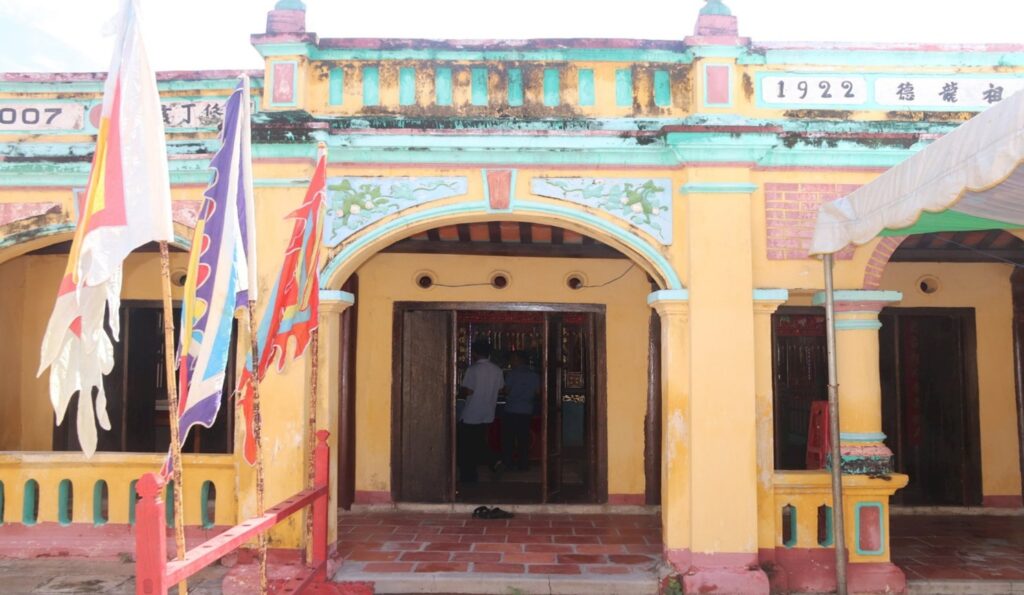
The roof is covered with traditional yin-yang tiles, which have developed a weathered appearance over time.
Three-Entrance Gate and Courtyard
The pagoda’s entrance is marked by a traditional three-entrance gate, known in Vietnamese as a tam quan.
Built from brick and stone, the gate features three arched openings and a restrained yet dignified architectural style.
It marks the transition from the everyday surroundings of the village into the sacred grounds of the pagoda.
Beyond the gate, visitors enter a quiet courtyard surrounded by greenery and traditional buildings.
According to descriptions of the site, a statue of Quan Am Nam Hai, the Bodhisattva Avalokiteshvara revered by coastal communities, stands near a small lotus pond in front of the entrance.
The statue symbolizes compassion and spiritual protection, values deeply respected by Buddhist followers and local fishermen.
Ancient Stone Enclosure
One of the most distinctive architectural features of Hai Tang Pagoda is its surrounding stone wall.
The enclosure was constructed using traditional stone-stacking techniques, contributing to the pagoda’s historic appearance.
According to local tradition, the wall was originally built to prevent snakes and other potentially dangerous animals from entering the grounds, protecting monks and visitors.
Today, the weathered stonework forms an important part of the monument’s architectural character.
Woodcarving and Decorative Art
Despite its remote island location, Hai Tang Pagoda preserves several examples of traditional Vietnamese decorative craftsmanship.
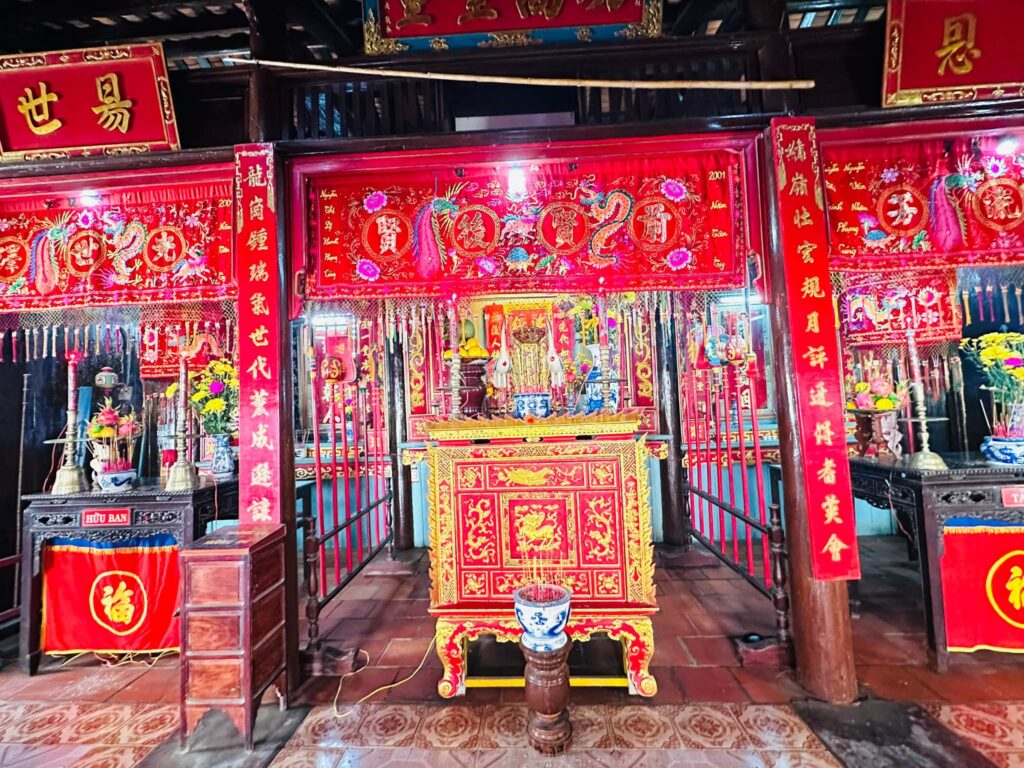
Inside the building are horizontal lacquered boards, parallel couplets, and intricately carved wooden architectural components.
Some of these elements feature red lacquer and gilded inscriptions, reflecting the decorative traditions of historic Vietnamese temples.
The combination of yin-yang roof tiles, timber construction, stone walls, and ornamental details makes Hai Tang Pagoda a valuable example of religious architecture on the Cham Islands.
Buddhist Worship and Folk Religious Traditions
One of Hai Tang Pagoda’s distinctive cultural features is the coexistence of Buddhist worship and traditional folk beliefs.
The main sanctuary contains Buddhist statues alongside representations of deities revered in local religious traditions.
According to descriptions of the pagoda, the principal objects of worship include the Three Buddhas of the Past, Present, and Future, Shakyamuni Buddha, the Jade Emperor, Buddhist guardian deities, and Guan Yu.
This combination reflects the historical interaction between Buddhism and other religious traditions within Vietnamese society.
It is an example of religious syncretism, in which Buddhist, Confucian, Taoist, and folk spiritual practices may coexist within a single sacred space.
For Cham Islands residents, the pagoda is not only a place to honor the Buddha but also somewhere to pray for peace, favorable weather, family well-being, and safe journeys at sea.
Historical Artifacts at Hai Tang Pagoda
In addition to its architecture, Hai Tang Pagoda preserves religious objects and artifacts associated with its long history.
Traditional Buddhist Statues
The main sanctuary houses Buddhist statues reflecting traditional religious art.
Among the most notable are the Three Buddhas and a statue of Shakyamuni Buddha seated on a lotus pedestal.
Together with the altars, lacquered boards, and classical inscriptions, these sculptures contribute to the pagoda’s sacred atmosphere and illustrate the religious traditions of the island community.
The Ancient Bronze Bell
Another notable artifact associated with Hai Tang Pagoda is a large bronze bell featuring a raised dragon motif.
Some heritage descriptions suggest that its artistic characteristics resemble those of the Early Le Dynasty, raising the possibility that the bell predates the pagoda’s establishment in 1758.
However, a precise date would require further examination of the artifact, any surviving inscriptions, and official heritage documentation.
Regardless of its exact age, the bell is an important cultural object that contributes to understanding the pagoda’s history and the tradition of bronze casting in Vietnamese religious architecture.
Hai Tang Pagoda in the Spiritual Life of Cham Islands Residents
For generations, Hai Tang Pagoda has served as an important spiritual center for the island community.
Living in close connection with the sea, local residents have traditionally placed great importance on prayers for safety, favorable weather, and successful fishing journeys.
The pagoda provides a place for worship, reflection, and the expression of hopes for peaceful family life and community prosperity.
Its religious traditions also demonstrate the close relationship between Buddhism and the everyday experiences of maritime communities.
This enduring connection has helped Hai Tang Pagoda retain its significance in the cultural and spiritual life of the Cham Islands for centuries.
Religious Festivals and Traditional Ceremonies
According to local descriptions, Hai Tang Pagoda is associated with several Buddhist festivals and religious ceremonies throughout the year.
Important occasions include:
- Cau An Ceremony on the fifteenth day of the first lunar month: A traditional prayer ceremony for peace, favorable weather, and prosperity.
- Vesak (Buddha’s Birthday): A celebration commemorating the birth of Shakyamuni Buddha, according to the Buddhist ceremonial calendar.
- Vu Lan Festival on the fifteenth day of the seventh lunar month: A Buddhist observance associated with filial piety, gratitude, and remembrance of parents and ancestors.
- Avalokiteshvara Bodhisattva Observances: Ceremonies honoring the Bodhisattva of Compassion.
During these occasions, the pagoda becomes a gathering place for Buddhist followers, island residents, and visitors.
Traditional ceremonies are also associated with environmental awareness, including efforts to reduce or avoid burning votive paper offerings.
Festival schedules and ceremonial arrangements may vary from year to year. Visitors wishing to attend should confirm the details locally before their trip.
Visiting Hai Tang Pagoda: What to Expect
Hai Tang Pagoda is an appealing destination for travelers interested in history, traditional architecture, religious heritage, and peaceful natural surroundings.
From Bai Lang Pier, visitors can walk along a village path toward the foot of Hon Lao Mountain.
Along the way, small houses, green vegetation, and the island’s rice field create a rural landscape that contrasts with the better-known beaches of the Cham Islands.
At the pagoda, visitors can admire the three-entrance gate, ancient stone enclosure, yin-yang tiled roof, and traditional architectural details.
Inside the sanctuary, Buddhist statues, lacquered boards, parallel couplets, and historical artifacts offer insights into the religious traditions of the local community.
Beyond worship and sightseeing, the visit provides an opportunity to understand how Buddhism and folk beliefs have shaped the cultural identity of Central Vietnam’s island communities.
Best Time to Visit
The period from March to August is generally considered favorable for visiting the Cham Islands, with many sunny days and relatively suitable sea conditions.
This season is also convenient for combining a visit to Hai Tang Pagoda with sightseeing, village exploration, and beach activities.
During summer, the island’s ngo dong trees produce striking red blossoms along the hillsides, adding a distinctive seasonal feature to the landscape.
Morning is often a pleasant time to visit the pagoda, when temperatures are relatively comfortable and natural light is suitable for architectural photography.
However, sea conditions can change unexpectedly. Travelers should always check weather forecasts and boat operating notices before departure.
How to Get to Hai Tang Pagoda
Visitors must first travel from the mainland to the Cham Islands.
From the Mainland to the Cham Islands
The most common departure point is the Cua Dai area near Hoi An.
Depending on operating schedules, visitors may have the following transport options:
- Speedboat: Approximately 20 minutes under favorable sea conditions.
- Traditional wooden boat: Approximately 60–90 minutes, depending on the vessel, weather, and operating schedule.
Speedboat departures are commonly arranged in the morning, while return trips to the mainland generally take place in the early or mid-afternoon.
Actual departure times depend on the transport operator, weather conditions, and local regulations.
From Bai Lang Pier to Hai Tang Pagoda
After arriving at Bai Lang Pier, visitors can walk approximately 300 meters along the village road to Xom Cam, where Hai Tang Pagoda is located.
The walk generally takes around 5–10 minutes, depending on the starting point and walking pace.
The route is relatively straightforward and offers an opportunity to experience the daily life of the island community.
Important Tips for Visiting Hai Tang Pagoda
As Hai Tang Pagoda is an active religious site and a cultural heritage monument, visitors should respect its sacred atmosphere and help preserve its surroundings.
Modest, respectful clothing is recommended, especially when entering the main sanctuary.
Visitors should avoid touching religious statues, historical artifacts, or decorative architectural elements without permission.
Photography should follow local guidance, particularly during religious ceremonies.
The Cham Islands are also known for their environmental protection initiatives, including restrictions on single-use plastic bags.
Travelers are encouraged to use reusable bags and water bottles and to avoid littering anywhere on the island.
Because visitor services around the pagoda may be limited, it is advisable to bring drinking water and plan the visit around the return boat schedule.
Quick Information About Hai Tang Pagoda
| Category | Information |
|---|---|
| Monument name | Hai Tang Pagoda |
| Current address | Xom Cam, Bai Lang, Tan Hiep Commune, Da Nang City, Vietnam |
| Location | Hon Lao Island, Cham Islands (Cu Lao Cham) |
| Original establishment | 1758, according to local historical accounts |
| Relocation and reconstruction | 1848 |
| Heritage type | Religious, architectural, and cultural monument |
| Heritage recognition | According to local descriptions, part of the Cham Islands heritage sites recognized nationally in 2007 |
| Architectural highlights | Front hall and rear sanctuary, yin-yang tiled roof, three-entrance gate, stone enclosure |
| Religious traditions | Buddhism combined with Vietnamese folk beliefs |
| Notable artifacts | Buddhist statues, lacquered boards, parallel couplets, and a large bronze bell |
| Distance from Hoi An | Approximately 18 km by sea to the Cham Islands area |
| Transport to the island | Speedboat or traditional wooden boat, depending on availability |
| Distance from Bai Lang Pier | Approximately 300 meters, accessible on foot |
| Pagoda admission | Reportedly free; boat fares and any applicable island fees are separate |
| Suggested visiting hours | Daytime, approximately 7:00 AM–5:00 PM, subject to local arrangements |
| Recommended travel season | Generally March to August |
| Visitor guidelines | Dress respectfully, observe religious customs, and minimize plastic waste |
Hai Tang Pagoda: A Living Spiritual Heritage of the Cham Islands
For nearly three centuries, Hai Tang Pagoda has held a special place in the cultural and spiritual life of Cham Islands residents.
The ancient temple preserves not only traditional architectural features but also the collective memories, religious practices, and cultural traditions of generations who have lived alongside the sea.
Surrounded by mountains, rice fields, and the coastal landscape, its moss-covered roofs and historic stone walls create a distinctive cultural landmark far removed from the atmosphere of conventional beach tourism.
A visit to Hai Tang Pagoda offers an opportunity to explore the history of the Cham Islands, understand the spiritual traditions of Central Vietnam’s maritime communities, and appreciate the relationship between architectural heritage and the natural environment.
More than a place of Buddhist worship, Hai Tang Pagoda remains a living symbol of the Cham Islands’ cultural identity and an enriching stop on any journey through this remarkable archipelago.