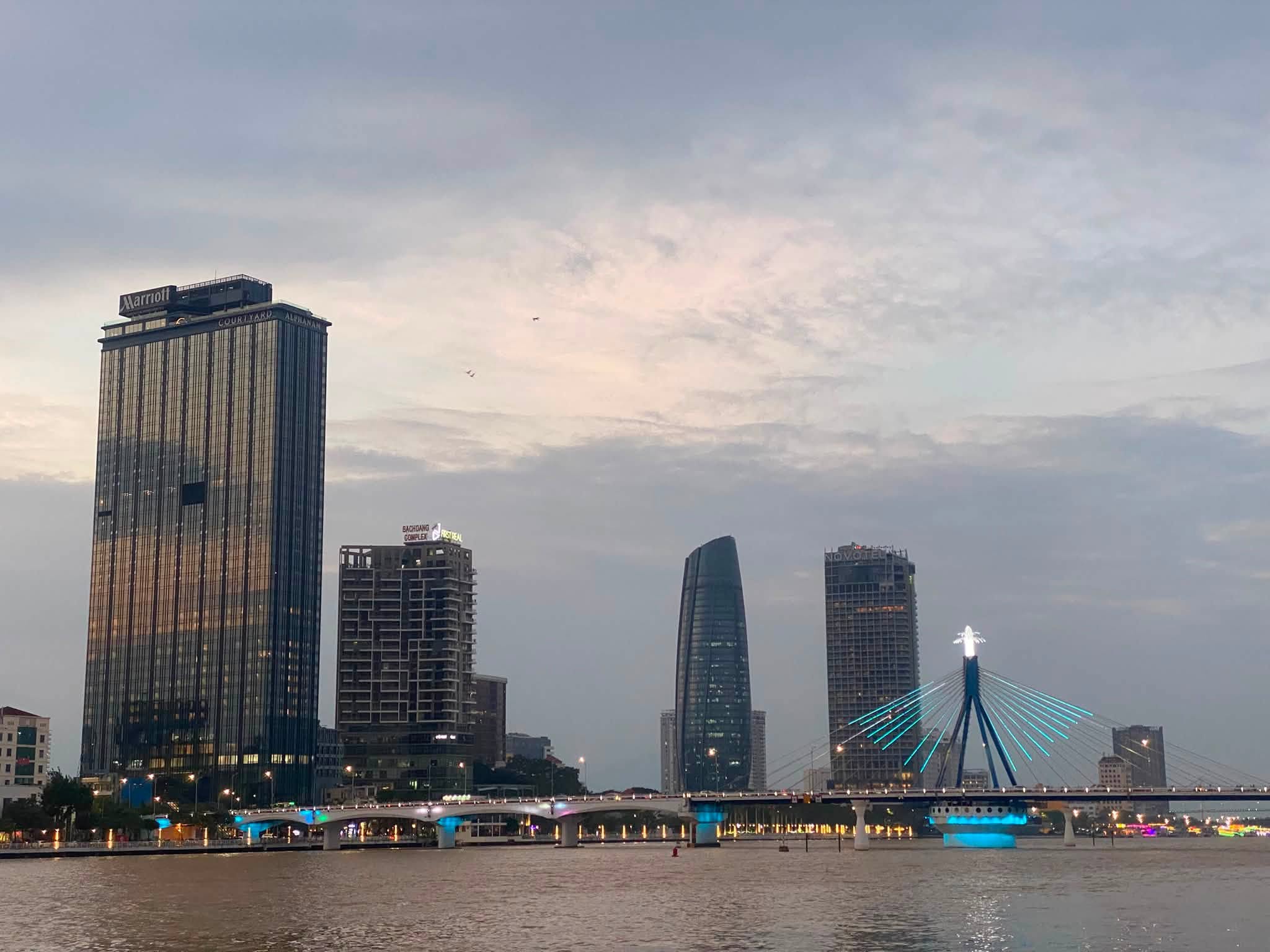
Length: 456.46 m
Structure: 13 spans, with two central spans capable of rotating
Construction started: September 2, 1998
Opened to traffic: March 29, 2000
Location: Connecting Le Duan Street in Hai Chau with Pham Van Dong Street in Son Tra
If Dragon Bridge represents the modern face of Da Nang, Han River Bridge carries a different kind of significance. It is the first swing bridge in Vietnam designed and constructed by Vietnamese engineers, and it became a landmark project that reflected the collective effort of the city and its residents during Da Nang’s early period of rapid development.
The bridge is not the largest or most imposing bridge in Vietnam, but its distinctive rotating mechanism and the story behind its construction have made Han River Bridge one of the most recognizable symbols of the city.
From River Ferries to a Bridge Connecting Two Banks
Before Han River Bridge was built, crossing the Han River was a familiar part of everyday life in Da Nang.
For decades, residents depended on small ferries to travel between the two banks, later supplemented by small motorized ferries. During the rainy season, high water levels, strong currents and powerful winds made crossing the river particularly difficult and sometimes unsafe.
What made the situation especially striking was its location right in the heart of the city. One side was the central urban area of Da Nang, while the other was the Ha Than area, where many residents still lived in difficult conditions.
A folk verse preserved in the memories of many Da Nang residents reflects the contrasting views from the two sides of the river:
Standing on this side of the Han River,
Looking across to Ha Than, the water green as a leaf.
Standing over there in Ha Than,
Looking toward Han, the city streets stretch proudly ahead.
Beyond the river itself, Ha Than was once home to many working-class communities. Makeshift houses stood on slender wooden posts above the water, with small fishing boats moored underneath. Residents made a living through carrying goods, street trading, farming vegetables and fishing along the river.
The contrast between the two banks was striking. One side was a brightly lit urban centre, while the other was lined with modest stilt houses and dim oil lamps.
The arrival of Han River Bridge gradually brought an end to this long-standing separation.
A Bridge Built Through a Collective Effort
Construction of Han River Bridge began on September 2, 1998, and the bridge was inaugurated and opened to traffic on March 29, 2000, coinciding with the 25th anniversary of the liberation of Da Nang.
The project was developed under the spirit of “the State and the people working together.” According to the provided source, contributions from local residents accounted for approximately 30% of the construction cost, reflecting the community’s strong involvement in a project considered vital to the city’s future.
The bridge was designed and constructed by Vietnamese engineers and workers. Its rapid construction became a notable achievement in Da Nang’s infrastructure development at the end of the 20th century.
Han River Bridge is 456.46 metres long and consists of 13 spans. Its two central spans can rotate along the direction of the river, creating enough clearance for large vessels and boats with tall masts to pass through and reach ports farther inland.
This rotating mechanism would become the defining feature of the bridge.
Vietnam’s First Swing Bridge
The most distinctive feature of Han River Bridge is its rotating central section.
When the bridge operates, the two central spans separate from the normal road alignment and rotate lengthwise along the river. This creates a navigation corridor for vessels to pass through. Once the vessels have cleared the bridge, the structure rotates back into its original position, allowing road traffic to resume.
This mechanism makes Han River Bridge an unusual piece of transport infrastructure. It serves both road traffic and river navigation while transforming the bridge itself into a moving structure.
For generations of Da Nang residents, the sight of the bridge slowly rotating over the river at night has become a distinctive part of the city’s identity. Han River Bridge is therefore more than a transportation project. It is part of the city’s urban memory and cultural landscape.
A Bridge That Transformed Eastern Da Nang
Han River Bridge connects the end of Le Duan Street in Hai Chau with the beginning of Pham Van Dong Street in Son Tra.
From there, the road continues toward My Khe Beach and the coastal road network, linking the eastern and southern parts of Da Nang.
The bridge brought a major transformation to the eastern bank of the Han River. Travel between the two sides became faster and more convenient, creating new opportunities for commerce, services, real estate and tourism.
According to the provided source, the years following the bridge’s opening saw significant urban changes. Residential areas were reorganized, roads were upgraded and expanded, while houses, hotels, schools, offices and other services appeared throughout the eastern side of the city.
Da Nang’s urban footprint consequently expanded rapidly toward the east and south.
Han River Bridge was therefore not simply a new transport route. It became one of the infrastructure projects that helped transform Da Nang from a city divided by a river into a modern coastal city increasingly oriented toward the sea.
A Cultural Landmark on the Han River
Han River Bridge has a different visual character from Dragon Bridge. It does not rely on a giant sculptural figure or spectacular lighting shows. Instead, its appeal comes from its elegant structure and its position within the river landscape.
The bridge’s tall supporting structures rise above the water, standing prominently against the sky, with Son Tra Mountain forming a dramatic backdrop.
The riverside roads of Bach Dang on the western bank and Tran Hung Dao on the eastern bank further frame the bridge and enhance its visual presence.
Over the years, Han River Bridge has inspired numerous poems, literary works and photographs. Its image has become part of the memories of local residents as well as visitors who have experienced Da Nang from the riverfront.
Watching Han River Bridge Rotate
According to the provided information, Han River Bridge currently operates its scheduled tourist rotation on Saturday and Sunday evenings, from 11:00 PM to midnight.
Approximately 15 minutes before the rotation, authorities temporarily block both ends of the bridge to ensure safety and prepare for the operation.
When the rotation begins, the central section turns approximately 90 degrees along the direction of the river, creating one of Da Nang’s most distinctive nighttime spectacles. After vessels have passed through, the bridge returns to its normal position.
During the temporary closure, vehicles traveling between the two sides of the river can use alternative routes such as Dragon Bridge or Thuan Phuoc Bridge.
Best Places to Watch the Bridge
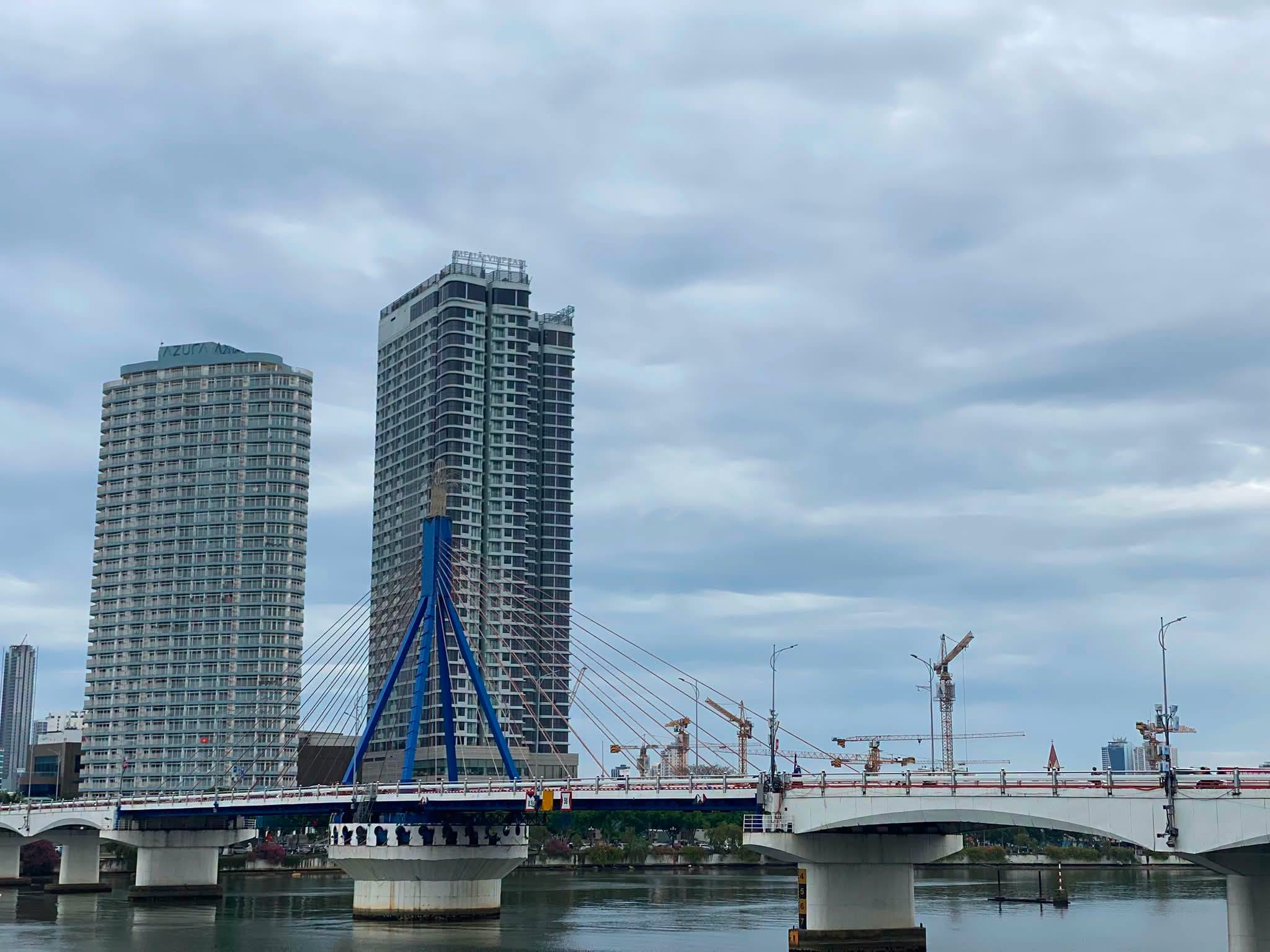
Bach Dang Street: The western bank offers convenient views of the bridge, particularly around the bridge approach and riverside cafés or elevated spaces.
Tran Hung Dao Street: The eastern bank provides a more open perspective across the river, making it a good place to watch the central spans rotate.
Han River cruises: A river cruise offers a different perspective, allowing visitors to watch the bridge separate and rotate directly from the water.
Han River Bridge, a Milestone in Da Nang’s Modern History
More than a century after Da Nang began developing as a modern urban centre, Han River Bridge marked an important turning point in the city’s history.
The journey from small river ferries to a modern bridge capable of rotating over the water reflects part of Da Nang’s transformation.
Today, alongside Dragon Bridge, Tran Thi Ly Bridge, Thuan Phuoc Bridge and the city’s newer crossings, Han River Bridge continues to hold a special place. It represents an era when Da Nang was rapidly developing, with the participation of both local residents and the government, while helping open the eastern side of the city to a new future.
For visitors, watching the bridge slowly rotate across the river at night is more than an engineering spectacle. It is part of the story of Da Nang, the city beside the Han River, and its journey toward the sea.