The Mạng Ma Ritual, also known as the Health-Praying Ritual, is an important traditional ritual in the spiritual life of the Xinh Mun Da people in Chiềng On Commune, Yên Châu District, Sơn La Province. The ritual is performed to pray for health and peace for shamans, while also wishing for good health among villagers, favorable weather, abundant crops, and healthy livestock and poultry.
A Ritual for the Health and Well-Being of Shamans
According to the beliefs of the Xinh Mun Da people, each shaman usually has a more experienced shaman who serves as a spiritual mentor. When beginning their practice, a shaman must perform a ritual to receive this spiritual mentor. This ceremony is known as Mạng Ma.
Afterward, approximately every 5 to 10 years, the shaman performs the Mạng Ma Ritual again to pray for personal health and peace, as well as for the well-being of people in the village. Prayers also seek favorable weather, good harvests, and the healthy reproduction of livestock and poultry without epidemics.
Xinh Mun shamans may be either women, known as Êm dua bi mạ, or men, known as Ải dua bi mạ. There are two ways of becoming a shaman. Some are believed to be chosen by spirits after experiencing a period of illness or exhaustion and subsequently gaining knowledge of prayers and healing practices. Others learn the profession through years of training. Regardless of how they enter the profession, both newly initiated and experienced shamans perform the annual ritual honoring the spiritual ancestors of their profession, known as Ksaisatip. Pasted markdown
The Mạng Ma Ritual is generally held at the beginning of the year, when ban and mạ flowers are blooming and bitter bamboo shoots begin to appear. It lasts for approximately two to three days and is held on an auspicious date. Participants include two shamans, one serving as the mentor and the other as the mentored shaman or a shaman suffering from illness, together with members of the maternal family, descendants, relatives, and villagers. Pasted markdown
Preparing for the Ritual
The first day is devoted to preparing offerings and ritual objects. Relatives and villagers work together to make ceremonial objects from wood, bamboo, and colored thread.
These objects include representations of agricultural tools such as knives, hoes, shovels, rakes, axes, harrows, and plows, as well as umbrellas, cicadas, staffs, bamboo tubes, boats, oars, flowers, fish, birds, and beehives.
The ritual objects are generally made in pairs. If it is the shaman’s first Mạng Ma Ritual, one pair of each object is prepared. With each subsequent ritual, another pair is added. Other preparations include brocade cloths, cotton scarves, drums, gongs, cymbals, and other musical instruments used during the ceremony. Pasted markdown
The second day is the main ceremonial day. When the shaman arrives, the family and villagers slaughter the sacrificial animals, erect the ritual pole, and arrange the offerings. Relatives bring sticky rice, alcohol, or money to support the host family.
The host prepares two principal offering trays. One belongs to the shaman conducting the ritual, while the other belongs to the host, who is the shaman receiving the health ritual. The two trays are arranged similarly and include cloth, scarves, rice, betel and areca, chicken eggs, silver coins, silver bracelets, candles, belts, and the clothing of the shaman receiving the ritual. Pasted markdown
The Ritual Pole and Ceremonial Space
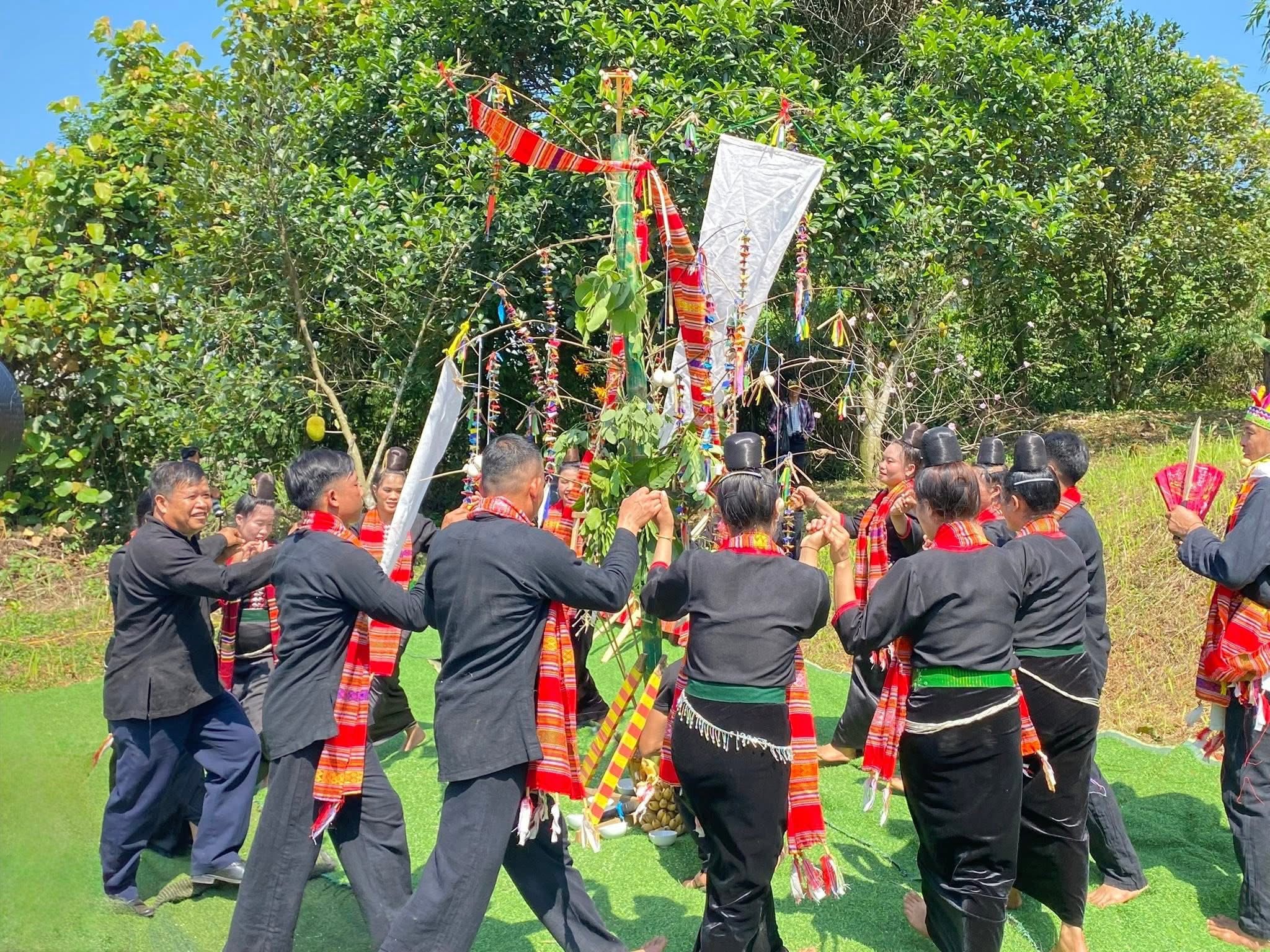
The ritual pole, known locally as cọc đắng, is an important element of the Mạng Ma ceremonial space. Made from bamboo approximately 4 to 4.5 meters long, it extends from the floor to the roof of the house and is erected in front of the shaman’s ancestral altar and near the entrance.
The pole is decorated with wild vegetables, woven bamboo panels in fishbone patterns, ban and mạ flowers, and rice flowers split from bamboo strips. Bamboo swallows are suspended from the top of the pole toward the floor. Near its base are cymbals, a small gong, a buffalo horn used for drinking fermented rice wine, wooden staffs, and bitter bamboo shoots. Two jars of fermented rice wine are also placed near the base of the pole.
Members of the maternal family prepare another offering tray containing piles of unhusked rice, milled rice, and money. It is placed near the roof in the shaman’s ritual area, expressing wishes for good harvests and abundant rice.
A separate ceremonial corner contains small wooden models of traditional stilt houses. One is presented by the paternal family and the other by the maternal family of the person receiving the ritual. They symbolize an invitation for the spirits to dwell in these houses and protect the family and descendants in their work and livelihood. Pasted markdown
Ceremonies and Xòe Dancing
The two shamans conduct a series of rituals to invite the spirits to attend the ceremony, ask them to protect the host, invite them to partake in the offerings, and express gratitude to the maternal family. Prayers seek health, longevity, children, a prosperous household, abundant crops, and healthy livestock and poultry.
After the prayers, the shamans invite the spirits to join the xòe dance. The shamans wear flower garlands and use scarves, belts, fans, and various ritual objects. Drums, gongs, cymbals, and other instruments create a lively atmosphere.
The two shamans move around the ritual pole in a counterclockwise circle while participants follow the rhythm of the xòe dance. They then visit the pig and chicken pens and perform rituals asking the spirits to protect the animals from disease and help them grow and reproduce.
During the xòe dance, women carry umbrellas, canopies, flowers, and cicada figures, performing movements associated with offering flowers and holding canopies. Men use plows, harrows, knives, and shovels to imitate farming activities such as plowing, harrowing, and clearing fields. These movements recreate aspects of everyday agricultural life among the Xinh Mun community.
In the evening, food is prepared and placed on offering trays. The shaman performs rituals inviting spirits and ancestors to share the meal and asking for the recovery of the sick person. The community then continues dancing, eating, and taking part in the festivities until midnight.
The Third Day and the Conclusion of the Ritual
On the third day, the host family prepares a pig weighing approximately 20 kilograms as a gift for the maternal family and uses meat from the previous day’s offerings to prepare lunch.
The shamans guide participants in xòe dancing and traditional performances. Additional props include a banana blossom and a small banana plant with its top and roots removed. Before the performances begin, an offering tray is placed outside the drying platform near the entrance. It is intended to prevent evil spirits from entering and disturbing the ceremony.
After the candles are lit, the shaman closes the door. Those inside are not allowed to leave, while people outside may not enter.
In addition to the xòe dance, participants perform activities representing boat rowing, martial arts, and collecting a beehive. The final ceremonies invite the ancestors to reside in the house and bid farewell to the spirits, marking the conclusion of the Mạng Ma Ritual.
Cultural Significance of the Mạng Ma Ritual
The Mạng Ma Ritual is a ceremony for praying for health, protection, and peace for shamans, while expressing the community’s wishes for good health, favorable weather, abundant harvests, healthy livestock, and freedom from disease.
Its dances, performances, and ritual objects recreate many aspects of agricultural life and production among the Xinh Mun people. Through the ceremony, important traditional cultural values are preserved, including food culture, folk performance, dance, and decorative arts.
The ritual also reflects the rich spiritual life of the Xinh Mun Da community, including its understanding of human life, the world, and ethnic origins. In this way, Mạng Ma contributes to preserving and transmitting the cultural identity of the Xinh Mun people.
Recognizing its cultural value, the Mạng Ma Ritual (Health-Praying Ritual) of the Xinh Mun Da people was included in the National Intangible Cultural Heritage List under Decision No. 2727/QĐ-BVHTTDL dated September 30, 2020.
Quick Information
| Item | Information |
|---|---|
| Name | Mạng Ma Ritual (Health-Praying Ritual) of the Xinh Mun Da People |
| Ethnic group | Xinh Mun Da |
| Location | Chiềng On Commune, Yên Châu District, Sơn La Province, Vietnam |
| Time | Usually held at the beginning of the year, lasting 2-3 days |
| Main participants | Shamans, family members, relatives, and villagers |
| Main purposes | Praying for health, peace, good harvests, and healthy livestock |
| Cultural activities | Ritual ceremonies, xòe dancing, traditional performances, music, and ritual objects |
| Cultural values | Spiritual beliefs, folk performance, dance, decorative arts, and community traditions |
| Heritage status | National Intangible Cultural Heritage |
| Recognition | Decision No. 2727/QĐ-BVHTTDL, September 30, 2020 |
Location: Chiềng On Commune, Yên Châu District, Sơn La Province, Vietnam.