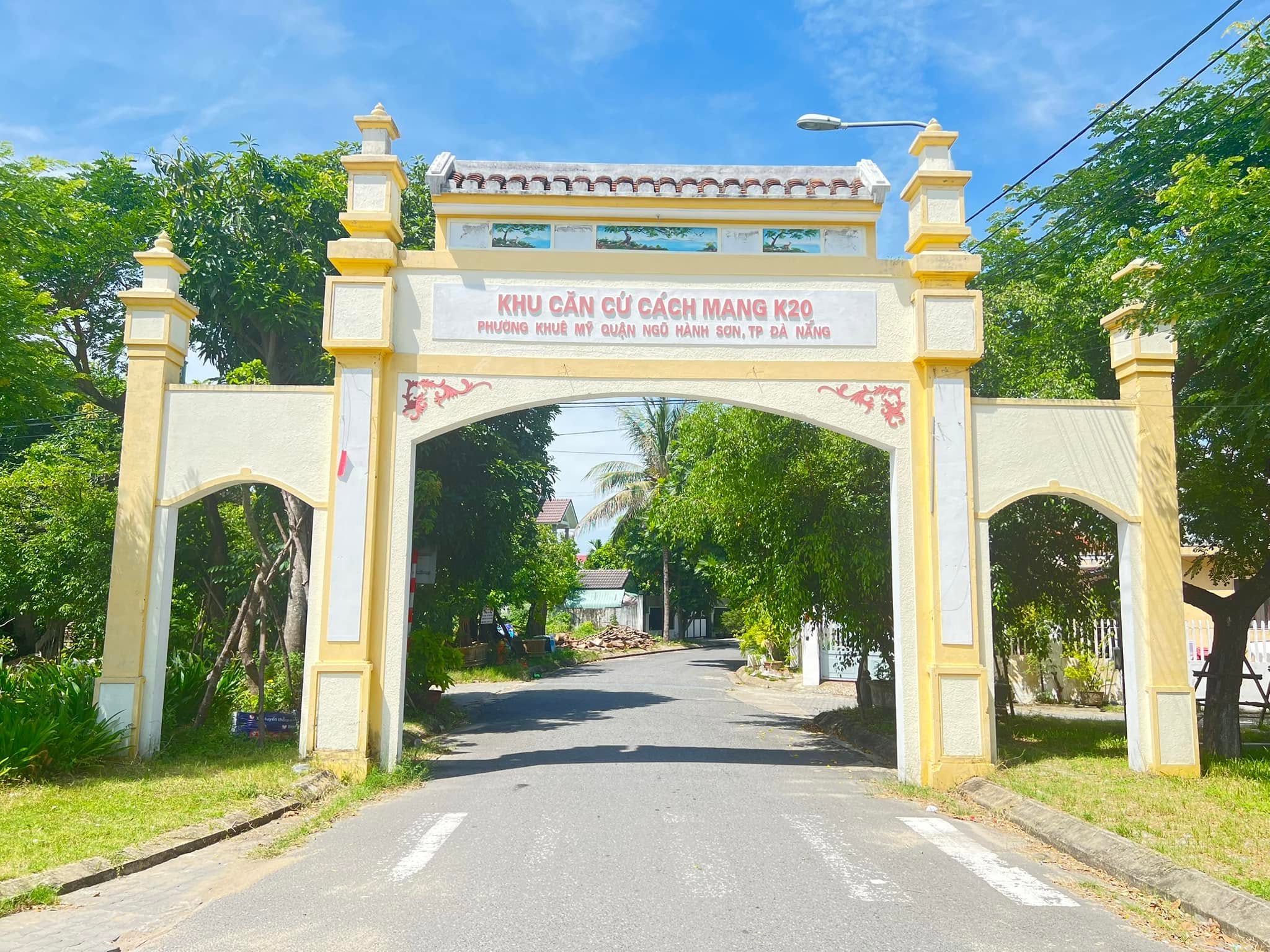
Located in Ngu Hanh Son Ward, Da Nang, Vietnam, the K20 Revolutionary Base is a significant historical site associated with the resistance movements of local communities during Vietnam’s wars against French colonial rule and American military intervention. Operating within territory controlled by opposing forces, K20 became a strategic underground revolutionary stronghold, providing shelter for resistance leaders, protecting revolutionary personnel, and supporting the organization of activities within the urban area.
What makes K20 particularly remarkable is not only its extensive network of secret underground shelters, defensive structures, and communication routes, but also the courage, solidarity, and determination of the people of Da Man, My Thi, and Ba Da.
Ordinary family homes, ancestral worship houses, and village pathways once provided protection for revolutionary officials and fighters. Today, these places remain valuable historical witnesses to a period of hardship, sacrifice, and resistance.
On October 17, 2023, the K20 Revolutionary Base was awarded the title Hero of the People’s Armed Forces, recognizing its contributions and achievements during Vietnam’s struggle for national liberation.
Where Is the K20 Revolutionary Base?
The K20 Revolutionary Base is located in the Da Man, My Thi, and Ba Da areas of Ngu Hanh Son Ward, Da Nang.
During the resistance period, this was a strategically important area southeast of the city, situated between rivers and the sea.
Its location provided connections between revolutionary activities in Da Nang and neighboring areas of Quang Nam.
The name K20 originated as a communication codename assigned by the District III Party Committee during the war against American military intervention.
The codename referred to the Da Man revolutionary base, where organizations associated with the District III Party Committee and the Da Nang City Party Committee were stationed and directed resistance activities.
According to historical accounts, the base covered approximately 3 square kilometers and had a population of more than 3,000 residents.
Despite being surrounded by military posts and checkpoints established by opposing forces, K20 maintained underground revolutionary operations and became an important center for organizing resistance, protecting personnel, and developing local support networks.
Today, the former revolutionary base has developed into an urban residential area.
Nevertheless, surviving underground shelters, ancestral worship houses, historical locations, and the traditional exhibition house continue to preserve memories of the area’s wartime past.
These sites give K20 a distinctive place within Da Nang’s historical and cultural heritage.
From Patriotic Villages to a Revolutionary Stronghold
Da Man, My Thi, and Ba Da are communities with long histories of settlement and development.
Over generations, local residents maintained traditions of solidarity, patriotism, and resistance to foreign domination.
Following the August Revolution of 1945, local revolutionary activities continued under the leadership of the Communist Party, including the Dang Tuyen Party Cell, according to the supplied historical materials.
During this period, residents began constructing concealed shelters, trenches, and defensive positions to protect revolutionary officials and fighters.
From early 1948, several families in the K20 area established secret defensive structures within their homes and properties.
As the conflict intensified, the construction of underground shelters expanded throughout Da Man, My Thi, and Ba Da.
Many residents accepted considerable personal risks to protect revolutionary personnel.
Historical accounts mention individuals such as Nguyen Phung, Ho Ngo, and Ho Cuong, who demonstrated determination and commitment to supporting the resistance under extremely difficult conditions.
Following the end of the war against French colonial rule, the local population continued to participate in the subsequent conflict.
The underground shelter network was expanded, and hiding places became more carefully organized to protect revolutionary personnel operating within areas controlled by opposing forces.
Under the direction of the Da Nang City Party Committee, the District III Party Committee decided to develop Da Man, My Thi, and Ba Da into an underground revolutionary stronghold.
Da Man occupied the most important position within this network.
From that point onward, the codename K20 became closely associated with a strategically significant revolutionary area in Da Nang.
A Strategic Stronghold Within Opposing-Controlled Territory
K20 occupied a strategic position at the southeastern approach to Da Nang, between the river system and the coast.
During the resistance periods, this location held considerable military importance.
Opposing forces established military posts and checkpoints to control the area, prevent revolutionary units from entering the city, and protect defensive positions around Da Nang.
After 1965, when American military forces increased their presence in South Vietnam, the network of military installations and checkpoints expanded further, forming a defensive perimeter around the city.
K20 was located within this heavily controlled environment.
For revolutionary organizations, however, the area offered a different strategic advantage.
It provided a place to establish and develop resistance forces within opposing-controlled territory while maintaining connections with revolutionary networks in neighboring parts of Quang Nam.
From the base, personnel could organize activities, receive instructions, transport documents and weapons, and prepare for operations within Da Nang.
Its location also helped connect underground urban resistance networks with revolutionary forces operating outside the city.
The fact that K20 functioned within a heavily monitored area made it an unusual revolutionary stronghold.
Its continued operation depended not only on concealed shelters and carefully planned communication systems but also on the support, resourcefulness, and courage of local residents.
The Remarkable Underground Shelter Network of K20
One of K20’s most distinctive historical features is its extensive network of secret underground shelters constructed within residential neighborhoods.
Unlike revolutionary bases located deep in forests or mountainous regions, K20 operated among family homes, village pathways, and everyday community buildings.
This environment required residents to develop creative methods of concealment, communication, and protection.
From approximately 1965, as the war intensified, the underground shelter system expanded considerably.
According to historical materials, the area once contained more than 150 concealed underground defensive structures.
Secret Shelters Beneath Homes and Community Buildings
Underground shelters were constructed in various locations, including beneath bamboo hedges, beside fences separating family properties, inside kitchens, and near ancestral altars.
Some were built within ancestral worship houses, where the layout and structure of the buildings provided suitable conditions for concealment.
Historical accounts identify several locations associated with these shelters, including the Nguyen Clan Ancestral House in Da Man and the Tran Viet Clan Ancestral House in Ba Da.
By selecting discreet locations and incorporating concealment methods into ordinary household environments, residents made the shelters difficult to discover during inspections and military searches.
These structures reflected the practical knowledge and creativity of local communities operating under constant surveillance.
Interconnected Underground Shelters
Another distinctive feature of the K20 shelter system was its flexibility and interconnected organization.
In some locations, families constructed secondary shelters and connecting passages, creating networks that could accommodate several people and provide alternative escape routes.
These arrangements allowed revolutionary personnel to change hiding places, reduce the risk of discovery, and improve their chances of escaping during military operations.
Several surviving underground shelters are associated with locations such as the Huynh Phien family worship house, Ba Nhieu’s ancestral house, the Huynh Clan Ancestral House, and the home of Huynh Trung.
According to the supplied materials, these four locations were recognized as historical relics within the K20 National Historical Site.
Today, the surviving shelters provide valuable physical evidence of the ingenuity and determination of the local population.
They also help visitors understand the difficult conditions under which revolutionary personnel operated within territory controlled by opposing forces.
Civilian Solidarity and the Quiet Contributions of Local Residents
If the underground shelter network provided physical protection for revolutionary personnel, the support of local residents formed the foundation that allowed K20 to survive and operate during the most difficult years of the conflict.
In Da Man, numerous families participated in underground support activities.
Women, mothers, and other residents provided food, accommodation, and assistance while also undertaking important responsibilities such as carrying messages, transporting documents, delivering instructions, guiding personnel, and helping revolutionary officials pass through controlled areas.
Although many of these activities resembled ordinary daily tasks, they were essential to maintaining the underground network.
A small mistake could place entire families and revolutionary personnel in danger.
Local residents also developed inventive methods of transporting weapons and supplies.
According to historical accounts, some fishing boats operating on nearby rivers were modified with concealed double-bottom compartments that could be used to transport equipment, weapons, and ammunition.
The combination of family-based support networks, couriers, underground shelters, and concealed transportation methods created an unusual system of resistance within the urban environment.
These activities demonstrate the important role played by civilians in protecting revolutionary personnel and sustaining resistance operations.
The history of K20 is therefore not simply a story of military activity.
It is also a story of community cooperation, personal sacrifice, and the determination of ordinary families who helped maintain a revolutionary presence under dangerous circumstances.
K20 During the Most Intense Years of the War
After the 1968 Tet Offensive
Following the Tet Offensive of 1968, opposing forces intensified efforts to identify and dismantle underground revolutionary networks in the K20 area.
Many key officials and Party members were killed, captured, or imprisoned.
Some revolutionary personnel were forced to relocate outside the area for security reasons.
Despite these losses, revolutionary activities at K20 were not completely eliminated.
According to the supplied historical materials, under the direction of the District III Party Committee Standing Committee, local Party cells had been reorganized and strengthened by the end of 1968.
The restoration of these organizations under difficult conditions reflected the resilience of the local revolutionary movement and the continuing relationship between its leadership and the civilian population.
Preparing for the Final Stage of the War
From the middle of 1974, the military situation in Quang Nam and Da Nang underwent significant changes.
Following instructions from the District III Party Committee, the K20 Party Cell expanded its local guerrilla force into two platoons in preparation for the final stage of the conflict.
Years of organizing underground shelters, maintaining communication networks, protecting personnel, and building local support had created the conditions for K20 to continue playing an important role during this period.
The base’s continued operation reflected the cumulative efforts of local residents and revolutionary organizations over many years.
March 29, 1975: K20 and the Liberation of Da Nang
On the morning of March 29, 1975, according to the supplied historical accounts, revolutionary forces at K20 launched an uprising.
Local residents, Party members, officials, and guerrilla fighters advanced in several groups toward Nuoc Man Airfield.
Historical materials report that some soldiers serving under the South Vietnamese government had surrendered the previous night.
The advancing forces entered the airfield without encountering significant resistance, while the remaining soldiers reportedly laid down their weapons.
By approximately 9:00 a.m., the flag of the National Liberation Front of South Vietnam was flying over Nuoc Man Airfield.
This event marked an important local victory during the liberation of Da Nang.
After years of operating within opposing-controlled territory, the K20 revolutionary base had helped preserve personnel, maintain resistance organizations, and prepare local forces for the final stage of the conflict.
The events of March 29, 1975, therefore hold particular significance in the historical memory of the K20 community.
K20 Traditional House and Historical Landmarks
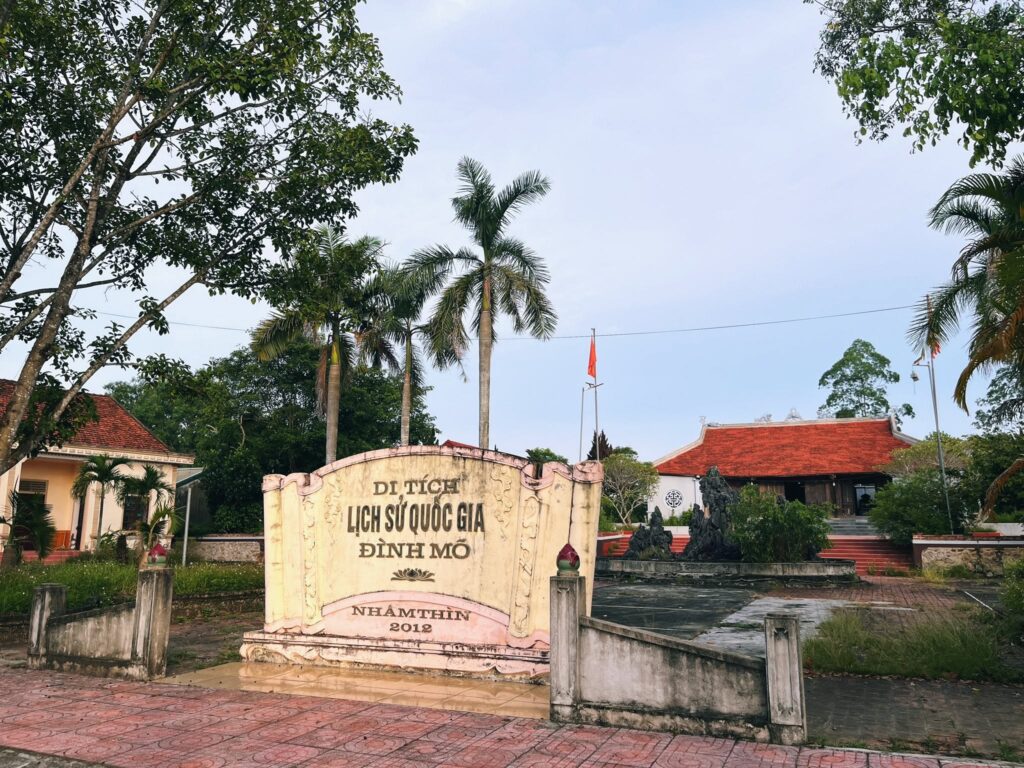
Today, the K20 Revolutionary Historical Site serves as a destination for heritage visits, historical research, and educational activities.
The traditional exhibition house preserves artifacts and materials associated with the resistance activities of local communities.
Alongside the exhibition space, surviving underground shelters, trenches, ancestral worship houses, and other historical locations are included in the interpretation of the site.
Each location is connected to stories about revolutionary officials, fighters, and civilians who helped protect the base during the war.
These historical landmarks provide insight into how an underground revolutionary stronghold could operate within an inhabited urban area.
They also highlight the contributions of individual families and neighborhoods to the broader resistance movement.
For students, researchers, and visitors interested in Vietnamese history, K20 offers an opportunity to learn about the experiences of local communities during the conflict.
The surviving shelters and buildings help make these historical accounts more tangible by connecting them to the physical spaces where events took place.
Visitors can gain a deeper understanding of the courage, solidarity, and sacrifices associated with the site’s history.
Hero of the People’s Armed Forces Recognition
The historical contributions of the K20 Revolutionary Base were formally recognized with the title Hero of the People’s Armed Forces.
On October 17, 2023, Vietnamese President Vo Van Thuong signed Decision No. 1209/QD-CTN, awarding this title to the K20 Revolutionary Base, historically associated with District III of Da Nang.
The honor recognized the contributions and achievements of the base and local communities during Vietnam’s struggle for national liberation.
It also reinforced the importance of preserving the historical site and communicating its significance to future generations.
Following Vietnam’s reunification, the communities of Da Man, My Thi, and Ba Da gradually developed, with improvements in economic, cultural, and social life.
Although the surrounding area has undergone extensive urban development, K20 continues to occupy an important place in local historical memory.
Its preserved landmarks recall a period when civilian solidarity, determination, and sacrifice played essential roles in sustaining revolutionary activities.
Historical Significance and Educational Value
K20 is a distinctive example of an underground revolutionary stronghold operating within territory controlled by opposing forces.
Unlike bases that relied primarily on remote forests or mountainous terrain, K20 survived through a combination of concealed underground shelters, communication networks, armed resistance activities, and the support of local residents.
The site illustrates several important aspects of wartime organization, including the establishment of underground networks, protection of personnel, transportation of weapons, maintenance of communication, and preparation for the final stage of the conflict.
Its greatest historical significance, however, extends beyond the surviving physical structures.
The history of K20 is closely connected to the experiences of ordinary people.
Families offered their homes as secret shelters. Women and local residents carried messages and provided essential supplies. Fishermen developed concealed transportation methods, while revolutionary officials and fighters continued their activities despite the constant risk of discovery.
These stories demonstrate how community participation shaped the operation of the base.
Today, preserving K20 is important for the study of Da Nang’s history, the education of younger generations, and the remembrance of those who contributed to the struggle for national independence.
Through its historical artifacts, underground shelters, memorial spaces, and community stories, K20 continues to connect the city’s modern urban landscape with its wartime past.
The K20 Revolutionary Base is more than a collection of wartime shelters and historical buildings. It represents the resilience, resourcefulness, and solidarity of a community that maintained underground resistance activities under extremely difficult conditions. As a historical and educational destination, K20 preserves an important chapter of Da Nang’s modern history and honors the contributions of the people of Da Man, My Thi, and Ba Da.
Quick Information
| Item | Details |
|---|---|
| Heritage name | K20 Revolutionary Base |
| Vietnamese name | Khu căn cứ cách mạng K20 |
| Historical name | Da Man Revolutionary Base |
| Location | Ngu Hanh Son Ward, Da Nang, Vietnam |
| Associated communities | Da Man, My Thi, and Ba Da |
| Origin of the name K20 | Communication codename assigned by the District III Party Committee during the war |
| Historical area | Approximately 3 km² |
| Historical population | More than 3,000 residents |
| Early underground shelter construction | From approximately 1948 |
| Expansion of shelter network | Particularly from 1965 onward |
| Number of underground structures | More than 150, according to historical accounts |
| Notable historical features | Secret underground shelters, defensive structures, trenches, ancestral worship houses, and exhibition facilities |
| Important historical event | Local uprising and advance toward Nuoc Man Airfield on March 29, 1975 |
| National honor | Hero of the People’s Armed Forces |
| Award date | October 17, 2023 |
| Award decision | No. 1209/QD-CTN |
| Outstanding values | Revolutionary history, underground resistance, civilian solidarity, and historical education |