

Nestled in the mountains and forests of Tra My, in Tra Tan Commune, Da Nang City, the Nuoc Oa Revolutionary Base is an important historical site associated with the leadership and revolutionary activities of the Region 5 Party Committee and the Military Region 5 Command during the Vietnam War.
Recognized as a National Historical and Cultural Monument in August 1992, the site preserves memories of wartime resistance and serves as an important destination for historical education, cultural heritage preservation, and remembrance.
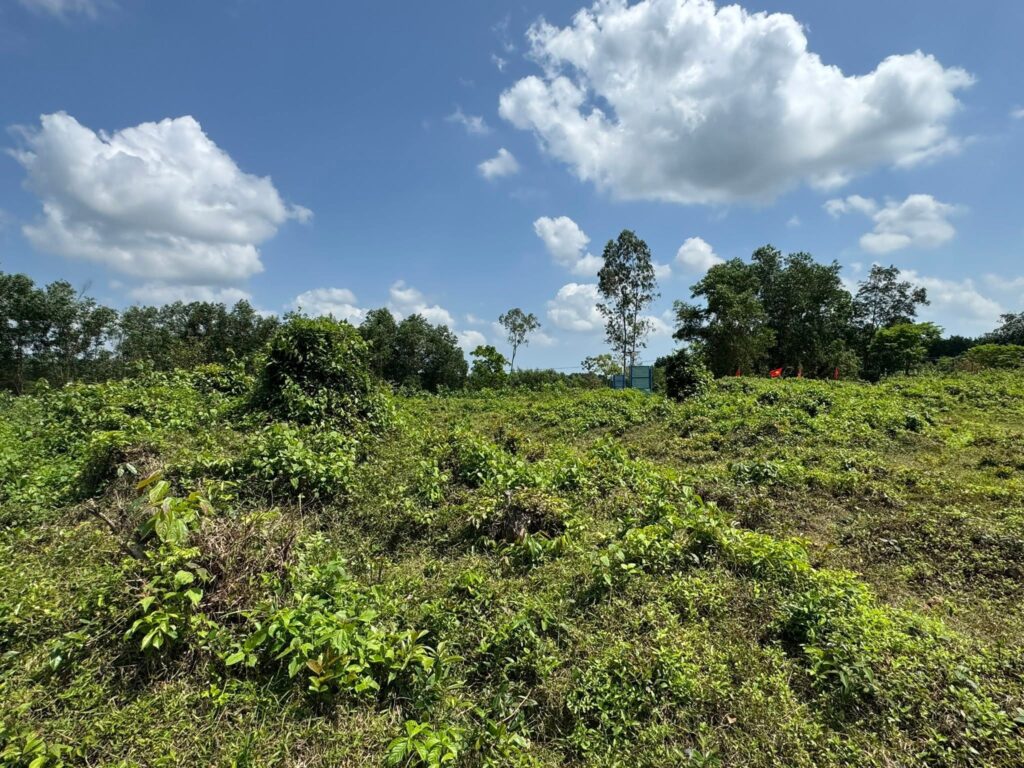
Surrounded by lush forests, the former working houses, underground shelters, fruit gardens, and memorial sites offer visitors a glimpse into the challenging conditions experienced by soldiers and revolutionary officials. These surviving features tell stories of resilience, solidarity, and sacrifice during one of Vietnam’s most difficult historical periods.
History of the Nuoc Oa Revolutionary Base
During the Vietnam War, Nuoc Oa was selected as a strategic base for important revolutionary organizations operating in Region 5, which covered much of central Vietnam.
Its mountainous terrain, dense forests, rivers, and streams provided favorable conditions for establishing command facilities, maintaining communications, organizing military activities, and protecting revolutionary personnel.
From this base, political and military leaders coordinated operations, organized forces, maintained communication networks, and directed activities across the region.
Nuoc Oa was also a place where officials and soldiers cultivated crops, raised fish, and developed small-scale agricultural activities to improve living conditions and maintain essential food supplies during wartime.
In August 1992, the Vietnamese government recognized the Nuoc Oa Revolutionary Base as a National Historical and Cultural Monument, acknowledging its importance in the revolutionary history of central Vietnam.
On April 29, 2011, the Prime Minister issued Decision No. 648/QD-TTg, approving a master conservation plan for the Central Vietnam Revolutionary Historical Site, also known as the Nuoc Oa Revolutionary Base.
The conservation plan covers approximately 700 hectares and aims to preserve historical remains, restore important revolutionary sites, and promote the area’s educational, cultural, and tourism value.
Military Region 5 Command Headquarters Historical Site
One of the two principal original historical sites within the Nuoc Oa complex is the former Military Region 5 Command Headquarters, covering approximately 9.8 hectares.
The headquarters is located more than one kilometer from the former Region 5 Party Committee site, near the Nuoc Oa River and Tan Stream.
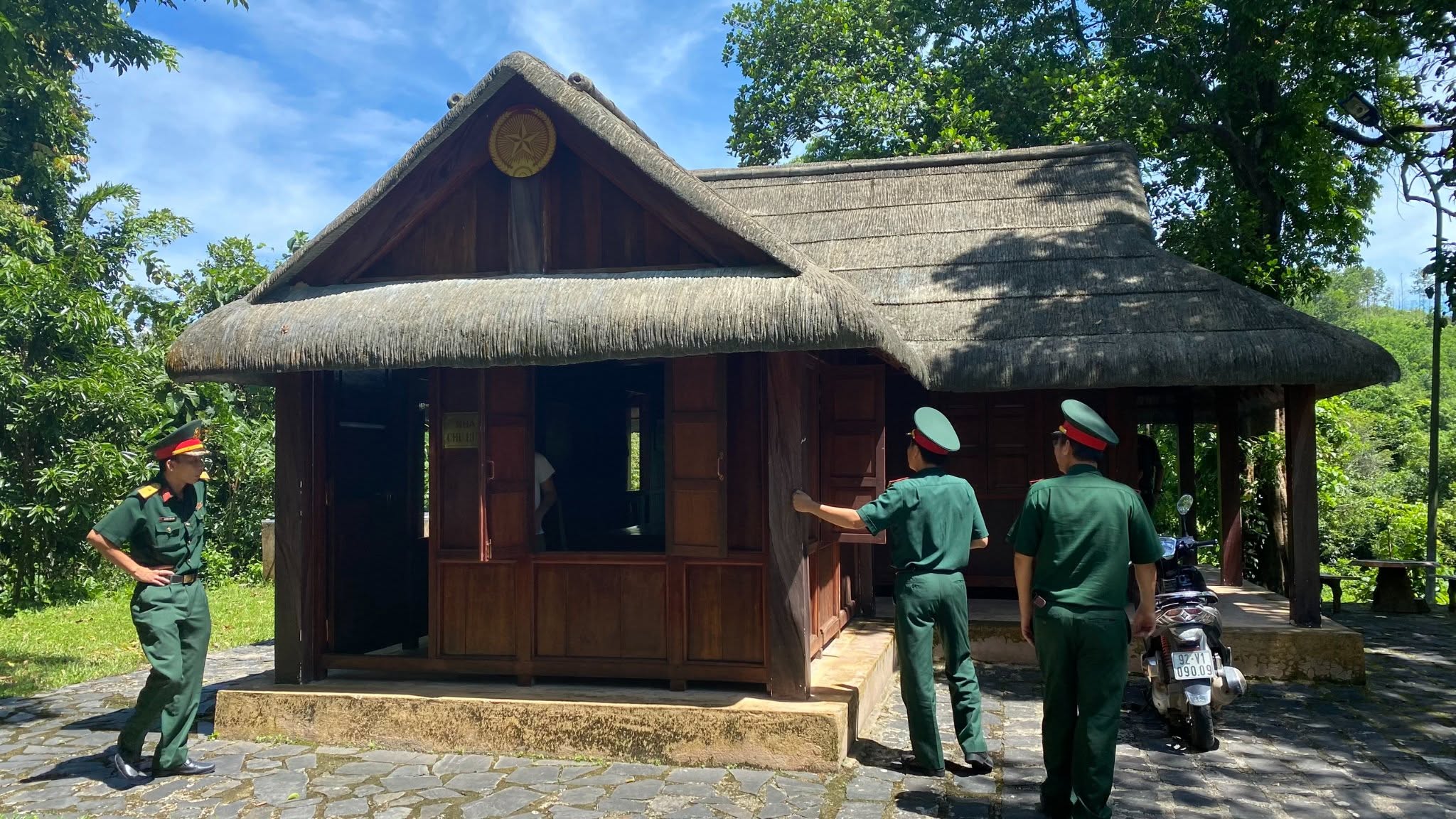
During the war, this area served as a workplace and residential base for senior military commanders and officials of Military Region 5.
The facilities were carefully arranged to suit the mountainous environment, combining working houses, underground shelters, and areas used for daily living.
The main attractions and historical features include:
- Exhibition House: Displays historical documents, photographs, and artifacts related to the Military Region 5 Command and the Region 5 Party Committee during the 1960–1973 period.
- Former Commanders’ Working Houses: Associated with the activities of Commander Chu Huy Man and Deputy Commander Vo Thu.
- Underground Shelters: Constructed inside and around the working areas to protect personnel during military attacks.
- Fish Ponds: Dug by soldiers and officials to raise fish and supplement their food supplies.
- Fruit Gardens: Cultivated during wartime to improve living conditions and demonstrate the self-sufficiency of the revolutionary base.
Among the notable historical artifacts is a wooden table once used by Chu Huy Man and Vo Chi Cong, Secretary of the Region 5 Party Committee, during discussions and meetings about revolutionary activities.
These simple objects provide a tangible connection to the leadership and military planning that took place in the forests of central Vietnam.
Chu Huy Man Orange Garden and Wartime Agriculture
The Chu Huy Man Orange Garden is a distinctive historical feature associated with agricultural production at the Nuoc Oa Revolutionary Base.
During wartime, securing adequate food supplies was essential for personnel stationed at the base for extended periods.
Alongside military operations and administrative responsibilities, officials and soldiers cultivated crops, planted fruit trees, raised fish, and improved their living environment.
The orange garden and surrounding orchards reflect their determination to overcome shortages and maintain a sustainable base despite difficult conditions.
According to historical accounts, the gardens included a variety of fruit trees such as rambutan, lychee, longan, jackfruit, plum, langsat, coconut, and star apple.
Many trees originated from different parts of northern, central, and southern Vietnam and were brought to the base for cultivation.
Over time, the trees grew into a lush green landscape, creating a peaceful environment that contrasts with the site’s wartime history.
Today, these gardens remind visitors that maintaining daily life, caring for the environment, and producing food were important parts of survival and resistance during the war.
Historical Leaders Associated with Nuoc Oa
The Nuoc Oa Revolutionary Base was closely connected with several prominent political and military leaders of central Vietnam.
Among them was Vo Chi Cong, Secretary of the Region 5 Party Committee, who later served as Chairman of the State Council of the Socialist Republic of Vietnam.
Another important figure was Chu Huy Man, Commander of Military Region 5, who later became a General in the Vietnam People’s Army, Vice Chairman of the State Council, and Director of the General Political Department.
Vo Thu, Deputy Commander of Military Region 5, also worked at the base and later became a Lieutenant General and Deputy Chief Inspector of National Defense.
Their former working houses, shelters, meeting spaces, and personal artifacts help visitors understand the conditions under which important political and military decisions were made.
Nuoc Oa was not simply a military headquarters. It was also a center for planning, communication, coordination, and the implementation of revolutionary policies across Region 5.
The surviving historical remains illustrate the base’s important role within the political and military command structure of central Vietnam.
Hero Ho Thanh Lam and the Defense of the Base
The history of Nuoc Oa is also associated with the soldiers and local communities who defended the revolutionary base throughout the war.
One notable figure was Major Ho Thanh Lam, a member of the Cor ethnic community and a recipient of the title Hero of the People’s Armed Forces.
He was born in 1941 in Tra Giap Commune, formerly part of Tra My District.
Ho Thanh Lam began participating in local guerrilla activities in the late 1950s.
In 1963, he joined Company 73 of the Tra My District Military Command in Quang Nam Province.
During the following years, he and his comrades helped establish revolutionary networks, defend local communities, and resist military operations targeting the Nuoc Oa base.
According to his recollections, between November 1966 and April 1975, he served in various positions, progressing from soldier and platoon officer to company officer and eventually commander of Company 73.
During this period, he participated in and commanded numerous engagements.
One particularly memorable battle took place on August 16, 1969, at Lang Dam.
According to his account, his unit established defensive positions to block opposing forces. During the battle, he reportedly shot down two helicopters using infantry weapons, helping prevent the opposing troops from advancing deeper into the revolutionary base.
On April 20, 1974, during the attack on Nuoc Viu Outpost, he used a B40 rocket launcher to strike a defensive bunker before leading his soldiers into the position.
A week later, on April 27, 1974, he commanded Company 73 during an attack on Phuoc Son Outpost, using supporting fire to suppress defensive positions and facilitate the assault.
For his military service, Ho Thanh Lam received numerous decorations, including four Liberation Feat of Arms Orders and several awards recognizing his combat achievements.
In November 1978, he was awarded the title Hero of the People’s Armed Forces.
His experiences form part of the historical memory of Nuoc Oa, reflecting the contributions of those who directly participated in defending the base.
From Wartime Soldier to Community Development Advocate
After the war ended in 1975, Ho Thanh Lam was appointed Deputy Commander of the Tra My District Military Command.
When the former Quang Nam–Da Nang Province began developing new economic settlement areas in Tra My, he was assigned to participate in community mobilization efforts.
He visited communities in the former Dien Ban area, explained the resettlement program, and learned about the circumstances of individual families.
Through these efforts, many households moved to Tra My to reclaim land, establish farms, and build a new settlement known as Minh Dong Village.
Today, Minh Dong is a residential area within Tra My Commune, Da Nang City.
Recalling the early postwar years, Ho Thanh Lam described the difficulties faced by families arriving in the mountainous region.
During the war, soldiers sometimes survived on wild forest plants when food supplies were scarce.
For newly settled families, daily life initially depended on cassava, vegetables, and forest produce. Water was collected from the Nuoc Oa River, Tan Stream, and Nuoc Y Stream.
Through the combined efforts of local authorities and residents, the area gradually developed into a stable community.
In 1989, Ho Thanh Lam retired with the rank of Major and continued living in Tra My.
His life illustrates the transition from wartime defense to postwar reconstruction and community development.
Eleven Historical and Memorial Sites Within the Nuoc Oa Complex
According to the historical materials, the Nuoc Oa Revolutionary Base complex includes 11 restored, renovated, or newly established historical and memorial sites.
Each location is associated with an organization, military unit, or administrative body that operated in Region 5 during the war.
The eleven sites are:
- Region 5 Party Committee Historical Site
- Military Region 5 Command Headquarters Historical Site
- Region 5 Security Historical Site
- Memorial Site of the Region 5 Party Committee’s Organization Department
- Nuoc Oa Youth Traditional Activities Center
- Memorial Stele of the Central Vietnam and Central Highlands Farmers’ Association
- Historical Stele of the Region 5 Party Committee’s Inspection Commission
- Historical Stele of the National Liberation Front of South Vietnam in South Central Vietnam
- Memorial to Fallen Medical Personnel of Region 5
- Memorial Site of the Region 5 Finance and Trade Department
- Historical Stele of the Region 5 Party School
Together, these locations form a connected historical landscape that allows visitors to explore different aspects of revolutionary activity.
They represent political leadership, military command, security operations, personnel organization, community mobilization, logistics, medical services, and education.
The restoration and preservation of these sites help maintain the memory of the officials, soldiers, and support personnel who lived and worked at Nuoc Oa.
They also provide opportunities for historical research, educational visits, and cultural tourism.
Exploring the Nuoc Oa Revolutionary Base in Tra My
Beyond its historical importance, the Nuoc Oa Revolutionary Base is surrounded by the natural landscapes of Tra My.
Dense forests, rivers, streams, and mountain scenery create an appealing setting for visitors interested in combining historical exploration with nature-based travel.
According to local information, guesthouses and homestay-style accommodations have gradually appeared along roads in the surrounding area.
These facilities offer opportunities to connect visits to the historical complex with other attractions, including the Song Tranh Hydropower area, waterfalls, streams, and the mountainous landscapes of Tra My.
Visitors can explore the historical sites, learn about the former revolutionary headquarters, observe wartime living facilities, and enjoy the surrounding natural environment.
Combining historical sightseeing with nearby natural attractions can provide a broader understanding of the region’s history, culture, and mountain communities.
Because the area has mountainous terrain and weather conditions can change, travelers should check road conditions before departure, wear suitable footwear, and follow guidance provided at the historical sites.
Historical Significance and Educational Value
The Nuoc Oa Revolutionary Base is an important destination for learning about the revolutionary history of central Vietnam.
Its historical buildings, artifacts, gardens, memorials, and personal stories help visitors understand the difficult conditions experienced by those who lived, worked, and fought in the region.
The site commemorates not only the leadership of the Region 5 Party Committee and Military Region 5 Command but also the contributions of local communities that provided shelter, supplies, and protection to revolutionary personnel.
Through historical visits, research, and educational activities, Nuoc Oa encourages reflection on the value of peace, solidarity, and the importance of preserving cultural heritage.
The monument also offers opportunities to develop cultural, historical, and nature-based tourism in the Tra My region.
Quick Facts About the Nuoc Oa Revolutionary Base
| Information | Details |
|---|---|
| Site name | Nuoc Oa Revolutionary Base |
| Vietnamese name | Khu căn cứ Nước Oa |
| Location | Tra Tan Commune, Da Nang City, Vietnam |
| Historical period | Vietnam War |
| National monument recognition | August 1992 |
| Conservation master plan | Decision No. 648/QD-TTg, April 29, 2011 |
| Total planned conservation area | 700 hectares |
| Principal historical sites | Region 5 Party Committee Site and Military Region 5 Command Headquarters |
| Command headquarters area | Approximately 9.8 hectares |
| Number of historical and memorial sites | 11 |
| Notable historical figures | Vo Chi Cong, Chu Huy Man, Vo Thu, Ho Thanh Lam |
| Main significance | Wartime history, revolutionary heritage, historical education, and cultural tourism |