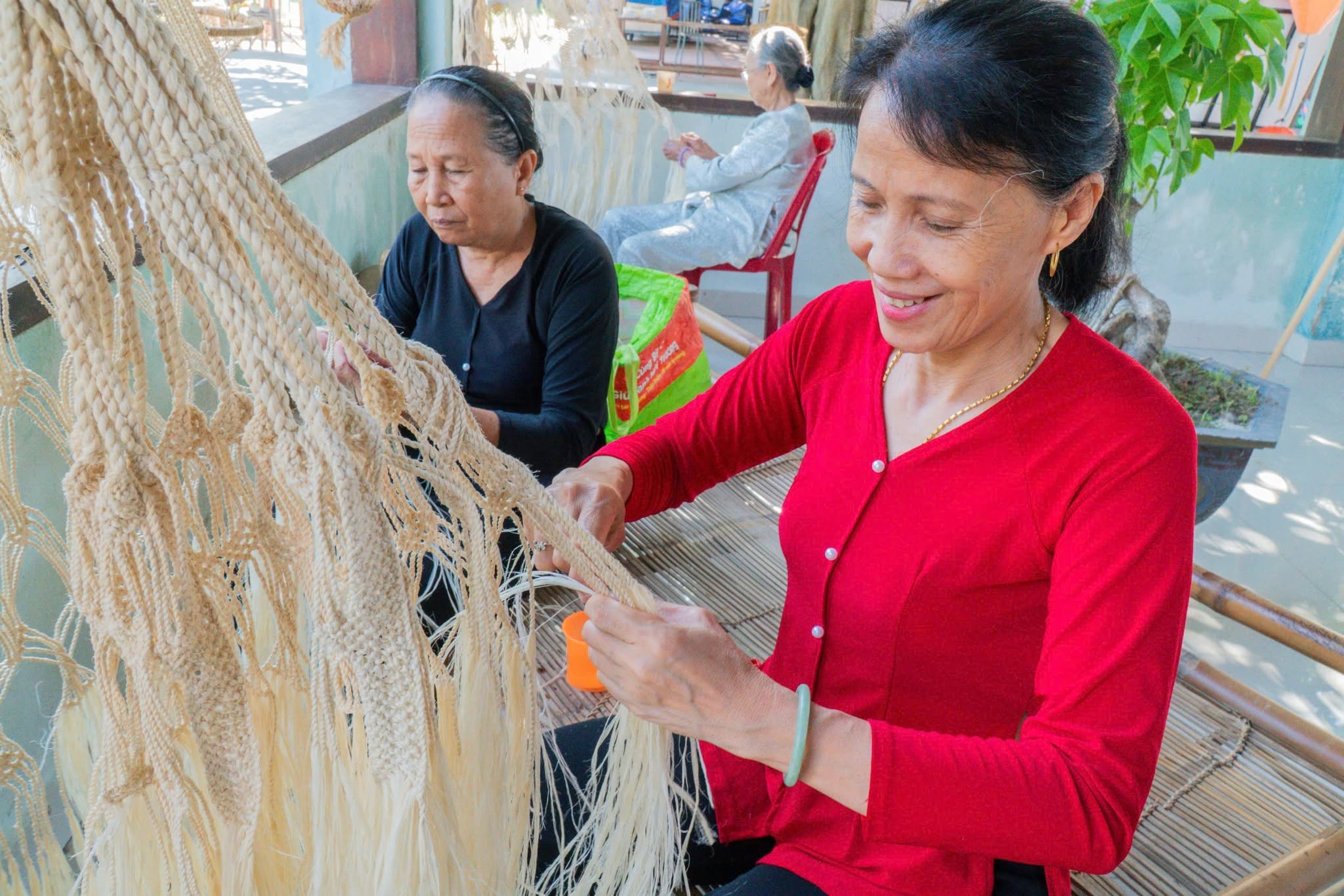
The traditional craft of weaving hammocks from the fibers of the red ngô đồng tree is a distinctive part of the cultural heritage of Cu Lao Cham, an island group off the coast of central Vietnam. Using fibers extracted from the tree’s inner bark, local artisans create durable hammocks entirely by hand through a meticulous process passed down through generations.
Closely connected to the island’s natural environment and the daily lives of its residents, this craft reflects the ingenuity of coastal communities in making use of local forest resources. Despite the time and skill required, hammock weaving continues to be preserved by a small number of artisans, carrying forward a valuable tradition of Cu Lao Cham.
The Origins of Hammock Weaving in Cu Lao Cham
The exact origins of ngô đồng hammock weaving have not been clearly documented. According to local elders, however, the craft has existed since the time of their grandparents and was passed down within families over generations.
The hammock became a familiar object in island households before being sold to fishermen and communities on the mainland. Its durability and practical value made it useful in everyday life, while the traditional weaving techniques gradually became part of the local cultural identity.
According to the source material, writer Nguyễn Tuân also used Võng ngô đồng as the title of a tùy bút included in Nguyễn Tuân toàn tập, in writings from the 1940–1945 period. This literary reference offers another connection between the craft and the cultural memory associated with the ngô đồng tree.
The Red Ngô Đồng Tree and Its Fibers
The main raw material is the red ngô đồng tree, identified in the source as Firmiana colorata R. Br. Locally, the tree is also known as bo rừng or trôm màu. The usable fiber extracted from its inner bark is called manh đồng.
In earlier times, these fibers were used to tie objects together and bundle bird nests prepared for export. Over time, local residents developed techniques for turning the material into hammocks, creating a product that was both practical and closely associated with island life.
The quality of the fibers depends on careful selection and processing. Artisans must know how to choose suitable trees, extract the inner bark, remove unwanted layers, and prepare the fibers until they become pale, smooth, and glossy enough for weaving.
The Entirely Handmade Weaving Process
Making a ngô đồng hammock requires patience and considerable manual skill. According to local experience, completing one hammock may take approximately one and a half to two months.
The process begins with selecting a straight tree, generally with a trunk no thicker than a wrist. Artisans cut the tree and beat its bark before soaking it in stream water to soften the outer layer. They then separate the inner fibers, wash them thoroughly, and dry them in the sun.
Once the fibers become white and glossy, they are split into smaller strands and twisted into usable cords. The subsequent stages include tước manh đồng, tề đầu võng, ra con chàng, ra chân, đan thân võng, làm bìa, and kết võng. These traditional terms describe the successive tasks involved in preparing the fibers, forming the hammock structure, weaving its body, finishing its edges, and completing the product.
During weaving, artisans must join fibers carefully and maintain consistent tension. If the strands are unevenly joined or the weave becomes too loose or twisted, the hammock may lose its shape and strength. Experience is therefore essential at every stage, from preparing the raw material to finishing the final product.
Three Traditional Types of Ngô Đồng Hammocks
Based on the number of strands used in each mesh, local artisans distinguish three traditional types: võng ba, made with three strands per mesh; võng tư, made with four; and võng sáu, made with six.
Each type reflects a particular weaving method and requires the artisan to maintain consistent spacing and tension throughout the hammock. When properly cared for, a ngô đồng hammock can reportedly last between 15 and 20 years, demonstrating the durability of the material and the effectiveness of traditional craftsmanship.
The finished hammock is more than a household object. Its structure embodies accumulated knowledge of plant fibers, weaving techniques, and the practical needs of island life.
The Craft in the Daily Life of Island Communities
Traditionally, women learned hammock weaving from their mothers and grandmothers. The skill was transmitted through observation and hands-on practice within the household, allowing younger generations to learn the techniques while participating in everyday family life.
Initially, hammocks were mainly made for household use. Later, island residents began selling them to fishermen and buyers on the mainland, creating an additional source of income for local families.
Cu Lao Cham was recognized by UNESCO as a World Biosphere Reserve in 2009, according to the source material. The growth of tourism has since provided greater opportunities to introduce the island’s natural environment and traditional crafts to visitors.
Ngô đồng hammock weaving offers a distinctive cultural story because it brings together the island’s forest resources, the skills of local women, and a product shaped by generations of experience.
Preservation Challenges and Opportunities Through Tourism
The craft faces challenges as fewer people continue to practice it. The source records only seven active practitioners, living in Bãi Làng and Bãi Ông. Their average age is over 50, with four artisans older than 85. The longest-serving practitioner has 54 years of experience, while the shortest-serving has approximately seven to eight years.
These figures highlight the importance of passing on the craft while experienced artisans can still teach its techniques directly. The work requires time, patience, and specialized knowledge, making transmission through hands-on instruction particularly important.
Tourism may offer opportunities to introduce visitors to the ngô đồng tree, the preparation of its fibers, and the intricate process of weaving a hammock. Demonstrations and cultural experiences can help visitors understand the work behind each product while creating additional opportunities for local artisans.
Preserving the craft therefore involves more than maintaining a traditional product. It also means safeguarding local knowledge of forest resources, family-based learning, and the cultural relationship between the people of Cu Lao Cham and their island environment.
National Intangible Cultural Heritage
The craft of ngô đồng hammock weaving in Cu Lao Cham was included in Vietnam’s National List of Intangible Cultural Heritage in 2024 under Decision No. 381/QĐ-BVHTTDL dated February 21, 2024.
This recognition acknowledges the cultural significance of a traditional craft sustained through practical knowledge, manual skill, and community transmission. It also provides a foundation for further efforts to preserve the techniques and encourage younger generations to learn from experienced artisans.
As the number of practitioners declines, documenting the process and creating opportunities for transmission become increasingly important. Each hammock carries not only the fibers of the ngô đồng tree but also the accumulated experience and cultural memory of the island community.
Basic Information
| Item | Details |
|---|---|
| Traditional craft | Ngô đồng hammock weaving |
| Location | Cu Lao Cham, Tan Hiep Commune, Da Nang City, according to the source material |
| Main material | Fibers from the inner bark of the red ngô đồng tree |
| Production method | Entirely handmade |
| Production time | Approximately 1.5–2 months per hammock |
| Traditional varieties | Three-strand, four-strand, and six-strand hammocks |
| Reported lifespan | Approximately 15–20 years with proper care |
| Cultural recognition | National Intangible Cultural Heritage, 2024 |
| Recognition decision | Decision No. 381/QĐ-BVHTTDL, February 21, 2024 |
| Cultural values | Traditional craftsmanship, indigenous knowledge, island livelihoods, and intergenerational transmission |