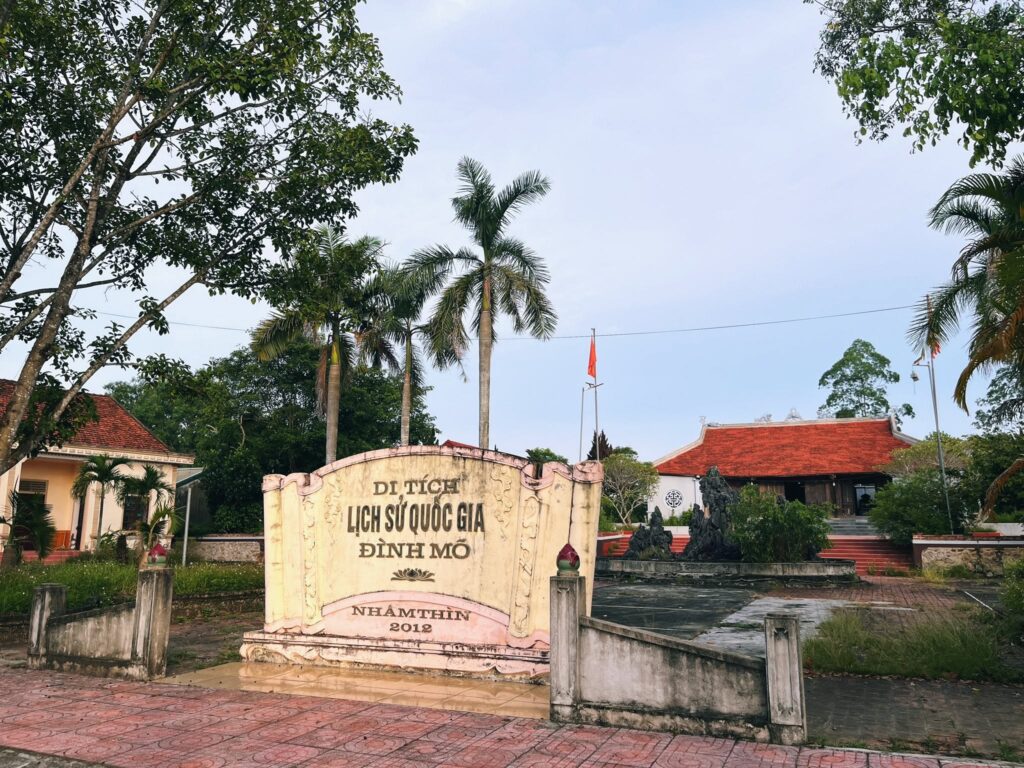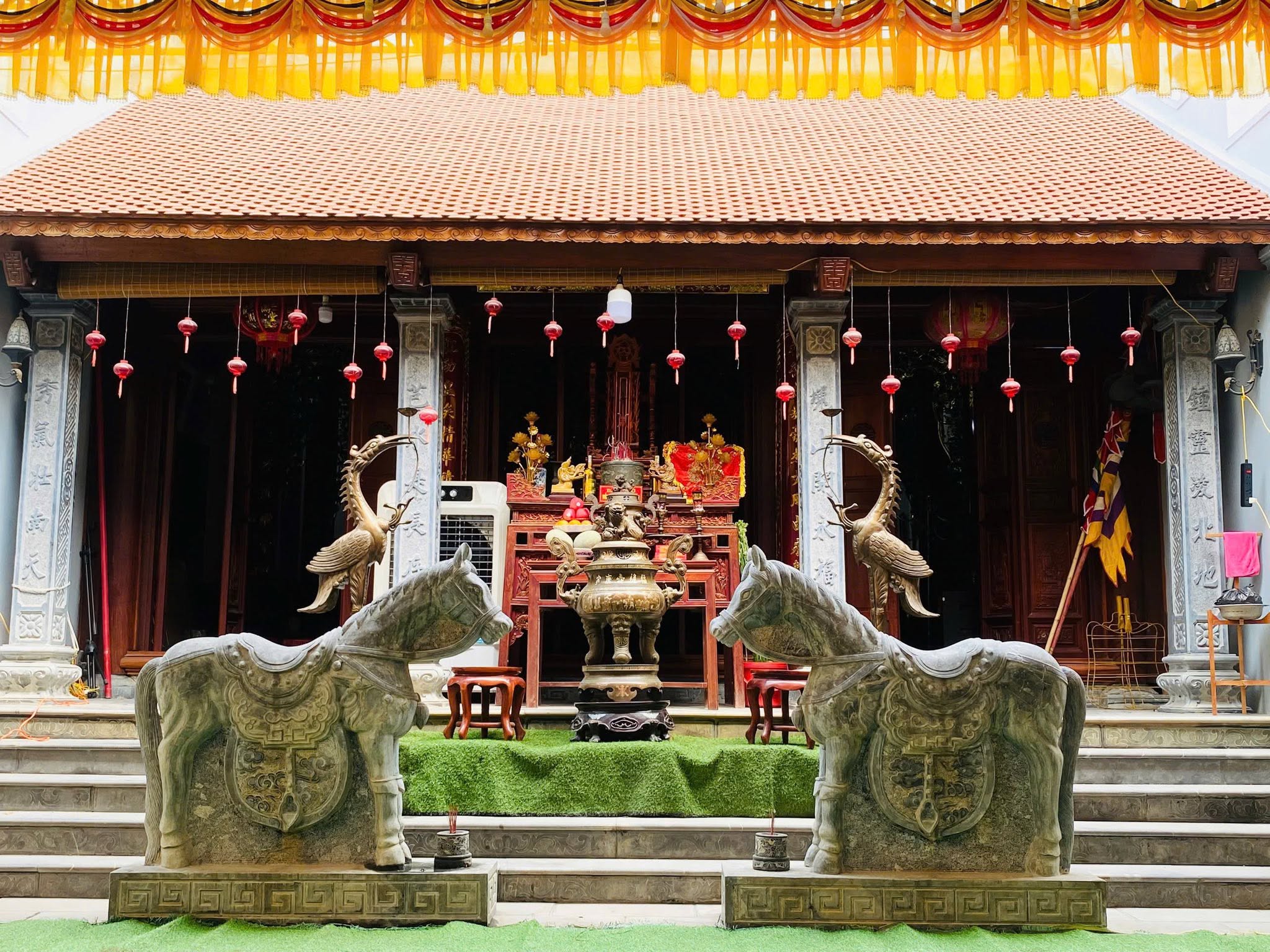
Pham Dinh Family Ancestral Hall, located in Vinh Lai Village, Lien Minh Commune, Ninh Binh Province, is a historical and cultural site associated with the scholarly traditions, educational achievements, and contributions of the Pham Dinh family to Vietnamese history. The site is particularly significant for its connection to Dr. Pham Dinh Kinh, also known as Lai Quan Cong (Duke of Lai), a high-ranking official during the Later Le Restoration period whose life and career are recorded in historical chronicles and family documents.
On February 12, 2026, Vietnam’s Ministry of Culture, Sports and Tourism officially designated the Pham Dinh Family Ancestral Hall as a National Historical Relic under Decision No. 323/QD-BVHTTDL. This recognition marks an important milestone in preserving the site’s historical and cultural significance while honoring the traditions of the Pham Dinh lineage and the Vinh Lai community.
More than a place of ancestral worship, the hall represents the Vietnamese tradition of gratitude toward previous generations, respect for education, and recognition of the responsibilities of scholars and public officials in traditional society.
History of the Pham Dinh Family Ancestral Hall and Vinh Lai’s Scholarly Traditions
The Pham Dinh Family Ancestral Hall is situated in Vinh Lai Village, Lien Minh Commune, Ninh Binh Province, in an area formerly belonging to Vu Ban District, Nam Dinh Province.
Historically, Vinh Lai was part of Ho Son Canton, Thien Ban District, a region with longstanding cultural and educational traditions in northern Vietnam.
In Vietnamese society, a family ancestral hall, known as a tu duong, serves as a place to honor ancestors, preserve genealogical records, and maintain connections between generations.
Such buildings also provide spaces for ancestral commemorations, family gatherings, and the preservation of valuable documents, including genealogies, royal decrees, and historical records.
For the Pham Dinh family of Vinh Lai, the site’s historical importance is closely connected with Pham Dinh Kinh, identified in the family genealogy as a seventh-generation ancestor.
Information about his life and career appears in several historical and genealogical sources, including:
- The Pham Dinh family genealogy and related royal decrees.
- Dai Viet Su Ky Tuc Bien (Supplementary Historical Records of Dai Viet).
- Kham Dinh Viet Su Thong Giam Cuong Muc (Imperially Commissioned Annotated Historical Chronicle of Vietnam).
- Cac Nha Khoa Bang Viet Nam (Vietnamese Imperial Examination Scholars).
- Tan Bien Nam Dinh Tinh Du Chi Luoc (A Revised Geographical and Historical Account of Nam Dinh Province).
- Dia Chi Van Hoa Xa Vinh Hao (Cultural Gazetteer of Vinh Hao Commune).
These sources provide insights into the family’s scholarly heritage and the historical context of Pham Dinh Kinh’s education, official appointments, and public service during the Later Le Restoration period.
According to local historical accounts, Pham Dinh Kinh was remembered as an upright and capable official who held important government positions and made contributions to his homeland.
He was honored through royal decrees issued by successive dynasties and was revered by the people of Vinh Lai as one of the village’s three protective deities, or Phuc Than.
His commemoration reflects not only respect for a distinguished historical figure but also the Vietnamese tradition of honoring scholars, public servants, and individuals remembered for their contributions to the community.
Dr. Pham Dinh Kinh and His Career During the Later Le Restoration Period
Pham Dinh Kinh, also known as Pham Kim Kinh, was born on the 16th day of the first lunar month in the Year of the Rooster, 1669, in Vinh Lai Village, Ho Son Canton, Thien Ban District.
His birthplace is now part of Vinh Lai Village, Lien Minh Commune, Ninh Binh Province.
He came from a prominent family with a tradition of academic achievement and government service.
Growing up in an environment that valued Confucian education, Pham Dinh Kinh pursued the imperial examination system, which was an important means of selecting educated officials in premodern Vietnam.
Passing the Imperial Doctoral Examination in 1710
In 1710, during the reign of Emperor Le Du Tong, Pham Dinh Kinh successfully passed the imperial examination and received the degree of De Tam Giap Dong Tien Si Xuat Than, commonly understood as a third-rank doctoral degree in the Vietnamese imperial examination system.
This qualification was awarded to successful candidates in the highest-level examinations and represented a significant scholarly achievement.
His success brought distinction to his family and the Vinh Lai community while strengthening his prospects for advancement in government service.
According to local accounts, he subsequently received appointments at the royal court, including responsibilities associated with the Ministry of Rites.
More than Three Decades of Government Service
According to materials introducing the historical site, Pham Dinh Kinh served as an official for 33 years, from 1703 to 1736.
During this period, he held various administrative and ministerial positions within the imperial government.
His recorded appointments and honors included:
- Prefect in the Nghia Hung area.
- Right Vice Minister of Personnel (Huu Thi Lang Bo Lai).
- Minister of War (Thuong Thu Bo Binh).
- The noble title Lai Quan Cong, commonly rendered in English as Duke of Lai.
These positions reflect his participation in government administration, from regional responsibilities to senior offices at the royal court.
According to the supplied historical accounts, his career was associated with the reigns of Le Du Tong, Le De Duy Phuong, and Le Thuan Tong.
This period belonged to the Later Le Restoration, when the Le monarchy existed within a political system in which the Trinh lords exercised substantial military and political authority.
Within this historical context, Confucian-educated officials played important roles in public administration, government organization, education, and the implementation of state policies.
Contributions to the Country
Local historical materials credit Pham Dinh Kinh with contributions in several fields, including politics, economics, military affairs, diplomacy, culture, and education.
However, individual achievements and specific events require comparison with original historical records to establish their dates, details, and wider circumstances.
In the collective memory of Vinh Lai, he is honored as a capable and principled official whose service reflected a sense of responsibility toward his homeland and country.
His career represents an important chapter in the Pham Dinh family’s scholarly tradition and offers insight into the role of Confucian intellectuals in Vietnamese history.
Historical, Cultural, and Spiritual Significance of the Ancestral Hall
The Pham Dinh Family Ancestral Hall holds several layers of significance, encompassing family history, scholarly achievement, ancestral worship, and community traditions.
Historical and scholarly significance
The site’s principal historical value lies in its association with Pham Dinh Kinh and the Pham Dinh family’s tradition of education and academic accomplishment.
Genealogical documents and historical records provide information about a scholar-official who participated in the government of Vietnam during the Later Le Restoration.
His academic journey also offers an opportunity to understand the importance of Confucian education and imperial examinations in Vietnamese society.
Ancestral worship and the tradition of gratitude
In Vietnamese culture, an ancestral hall symbolizes continuity between generations and the enduring relationship between family members and their ancestors.
Ancestral worship expresses gratitude toward previous generations while encouraging descendants to preserve family values and traditions.
At the Pham Dinh Family Ancestral Hall, these meanings are closely associated with the remembrance of a distinguished scholar and senior official.
The fact that Pham Dinh Kinh was revered as one of Vinh Lai’s three Phuc Than demonstrates that his historical significance extended beyond his family lineage into the spiritual life of the wider community.
In Vietnamese folk belief, Phuc Than refers to benevolent or protective deities, often historical individuals honored for their virtues, achievements, or contributions to local society.
Historical documentary value
The genealogies, royal decrees, and written records associated with Pham Dinh Kinh provide valuable materials for researching local history.
Family genealogies help trace the development of a lineage and the relationships between successive generations.
Royal decrees are important historical documents for understanding official recognition, honorary titles, and traditional religious practices.
Meanwhile, historical chronicles and studies of imperial examination scholars help researchers compare information about academic qualifications, official appointments, and the broader political context.
Preserving and studying these materials can contribute to a deeper understanding of the history of Thien Ban, Vu Ban, and the former Nam Dinh region.
Educational significance
The ancestral hall also provides a meaningful setting for teaching younger generations about scholarly traditions and respect for ancestors.
Through the life of Pham Dinh Kinh, visitors can learn about Confucian education, imperial examinations, and the role of educated officials in traditional Vietnamese society.
The site also encourages awareness of heritage preservation, including the importance of protecting historical buildings and safeguarding family documents.
National Relic Recognition, Heritage Preservation, and Visitor Information
On February 12, 2026, the Ministry of Culture, Sports and Tourism issued Decision No. 323/QD-BVHTTDL, officially recognizing the Pham Dinh Family Ancestral Hall in Vinh Lai Village, Lien Minh Commune, Ninh Binh Province, as a National Historical Relic.
The designation represents an important step in recognizing and protecting the site’s historical and cultural values.
For the Pham Dinh family and the local community, it also acknowledges the significance of a place of ancestral worship associated with a historical figure who served during the Later Le Restoration period.
Preserving the ancestral hall and historical documents
Conservation efforts should prioritize the protection of the site’s original historical features, worship spaces, and associated documentary heritage.
Any restoration, rehabilitation, or modification should follow applicable cultural heritage regulations and be supported by appropriate historical research.
Alongside architectural preservation, the inventorying, conservation, and digitization of genealogies, royal decrees, and other valuable documents are important measures for safeguarding the site’s heritage.
These materials serve not only the family’s commemorative traditions but also historical research and heritage education.
Introducing the site’s heritage to the wider community
Through historical interpretation, educational activities, and carefully prepared visitor information, the Pham Dinh Family Ancestral Hall has the potential to become a meaningful destination for those interested in the history and culture of Vinh Lai.
For visitors exploring Vietnamese history, the site offers an opportunity to discover the life of a scholar-official during the Later Le Restoration and the scholarly traditions of the northern Red River Delta.
Heritage education, local history visits, and genealogical research activities could help introduce the site’s significance to a wider audience when appropriately organized.
Visitor information and etiquette
The Pham Dinh Family Ancestral Hall is located in Vinh Lai Village, Lien Minh Commune, Ninh Binh Province.
As the building serves an ancestral worship function, visitors should respect its spiritual character and the activities of the family and local community.
Those wishing to visit are advised to contact the site’s representatives or local authorities in advance to confirm access arrangements.
Visitors should dress respectfully, maintain a quiet atmosphere, avoid touching or moving historical objects, and take photographs only where permitted.
Regular opening hours, admission fees, and permanent guided-tour services have not been independently confirmed.
The ancestral hall may also be included in broader cultural itineraries exploring historical sites, religious buildings, and traditional craft villages in the former Nam Dinh region, now part of Ninh Binh Province.
Such connections could help introduce travelers to the distinctive cultural and historical heritage of Vietnam’s Red River Delta.
The Pham Dinh Family Ancestral Hall is more than a place where one family honors its ancestors. It is a historical site preserving the scholarly traditions of Vinh Lai and the legacy of Dr. Pham Dinh Kinh, Duke of Lai. Its recognition as a National Historical Relic in 2026 affirms its cultural and historical importance while emphasizing the responsibility to preserve this heritage for future generations.
Quick Information
| Item | Details |
|---|---|
| Site name | Pham Dinh Family Ancestral Hall |
| Vietnamese name | Từ đường họ Phạm Đình |
| Current location | Vinh Lai Village, Lien Minh Commune, Ninh Binh Province, Vietnam |
| Historical location | Vinh Lai Village, Ho Son Canton, Thien Ban District |
| Former administrative area | Vu Ban District, Nam Dinh Province |
| Site type | Historical and cultural ancestral worship site |
| Heritage designation | National Historical Relic |
| Recognizing authority | Ministry of Culture, Sports and Tourism |
| Recognition decision | No. 323/QD-BVHTTDL |
| Recognition date | February 12, 2026 |
| Associated historical figure | Dr. Pham Dinh Kinh, Duke of Lai |
| Alternative name | Pham Kim Kinh |
| Birth year | 1669 |
| Lunar birth date | 16th day of the first lunar month, Year of the Rooster |
| Birthplace | Vinh Lai Village, Ho Son Canton, Thien Ban District |
| Family lineage | Seventh-generation ancestor of the Pham Dinh family, according to its genealogy |
| Academic qualification | De Tam Giap Dong Tien Si Xuat Than, third-rank doctoral degree |
| Year of doctoral examination success | 1710 |
| Historical period | Later Le Restoration |
| Recorded government positions | Prefect in Nghia Hung, Right Vice Minister of Personnel, Minister of War |
| Noble title | Lai Quan Cong, Duke of Lai |
| Reported years of official service | 1703–1736 |
| Local spiritual significance | Revered as one of Vinh Lai’s three protective deities |
| Principal historical sources | Family genealogies, royal decrees, Dai Viet Su Ky Tuc Bien, Kham Dinh Viet Su Thong Giam Cuong Muc |
| Outstanding heritage values | Scholarly history, family traditions, ancestral worship, and heritage education |
| Visiting arrangements | Contact local authorities or site representatives in advance |