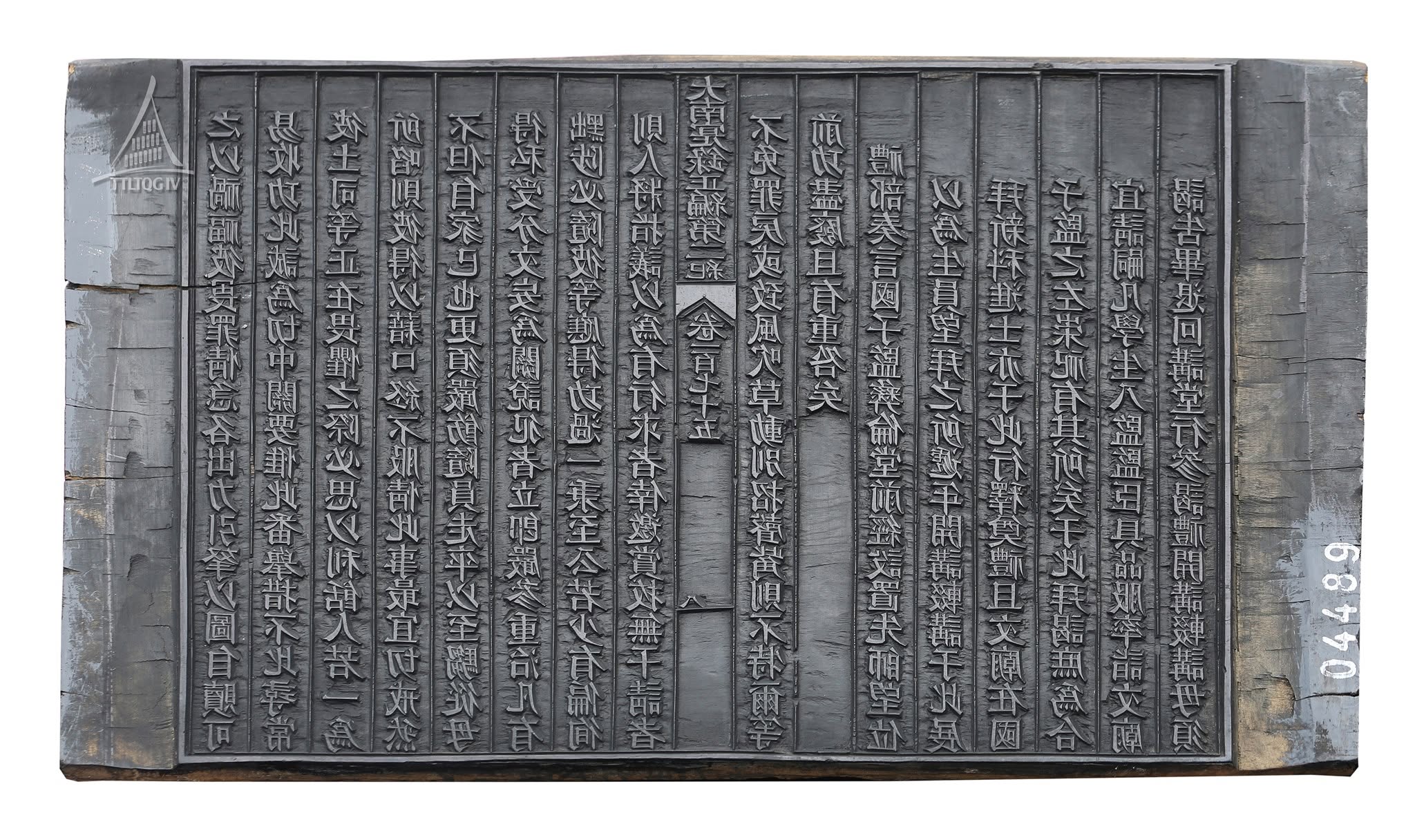
The Woodblocks of the Nguyen Dynasty represent one of Vietnam’s most valuable collections of historical documents, preserving centuries of knowledge, scholarship, and cultural memory through intricately carved wooden printing blocks. On July 31, 2009, UNESCO inscribed the collection on the Memory of the World International Register, making it the first documentary heritage collection from Vietnam to receive recognition at the global level.
Comprising more than 34,000 wooden printing blocks engraved with classical Chinese and Nom characters, the collection was used to print official historical chronicles, classical texts, literary works, and important administrative and scholarly publications during the Nguyen Dynasty.
Its contents cover a remarkable range of subjects, including Vietnamese history, geography, politics, law, military affairs, education, literature, philosophy, religion, and international relations. Together, these documents provide an extensive record of Vietnam’s historical development and the intellectual traditions of its premodern society.
Beyond their historical significance, the woodblocks demonstrate the extraordinary craftsmanship of traditional Vietnamese woodblock printing. Each character was carved in reverse with exceptional precision, allowing inked impressions to produce correctly oriented text on paper. The refined calligraphy, carefully prepared wooden surfaces, and sophisticated engraving techniques make each block a distinctive cultural artifact.
Today, the collection is preserved at the National Archives Center IV in Da Lat, Lam Dong Province, where it serves as an invaluable resource for historical research, cultural preservation, and public education.
The Origins of the Nguyen Dynasty Woodblocks and the Development of Woodblock Printing
Woodblock printing is a traditional printing technique in which characters or images are carved in reverse onto wooden surfaces. Ink is applied to the raised portions of the block, and paper is pressed against the surface to reproduce the text or illustration.
This method had been practiced in Vietnam for centuries before the Nguyen Dynasty, particularly in the production of Buddhist scriptures, educational materials, literary works, and other texts.
Under the Nguyen emperors, however, woodblock printing developed into a highly organized system of official publishing and historical documentation.
Following the establishment of the Nguyen Dynasty in 1802, the imperial court placed considerable importance on compiling historical records, documenting legal institutions, establishing administrative regulations, and preserving the achievements of successive rulers.
The court commissioned numerous historical chronicles, legal compilations, classical texts, and literary publications. These works supported state administration, education, scholarship, and the transmission of political and moral principles.
A particularly important development occurred in 1820, during the reign of Emperor Minh Mang, when the Imperial Historiography Office (Quoc Su Quan) was established in Hue.
This institution became responsible for compiling official histories and other major scholarly works commissioned by the imperial court.
Its activities contributed significantly to the formation of the surviving collection of Nguyen Dynasty woodblocks. Historical manuscripts underwent compilation, revision, proofreading, and official approval before being transferred to skilled craftsmen for engraving.
The collection also includes printing blocks originating from earlier educational and archival institutions.
During Emperor Minh Mang’s reign, the court ordered certain printing blocks containing Confucian classics, historical works, and educational texts to be transferred from the Temple of Literature and Imperial Academy in Hanoi to the Imperial Academy in Hue.
This process brought together materials from different periods and locations, gradually creating an extensive repository of historical and scholarly knowledge.
For major official publications, the preparation of manuscripts followed strict procedures. Important works were submitted for examination and approval by the emperor or authorized officials before engraving began.
Consequently, the woodblocks were more than printing tools. They formed part of an institutional system through which historical knowledge, legal principles, and official interpretations of events were compiled, authorized, reproduced, and preserved.
During the imperial period, access to these materials was carefully controlled. Only designated officials and authorized personnel could handle certain documents and printing blocks.
Such restrictions reflected the importance attached to official historical records and helped establish practices for their preservation.
A Collection of More Than 34,000 Woodblocks and Its Exceptional Historical Value
The collection is commonly described as comprising 34,618 woodblocks, although some inventories and publications have recorded slightly different figures, including 34,555 and 34,619.
These variations reflect differences among historical inventories, documentation periods, and collection descriptions. The internationally recognized collection nevertheless represents one of Vietnam’s most significant surviving bodies of original documentary material.
Its contents are generally classified into nine principal subject areas: history; geography; military affairs; law; literature; religion, philosophy, and intellectual thought; language and writing systems; politics and society; and culture and education.
Historical records constitute one of the most important parts of the collection.
According to published descriptions, this category contains 30 sets of historical works comprising 836 volumes, documenting Vietnamese history from the legendary era of the Hung Kings through successive dynasties and into the Nguyen period.
Major works associated with the collection include Dai Nam Thuc Luc (Veritable Records of Dai Nam), Dai Nam Liet Truyen (Biographical Records of Dai Nam), and other official historical compilations.
These texts document the reigns of rulers, important political figures, administrative developments, military campaigns, diplomatic activities, and major social changes.
The collection also preserves a woodblock engraving of Nam Quoc Son Ha (Mountains and Rivers of the Southern Country), a celebrated poem closely associated with Vietnam’s historical consciousness of sovereignty and independence.
This engraving is particularly valuable for research into the transmission of classical Vietnamese literature, historical textual traditions, and the development of national identity.
Geographical records contain information about territorial divisions, administrative boundaries, rivers, mountains, settlements, transportation routes, and important structures.
Of particular significance are historical references to the Hoang Sa (Paracel) Islands and activities associated with their administration and use.
Several official Nguyen Dynasty chronicles contain accounts relevant to Vietnam’s historical maritime activities and territorial administration.
These documents provide important primary-source evidence for historical research into the country’s islands and maritime territories. Their interpretation is strengthened by comparison with contemporary maps, administrative records, and other historical sources.
Political and social documents describe principles of governance, the organization of imperial institutions, administrative policies, population management, and social conditions.
They offer insight into the functioning of the Vietnamese monarchy and the relationship between the imperial court, officials, and local communities.
Military documents record military organization, defensive measures, campaigns, internal conflicts, and other significant military events.
These materials help researchers examine the development of Vietnam’s military institutions and the ways successive governments responded to political and territorial challenges.
Legal documents preserve imperial regulations, administrative rules, institutional procedures, and legal provisions.
They are important sources for understanding the legal framework of the Nguyen Dynasty, including the responsibilities of officials, administrative structures, judicial procedures, and the principles governing society.
Cultural and educational records provide information about the imperial examination system, educational institutions, successful examination candidates, and scholarly traditions.
They illustrate the central role of Confucian education in imperial Vietnam and the relationship between scholarship, examinations, and recruitment into public service.
Religious and philosophical works include texts associated with Confucian learning, moral philosophy, and traditional intellectual thought.
They help explain the ethical and philosophical ideas that shaped education, governance, and social values.
Literary works preserve poetry and prose composed by emperors, court officials, scholars, and prominent Vietnamese writers.
These writings reveal the intellectual interests, literary aesthetics, and cultural environment of the period, while also contributing to the study of classical Chinese and Nom literature in Vietnam.
Linguistic and writing-related documents provide evidence of historical vocabulary, written expression, textual interpretation, and the use of classical Chinese and Nom characters.
They are particularly valuable for scholars studying the development of Vietnamese literary traditions and historical writing systems.
Beyond these nine principal categories, the collection also contains material relevant to international relations.
References to China, Laos, Cambodia, Thailand, France, and other countries provide insights into diplomacy, regional interactions, cultural exchanges, and the Nguyen court’s understanding of the wider world.
The breadth of the collection makes it an exceptional interdisciplinary resource for historians, linguists, literary scholars, legal historians, geographers, and researchers in cultural studies.
Traditional Woodblock Engraving and the Art of Imperial Printing
The Nguyen Dynasty woodblocks are not only historical documents but also outstanding examples of traditional Vietnamese craftsmanship.
Producing a printing block required a demanding sequence of operations, from selecting and preparing suitable wood to transferring the manuscript, engraving individual characters, and checking the completed surface.
Traditional woodblock production employed several types of fine-grained timber, including wood from persimmon, pear, and jujube trees, as well as other varieties suitable for detailed carving.
The chosen wood needed to be sufficiently soft for precise engraving while remaining durable enough to withstand repeated printing.
A smooth, stable grain was especially important because the craftsmen worked with intricate characters containing numerous small strokes.
After selection, the timber was cut into appropriately sized boards, seasoned or otherwise prepared, and carefully smoothed.
The approved manuscript was then transferred to the wooden surface in a manner that allowed the characters to be carved in reverse.
Using specialized knives and chisels, the engraver removed the surrounding wood, leaving the characters raised above the background.
This was the most technically demanding stage of production.
Classical Chinese and Nom characters frequently contain complex combinations of strokes, some of which are extremely small or visually similar.
An incorrectly carved stroke could alter the meaning of a character, while a damaged section might affect an entire printed passage.
The engraver therefore needed exceptional manual precision, familiarity with written characters, and close attention to the approved manuscript.
The surviving woodblocks demonstrate a remarkable level of technical accomplishment.
Their characters often display clearly differentiated strokes, balanced compositions, consistent spacing, and refined calligraphic forms.
Some blocks also contain borders, decorative elements, or illustrations, showing how engraving combined functional printing requirements with artistic expression.
Once a block had been completed, ink was applied to its raised surface. Paper was then placed against the block and carefully pressed or rubbed to transfer the characters.
This method made it possible to reproduce multiple copies of a text from the same engraved blocks.
In an era before modern printing technologies became widespread in Vietnam, woodblock printing played an important role in disseminating official histories, educational works, classical literature, and administrative knowledge.
Although many paper copies could be printed from a single block, the original wooden plate remained a unique physical artifact.
Its grain, carved characters, corrections, wear patterns, and traces of use preserve information about the production process and the history of the text itself.
From the perspective of technological history, the Nguyen Dynasty woodblocks illustrate the sophistication of Vietnam’s traditional publishing practices and the imperial court’s capacity to organize large-scale scholarly and printing projects.
They also testify to the contribution of generations of artisans whose skills helped transform written manuscripts into durable cultural records.
From the Imperial Capital of Hue to Da Lat: Preservation Through Historical Change
The history of the Nguyen Dynasty woodblocks is closely connected with the political and social transformations Vietnam experienced during the twentieth century.
Originally, much of the collection was produced, assembled, and preserved in Hue, the imperial capital and the location of the Imperial Historiography Office and other important educational and cultural institutions.
Following the end of the monarchy, the documents passed through changes in administrative responsibility and storage arrangements.
Before 1960, the collection was primarily held in Hue.
Beginning in 1960, the woodblocks were transferred to Da Lat through several carefully organized shipments.
Transporting such a large quantity of fragile historical material required substantial logistical effort and attention to the condition of the wooden plates.
Between 1961 and 1975, the collection was kept at an archival facility in Da Lat.
Storage conditions during this period were not always suitable for long-term preservation. Humidity, environmental exposure, and historical circumstances contributed to deterioration affecting some of the woodblocks.
After 1975, the collection came under the administration of Vietnam’s state archival system.
For a period, it was stored at a facility associated with the Redemptorist community in Da Lat.
In 1984, the woodblocks were transferred to the former Tran Le Xuan villa complex, which later became associated with the National Archives Center IV.
Consolidating the collection within a specialized archival institution made it possible to undertake more systematic inventorying, classification, conservation, and research.
Because the woodblocks are made of organic material, their preservation requires particular care.
Wood is vulnerable to fluctuations in temperature and humidity, insect infestation, fungal growth, cracking, warping, and physical damage.
If these risks are not properly controlled, the engraved surfaces may deteriorate, potentially resulting in the permanent loss of historical characters and information.
Conservation therefore involves appropriate storage conditions, environmental monitoring, regular inspection, careful handling, and specialized treatment when necessary.
One important preservation measure has been the production of impressions on do paper, a traditional Vietnamese handmade paper.
These impressions reproduce the engraved text and allow researchers to examine its contents without repeatedly handling the original wooden blocks.
Photography, digitization, and electronic cataloguing have further improved the collection’s long-term protection and accessibility.
Digital records can support the comparison of textual versions, transcription, translation, and research into historical figures, geographical names, and events.
They also provide opportunities to introduce the collection to wider audiences through exhibitions, educational resources, and digital heritage projects.
In 2004, the State Records and Archives Department authorized the compilation and publication of Moc Ban Trieu Nguyen – De Muc Tong Quan (Nguyen Dynasty Woodblocks: General Catalogue).
This publication provided an overview of the collection and helped scholars in Vietnam and abroad identify materials relevant to their research.
The combined efforts of archival specialists, conservators, historians, and cultural institutions played an important role in preparing the collection for international recognition.
They also established a foundation for the continued preservation and public interpretation of this extraordinary documentary heritage.
UNESCO Recognition in 2009 and the Continuing Significance of the Collection
On July 31, 2009, UNESCO inscribed the Woodblocks of the Nguyen Dynasty on the Memory of the World International Register.
The inscription marked a milestone in Vietnamese heritage preservation, as the collection became Vietnam’s first documentary heritage recognized at the international level under UNESCO’s Memory of the World Programme.
The Memory of the World Programme promotes the preservation of documentary heritage, raises awareness of its significance, and encourages access to records that contribute to humanity’s collective memory.
This form of recognition is distinct from UNESCO World Heritage inscription, which concerns cultural and natural properties such as monuments, archaeological sites, historic urban areas, and natural landscapes.
The Nguyen Dynasty woodblocks were recognized for their documentary significance, historical authenticity, and exceptional contribution to the preservation of knowledge.
One of their most important qualities is their role as original historical sources.
The collection preserves records of political institutions, territorial administration, legal systems, education, cultural practices, and intellectual life across different periods of Vietnamese history.
It also provides evidence of the development of traditional printing technology and the historical use of classical Chinese and Nom scripts.
Each woodblock represents the combined efforts of scholars, historians, editors, officials, and skilled craftsmen.
Together, these individuals contributed to the creation of a substantial body of knowledge that has survived far beyond the period in which it was produced.
For modern audiences, the collection offers a tangible connection to the ways information was recorded, reproduced, and transmitted before the introduction of contemporary printing technologies.
In Da Lat, the National Archives Center IV is an important institution for those interested in this heritage.
Located within the historic former Tran Le Xuan villa complex, the center is associated with both the preservation of nationally significant archival records and the history of the city itself.
Exhibitions, educational activities, and thematic presentations help make selected aspects of the collection accessible to the public.
Visitors interested in learning about the woodblocks should consult the center’s current exhibition arrangements, opening schedules, and access regulations before planning a visit.
Looking ahead, continued digitization, scholarly transcription, translation, and carefully managed publication will be essential to realizing the collection’s full educational and cultural potential.
Historical materials concerning geography, maritime administration, law, education, literature, and diplomacy can be introduced through research publications, museum displays, interactive digital resources, and educational programmes.
Such initiatives can help younger generations understand not only the contents of the documents but also the intellectual traditions and craftsmanship that made their creation possible.
More than two centuries after the founding of the Nguyen Dynasty, the surviving woodblocks remain powerful witnesses to a significant chapter in Vietnamese history.
From imperial chronicles and geographical records to classical literature and educational texts, they preserve a remarkable body of knowledge extending well beyond the history of a single ruling dynasty.
UNESCO’s recognition in 2009 affirmed the international significance of the Nguyen Dynasty woodblocks while highlighting the responsibility to protect, study, and transmit this irreplaceable documentary heritage to future generations.
Quick Information
| Information | Details |
|---|---|
| Heritage name | Woodblocks of the Nguyen Dynasty |
| Vietnamese name | Mộc bản triều Nguyễn |
| Heritage type | Documentary heritage; engraved wooden printing blocks |
| Historical period | Primarily the 19th and early 20th centuries, including blocks collected from earlier periods |
| Collection size | Commonly cited as 34,618 woodblocks |
| Writing systems | Classical Chinese and Nom |
| Material | Wood engraved with reversed characters for printing |
| Origin | Imperial publishing, historiography, and archival activities of the Nguyen Dynasty, together with earlier collected printing blocks |
| Major historical institution | Imperial Historiography Office (Quoc Su Quan), established in 1820 |
| Original location | Hue Imperial Capital |
| Current repository | National Archives Center IV, Da Lat, Lam Dong Province |
| Main subjects | History, geography, military affairs, law, literature, religion, philosophy, language, politics, society, culture, and education |
| Outstanding values | Original historical records, territorial history, classical literature, woodblock engraving, and traditional printing technology |
| UNESCO designation | Memory of the World International Register |
| Recognition date | July 31, 2009 |
| International organization | UNESCO |
| National significance | Vietnam’s first documentary heritage collection inscribed on the Memory of the World International Register |