Pho Trach Rush Mat Craft Village, now located in Phong Dinh Ward, Hue City, is an old village believed to have been established around the mid-15th century. Since its early days, the village has been closely associated with agriculture and the making of rush mats. The surrounding rice fields, ponds and low-lying wetlands provided both a livelihood and the natural materials needed for the craft.
For generations, weaving rush mats has been a familiar skill among the people of Pho Trach. From older villagers to younger generations, women, men and children have all participated in the craft. What began as a practical household occupation gradually became a traditional village craft passed down through generations.
Rush Grass from the Wetlands
Pho Trach mats are made from a type of rush grass locally known as cỏ bàng, also referred to as cói bàng or cây bàng. According to the source, its scientific name is Lepironia articulate and it belongs to the sedge family. The plant grows naturally in low-lying, waterlogged areas, with upright stems reaching approximately one meter in height.
For the people of Pho Trach, rush grass was once simply a familiar wild plant growing around the village’s wetlands. Through generations of experience, however, local residents learned how to harvest, process and transform it into useful handicrafts.
From a wild grass growing in wet ground, the people of Pho Trach have created hundreds of thousands of practical and visually appealing products. This relationship between local natural resources and traditional craftsmanship gave rise to the identity of Pho Trach Rush Mat Craft Village, commonly known among local residents as “Pho Trach Dem.”
From Rush Grass to a Handwoven Mat
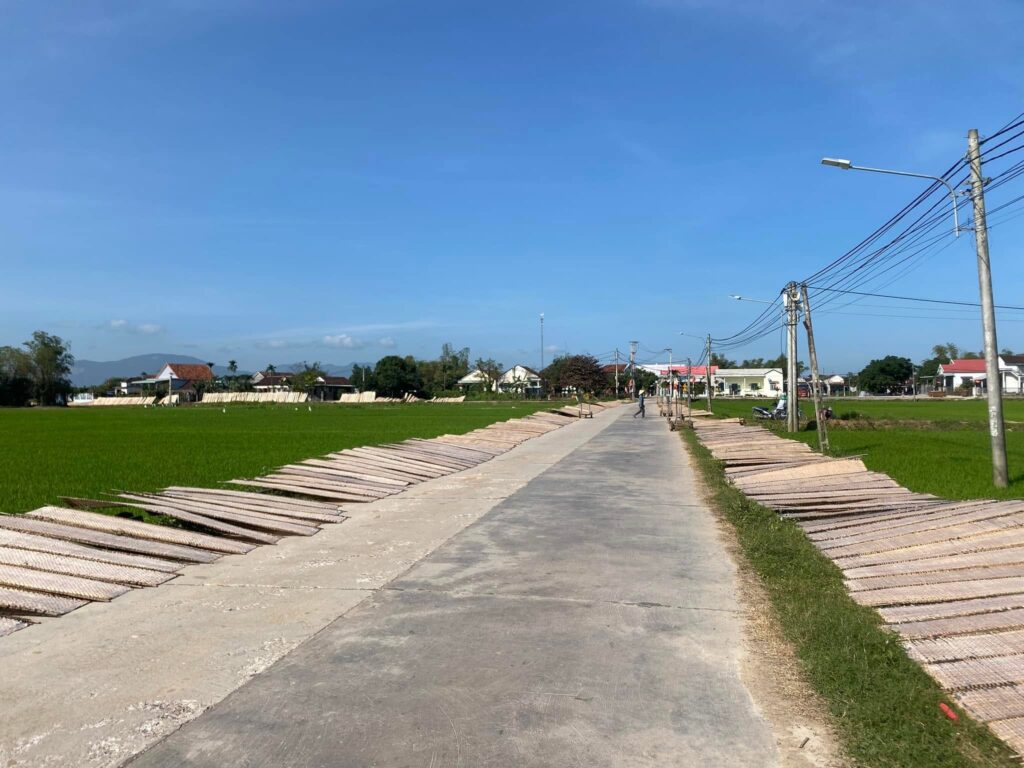
Producing a rush mat involves a series of carefully performed manual steps. After being harvested from the fields, the rush grass is brought home and naturally dried in the sunlight for around three to five days. Once dried, the stems become firm and durable.
The dried rush is then sorted, with pieces of relatively similar size selected to make weaving easier and more uniform. The material is subsequently beaten and pounded to flatten and soften the rush fibers before weaving.
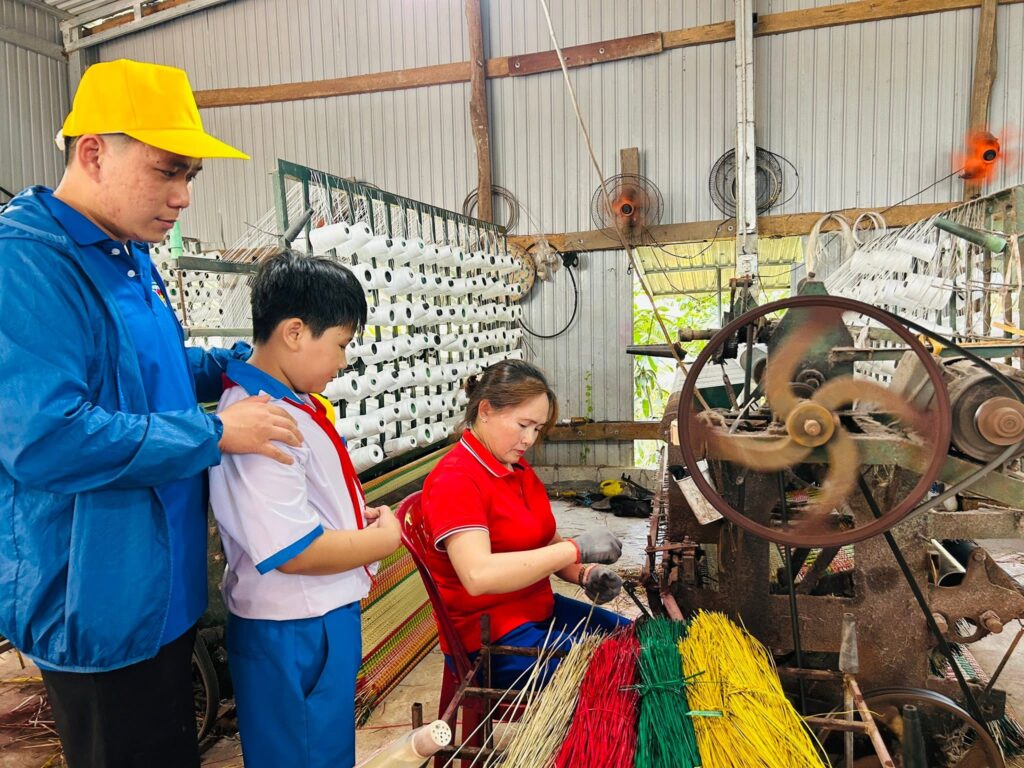
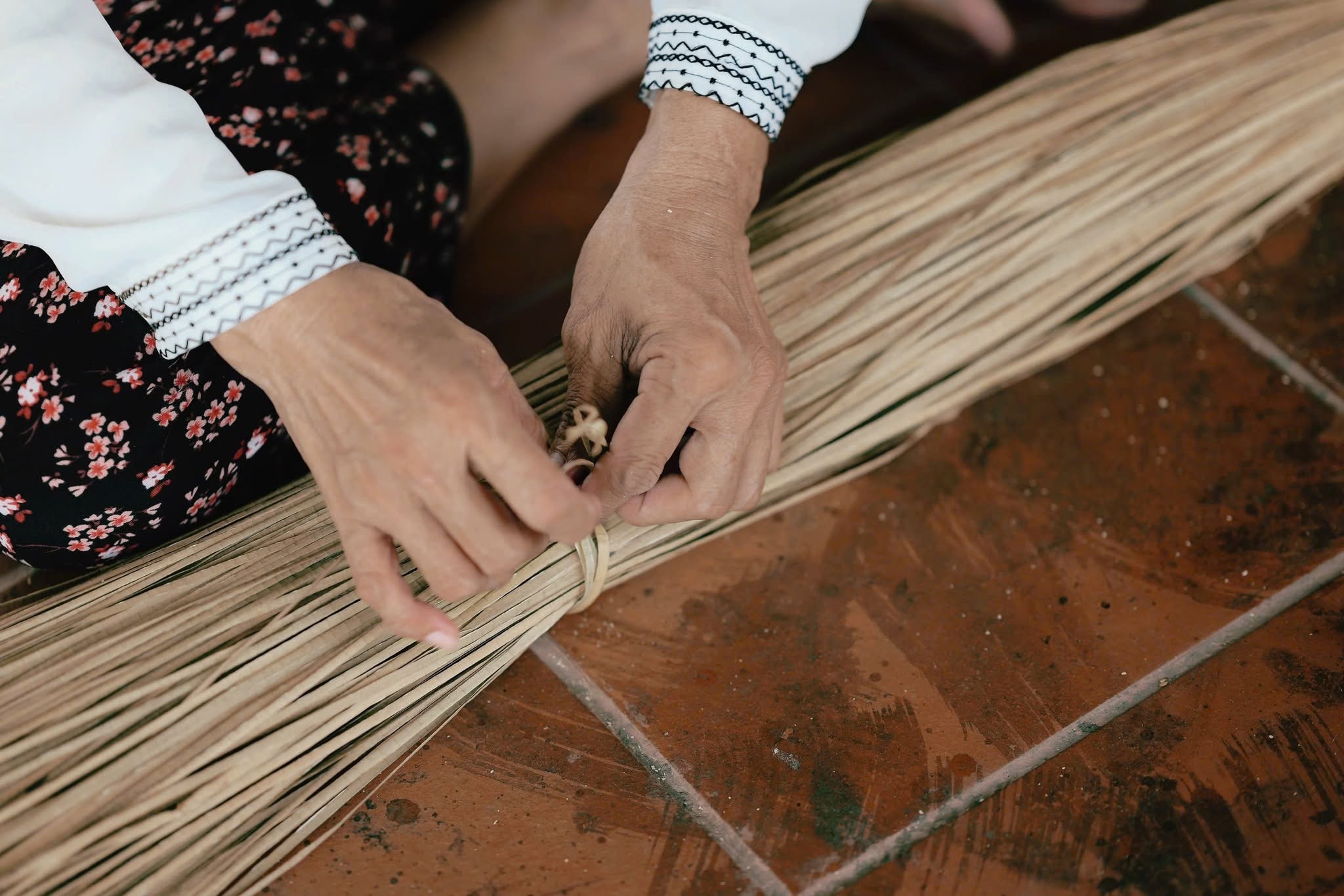
The weaving process requires considerable patience and manual skill. The softened rush strands are arranged closely together in the same direction, generally in groups of around 20 to 30 strands. Another group is then woven across them at a perpendicular angle.
Decorative patterns or lettering may be incorporated into some products to enhance their appearance. During the weaving process, the artisan interlaces the strands in a regular sequence until the desired length is reached. The ends are then twisted and secured so that the finished mat retains its shape and does not come apart.
Behind a seemingly simple rush mat is a considerable amount of manual labor. The artisan must maintain consistent tension, arrange the fibers evenly and carefully control the structure of the product throughout the weaving process.
Preserving the Craft Amid Changing Markets
Pho Trach’s rush mat craft faces a number of challenges. Products can take considerable time to complete and require patience, precision and experience, while selling prices have traditionally remained relatively modest. Market demand can also fluctuate.
The arrival of machine-made goods, synthetic materials and inexpensive plastic products has created additional competition for traditional handicrafts. These changes have made it increasingly difficult for artisans to maintain a stable income from the craft alone.
Despite these challenges, the people of Pho Trach have continued to practice the craft. For many families, rush weaving is more than a source of income. It is an occupation inherited from previous generations and closely connected with memories of the village and its wetland landscape.
From Mats to Contemporary Handicrafts
To respond to changing consumer demand, Pho Trach artisans have gradually expanded their product range. In addition to traditional rush mats, the village now produces tissue boxes, bedside lamps, handbags, trays, hats, sleeping mats, keychains, decorative rugs and other handicrafts.
These products continue to use traditional rush materials and weaving techniques while adapting their designs, sizes and functions to contemporary lifestyles.
The natural appearance, durability and environmentally friendly character of rush products have helped create new opportunities for the traditional craft. Developing new product lines also allows artisans to preserve their weaving skills while reaching customers beyond the traditional market for mats.
Bringing Pho Trach Handicrafts to a Wider Market
Products from the craft village have been presented at exhibitions and Vietnamese handicraft competitions organized by the Ministry of Agriculture and Rural Development, providing opportunities to introduce Pho Trach’s traditional craft to a wider audience.
According to the source, the village’s products have received several awards at such events. These achievements are also associated with efforts by local residents and relevant agencies to preserve and develop the rush mat craft.
At a time when consumers are increasingly interested in products made from natural materials, rush grass offers traditional handicrafts an opportunity to connect with contemporary environmental values. Yet the core of Pho Trach’s craft remains the manual knowledge and skills passed down through generations.
A Traditional Craft Village of Hue
Pho Trach Rush Mat Craft Village was recognized by the People’s Committee of Thua Thien Hue Province as a traditional craft village under Decision No. 717/QD-UBND dated April 14, 2014.
From the low-lying wetlands where rush grass grows naturally, the people of Pho Trach have developed a traditional craft with a history spanning centuries. Grass that might otherwise appear ordinary is dried, beaten, sorted and woven by hand into practical objects for everyday life.
The value of the rush mat craft therefore extends beyond the finished products. It tells the story of how a community has made use of local natural resources, developed a livelihood and adapted to changing markets while preserving traditional skills that have remained part of village life for generations.
Basic Information
| Item | Information |
|---|---|
| Craft village | Pho Trach Rush Mat Craft Village |
| Location | Phong Dinh Ward, Hue City |
| Village history | Established around the mid-15th century |
| Main material | Rush grass |
| Traditional products | Rush mats and sleeping mats |
| Developed products | Tissue boxes, lamps, handbags, trays, hats, keychains, decorative rugs and other handicrafts |
| Main techniques | Natural drying, beating, pounding, sorting and hand weaving |
| Recognition | Traditional craft village |
| Decision | Decision No. 717/QD-UBND, April 14, 2014 |
| Recognizing authority | People’s Committee of Thua Thien Hue Province |
Cultural Value of Pho Trach Rush Mat Making
Pho Trach rush mat making is a traditional craft rooted in the relationship between the local community, its wetland environment and natural resources. Its value comes from the practical knowledge of harvesting and processing rush grass, traditional weaving techniques and the manual skills transmitted between generations.
More broadly, the craft reflects the ability of the people of Pho Trach to transform a local natural resource into useful products and a source of livelihood. The continued development of new handicrafts shows how a traditional occupation can adapt to contemporary needs while retaining the knowledge and identity of the village.