


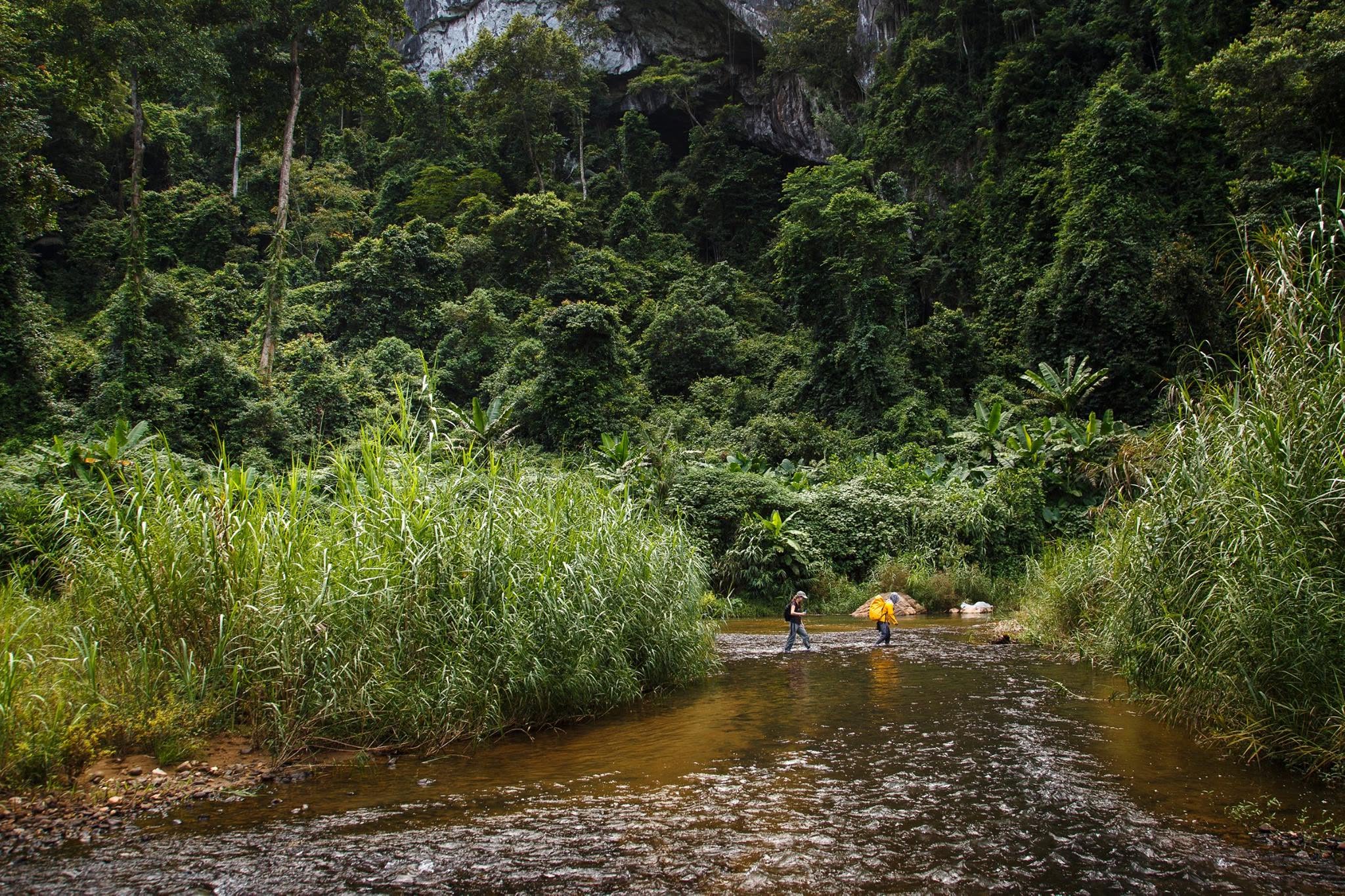
Phong Nha – Ke Bang National Park is one of Vietnam’s most significant natural heritage areas, recognized for its exceptional geological and geomorphological values, rich biodiversity, spectacular landscapes, historical sites and cultural heritage. Its ancient limestone formations, extensive cave systems and underground rivers preserve important evidence of the Earth’s geological history and the long-term development of natural ecosystems.
At its 27th session, held in Paris, France, on 3 July 2003, the UNESCO World Heritage Committee inscribed Phong Nha – Ke Bang on the World Heritage List as a Natural World Heritage Site under criterion (viii) for its outstanding geological and geomorphological values. The property represents an impressive collection of evidence of the Earth’s history, particularly through its ancient limestone formations and highly developed karst landscape.
The Phong Nha – Ke Bang area and its surrounding region extend from the coastal area to the Vietnam – Laos border and include parts of Bo Trach, Tuyen Hoa and Quang Ninh districts. The World Heritage property covers approximately 85,754 hectares. Geologically and ecologically, the limestone landscape is connected with the limestone mountains of the Hin Nam No National Biodiversity Conservation Area in Laos, forming one of the largest continuous limestone landscapes in Southeast Asia.
Geological and Cave Values
Phong Nha – Ke Bang National Park consists of two principal types of terrain: karst terrain and non-karst terrain. Limestone mountains account for a large proportion of the core area. The strongly dissected karst landscape, combined with tropical evergreen vegetation growing on limestone, has created a distinctive environment with exceptional geological, geomorphological and biological diversity.
The limestone formations of Phong Nha – Ke Bang are more than 400 million years old. Their geological history dates back to the Devonian Period and has been shaped through several major tectonic cycles, including the Devonian, Late Devonian – Early Carboniferous, Carboniferous – Permian and Mesozoic periods.
These prolonged geological processes created the complex limestone structure that characterizes the region today. The dissolution and erosion of limestone by water over geological timescales produced an extensive network of caves, underground rivers, valleys, sinkholes and other karst formations.
More than 300 caves of different sizes have been recorded in the Phong Nha – Ke Bang area. Many have been surveyed and studied, while further exploration continues to reveal additional geological and hydrological features.
Phong Nha Cave is one of the best-known caves in the region. It contains an extensive underground river system, large chambers, sandy banks and diverse formations of stalactites and stalagmites. Tien Son Cave is another important cave within the Phong Nha landscape and has been developed for tourism.
The cave systems are valuable not only for their scenic beauty but also for scientific research into the development of tropical karst landscapes, underground hydrology and the geological history of the region. Underground rivers, cave lakes, sandy passages, stalactites and stalagmites together form a complex subterranean environment that has developed over millions of years.
The combination of ancient limestone, strongly dissected karst terrain and tropical evergreen forest is one of the defining characteristics of Phong Nha – Ke Bang. The close relationship between geology, landforms, water systems and vegetation provides the foundation for its outstanding natural values.
Biodiversity and Ecosystems
Phong Nha – Ke Bang supports highly diverse tropical forest ecosystems, particularly forests associated with limestone mountains. Differences in terrain, elevation, water availability, soils and local climatic conditions have created a variety of vegetation communities.
Initial botanical surveys identified eight principal vegetation types, including:
- Tropical humid evergreen seasonal forest.
- Secondary forest following logging on limestone mountains.
- Shrub and scattered tree communities on limestone.
- Evergreen broadleaf forest.
- Secondary forest following logging.
- Shrub and scattered tree communities.
- Periodically flooded forest corridors.
- Coniferous forest on limestone mountains.
Early surveys recorded approximately 2,500 species of vascular plants, including around 208 species of orchids and numerous rare and valuable plant species listed in Vietnamese and international conservation assessments.
The animal diversity of Phong Nha – Ke Bang is also considerable. Limestone forests, valleys, rivers, streams and caves provide a wide range of habitats for mammals, birds, fish, reptiles and amphibians, including rare and threatened species.
Previous surveys recorded 1,074 species of vertebrates, including:
- Mammals: 140 species belonging to 64 genera, 31 families and 10 orders.
- Birds: 356 species belonging to 137 genera, 52 families and 18 orders.
- Fish: 162 species belonging to 85 genera, 31 families and 11 orders.
- Reptiles: 99 species belonging to 43 genera, 14 families and 3 orders.
- Amphibians: 47 species belonging to 9 genera, 6 families and 1 order.
The forests and limestone ecosystems of Phong Nha – Ke Bang are particularly important habitats for numerous wildlife species, including primates, large mammals and other species of conservation concern. The connection between limestone forests, valleys, streams and underground cave systems creates a diverse network of habitats.
The outstanding feature of the park lies in the close relationship between its ancient geology, karst landscape, tropical forests and underground river systems. This combination has produced a wide range of specialized habitats and contributes significantly to the scientific and conservation value of the area.
Historical, Cultural and Scenic Values
In addition to its natural values, Phong Nha – Ke Bang preserves numerous historical sites associated with Vietnam’s modern history. The area contains important remnants of the Ho Chi Minh Trail, a strategic transportation network that played a major role in the movement of personnel and supplies during the wars.
Historical locations associated with this network include Xuan Son Ferry, Nguyen Van Troi Ferry, the Communications Route, Road 20 Quyet Thang, Hang Tam Co and the A-shaped Junction (Cua Chu A).
Among these, Hang Tam Co, also known as the Eight Volunteers Cave, is an important memorial site associated with the sacrifice of young volunteers and transport personnel who worked to maintain the strategic Road 20 Quyet Thang during the war. Today, the site serves as a place of remembrance and historical education.
The landscape of Phong Nha – Ke Bang also includes numerous natural attractions such as Bong Lai Lake, Nuoc Mooc Spring, Sinh Ton Valley, Wind Waterfall, U Bo and Gieng Vooc. Each area has its own combination of forests, mountains, streams, wetlands and other natural features, contributing to the diversity of the park’s landscape.
The cultural character of the region is also reflected in the lives and traditions of local communities, including ethnic minority groups living in the mountainous areas to the west. Their customs, festivals and traditional cultural practices demonstrate the long-standing relationship between communities and their natural surroundings.
Traditional cultural activities include the Drum-Beating Festival of the Mang Coong people in Thuong Trach, the Tien Water Offering Festival practiced by communities in the Son River basin, and traditional Tuong theatre performed by residents of Khuong Ha Village in Hung Trach Commune.
These cultural values complement the natural and geological significance of Phong Nha – Ke Bang. Together, they demonstrate that the area is not only a protected natural environment but also a cultural landscape where local communities continue to preserve traditions associated with their environment.
Phong Nha – Ke Bang as a World Heritage Site
The Outstanding Universal Value of Phong Nha – Ke Bang is particularly associated with its geology and geomorphology. Its ancient limestone mountains, extensive cave systems, underground rivers and diverse karst formations are the result of geological processes that have continued for hundreds of millions of years.
The Phong Nha cave system has attracted international attention for its distinctive characteristics, including underground rivers, cave entrances, sandy banks and diverse limestone formations. The caves provide important opportunities for studying the development of karst landscapes and underground hydrological systems.
Exploration and scientific research continue to reveal new geological, biological and archaeological information within Phong Nha – Ke Bang. Studies of geology, geomorphology, biodiversity and human occupation have contributed to a broader understanding of both the natural history and cultural history of the region.
Conservation of Phong Nha – Ke Bang therefore extends beyond the visible landscape. It includes the protection of cave systems, underground rivers, natural forests, wildlife habitats, historical sites and the cultural environment of local communities.
With a geological history spanning more than 400 million years, an extensive karst landscape, hundreds of caves, underground river systems and rich tropical ecosystems, Phong Nha – Ke Bang National Park represents an exceptional natural heritage area. It brings together geology, geomorphology, biodiversity, history and culture within a continuous landscape, making it one of Vietnam’s most important sites for scientific research, nature conservation and sustainable tourism.


