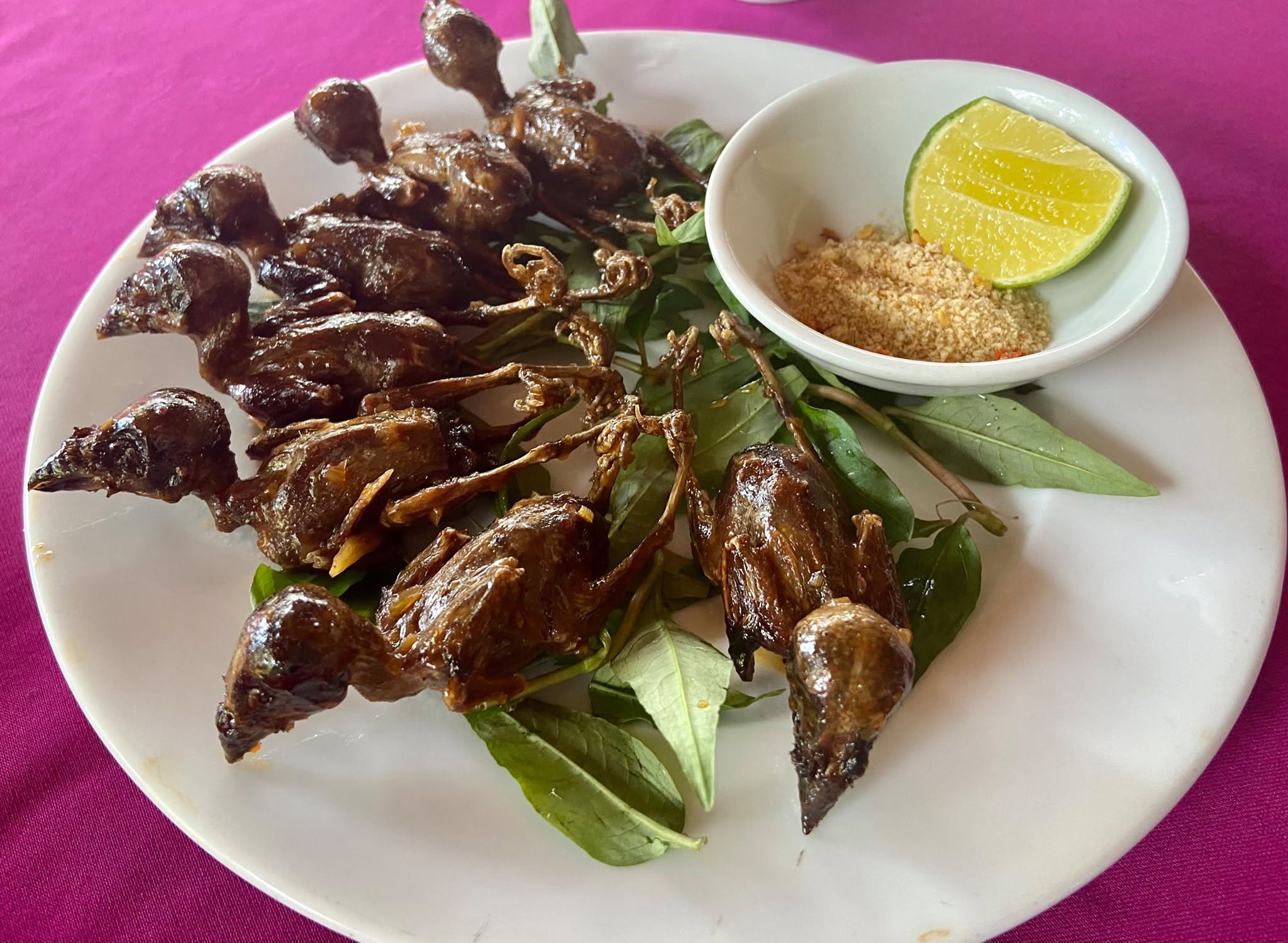
“Whoever comes to Kien My and Phu Phong,
should taste the reed birds and leave with a satisfied heart.”
This folk verse recalls a rustic specialty once closely associated with Phu Phong, Tay Son, Binh Dinh: Phu Phong reed birds, locally known as chim mía.
Surrounded by vast green sugarcane fields, Tay Son provides a seasonal habitat for small birds that appear in greater numbers toward the end of winter and the beginning of spring. Similar in size to sparrows, these birds have muted, straw-like plumage that blends naturally into the sugarcane fields.
Over time, reed birds became part of the local culinary memory of Phu Phong, representing a style of countryside cooking rooted in seasonal ingredients and rural life.
Reed Birds Among the Sugarcane Fields of Tay Son
Tay Son has long been associated with extensive sugarcane-growing areas. Sugarcane is not only an important agricultural crop but also forms part of the rural landscape where birds and other wildlife find food and shelter.
Reed birds traditionally appeared during the cooler months, particularly around late winter and early spring. In the past, local people used a type of large net known as a tru to catch the birds.
The net was stretched along the edge of a field, sometimes above the height of the sugarcane. Long poles were used to disturb the vegetation, encouraging the birds to move toward the net.
Seasonal bird catching was once part of rural life in the Phu Phong area. Today, however, any interaction with wild birds should comply with Vietnamese regulations concerning wildlife protection and biodiversity conservation.
Traditional Ways of Preparing Reed Birds
In the culinary traditions associated with Phu Phong, reed birds were prepared in simple ways, particularly grilling and frying.
For grilling, cleaned birds were seasoned with salt, chili, shallots, pepper and other spices. Several birds could be threaded onto a skewer and grilled over glowing charcoal.
The skewers had to be turned frequently so that the birds cooked evenly without burning. As the skin became golden brown and the fat began to sizzle over the charcoal, an enticing aroma filled the air.
Grilled reed birds were traditionally served hot with salt and pepper mixed with lime juice. The preparation was uncomplicated, reflecting the straightforward character of countryside cuisine.
Another traditional method was deep-frying. The birds were placed in hot peanut oil and fried until golden and crisp. They could then be removed, drained and sprinkled with roasted sesame seeds before serving.
Traditionally, the birds were cooked whole. This gave the dish a distinctive combination of textures, from the firm meat and rich skin to the crisp bones.
The Flavor of a Rustic Countryside Dish
The appeal of Phu Phong reed birds lies partly in their simple presentation.
A small bird, grilled over charcoal or fried until crisp, is served with salt, pepper and lime. Rather than relying on elaborate sauces, the dish allows the aroma of the roasted meat and richness of the skin to combine with the salty, spicy and slightly sour dipping mixture.
Reed birds were also traditionally mentioned alongside Bau Da rice liquor, another well-known specialty of Binh Dinh. In the culinary culture of the countryside, grilled food and a small glass of local rice liquor often accompanied conversations and gatherings.
Yet the significance of the dish extends beyond taste. Reed birds evoke an earlier way of life in which rural communities were closely connected to agricultural fields, seasonal cycles and locally available foods.
From a Rustic Dish to a Culinary Memory
Local cuisine often begins with ingredients that are deeply connected to everyday life. In Phu Phong, reed birds were once regarded as a seasonal product of the sugarcane fields, prepared simply and enjoyed in a rural setting.
Together with the folk verse associated with Kien My and Phu Phong, the dish became part of the area’s culinary memory and stories about Tay Son.
Today, as agricultural landscapes and rural lifestyles continue to change, traditional foods associated with wild species should also be viewed through the lens of wildlife conservation. Protecting wild bird populations, maintaining healthy agricultural ecosystems and complying with regulations on wildlife exploitation are essential to preserving local cultural values in a sustainable way.
Phu Phong reed birds are therefore more than a traditional dish. They are part of a broader story about Tay Son’s sugarcane fields, seasonal rhythms, agricultural life and the culinary memories of Binh Dinh.
For travelers exploring the cuisine of Tay Son, the story of chim mía Phú Phong offers an intriguing glimpse into how local communities once transformed seasonal resources into distinctive dishes, while reflecting the close relationship between food, landscape and rural culture.