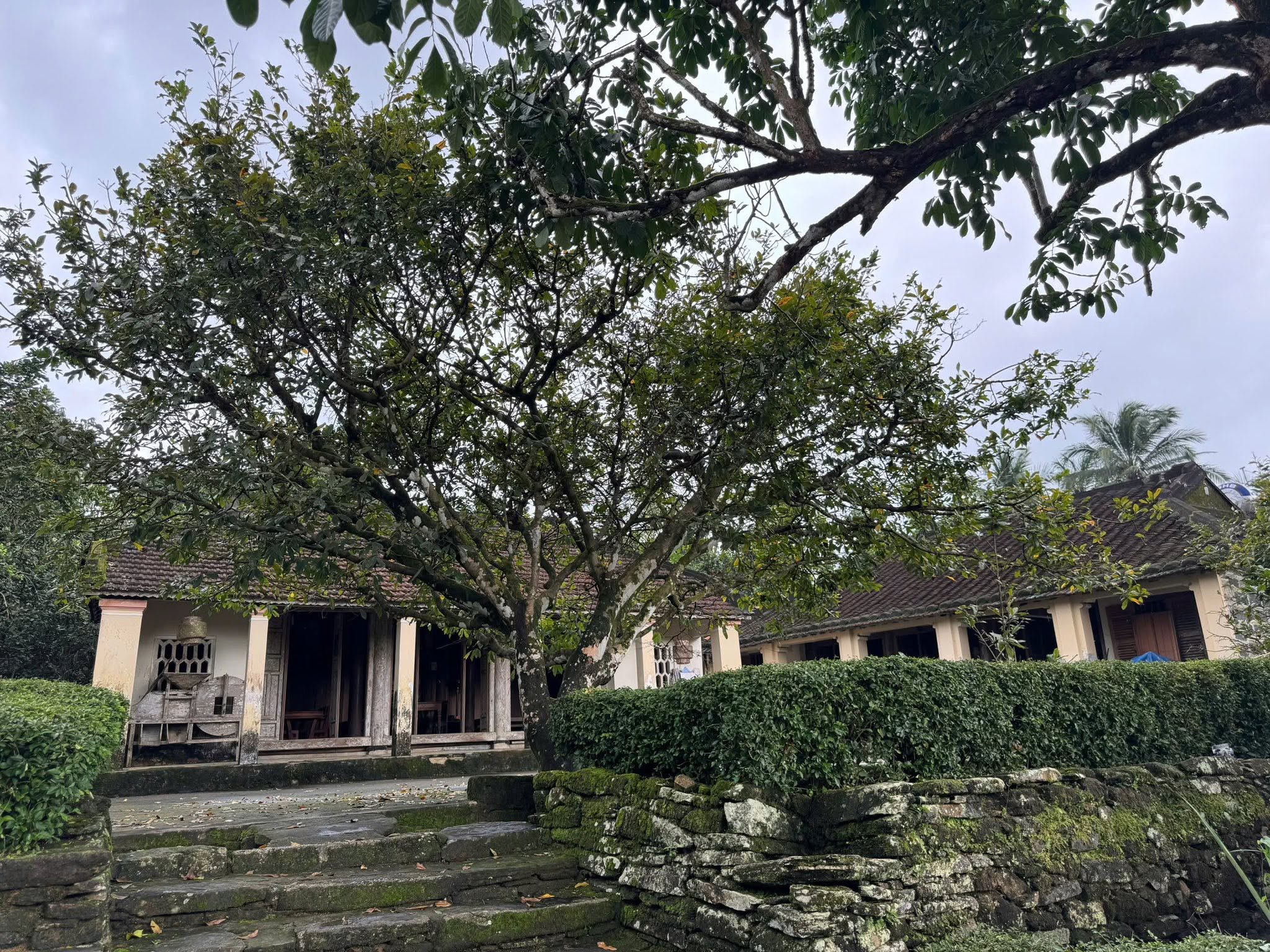
Loc Yen Ancient Village is one of the most remarkable traditional villages in the historic Quang Nam region, now located in Thanh Binh Commune, Da Nang City, Central Vietnam. Established in the late 18th century, the village is renowned for its centuries-old wooden houses, moss-covered stone pathways, lush fruit orchards, and beautifully preserved rural landscape.
Nestled among the gentle hills of Central Vietnam, Loc Yen retains the quiet charm of a traditional Vietnamese countryside settlement. Ancient timber houses stand beneath leafy trees, winding stone paths connect family gardens, and everyday village life continues much as it has for generations.
More than a destination for architecture enthusiasts, Loc Yen is often described as a living museum of rural Quang Nam culture, where historic buildings, traditional customs, and the natural environment remain closely connected.
In September 2019, Loc Yen Ancient Village was officially recognized as a National Monument, acknowledging its outstanding historical, architectural, landscape, and cultural significance.
Where Is Loc Yen Ancient Village?
Loc Yen Ancient Village is situated in Thanh Binh Commune, Da Nang City, in the midland region of the former Quang Nam Province.
According to approximate geographical references, the village lies about 60 kilometers northwest of Chu Lai Airport and 90 kilometers southwest of Da Nang International Airport.
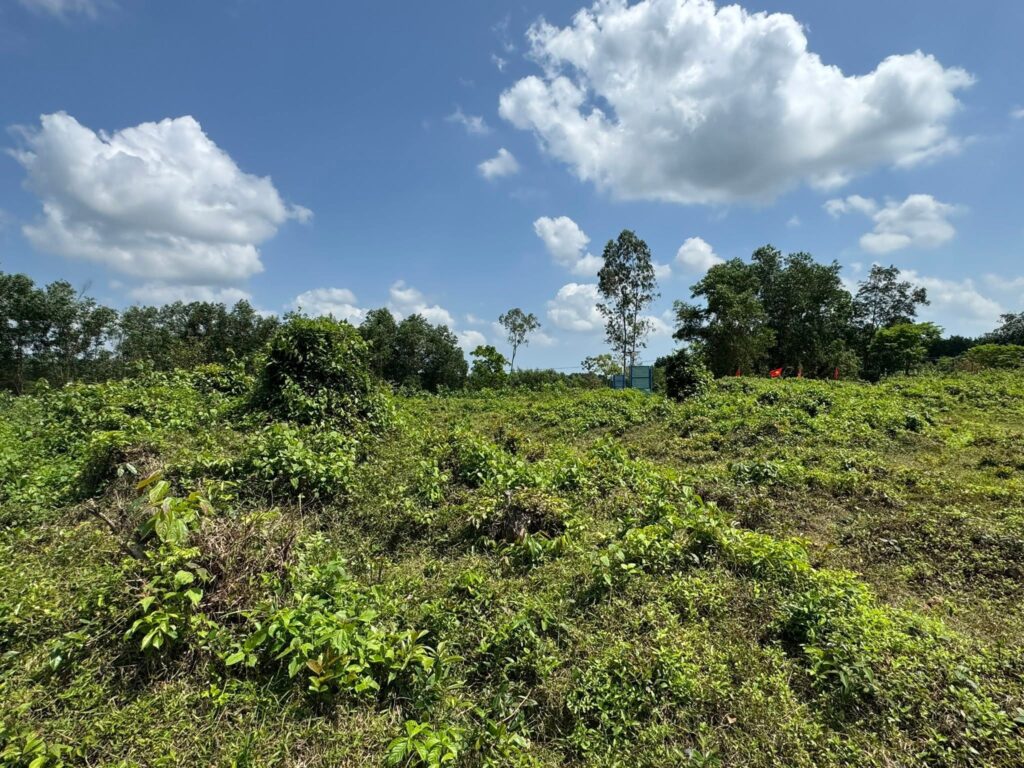
Unlike ancient villages established on flat river plains, Loc Yen developed in a landscape of low hills, where houses, gardens, and pathways follow the natural contours of the terrain.
This setting has given the village its distinctive character. Traditional houses are typically built against hillsides, with their front entrances overlooking gardens, cultivated fields, and winding stone paths.
The result is a harmonious rural landscape shaped by traditional architecture, fruit orchards, stone structures, and the surrounding natural environment.
History and Origins of Loc Yen Ancient Village
According to local genealogical records and historical accounts, Loc Yen Ancient Village was established in the late 18th century, during a period of settlement and agricultural expansion in Central Vietnam.
During the Tay Son period, a pioneering ancestor from the Tam Ky area reportedly brought his family and a group of settlers to this region to reclaim land and establish a new community.
The settlement was originally named Loc An Hamlet, before later becoming known as Loc Yen.
The name Loc Yen evokes aspirations for prosperity, peace, and a stable life in the newly established settlement.
Over approximately seven generations, numerous family lineages have maintained their connections with the land first cultivated by their ancestors.
From the original settlement, residents gradually constructed houses, developed gardens, established pathways, and organized community life.
Over time, these activities created a distinctive rural environment adapted to the natural conditions of the midland region.
Despite historical changes, Loc Yen has preserved important traces of its early development, particularly its traditional houses, stone pathways, stone walls, and garden landscapes.
Traditional Wooden Houses in Loc Yen Ancient Village
One of Loc Yen’s most valuable heritage features is its collection of traditional wooden houses, some of which are more than a century old.
According to local heritage descriptions, the village retains approximately eight representative ancient houses, dating from more than 100 to nearly 150 years ago.
These buildings reflect the traditional Quang Nam timber-frame house, commonly known as a nha ruong, characterized by a three-bay, two-wing layout and a sophisticated wooden structural system.
Three-Bay, Two-Wing Architecture
Traditional houses in Loc Yen typically follow a three-bay, two-wing arrangement.
The central bay is generally reserved for ancestor worship and receiving guests, while the adjoining bays and side wings serve domestic functions.
The structural framework consists of wooden columns, beams, rafters, and other components connected using traditional mortise-and-tenon joints.
This construction technique provides structural stability while demonstrating the expertise of earlier generations of Vietnamese carpenters.
Many houses were built primarily using jackfruit wood, a material traditionally favored in Central Vietnam for its durability, workability, and suitability for decorative carving.
Traditional Woodcarving
The roof frames, beams, column heads, and other wooden components of Loc Yen’s historic houses often feature elaborate decorative carvings.
These details contribute to the architectural beauty of the buildings while expressing traditional aesthetic values and aspirations for peace, prosperity, and family well-being.
According to local accounts, some of the houses were constructed by craftsmen associated with Kim Bong Carpentry Village, a historic woodworking center in the Quang Nam region.
Their craftsmanship can be seen in the precision of the timber joints, the balance of the structural framework, and the delicate decorative details.
After generations of use, many of these houses still preserve important original architectural elements, providing valuable evidence of traditional Vietnamese carpentry and vernacular construction techniques.
Moss-Covered Stone Paths, Walls, and Wells
While its timber houses are central to Loc Yen’s architectural heritage, the village’s stone pathways are perhaps its most recognizable feature.
These narrow paths were constructed using locally available mountain stones, carefully arranged to follow the natural terrain.
Over time, moss has spread across the stones, blending with the surrounding vegetation and the weathered surfaces of the ancient houses.
Winding Stone Pathways
Unlike modern roads designed along straight lines, Loc Yen’s stone pathways wind naturally around hillsides, gardens, and residential compounds.
The stones were arranged by hand to create walkable routes suited to the village’s sloping terrain and local drainage conditions.
Some pathways pass between low stone walls, with fruit trees and green hedges rising on either side.
Their irregular, organic layout gives Loc Yen much of its distinctive charm.
Rather than appearing as a carefully planned tourist attraction, the village landscape reflects generations of gradual development and adaptation to the natural environment.
Traditional Stone Garden Walls
Many family gardens in Loc Yen are enclosed by walls built from locally sourced stones.
These walls historically served several purposes, including defining property boundaries, protecting cultivated areas, and stabilizing sections of land on uneven terrain.
Today, they are an important part of the village’s cultural landscape.
Their weathered surfaces, covered with moss and small plants, create picturesque scenes that complement the surrounding wooden houses and orchards.
Ancient Stone Wells
Stone wells are another feature associated with traditional village life in Loc Yen.
Before modern water supply systems became widely available, wells played an essential role in domestic activities and agricultural production.
The surviving wells help illustrate how earlier residents adapted to local environmental conditions and organized their daily lives around available water resources.
Traditional Gardens and the Midland Landscape
One of the most distinctive aspects of Loc Yen Ancient Village is the close relationship between its traditional houses and surrounding fruit gardens.
Many houses were built with hills rising behind them and open courtyards, gardens, or cultivated fields extending in front.
This arrangement suited the local terrain while providing ventilation and comfortable living spaces.
Loc Yen’s gardens contain various fruit trees associated with the Quang Nam midlands, including lon bon (langsat), mangosteen, oranges, mandarins, and other locally cultivated varieties.
During the fruiting season, clusters of ripe fruit appear among the green foliage, adding color and vitality to the landscape.
Beneath the trees, old timber houses and moss-covered stone paths create a distinctive rural setting that reflects the close relationship between people and nature.
What makes Loc Yen especially valuable is that its gardens are not simply decorative spaces created for tourism.
They remain closely connected to the daily lives and agricultural activities of local residents.
Cultural Heritage and Community Life
The significance of Loc Yen Ancient Village extends beyond its architecture and landscape.
Its cultural value also lies in the traditional lifestyles, customs, and collective memories preserved by generations of residents.
Each ancient house is both a family residence and a repository of stories about ancestors, family lineages, and the village’s development.
Ancestor worship, traditional house arrangements, gardening practices, and close neighborhood relationships all reflect the cultural characteristics of rural Vietnamese communities.
The continued occupation and maintenance of historic houses by local families have helped preserve the continuity of the village’s cultural landscape.
This makes Loc Yen a particularly valuable example of living heritage, where traditional architecture remains an integral part of everyday life.
Local residents are not only the inheritors of this heritage but also its primary custodians, maintaining and passing down the village’s cultural values.
National Monument Recognition in 2019
In September 2019, Loc Yen Ancient Village was recognized as a National Monument, acknowledging its outstanding historical, architectural, and cultural landscape values.
The designation highlighted the importance of Loc Yen within Vietnam’s traditional village heritage, particularly as a settlement that has retained much of its historic spatial organization.
The village’s significance can be understood through several closely connected values.
Historical value: Loc Yen reflects the settlement, land reclamation, and community formation processes that took place in the Quang Nam midlands from the late 18th century.
Architectural value: Its traditional timber houses preserve characteristic structural systems, building materials, and decorative craftsmanship.
Landscape value: The village retains a harmonious relationship between houses, orchards, stone pathways, stone walls, wells, and the natural hills.
Cultural value: Traditional customs, ancestor worship, family life, and community relationships remain closely associated with the historic environment.
Tourism value: Loc Yen provides opportunities for cultural tourism, architectural exploration, rural experiences, and community-based ecotourism.
Together, these qualities make the village an important destination for understanding the traditional culture of the historic Quang Nam region.
Things to Do in Loc Yen Ancient Village
A visit to Loc Yen is best enjoyed at a relaxed pace, allowing time to appreciate the architecture, landscape, and everyday life of the village.
Rather than large modern attractions, the village offers experiences rooted in traditional houses, fruit gardens, local craftsmanship, and rural hospitality.
Walk Along Ancient Stone Paths
One of the most enjoyable activities is exploring the village on foot.
Its winding stone paths lead past moss-covered walls, green gardens, and traditional wooden houses.
Every turn offers a different perspective, from tiled roofs partially hidden beneath trees to quiet courtyards surrounded by lush vegetation.
The village is particularly appealing to travelers interested in photography, architecture, and traditional rural landscapes.
Visit Traditional Houses and Meet Local Residents
Some families in Loc Yen may welcome visitors who wish to learn about their historic homes and traditional lifestyles.
Inside, guests can observe timber columns, roof frames, ancestral altars, household objects, and decorative carvings preserved over generations.
Conversations with homeowners may reveal stories about family history, the construction of the houses, and changes in village life.
Because these buildings remain private residences, visitors should always ask permission before entering.
Explore Fruit Orchards
Loc Yen is known for its green fruit gardens.
Depending on the season, visitors may have opportunities to taste locally grown fruits such as langsat, mangosteen, oranges, and mandarins.
Some households may offer garden visits, introduce traditional cultivation practices, or organize fruit-picking experiences.
These activities provide insights into the agricultural traditions and everyday livelihoods of the midland community.
Enjoy Traditional Local Food
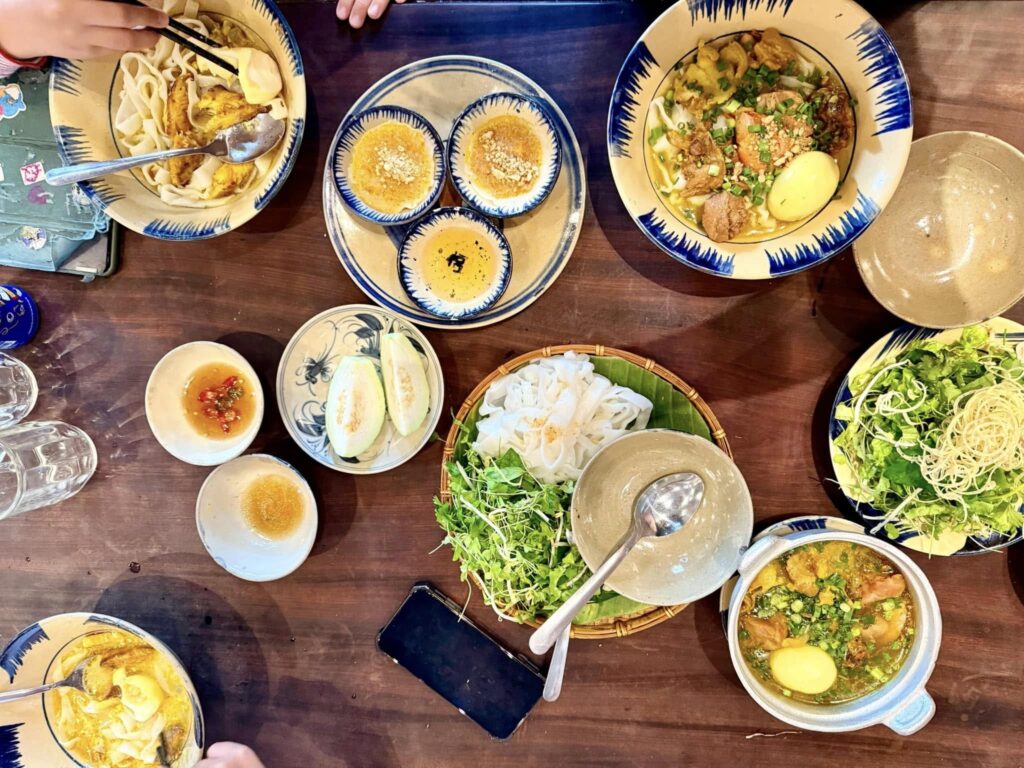
Alongside architectural sightseeing, visitors can discover simple dishes associated with rural Quang Nam.
According to local tourism descriptions, some experiences may include preparing traditional Vietnamese crispy pancakes, known as banh xeo, and enjoying them freshly cooked.
Such culinary activities offer an engaging introduction to the region’s food culture and village hospitality.
Discover Handicrafts and Folk Games
Community-based cultural experiences in Loc Yen may also include traditional games and demonstrations of local handicrafts.
One example is weaving or crafting objects from areca palm sheaths, a natural material traditionally used in rural households.
These activities highlight the practical knowledge, creativity, and craftsmanship of local residents.
Availability may depend on the season, group arrangements, and participating households.
The Mysterious Rotating Table of Loc Yen
Beyond its traditional houses and stone pathways, Loc Yen is also associated with an unusual local attraction known as the mysterious rotating table.
According to stories shared by residents and visitors, when several people place their hands on the tabletop and collectively focus on a particular direction, the table may begin to rotate.
The experience often surprises and entertains participants.
However, it is best understood as a local curiosity and interactive folk experience rather than evidence of supernatural powers.
Such movements may result from subtle, unconscious physical forces applied by participants, a phenomenon commonly associated with the ideomotor effect.
Regardless of the explanation, the rotating table remains an intriguing part of Loc Yen’s local storytelling and visitor experience.
Best Time to Visit Loc Yen Ancient Village
Loc Yen can be visited throughout the year, with each season bringing a different character to the surrounding countryside.
However, certain periods may be more suitable depending on the type of experience travelers are seeking.
February to April
This period often brings relatively comfortable weather and fresh green vegetation.
It is a pleasant time for walking through the village, exploring traditional houses, and photographing its stone pathways and gardens.
June to August
Summer coincides with the harvesting season of several locally grown fruits.
Visitors may be able to combine architectural sightseeing with orchard visits, seasonal fruit tasting, and agricultural experiences.
Because daytime temperatures can be high, morning or late-afternoon visits are generally more comfortable.
September and the Final Months of the Year
September marks the anniversary of Loc Yen’s National Monument recognition in 2019.
The landscape also begins to change as the seasons shift.
However, Central Vietnam can experience heavy rainfall and unfavorable weather from around September through the end of the year.
Travelers should check forecasts before visiting, particularly when traveling along roads through the midland region.
How to Get to Loc Yen Ancient Village
Loc Yen Ancient Village is located in Thanh Binh Commune, Da Nang City.
Approximate distances from major airports include:
- Chu Lai Airport: Around 60 kilometers northwest of the airport.
- Da Nang International Airport: Around 90 kilometers southwest of the airport.
Visitors can travel by private car, hired vehicle, or other suitable road transport.
As Loc Yen is situated in a midland landscape, some access roads may pass through hilly terrain and rural residential areas.
Before departure, travelers should check the route and confirm the village’s location on a map.
Once there, walking is the most suitable way to explore the historic stone paths and traditional residential compounds.
Important Tips for Visiting Loc Yen Ancient Village
Loc Yen is both a nationally recognized heritage site and a living residential community.
Visitors should therefore respect the privacy and daily activities of local residents.
Always ask permission before entering a traditional house or private garden.
Avoid touching historical objects, wooden architectural components, ancestral altars, or household belongings without approval.
Stone pathways may become slippery when covered with moss, especially after rain. Comfortable footwear with good grip is recommended.
Visitors should not litter, damage plants, or pick fruit without the owner’s permission.
Some activities, including orchard visits, fruit tasting, cooking experiences, and handicraft demonstrations, may involve additional fees arranged by local households.
Responsible tourism helps preserve the cultural landscape and supports the community that continues to care for Loc Yen’s heritage.
Quick Information About Loc Yen Ancient Village
| Category | Information |
|---|---|
| Heritage site | Loc Yen Ancient Village |
| Current address | Thanh Binh Commune, Da Nang City, Vietnam |
| Historical region | Quang Nam midlands |
| Established | Late 18th century |
| Original name | Loc An Hamlet |
| Heritage type | Historical, architectural, and traditional village landscape |
| National recognition | September 2019 |
| Notable historic houses | Approximately eight traditional wooden houses |
| Age of historic houses | More than 100 to nearly 150 years |
| Architectural style | Three-bay, two-wing timber-frame houses |
| Traditional materials | Timber, locally sourced stone, and other traditional building materials |
| Landscape highlights | Stone paths, stone walls, ancient wells, fruit orchards, and surrounding hills |
| Visitor experiences | Historic house visits, village walks, orchard exploration, and local food |
| Distance from Chu Lai Airport | Approximately 60 km |
| Distance from Da Nang International Airport | Approximately 90 km |
| General admission | Reportedly free; certain activities may have separate charges |
| Visiting arrangements | The village can be explored during daylight hours; entering private houses requires permission |
| Recommended seasons | February–April or the fruit season around June–August |
Loc Yen Ancient Village: Preserving the Rural Heritage of Quang Nam
Amid the rapid changes of modern life, Loc Yen Ancient Village continues to preserve the distinctive character of the traditional Quang Nam countryside.
Its wooden houses, moss-covered stone paths, ancient walls, and lush orchards are more than picturesque features. They reflect generations of labor, craftsmanship, cultural traditions, and dedication to preserving ancestral heritage.
What makes Loc Yen especially remarkable is its identity as a living heritage village, where architecture, nature, and community life remain closely intertwined.
Visitors come not only to admire centuries-old houses but also to discover local customs, meet residents, and experience the gentle rhythm of rural life in Central Vietnam.
With its rich historical background, distinctive architecture, and beautifully preserved cultural landscape, Loc Yen Ancient Village is a meaningful destination for travelers exploring the heritage of southern Da Nang and the historic Quang Nam region.