


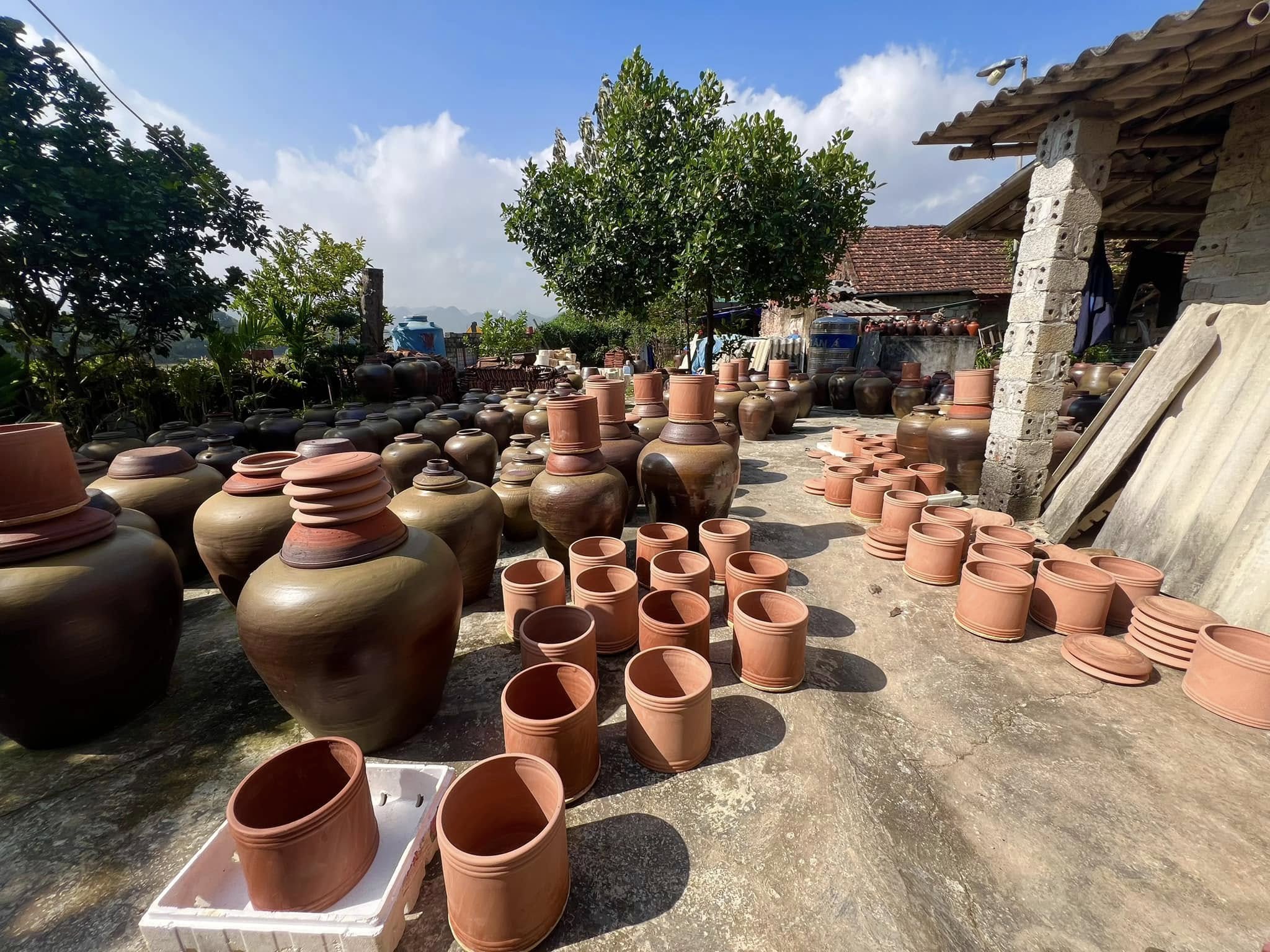
Quyet Thanh Pottery Village, located in Kim Bang Ward, Ninh Binh Province, formerly part of Ha Nam Province, is one of the longstanding traditional pottery communities of northern Vietnam. Situated near the peaceful Day River, the village is known for a pottery-making tradition believed to date back more than 500 years, particularly its distinctive unglazed red clay ceramics, locally known as gom son.
Unlike many ceramic traditions that emphasize colorful glazes or elaborate decorative patterns, Quyet Thanh pottery is admired for its natural reddish tones, understated elegance, and balanced forms. Its beauty comes from the character of the clay itself, the skill of the potter, and the traditional firing techniques developed through generations of experience.
The village produces a wide variety of ceramic items, including storage jars, water vessels, wine containers, teapots, flower vases, decorative sculptures, religious objects, and handcrafted pottery for interior decoration.
What makes Quyet Thanh particularly distinctive is the combination of locally associated red clay, traditional shaping methods, and the knowledge required to control high-temperature kiln firing. Through a carefully managed production process, raw clay is transformed into durable ceramic objects with characteristic colors and textures.
Over the centuries, the craft has evolved from producing practical household vessels to creating decorative and artistic ceramics for domestic and international markets.
According to local accounts, an important milestone occurred in 2010, when Quyet Thanh’s artistic red pottery received recognition in connection with branding activities involving the Department of Science and Technology. The precise legal form of this recognition would require confirmation from the original official documentation.
Today, Quyet Thanh Pottery Village represents both a traditional handicraft center and a destination with potential for cultural tourism, where visitors can discover the artistry of Vietnamese pottery and explore the relationship between natural materials, skilled craftsmanship, and local heritage.
History and Development of Quyet Thanh Pottery Village
Quyet Thanh Pottery Village developed within the cultural landscape of the Red River Delta, a region where traditional handicrafts have long been closely connected to agriculture, river transportation, and village commerce.
According to local tradition, pottery production in Quyet Thanh began around the sixteenth century, giving the craft a history of more than 500 years.
Although the exact date of its origin has not been firmly established through the information available, the village’s longstanding reputation reflects the importance of pottery-making in the local community.
The development of the craft was closely associated with the natural conditions of the surrounding area, particularly the availability of clay suitable for ceramic production.
The nearby Day River also formed part of the wider transportation and trading network that historically connected communities across northern Vietnam.
The Origins of a Traditional Pottery Community
During the early stages of its development, Quyet Thanh pottery primarily served practical household needs.
Local craftspeople produced everyday ceramic vessels used for storing water, food, and other household materials.
Common products included large jars, storage pots, and various types of earthenware containers.
These objects were designed to be functional, durable, and suitable for everyday use.
As the craft developed, artisans gradually improved their knowledge of clay preparation, shaping techniques, surface finishing, and kiln operation.
Experience accumulated over generations helped establish the distinctive characteristics of Quyet Thanh pottery.
The natural reddish color of the finished products became one of the village’s most recognizable features.
From Household Pottery to Artistic Red Ceramics
Over time, the range of products expanded beyond traditional household vessels.
Changing consumer preferences encouraged local potters to develop decorative ceramics, including flower vases, teapots, sculptures, religious objects, and other handcrafted items.
This transition required additional artistic skills.
While practical storage vessels emphasized strength and functionality, decorative ceramics demanded greater attention to proportions, surface texture, shape, and ornamental details.
Artisans began exploring different designs while continuing to preserve the natural appearance of the clay.
The development of artistic red pottery, or gom son my nghe, became an important part of the village’s evolving identity.
Rather than relying heavily on colorful glazes, many of these products emphasize the inherent beauty of fired clay.
Their natural colors and restrained decoration give them an appearance that can complement both traditional Vietnamese interiors and contemporary spaces.
Passing Down Traditional Pottery Skills
The continuation of Quyet Thanh pottery has depended largely on the transmission of knowledge within families and the local community.
Experienced potters teach younger generations how to identify suitable clay, prepare raw materials, shape vessels, control drying conditions, and operate kilns.
Kiln firing is particularly dependent on practical experience.
The potter must understand how temperature, fuel, airflow, and firing duration affect the final product.
These skills are often acquired through years of observation and hands-on work.
In addition to technical knowledge, artisans pass down traditional product shapes, proportions, and decorative styles.
This intergenerational transmission helps preserve the distinctive identity of Quyet Thanh ceramics while allowing individual craftspeople to introduce new designs.
Brand Development and Commercial Expansion
As the pottery industry developed, branding and product recognition became increasingly important.
According to descriptions of the village, Quyet Thanh’s artistic red pottery was associated with a product-brand recognition initiative involving the Department of Science and Technology in 2010.
This milestone is frequently mentioned in accounts of the village’s commercial development.
However, the exact name of the recognition, its legal status, and the issuing documentation should be verified before treating it as a specific trademark certificate or official designation.
The broader significance of such initiatives lies in helping traditional products establish a recognizable identity and reach wider markets.
Today, Quyet Thanh pottery includes both practical household items and artistic ceramics, reflecting the village’s ability to adapt traditional techniques to changing consumer demands.
Quyet Thanh Red Pottery and Its Distinctive Artistic Characteristics
The defining feature of Quyet Thanh pottery is its natural reddish appearance.
Known locally as gom son, this traditional ceramic style is associated with red clay, restrained decoration, and the visual qualities created through firing.
Many products are left unglazed, allowing the texture and color of the fired clay to remain visible.
This approach distinguishes Quyet Thanh pottery from ceramic traditions that rely primarily on glossy glazes or elaborate painted ornamentation.
Locally Associated Red Clay
According to traditional descriptions, Quyet Thanh pottery is made using clay associated with the local area, particularly clay with a characteristic reddish color.
Before shaping, the raw material must be carefully prepared to remove impurities and achieve the appropriate consistency.
The clay’s composition influences its plasticity, drying behavior, firing characteristics, and final appearance.
Material containing excessive impurities or prepared incorrectly may result in defects such as cracking, warping, or uneven surfaces.
For this reason, clay selection and preparation are essential parts of traditional pottery knowledge.
The reddish color of the finished ceramics is influenced by mineral composition and firing conditions.
Variations in clay sources, temperature, and kiln atmosphere can produce differences in tone, ranging from warm earthy reds to deeper reddish-brown shades.
The ability to work with these natural variations is an important part of the potter’s craftsmanship.
The Natural Beauty of Unglazed Ceramics
One of the most appealing characteristics of Quyet Thanh red pottery is its understated appearance.
Rather than concealing the clay beneath decorative glazes, traditional pieces often highlight the natural surface of the fired material.
Their aesthetic value comes from balanced proportions, smooth or subtly textured surfaces, and the warm colors created during firing.
Large jars and storage vessels may feature rounded bodies, carefully proportioned openings, and sturdy bases.
Decorative pieces can incorporate elegant curves, raised details, or engraved patterns without losing the simplicity of the underlying material.
This restrained style gives Quyet Thanh pottery a distinctive identity.
It also makes many pieces suitable for interior spaces that emphasize natural materials, traditional craftsmanship, and minimalist decoration.
Traditional Shaping and Decorative Techniques
Shaping pottery requires a thorough understanding of the clay’s properties.
Depending on the product, artisans may use hand-forming methods and appropriate tools to establish the body, rim, base, and decorative features.
For larger vessels, controlling the thickness and balance of the ceramic walls is especially important.
Uneven thickness can cause difficulties during drying and firing, increasing the risk of deformation or cracking.
Decorative pieces may require additional precision to achieve the intended curves and proportions.
Artisans can also incorporate raised relief details, incised patterns, and other surface treatments.
These decorative elements are selected according to the function and style of the product.
A simple household vessel may have little ornamentation, while an artistic vase or religious object may require more elaborate shaping and finishing.
The overall design reflects a balance between functionality, material characteristics, and artistic expression.
Traditional and Contemporary Ceramic Products
Quyet Thanh pottery encompasses a broad range of products.
Traditional household items include large storage jars, water vessels, wine containers, and other practical ceramic objects.
These products reflect the historical role of pottery in everyday rural life.
The village also produces flower vases, teapots, decorative sculptures, religious objects, and artistic ceramics.
Some pieces are designed for practical use, while others are intended primarily for decoration or display.
The value of a handcrafted product depends on several factors, including size, complexity, finishing quality, and the amount of skilled labor required.
According to local promotional accounts, some Quyet Thanh red pottery products have reached international markets.
Such commercial opportunities demonstrate the potential of traditional Vietnamese ceramics when craftsmanship, product quality, and design meet customer expectations.
Traditional Production Process and Wood-Fired Kiln Techniques
Producing Quyet Thanh red pottery involves a sequence of carefully managed stages, from raw material preparation to shaping, drying, firing, and final inspection.
Each stage affects the quality of the finished product.
Among them, kiln firing is especially important because it determines many of the ceramic’s physical properties and contributes to its characteristic appearance.
Selecting and Preparing Clay
The production process begins with preparing suitable clay.
Raw clay is selected and processed to remove unwanted materials, adjust moisture content, and achieve the plasticity required for shaping.
Depending on the workshop and production method, preparation may involve crushing, soaking, filtering, mixing, or kneading.
Properly prepared clay should be workable and sufficiently consistent to reduce defects during drying and firing.
For large ceramic vessels or products with thick walls, uniform preparation is particularly important.
Differences in moisture or material consistency can cause uneven shrinkage and increase the risk of cracking.
Shaping the Ceramic Products
Once the clay has reached the required condition, the potter begins shaping the product.
Traditional vessels such as storage jars and wine containers often feature relatively simple forms, but achieving balanced proportions requires considerable skill.
The relationship between the body, opening, and base must be carefully controlled.
Decorative products, including vases and artistic ceramics, may require more elaborate shaping and additional attention to curves, symmetry, and surface details.
During this stage, the potter must maintain an appropriate moisture level.
Clay that is too wet may lose its shape, while clay that becomes too dry can be difficult to manipulate.
Raised decorations, engraved patterns, and other surface features are generally added when the clay has reached a suitable degree of firmness.
After shaping and decoration, the products are prepared for drying.
Drying and Preparing the Kiln
Drying is an essential stage before firing.
Moisture must be removed gradually to reduce the risk of damage when the ceramic objects are exposed to high temperatures.
Drying time depends on the size, thickness, and shape of each piece, as well as the surrounding environmental conditions.
Large or thick-walled products usually require greater care to ensure that moisture is reduced evenly throughout the material.
Once sufficiently dry, the products are inspected and arranged inside the kiln.
Their placement must account for size, spacing, airflow, and the distribution of heat.
Poor arrangement can contribute to uneven firing or damage during the process.
Traditional Wood-Fired Kilns
Traditional descriptions of Quyet Thanh pottery emphasize the use of wood-fired kilns.
Some accounts mention firing processes lasting nearly three weeks, with temperatures exceeding 1,200°C.
These figures should be understood as reported characteristics of certain traditional production methods rather than universal requirements for every product or workshop.
Actual firing temperatures and durations depend on kiln design, clay composition, product dimensions, fuel, and production objectives.
The firing process generally involves several stages.
The kiln is heated gradually, brought to the required firing conditions, maintained as necessary, and then allowed to cool.
Throughout the process, the operator must monitor heat development and adjust fuel or airflow appropriately.
If the temperature rises too quickly or heat is distributed unevenly, ceramic products may crack, warp, or develop other defects.
Insufficient firing can also prevent the clay from reaching the desired hardness and appearance.
For red pottery, the interaction between clay minerals and firing conditions contributes to the finished color and surface texture.
Successful firing therefore requires both technical knowledge and practical experience.
Cooling, Inspection, and Finishing
After firing, the kiln must cool under appropriate conditions before the products are removed.
Sudden temperature changes can create thermal stress and potentially damage the ceramics.
Once the pieces have cooled, artisans inspect their shape, color, surface quality, and other relevant characteristics.
Products that meet the required standards are cleaned, finished, and prepared for packaging.
Decorative ceramics may undergo additional surface treatment or finishing, depending on their design.
The entire process demonstrates the close relationship between traditional craftsmanship, material knowledge, and the technical demands of ceramic production.
Visiting Quyet Thanh Pottery Village and Preserving Its Craft Heritage
Beyond its role as a production center, Quyet Thanh Pottery Village represents an important part of the cultural landscape surrounding the Day River.
Its longstanding pottery tradition reflects the relationship between local communities, natural resources, and generations of skilled craftsmanship.
For visitors interested in traditional Vietnamese arts, the village has potential as a destination for cultural exploration and hands-on learning.
Discovering a Traditional Pottery Village Near the Day River
Quyet Thanh is situated within a landscape shaped by the Day River and the agricultural communities of northern Vietnam.
The river has long been part of the region’s cultural and economic environment, connecting settlements and supporting local activities.
Exploring the pottery tradition offers an opportunity to understand how natural resources and human ingenuity have contributed to the development of rural handicrafts.
Clay, water, fire, and skilled manual labor come together to produce objects that serve both practical and artistic purposes.
The village’s workshops and pottery-making spaces can provide insights into this relationship.
From raw material preparation to shaping and kiln firing, each stage reflects knowledge accumulated through generations of experience.
Learning About Traditional Pottery Production
At workshops that are able to welcome visitors, travelers may have opportunities to observe different stages of the pottery-making process.
These may include clay preparation, shaping, surface decoration, and product finishing.
Watching an experienced potter transform a piece of clay into a balanced vessel can be particularly engaging.
The process reveals the precision, coordination, and sensitivity to materials required in traditional ceramic production.
Where suitable visitor programs are available, travelers may also be able to try basic clay-shaping activities under the guidance of local craftspeople.
Such experiences can help participants appreciate the difficulties involved in creating even a simple ceramic object.
Learning about traditional kilns may also provide insight into the transformation of clay through high-temperature firing.
However, kiln areas and production equipment can present safety risks.
Visitors should follow workshop instructions and avoid approaching operating kilns or handling hot equipment without appropriate supervision.
Choosing Quyet Thanh Pottery as a Cultural Souvenir
Quyet Thanh red pottery includes products that may appeal to travelers seeking traditional Vietnamese handicrafts.
Flower vases, teapots, decorative objects, and artistic ceramics can serve as distinctive souvenirs associated with the village’s heritage.
Their natural reddish colors and handcrafted forms make them particularly suitable for people who appreciate understated decoration and traditional materials.
When selecting a product, visitors should consider its dimensions, weight, intended use, finishing quality, and transportation requirements.
For ceramics intended to hold food or beverages, it is important to confirm that the product has been made and tested for the relevant use.
Large or fragile items should be packaged carefully to reduce the risk of damage during transportation.
Purchasing directly from local workshops, where possible, can also support the economic activities of traditional craft communities.
Preserving Traditional Pottery in a Changing Economy
Like many traditional craft villages, Quyet Thanh faces challenges associated with changing markets and modern production methods.
Industrial manufacturing, competition from mass-produced products, and evolving consumer preferences place pressure on traditional pottery businesses.
Maintaining the craft requires a balance between preserving inherited techniques and responding to contemporary demand.
Training younger artisans is particularly important.
Without opportunities to learn and practice traditional methods, specialized knowledge of clay preparation, shaping, and kiln operation may gradually decline.
Product development also plays an important role.
By adapting traditional designs to contemporary uses while retaining the distinctive characteristics of red pottery, local producers can explore new market opportunities.
Environmental considerations are another important part of sustainable development.
Traditional wood-fired kilns require careful attention to fuel consumption, emissions, workplace conditions, and community health.
Improving kiln efficiency and adopting suitable environmental measures can help support the long-term viability of pottery production.
Developing Cultural Tourism and Promoting Local Craftsmanship
Quyet Thanh Pottery Village has potential to develop cultural tourism activities that introduce visitors to traditional Vietnamese ceramics.
Possible experiences include workshop visits, pottery demonstrations, introductory clay-shaping sessions, and exhibitions of traditional and contemporary products.
When organized responsibly, these activities can create additional opportunities for artisans while increasing public awareness of the village’s cultural heritage.
Digital promotion, product storytelling, and collaborations with tourism businesses may also help Quyet Thanh pottery reach wider audiences.
The history of the village, the distinctive red clay, and the technical complexity of traditional kiln firing provide meaningful subjects for cultural interpretation.
However, tourism development should respect the daily lives and working conditions of local residents.
Visitor programs should be adapted to the capacity of individual workshops and designed to ensure safety without disrupting production.
In the long term, the combination of heritage preservation, product innovation, environmental responsibility, and cultural tourism may provide a sustainable direction for Quyet Thanh’s pottery industry.
Quyet Thanh Pottery Village is a distinctive center of traditional Vietnamese ceramics, associated with a history of more than 500 years and the natural beauty of unglazed red clay pottery. Through careful clay preparation, skilled hand shaping, and demanding kiln-firing techniques, generations of artisans have transformed local materials into practical vessels and refined decorative objects. Beyond its economic importance, the craft preserves valuable knowledge, artistic traditions, and a sense of community identity. By maintaining its heritage while embracing thoughtful innovation and cultural tourism, Quyet Thanh Pottery Village can continue to introduce the craftsmanship and cultural richness of Ninh Binh Province to visitors from Vietnam and around the world.
Quick Information
| Item | Details |
|---|---|
| Village name | Quyet Thanh Pottery Village |
| Vietnamese name | Làng nghề gốm Quyết Thành |
| Signature product | Quyet Thanh Red Pottery (Gom Son Quyet Thanh) |
| Current location | Kim Bang Ward, Ninh Binh Province, Vietnam |
| Province before the 2025 administrative reorganization | Ha Nam Province |
| Geographical setting | Area near the Day River |
| Craft type | Traditional pottery and ceramic handicrafts |
| Main activities | Handmade pottery and artistic ceramic production |
| Traditional origins | Around the sixteenth century, according to local accounts |
| Craft history | More than 500 years, according to local tradition |
| Distinctive ceramic style | Unglazed red clay pottery |
| Characteristic color | Natural reddish tones |
| Main raw material | Clay associated with the local area |
| Shaping techniques | Traditional hand forming, raised relief, and incised decoration |
| Traditional firing method | Wood-fired kilns |
| Reported firing temperature | Above 1,200°C for certain traditional processes |
| Reported firing duration | Some accounts describe processes approaching three weeks; actual duration varies |
| Household products | Storage jars, water vessels, wine containers, and teapots |
| Decorative products | Flower vases, ceramic sculptures, religious objects, and artistic pottery |
| Markets | Domestic and some international markets, according to local accounts |
| Branding milestone | 2010, according to accounts of product-brand recognition activities |
| Cultural significance | Traditional ceramic craftsmanship, clay-processing knowledge, and kiln-firing techniques |
| Tourism potential | Workshop visits, pottery demonstrations, and introductory clay-shaping experiences |
| Visitor advice | Contact workshops in advance and follow kiln-area safety instructions |
| Preservation priorities | Skills transmission, product development, brand promotion, and sustainable craft tourism |







