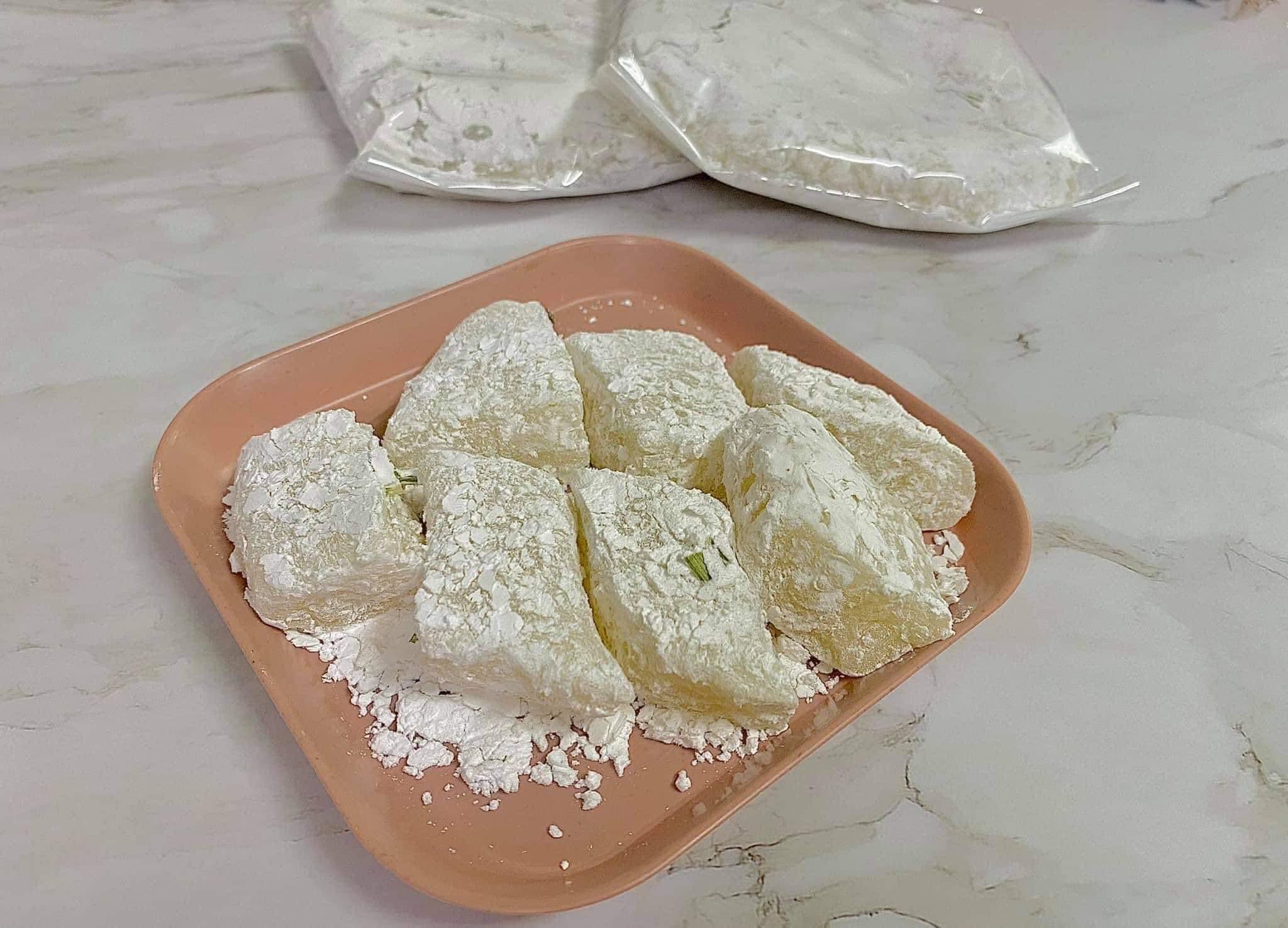
Bánh Hồng Tam Quan is a traditional specialty associated with the Tam Quan region of Binh Dinh, a land long known for its coconut-growing traditions. Made primarily from glutinous rice, sugar, and fresh coconut, the cake has a soft, chewy texture, a fragrant aroma, and a distinctive sweetness.
The cake is closely connected with weddings, engagement ceremonies, Tet celebrations, and the tradition of giving local specialties as gifts. Its simple ingredients and familiar preparation have made Bánh Hồng an enduring part of the culinary culture of Tam Quan.
A local folk verse celebrates the coconut-growing land of Tam Quan:
“Công đâu công uổng công thừa
Công đâu gánh nước tưới dừa Tam Quan.”
- Vietnamese name: Bánh Hồng Tam Quan
- English name: Tam Quan Bánh Hồng
- Locality: Tam Quan, Binh Dinh
- Region: Xứ Nẫu, Central Vietnam
- Main ingredients: Glutinous rice, sugar, fresh coconut
- Traditional color: Opaque white
- Other variations: Pink and green
- Texture: Soft, chewy, slightly firm
- Flavor: Sweet, fragrant, rich in coconut
- Typical occasions: Weddings, engagement ceremonies, Tet, and gifts
Table of Contents
ToggleFrom Glutinous Rice to Bánh Hồng
The preparation of Bánh Hồng begins with carefully selected glutinous rice, traditionally including newly harvested glutinous rice. The rice is soaked overnight before being ground into wet rice flour.
The flour is then pressed to remove excess water and formed into pieces of dough. These pieces are boiled before being added to the sugar mixture.
Cooking the dough is one of the important stages. The heat needs to be carefully controlled so that the dough cooks evenly without remaining raw, becoming lumpy, or turning too soft.
Once the dough is properly cooked, it is placed into the cooking sugar and mixed together. Freshly grated coconut is then added. The mixture must be stirred quickly and evenly so that the rice dough, sugar, and coconut combine into a smooth, cohesive mass.
Shaping the Cake
After the mixture reaches the appropriate consistency, it is transferred into a mold that has been dusted with dry glutinous rice flour.
The cake is pressed and rolled into a square shape, generally around 3 to 4 centimeters thick. More dry glutinous rice flour is sprinkled over the surface to prevent sticking.
After cooling, the cake can be cut into smaller pieces and served.
The traditional cake is usually opaque white, although pink and green versions can also be found. These variations add visual appeal while retaining the characteristic chewy texture of Bánh Hồng.
Why Is It Called Bánh Hồng?
The name Bánh Hồng is commonly associated with the cake’s color. Although the traditional version is white, colored versions in pink and green have also been made using natural or food coloring ingredients.
The name also carries a cultural association with happiness and marriage. Because Bánh Hồng is traditionally used at weddings and engagement celebrations, it has become associated with good news, family happiness, and the formation of a new household.
Among local expressions, the phrase “Sớm cho bà con ăn bánh hồng”, meaning roughly “Soon, let everyone enjoy Bánh Hồng,” can be used as a playful wish that a young person will soon find a partner and get married.
Bánh Hồng in the Culinary Culture of Tam Quan
Bánh Hồng is particularly associated with weddings and family celebrations in the Tam Quan area. The cake can be prepared for guests, shared among relatives, or presented as a traditional gift.
It is also enjoyed during Tet and other family gatherings. Fresh coconut is an important ingredient, which gives the cake its characteristic richness and fragrance but also means that the traditional cake has a relatively short shelf life, around five days according to the source.
When served, Bánh Hồng is often enjoyed with tea. The gentle bitterness of tea helps balance the sweetness and richness of the cake, making the combination particularly suitable for conversations and family gatherings.
The Flavor of Tam Quan Bánh Hồng
A good piece of Bánh Hồng has a soft yet pleasantly chewy texture. The aroma of glutinous rice blends with the sweetness of cooked sugar, while fresh coconut provides a fragrant, slightly rich and creamy note.
Its appearance may be simple, but the cake carries a strong connection with the culinary traditions of Tam Quan and the wider Binh Dinh region.
For travelers exploring Central Vietnam, tasting or bringing home Bánh Hồng Tam Quan offers a chance to experience a traditional specialty shaped by the region’s glutinous rice and coconut culture. More than a sweet cake, it is part of the food traditions surrounding weddings, family gatherings, hospitality, and the everyday culinary memory of Tam Quan.