A Rum Deng Weaving Craft Village is located in Residential Group 4, A Luoi 2 Commune, Hue City. It is home to a long-standing traditional weaving craft of the Ta Oi people, passed down through generations. More than a means of producing textiles, Deng weaving preserves a distinctive body of cultural knowledge, artistic expression and traditional craftsmanship associated with the Ta Oi community in the A Luoi highlands.
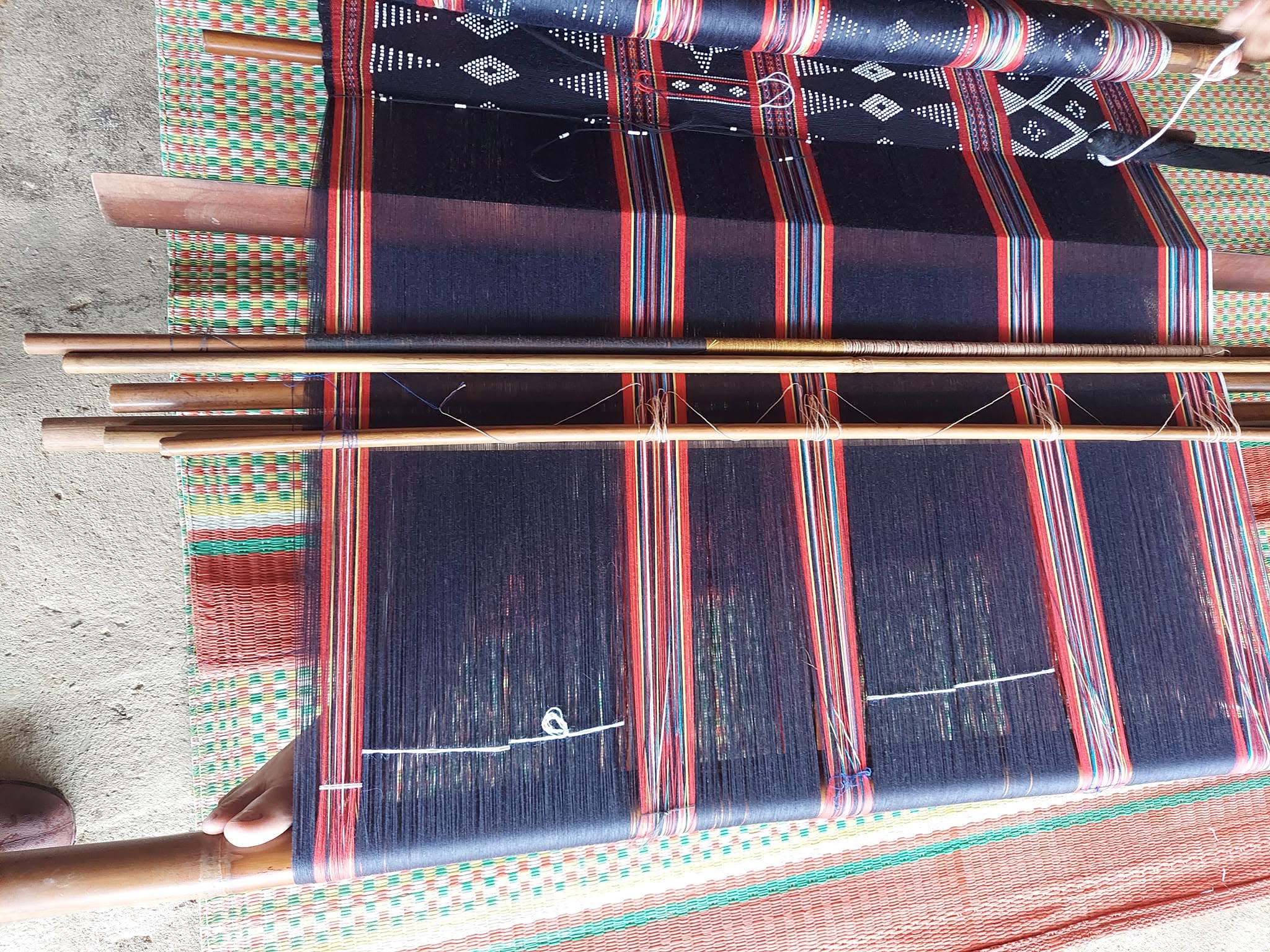
One of the most distinctive features of Deng textiles is their decorative technique. In addition to colored threads, artisans directly incorporate beads into the weaving process to create patterns on the fabric. This combination of woven threads and beads gives A Rum Deng textiles a recognizable character that distinguishes them from many other brocade traditions whose patterns are created primarily with colored yarn.
From A Rum Village to a Traditional Craft Village
According to local records, around 1965, the Ta Oi community living in this area called their settlement A Rum Village. In 1976, when A Luoi District was established, the village became known as A Rum Hamlet, part of Hong Nam Commune, A Luoi District. Later, when Hong Nam Commune became A Luoi Town, A Rum Village became part of Residential Group 4 of A Luoi Town.
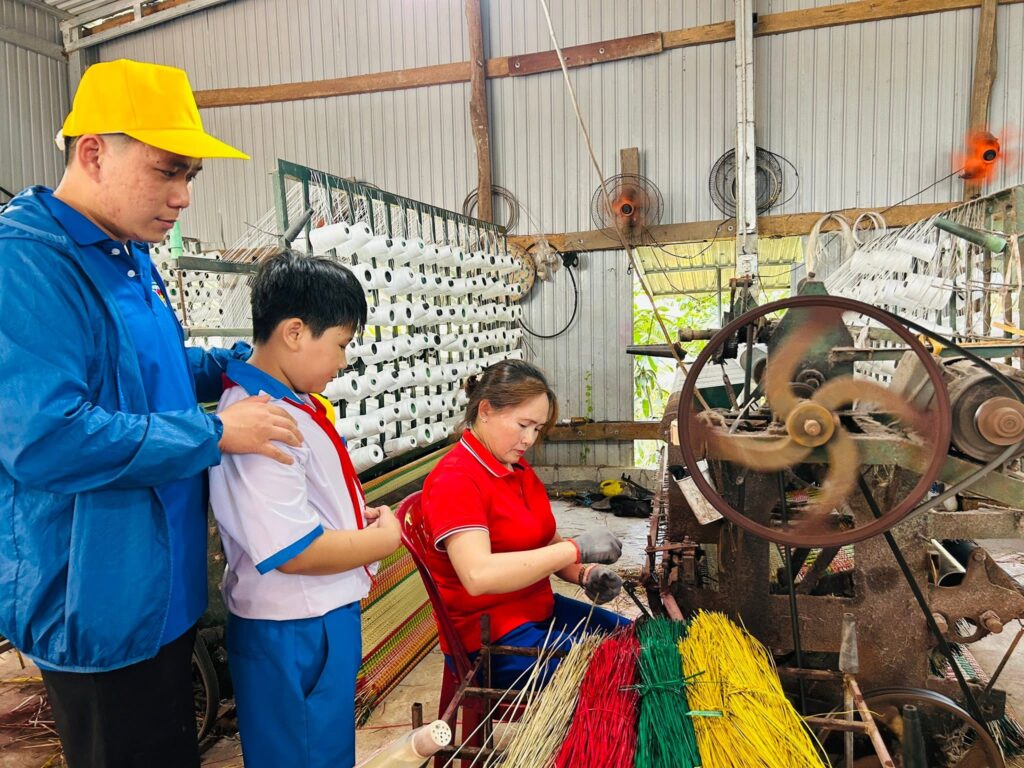
Despite these administrative changes, the Deng weaving tradition continued to be practiced. Local weavers have preserved and passed down their techniques while adapting the craft to contemporary life. The textiles are used within families and the community, while finished products are also sold in the market, providing an additional source of household income.
In the past, Deng textiles were primarily made for everyday life and agricultural work. Today, the craft has received greater attention and efforts have been made to revive it. Deng products are increasingly used in offices, schools and major cultural occasions, giving the traditional textile a broader presence in contemporary life.
Cotton Fibers and the Colors of the Highlands
Traditional Deng weaving uses cotton fibers obtained from natural sources. The fibers are processed into yarn and combined with colors such as yellow, black and blue to create the textile and its decorative patterns.
During the weaving process, artisans rely on experience and precision to control the yarn, colors, pattern density and placement of individual beads. The combination of weaving and hand decoration gives each piece of Deng fabric the imprint of the person who created it.
The patterns are more than decorative elements. They reflect the surrounding environment, everyday activities and cultural life of the Ta Oi community. Through these motifs, Deng textile art expresses a connection with nature, homeland, people and ethnic identity.
Beads as a Distinctive Feature of A Rum Deng
The direct incorporation of beads into the woven fabric is one of the notable characteristics of Deng weaving. Rather than relying solely on different colored threads to create motifs, artisans introduce beads during the weaving process, producing distinctive visual accents and adding depth to the surface of the textile.
This technique requires patience and precision. The weaver must maintain the structure of the fabric while carefully controlling the position of each bead so that the intended pattern and composition are preserved.
Behind every piece of Deng fabric lies a process of careful manual work. The value of the textile therefore comes not only from its colors and motifs but also from the traditional knowledge and skills accumulated and transmitted among Ta Oi women over generations.
Products Created on the Deng Loom
The craft village includes many households involved in Deng weaving. According to the source, the village produces more than 2,000 pieces of Deng fabric each year in a variety of patterns, dimensions and designs according to consumer preferences.
Traditional fabric is transformed into a range of products for everyday use and the market, including clothing, men’s loincloths, belts, wallets, cushions, handbags, scarves and other handicraft products.
This diversity allows Deng weaving to respond to contemporary demand while maintaining its connection with the traditional clothing and cultural life of the Ta Oi people.
The craft village is also associated with artisans including Mai Thi Hop, Ra Pat Thi Nhan, Ho Thi Phuoc, BLup Thi Zot and Le Thi Ly. These artisans have contributed to maintaining techniques, transmitting knowledge and continuing to create Deng textiles that carry distinctive Ta Oi cultural characteristics.
Deng Weaving and the Artistry of Ta Oi Women
Within Ta Oi cultural life, Deng weaving is not simply an occupation. It is also a space in which women demonstrate their skill and creativity. From preparing fibers and combining colors to creating patterns and incorporating beads, every stage requires patience, diligence and practical knowledge.
The motifs on Deng textiles reflect the community’s environment and spiritual world. Images associated with nature, people and familiar aspects of daily life are transformed into a visual language expressed through the fabric.
In this way, a piece of Deng textile becomes a form of cultural memory created from fibers, colors and small beads. Weaving therefore carries both practical and cultural significance, allowing the Ta Oi community to express its identity while preserving traditional knowledge.
National Intangible Cultural Heritage
On November 21, 2019, the Minister of Culture, Sports and Tourism issued Decision No. 4036/QD-BVHTTDL announcing the List of National Intangible Cultural Heritage, which included the Deng weaving craft (brocade) of the Ta Oi people in A Luoi District, according to the source.
The recognition reflects the values associated with Deng weaving, including traditional craftsmanship, decorative art, community knowledge and the transmission of skills across generations.
For A Rum, weaving also has an important livelihood function. Deng textiles are used by local people while also generating additional income for participating households. Efforts to revive and develop Deng products provide the craft with new opportunities to remain part of contemporary life while retaining its distinctive techniques.
A Traditional Craft Village of A Luoi
A Rum Deng Weaving Craft Village, located in Residential Group 4, A Luoi 2 Commune, Hue City, was recognized by the People’s Committee of Thua Thien Hue Province as a traditional craft village under Decision No. 56/QD-UBND dated January 11, 2021.
From an occupation once closely associated with the clothing and everyday needs of the Ta Oi community, A Rum Deng weaving has become a cultural product of the A Luoi region. Each textile represents the work of an artisan while preserving memories of the mountains, the community and the cultural life of the Ta Oi people.
Preserving Deng weaving therefore means more than maintaining a traditional production method. It means preserving a cultural language expressed through colors, patterns and beads woven into the fabric.
Basic Information
| Item | Information |
|---|---|
| Craft village | A Rum Deng Weaving Craft Village |
| Location | Residential Group 4, A Luoi 2 Commune, Hue City |
| Community | Ta Oi people |
| Traditional craft | Deng weaving and brocade weaving |
| Products | Deng fabric, clothing, men’s loincloths, belts, wallets, cushions, handbags, scarves and handicrafts |
| Production | According to the source, more than 2,000 pieces of Deng fabric per year |
| National intangible cultural heritage | Deng weaving craft (brocade) of the Ta Oi people |
| Heritage decision | Decision No. 4036/QD-BVHTTDL, November 21, 2019 |
| Craft village recognition | Decision No. 56/QD-UBND, January 11, 2021 |
| Recognizing authority | People’s Committee of Thua Thien Hue Province |
Cultural Value of A Rum Deng Weaving
A Rum Deng weaving is a traditional craft closely connected with the cultural life and livelihood of the Ta Oi community. Its value comes from weaving techniques, knowledge of natural fibers and colors, decorative skills, the incorporation of beads and the transmission of knowledge within families and the community.
More broadly, Deng textiles preserve a distinctive element of Ta Oi cultural identity in A Luoi. Every piece of fabric carries not only the visual language of its patterns and colors but also the patience, skill and cultural memory of the artisan who creates it.