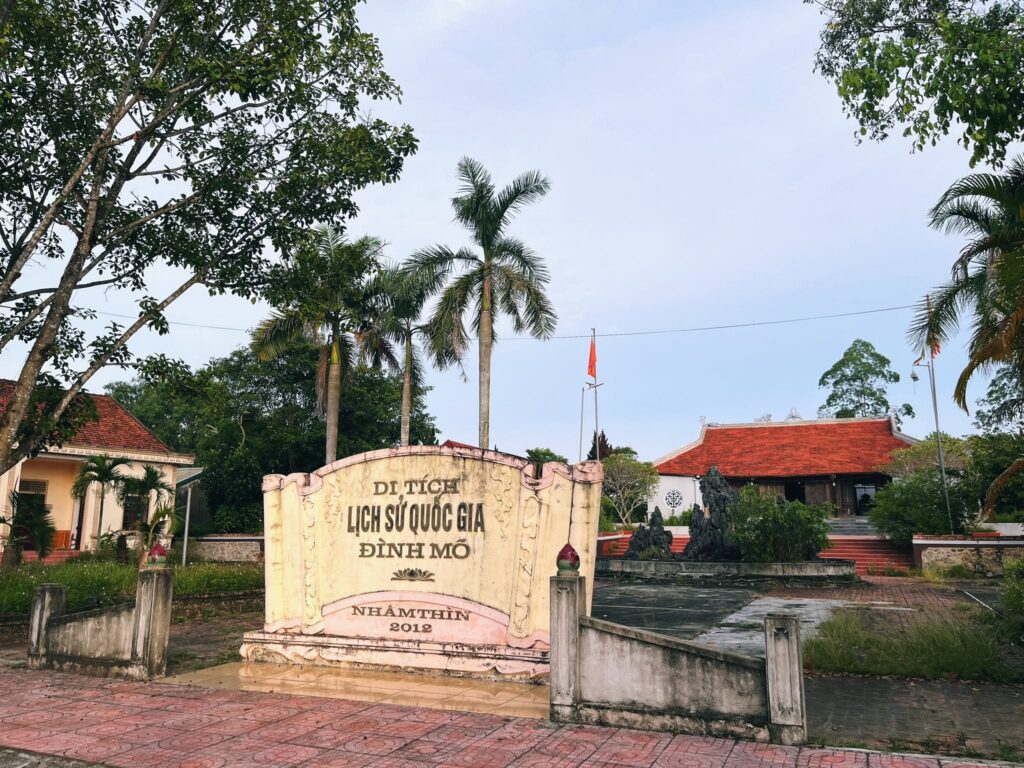


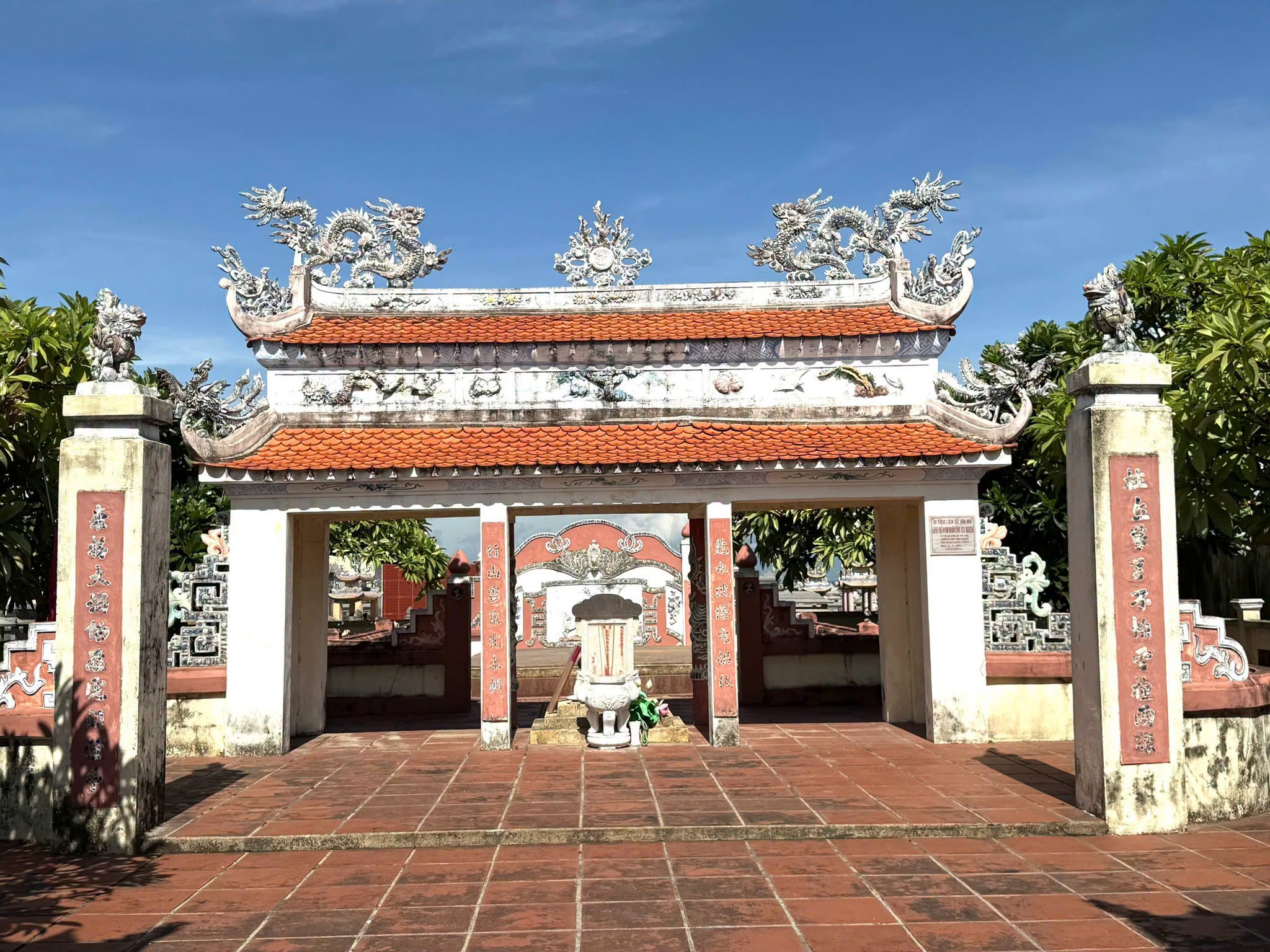
The Tomb of Ông Ích Khiêm is a historical monument dedicated to a distinguished military commander of Vietnam’s Nguyen Dynasty. Renowned for his intelligence, military leadership, strategic abilities, and patriotism, Ông Ích Khiêm played an important role in resisting French colonial forces during their initial attack on Da Nang in 1858.
Beyond commemorating an accomplished military officer, the tomb honors a historical figure remembered for his strong character, integrity, and refusal to submit to powerful authorities. Today, the monument preserves the legacy of a prominent figure from the former Quang Nam region and offers visitors an opportunity to explore Da Nang’s history.
Location and Origins of the Tomb
The Tomb of Ông Ích Khiêm is located in the Go Mo area, formerly part of Hoa Tho Commune, Hoa Vang District, Da Nang. The site lies approximately 10 kilometers southwest of the city center and is closely associated with his hometown of Phong Le Village.
Ông Ích Khiêm, whose courtesy name was Muc Chi, was born in 1829 in Phong Le Village, Thanh Quyt Canton, Dien Ban District, former Quang Nam Province. His birthplace is now within Da Nang.
After his death in Binh Thuan in 1884, his son, Ông Ích Thiện, brought his remains back to Phong Le Village for burial. In 1938, the 13th year of Emperor Bao Dai’s reign, his remains were reinterred in the Go Mo area, where the tomb stands today.
The relocation reflected his family’s efforts to preserve the resting place of an important historical figure. Over time, the tomb became a memorial associated with his life, military career, and contributions to Vietnam.
Early Life and Official Career
Ông Ích Khiêm grew up in Phong Le Village, a traditional community in the former Quang Nam region. From an early age, he was recognized for his intelligence and abilities in both literature and martial arts.
In 1847, during the seventh year of Emperor Thieu Tri’s reign, he passed the provincial imperial examination and earned the degree of Cu Nhan, reportedly ranking 14th among 116 successful candidates.
Following his success, he was appointed to the Imperial Cabinet and later became District Magistrate of Kim Thanh in Hai Duong Province.
Throughout his career, he held various administrative and military positions and was entrusted with important responsibilities in maintaining regional security and stability.
Ông Ích Khiêm was known for his straightforward personality, independence, and unwillingness to flatter influential officials. Although these qualities earned him respect, they also led to conflicts within the imperial administration. Historical accounts indicate that he was demoted and reinstated on several occasions.
His military abilities and decisiveness led to his participation in campaigns against armed bandits, pirates, and other threats to local security.
People in his hometown affectionately referred to him as “Ông Tiểu Phong Lệ”, a nickname associated with his military reputation and official position.
His Role in the Resistance Against the French in Da Nang
On September 1, 1858, French and Spanish allied forces attacked Da Nang, marking the beginning of the French conquest of Vietnam.
In response, the Nguyen Dynasty organized defensive forces to prevent the invaders from expanding their occupation.
During this period, Ông Ích Khiêm served under the command of Nguyễn Tri Phương, the senior military commander responsible for defending Da Nang.
He participated in strengthening defensive positions, organizing military outposts, and reinforcing strategic locations, including the Hai Van Pass, Lien Tri, and Phong Le areas.
He also contributed to the construction of defensive fortifications extending from Hai Chau to Phuoc Ninh.
These activities helped strengthen Vietnamese defenses, restrict the advance of the allied forces, and support the continued resistance of local soldiers and communities.
Ông Ích Khiêm became recognized as a capable commander with a strong sense of responsibility and determination to defend his country. His participation in the Da Nang campaign was an important chapter in his long military career under the Nguyen Dynasty.
Military Achievements and Contributions
Following his involvement in the resistance against French forces in Da Nang, Ông Ích Khiêm continued to undertake military assignments in northern Vietnam.
In 1865, he was appointed to a military suppression role in Hai Duong, where he participated in campaigns against armed groups entering northeastern Vietnam from islands off southern China.
Following successful operations, he received additional military and administrative responsibilities.
Between 1868 and 1869, he commanded forces against pirate groups commonly known as Tau O, which were active around the Bac Ninh region.
He was subsequently reinstated to senior administrative and military positions.
Due to health problems, he requested permission to return to his hometown for a period of rest.
In 1874, when Phạm Phú Thứ was appointed Governor-General of Hai Duong, Ông Ích Khiêm was recommended for further military responsibilities in Bac Ninh to help stabilize the region.
During the following years, he continued to hold various military and administrative appointments.
According to historical materials, he was eventually granted the noble title Kien Trung Nam during the early Kien Phuoc reign.
His career demonstrates the important responsibilities assigned to him by the Nguyen court, ranging from coastal security and anti-piracy campaigns to defensive military operations and regional administration.
Final Years and Death in Binh Thuan
Despite his military achievements, Ông Ích Khiêm’s outspoken personality and uncompromising character frequently brought him into conflict with influential court officials.
Following the death of Emperor Tu Duc in 1883, the Nguyen court experienced considerable political instability.
According to historical accounts, Ông Ích Khiêm was accused by powerful court figures, imprisoned, and subsequently exiled to Binh Thuan.
He died there in 1884 while in detention.
Some historical materials record his death as July 19, 1884, while others mention the 19th day of the eighth lunar month of the Giap Than year. These dates require further comparison with historical records to establish the precise chronology.
After his death, the imperial court granted him posthumous honors and recognition, while his family received certain privileges.
His remains were returned to his hometown for burial and later reinterred at the present tomb site in 1938.
His life reflects the challenges faced by a talented military officer whose commitment to duty and independent character often conflicted with the political realities of the late Nguyen Dynasty.
Tomb Architecture and Stone Inscription
The Tomb of Ông Ích Khiêm features an octagonal architectural design with a clearly defined burial area, surrounding walls, and a stone inscription pavilion at the front.
According to documented measurements, the tomb complex extends approximately 13.8 meters from its entrance and measures around 6.1 meters in width.
The surrounding wall is approximately 0.72 meters high, while the burial mound measures about 4.75 meters long, 3.5 meters wide, and 0.35 meters high.
In front of the tomb stands a small pavilion containing a marble stele measuring approximately 0.83 meters in height and 0.54 meters in width.
The stele is decorated with traditional dragon, phoenix, floral, and foliage motifs, reflecting architectural elements commonly found in memorial structures associated with distinguished figures of the Nguyen Dynasty.
The inscription reads:
“Hoàng triều – Hiển tổ Binh bộ Tả thị lang, tấn phong Kiên Trung Nam linh mộ.
Bảo Đại thập tam niên, tứ nguyệt, kiết nhật.”
The inscription identifies the burial place of an official associated with the position of Left Vice Minister of War and the noble title Kien Trung Nam.
It also records that the stele was erected on an auspicious day in the fourth lunar month of the 13th year of Emperor Bao Dai’s reign, corresponding to 1938.
The inscription is a valuable historical artifact documenting the reinterment and recognition of Ông Ích Khiêm.
Together with the tomb’s architecture, it contributes to the site’s historical and cultural significance.
Historical Significance and Cultural Heritage
The Tomb of Ông Ích Khiêm commemorates an important historical figure from the former Quang Nam region who contributed to Vietnam’s military affairs and resistance against French colonial expansion.
Its significance extends beyond being a burial site. The monument preserves the memory of a determined military commander remembered for his integrity, strategic abilities, and patriotic spirit.
His life offers insights into the military organization of the Nguyen Dynasty, the defense of Da Nang in 1858, and the political developments of Vietnam during the second half of the nineteenth century.
Ông Ích Khiêm’s name also remains part of Da Nang’s urban landscape.
A major street named after him extends approximately 2,350 meters from the Thanh Binh Beach area toward Nguyen Van Linh Street, according to the historical information provided.
Preserving his tomb and commemorating his name help maintain local historical memory while encouraging future generations to appreciate Vietnam’s cultural heritage and patriotic traditions.
Recognition as a National Historical Monument
The Tomb of Ông Ích Khiêm was officially recognized as a National Historical Monument on July 12, 2001, by Vietnam’s Ministry of Culture and Information.
This designation acknowledges the historical and cultural importance of the site and provides a foundation for its conservation and protection.
Today, the tomb is a meaningful destination for visitors interested in Da Nang’s history, notable figures from the former Quang Nam region, and Vietnam’s early resistance against French colonial forces.
Quick Facts About the Tomb of Ông Ích Khiêm
| Information | Details |
|---|---|
| Site name | Tomb of Ông Ích Khiêm |
| Historical figure | Ông Ích Khiêm |
| Courtesy name | Muc Chi |
| Born | 1829 |
| Died | 1884 |
| Birthplace | Phong Le Village, former Quang Nam Province |
| Tomb location | Go Mo area, former Hoa Tho Commune, Da Nang |
| Historical period | Nguyen Dynasty |
| Noble title | Kien Trung Nam |
| Major historical role | Participated in the defense of Da Nang against French-Spanish forces in 1858 |
| Architectural features | Octagonal tomb with a marble inscription stele |
| Reinterment year | 1938 |
| National monument recognition | July 12, 2001 |
| Historical significance | Military history, regional heritage, and patriotic traditions |