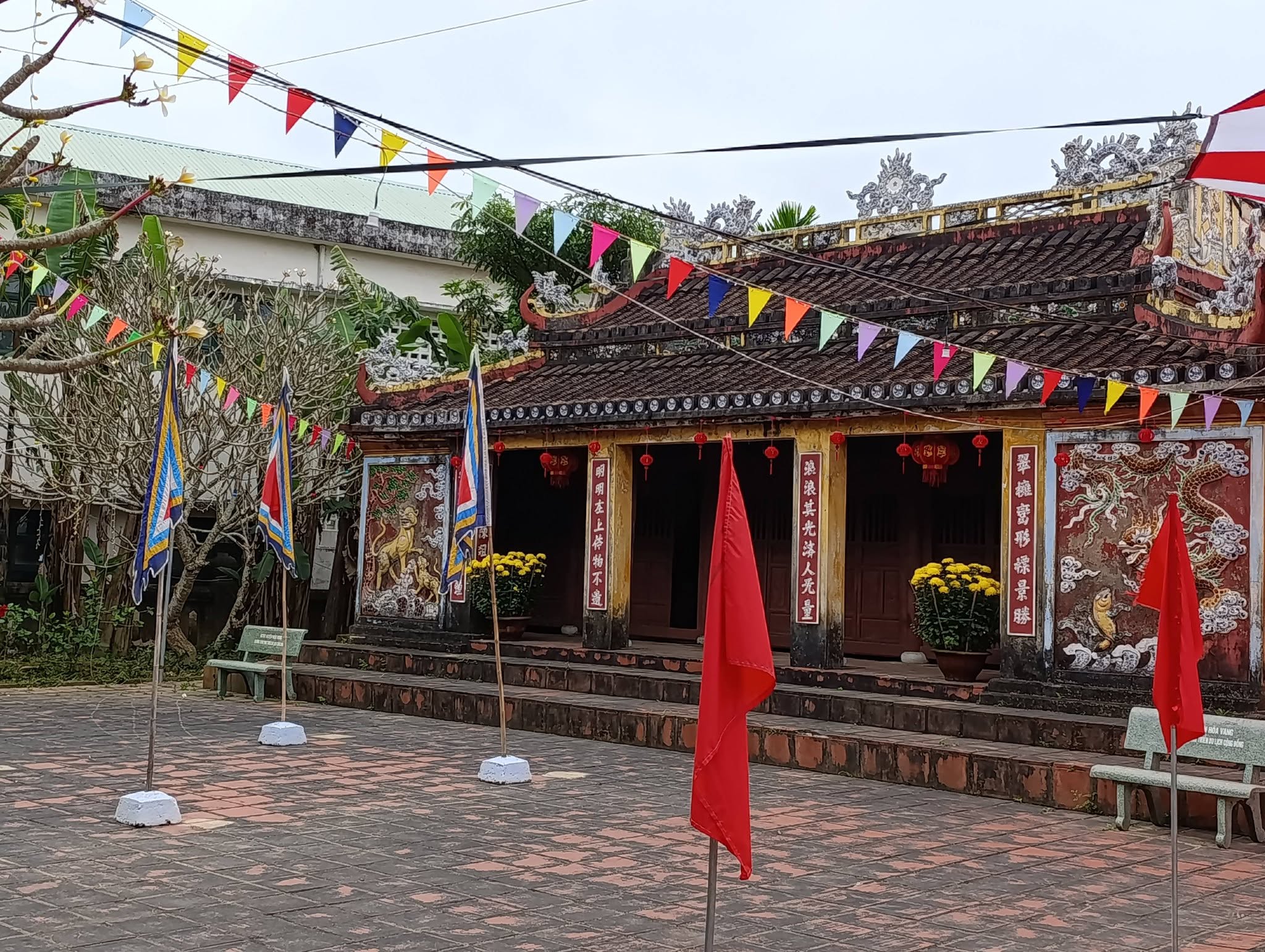
Tuy Loan Communal House is a traditional religious and architectural landmark in Hoa Vang Commune, Da Nang, Vietnam. Located within the historic village of Tuy Loan, whose history stretches back more than 500 years, the communal house is not only a place dedicated to the village’s founding ancestors but also an important center of cultural, spiritual, and community activities. Despite centuries of historical change, it continues to preserve valuable architectural features, traditional customs, and cultural practices that reflect the identity of the rural communities along the Tuy Loan River.
Situated approximately 15 kilometers southwest of central Da Nang, near National Highway 14B, Tuy Loan Communal House is closely associated with the history and development of Tuy Loan Ancient Village, one of the best-known traditional villages in the Da Nang area.
The village is particularly notable for its enduring customs, traditional festivals, and local handicrafts, which have been passed down through generations.
Beyond its spiritual significance, Tuy Loan Communal House is an appealing destination for visitors interested in discovering the cultural heritage of central Vietnam. Surrounded by peaceful rural scenery, traditional houses, mature trees, and the Tuy Loan River, the communal house offers a glimpse into the historical landscape of a Vietnamese village.
Visitors can explore the history of local settlement, admire traditional communal house architecture, learn about the famous Tuy Loan rice paper-making craft, and experience cultural traditions that remain closely connected to community life.
History of Tuy Loan Communal House and the Village’s 500-Year Heritage
Tuy Loan is one of the long-established communities in the Hoa Vang area of Da Nang. According to local tradition, the village’s origins are associated with the migration and settlement of Vietnamese communities who cleared land, established agricultural settlements, and gradually developed social institutions in the southern regions of the country.
Over more than five centuries, Tuy Loan has preserved many historical traces, traditional customs, and forms of cultural expression that reflect the experiences of successive generations.
At the center of this heritage stands Tuy Loan Communal House, a place that embodies the relationship between the village’s founding families, its residents, and the land they cultivated and developed.
According to traditions preserved by the local community, the establishment of Tuy Loan Village is associated with five founding ancestors belonging to the Dang, Lam, Nguyen, Tran, and Le family lineages.
These founding families are remembered for their contributions to clearing land, establishing the village, and laying the foundations for community life.
Their contributions continue to be honored through traditional worship practices and the annual communal house festival.
The veneration of founding ancestors is an important feature of Vietnamese village culture.
Individuals who contributed to establishing settlements, cultivating land, organizing communities, and developing local livelihoods were traditionally honored by later generations.
Communal houses, ancestral halls, and other religious buildings became places where communities expressed gratitude and maintained their connection with the past.
In this context, Tuy Loan Communal House represents more than a place of worship.
It is a symbol of the village’s collective history, preserving memories of the earliest generations who settled the area, developed agricultural activities, and established the customs that shaped community life.
The historical materials introducing Tuy Loan Ancient Village describe the existing communal house as an architectural structure with a history extending over a century.
The village itself, however, has a much longer history, traditionally estimated at more than 500 years.
It is therefore important to distinguish between the age of the village and the construction or restoration history of the communal house.
Throughout Vietnamese history, communal houses played a central role in rural society.
They served as places for religious ceremonies, ancestor commemoration, community gatherings, and collective activities.
In many villages, the communal house was among the most important public buildings, representing both spiritual beliefs and social organization.
For the residents of Tuy Loan, the communal house has long been associated with important events in the annual cultural calendar, particularly the traditional festival held at the beginning of the lunar year.
Ceremonies conducted at the communal house express gratitude to the founding ancestors and convey wishes for peace, favorable weather, productive harvests, and community harmony.
One of the historically significant features associated with Tuy Loan Communal House is a collection of 20 royal decrees from the Nguyen Dynasty, as mentioned in introductory materials about the site.
Royal decrees, known in Vietnamese as sac phong, were official documents issued by Vietnamese emperors.
In the context of communal houses and traditional religious institutions, these documents often recognized or conferred titles upon deities and spiritual figures worshipped by local communities.
They formed an important connection between the imperial court and village religious practices.
For historians and cultural researchers, royal decrees provide valuable evidence about administrative history, local religious beliefs, social organization, and the relationship between central authority and rural communities.
The preservation of such documents at communal houses also reflects the continuity of local worship traditions across generations.
In Tuy Loan, the reported collection of royal decrees adds an important documentary dimension to the site’s architectural and spiritual heritage.
Beyond their historical value, these documents help illustrate the importance of the communal house in maintaining the village’s cultural identity.
The communal house is also closely associated with the collective memories of local residents.
Religious ceremonies, community meetings, and annual festivals have created a continuous connection between the village’s past and present.
Through these activities, younger generations have opportunities to learn about their ancestors, understand local customs, and develop a stronger connection to their homeland.
The combination of founding traditions, ancestral worship, historical documents, and community activities gives Tuy Loan Communal House a distinctive position within the cultural landscape of Hoa Vang.
Traditional Architecture and the Riverside Cultural Landscape
Tuy Loan Communal House stands within a traditional village landscape near the Tuy Loan River, where historical architecture and natural surroundings contribute to a harmonious rural setting.
Unlike modern urban buildings, traditional Vietnamese communal houses are characterized by their dignified appearance, tiled roofs, wooden structural elements, decorative details, and spacious courtyards.
These architectural features reflect both the practical requirements of communal activities and the religious beliefs of the communities that built them.
Over time, the building has been affected by natural weathering, climatic conditions, and historical changes.
The appearance of aged materials, weathered surfaces, and traditional decorative features contributes to the site’s historic atmosphere.
One of the defining characteristics of Vietnamese communal house architecture is the combination of a sacred worship space with areas intended for public gatherings.
The principal worship hall is traditionally reserved for religious ceremonies and the veneration of deities or founding ancestors.
Meanwhile, the courtyard and surrounding spaces provide room for community events, festival activities, and gatherings.
At Tuy Loan Communal House, traditional decorative elements contribute to the architectural character of the site.
Motifs associated with dragons, phoenixes, and other symbolic images reflect artistic conventions and spiritual concepts found in Vietnamese traditional architecture.
Dragons and phoenixes, in particular, are commonly associated with auspicious meanings, dignity, prosperity, and aspirations for peace.
The use of such motifs illustrates how architectural decoration can communicate cultural values beyond its purely aesthetic function.
Chinese characters, horizontal lacquered boards, parallel inscriptions, and historical documents associated with traditional communal houses also provide insight into the cultural environment of earlier Vietnamese society.
For many centuries, classical Chinese writing was used in official documentation, scholarship, religious activities, and traditional architecture in Vietnam.
Inscriptions preserved within communal spaces can therefore reveal aspects of historical language use, religious practices, and community values.
The architectural and decorative elements of Tuy Loan Communal House reflect the skills of traditional builders, carpenters, and artisans.
They also demonstrate the relationship between material craftsmanship and the spiritual beliefs of village communities.
Outside the communal house, the surrounding landscape retains characteristics associated with rural central Vietnam.
Village roads, green trees, traditional residential spaces, and the nearby river create a peaceful atmosphere that contrasts with the busy urban environment of central Da Nang.
The Tuy Loan River has played an important role in the historical settlement and economic development of the area.
For traditional agricultural communities, rivers provided water for everyday life and cultivation while also serving as transportation routes and channels for trade.
Riverside locations often encouraged the establishment of settlements, agricultural activities, and local markets.
The Tuy Loan River helped shape the village’s cultural landscape by connecting residential areas, farmland, transportation routes, and traditional production activities.
The relationship between the communal house, the river, and the surrounding settlement is therefore an important part of understanding the historical environment of Tuy Loan.
Visitors exploring the village can combine a visit to the communal house with walks through local roads and residential areas, observing aspects of traditional rural life.
The wider village environment offers an opportunity to appreciate how historical architecture, everyday activities, and natural scenery contribute to a shared cultural identity.
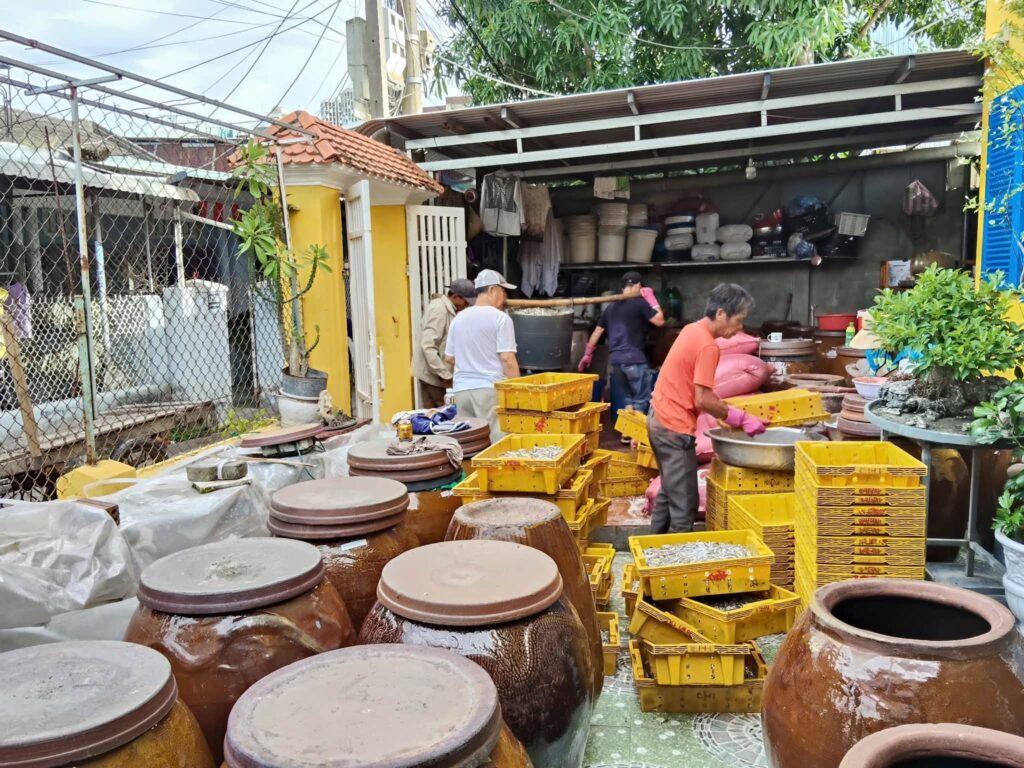
Another distinctive feature of Tuy Loan is its association with traditional rice paper making and Quang-style noodles.
Tuy Loan rice paper has long been recognized as a characteristic local food product of the Hoa Vang area.
The craft has been maintained through generations, reflecting traditional food-processing knowledge and the practical skills of local residents.
Producing rice paper involves several carefully coordinated stages, including selecting ingredients, preparing the batter, steaming or spreading the mixture, and drying the finished sheets.
Each stage affects the thickness, texture, flavor, and overall quality of the product.
The skills required for successful rice paper production are generally developed through experience and repeated practice.
During traditional holidays, particularly the Lunar New Year, rice paper production often becomes more active as households prepare food for family gatherings and festive occasions.
The craft therefore forms part of both the local economy and the culinary traditions of the village.
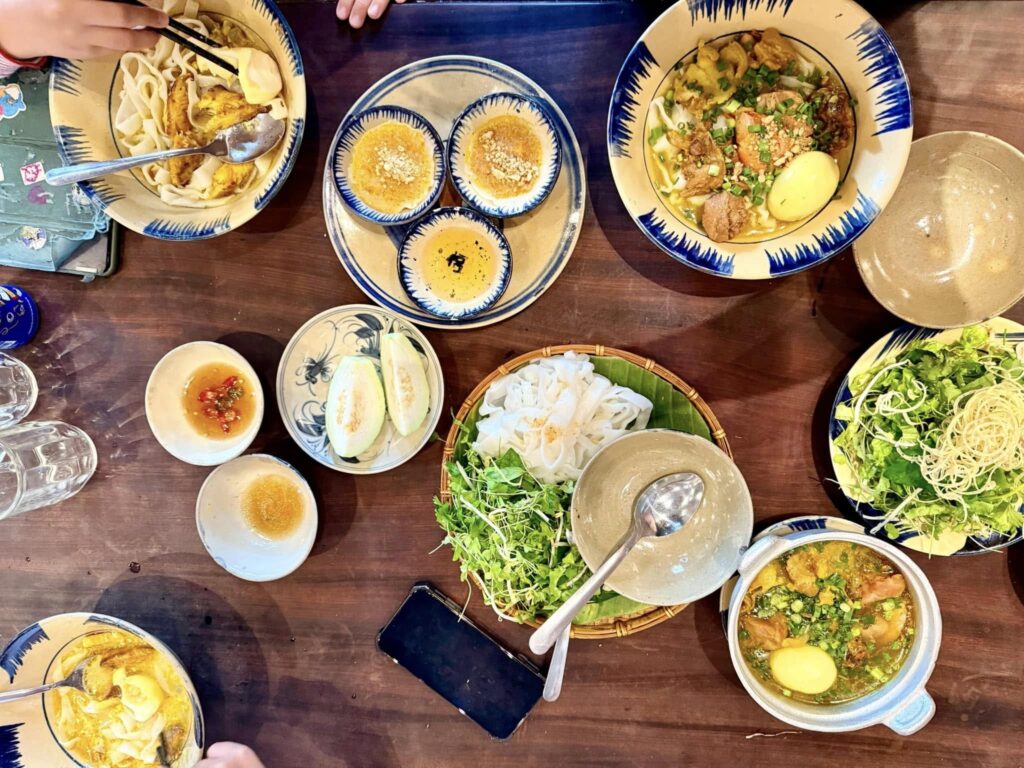
Alongside rice paper, Mi Quang, or Quang-style noodles, is another important element of the region’s culinary identity.
This traditional noodle dish is closely associated with the food culture of central Vietnam and remains popular among local residents and visitors.
Together, rice paper making and local cuisine add another dimension to the cultural significance of Tuy Loan.
The village is not simply a destination for architectural sightseeing. It also offers opportunities to discover traditional occupations, culinary knowledge, and the everyday experiences of local communities.
For travelers interested in authentic cultural experiences, a visit to Tuy Loan may begin with exploring the communal house and learning about the village’s founding history.
The journey can then continue through the surrounding settlement, with opportunities to discover traditional rice paper production and enjoy local specialties where available.
Such experiences connect historical monuments with living cultural practices, allowing visitors to better understand how traditional heritage continues to shape contemporary community life.
Tuy Loan Communal House Festival and Its Cultural Significance
The Tuy Loan Communal House Festival is one of the traditional cultural events associated with the Hoa Vang area of Da Nang.
The festival is held annually on the 9th and 10th days of the first lunar month, bringing together local residents, descendants of the village’s founding families, and visitors interested in traditional Vietnamese culture.
Taking place during the early days of the lunar year, the festival is an occasion for the community to commemorate its founding ancestors, express gratitude to earlier generations, and offer wishes for peace and prosperity in the year ahead.
The event traditionally consists of two main components: ceremonial rituals and festive community activities.
The ceremonial section reflects the spiritual and historical significance of the communal house.
Traditional activities include the procession of royal decrees, incense offerings, and rituals conducted to honor the village’s founding ancestors.
These ceremonies commemorate the contributions of those who established the settlement and laid the foundations for community life.
Particular respect is paid to the five founding ancestors associated with the Dang, Lam, Nguyen, Tran, and Le lineages.
Their commemoration demonstrates the importance of ancestral gratitude and the continuing relationship between family traditions and community identity.
The procession of royal decrees is especially meaningful within the ceremonial programme.
Royal decrees are regarded as historical documents associated with the village’s worship traditions and its relationship with the imperial court.
Presenting these documents during traditional ceremonies reinforces their symbolic importance and reminds participants of the historical continuity of local religious practices.
Incense offerings and communal rituals are performed in a solemn atmosphere.
They express the Vietnamese principle of remembering and honoring those whose efforts made the present community possible.
For the people of Tuy Loan, the festival is therefore more than a religious occasion.
It is also an annual gathering that strengthens social relationships, reinforces a sense of belonging, and maintains the traditions of the village’s family lineages.
Following the ceremonial activities, the festival becomes a lively celebration featuring traditional games and community competitions.
Activities mentioned in descriptions of the festival include tug-of-war, stick-pushing competitions, and rice paper-making contests.
Tug-of-war and stick-pushing are familiar forms of traditional entertainment at Vietnamese village festivals.
They encourage teamwork, physical strength, and friendly competition while creating an energetic atmosphere for participants and spectators.
Such activities also provide opportunities for residents of different ages to gather and celebrate together.
Among the festival’s most distinctive events is the traditional rice paper-making competition.
This activity is closely connected to Tuy Loan’s culinary heritage and its longstanding reputation for rice paper production.
During the competition, participants demonstrate their skills in preparing batter, spreading or steaming rice paper, and producing sheets with the desired appearance and consistency.
Successful rice paper making requires precise control of technique, timing, and materials.
The competition therefore celebrates both individual craftsmanship and the occupational knowledge preserved within the community.
Beyond its competitive element, the event introduces visitors to the traditional production process and the cultural importance of rice paper in local life.
It also helps promote one of the village’s characteristic products.
According to descriptions of the festival, residents of the village’s Dong and Tay hamlets participate in organizing and celebrating the activities.
Friendly competitions between community groups contribute to the festive atmosphere while strengthening relationships among residents.
Through these events, the festival becomes an important setting for the transmission of traditional knowledge.
Older residents can introduce customs, practical skills, and historical stories to younger generations.
Children and young people have opportunities to observe, participate, and learn about the traditions of their community.
This intergenerational connection is one of the most important cultural values of traditional village festivals.
The preservation of a festival involves more than maintaining a fixed programme of ceremonies.
Its vitality depends on the continued participation of the people who recognize it as part of their shared heritage.
At Tuy Loan, the combination of ancestral worship, traditional games, craft demonstrations, and community gatherings helps maintain the festival’s role in contemporary village life.
The festival also provides an opportunity to introduce local products and cuisine to visitors.
Traditional rice paper and other regional specialties contribute to the celebration’s cultural atmosphere and allow guests to experience aspects of everyday life in Hoa Vang.
For travelers, the festival period is a particularly interesting time to explore Tuy Loan and discover the traditions of rural Da Nang.
Visitors can observe ceremonial activities, learn about local beliefs, enjoy community events, and gain a deeper appreciation of the village’s cultural identity.
However, visitors should respect the sacred character of the communal house and its religious ceremonies.
Appropriate clothing, considerate behavior, and compliance with instructions from festival organizers are recommended.
The exact programme and timing of individual activities may vary from year to year, so visitors should check current information before planning their trip.
Beyond the annual festival, Tuy Loan Communal House continues to represent the historical identity and cultural continuity of the local community.
It connects past and present by preserving the memory of the village’s founding ancestors and providing a setting for traditional ceremonies.
In the context of urbanization and tourism development in Da Nang, protecting communal houses and traditional village customs is increasingly important.
Preservation should not focus solely on the physical building.
The surrounding cultural landscape, historical documents, religious practices, community memories, and traditional crafts are also essential elements of the site’s heritage significance.
Maintaining these connections helps ensure that the communal house remains a meaningful part of community life rather than becoming only an architectural monument.
The relationship between Tuy Loan Communal House, traditional rice paper production, local cuisine, and the annual festival also creates opportunities for culturally responsible tourism.
When developed with respect for local traditions and community participation, cultural tourism can contribute to heritage awareness and support the continued transmission of traditional knowledge.
For travelers seeking to discover a different side of Da Nang beyond its beaches and modern attractions, Tuy Loan Communal House offers a valuable opportunity to explore the city’s rural heritage.
Its history, architecture, founding traditions, and annual festival reveal important aspects of Vietnamese village culture.
The surrounding ancient village and riverside landscape add to the experience, providing a setting in which historical architecture and living traditions remain closely connected.
Tuy Loan Communal House is an important symbol of the historical, spiritual, and cultural traditions of Hoa Vang, Da Nang. Through its association with the village’s founding ancestors, traditional architecture, royal decrees, and annual festival, the communal house continues to preserve the collective memory of the local community. Together with Tuy Loan Ancient Village, its traditional rice paper-making craft, and the surrounding riverside landscape, the site contributes to the cultural diversity and heritage appeal of Da Nang.
Quick Information
| Item | Details |
|---|---|
| Heritage name | Tuy Loan Communal House |
| Vietnamese name | Đình làng Túy Loan |
| Alternative name | Dinh Tuy Loan |
| Heritage type | Historical, architectural, and traditional religious site |
| Current administrative location | Hoa Vang Commune, Da Nang, Vietnam |
| Historical administrative location | Hoa Phong Commune, Hoa Vang District, Da Nang |
| Location | Near National Highway 14B, within Tuy Loan Ancient Village |
| Distance from central Da Nang | Approximately 15 km |
| Landscape | Historic riverside village along the Tuy Loan River |
| Village history | More than 500 years |
| Communal house history | The existing structure is described as more than 100 years old in introductory materials |
| Honored figures | Five founding ancestors of Tuy Loan Village |
| Founding family lineages | Dang, Lam, Nguyen, Tran, and Le |
| Historical documents | 20 Nguyen Dynasty royal decrees mentioned in heritage descriptions |
| Architectural style | Traditional Vietnamese communal house architecture |
| Religious activities | Founding ancestor worship, incense offerings, and communal ceremonies |
| Major festival | Tuy Loan Communal House Festival |
| Festival dates | 9th and 10th days of the first lunar month |
| Festival activities | Royal decree procession, communal ceremonies, tug-of-war, stick-pushing, and rice paper-making competitions |
| Associated traditional craft | Tuy Loan rice paper making |
| Local cuisine | Tuy Loan rice paper and Mi Quang |
| Outstanding values | Village settlement history, architecture, religious traditions, festivals, and community culture |
| Visitor experiences | Exploring traditional architecture, village history, local crafts, and festival activities |
| Suggested visiting period | Year-round, especially during the early lunar-year festival |