


Vinh Lai Bamboo and Rattan Weaving Village, historically associated with the name Ke Si Village, is located in Lien Minh Commune, Ninh Binh Province, Vietnam. With a craft tradition believed to span more than 300 years, the village is known for its traditional palm-leaf mat weaving, a form of craftsmanship deeply connected to the agricultural lifestyle and cultural heritage of northern Vietnam.
For generations, local residents have transformed natural materials such as palm leaves, bamboo, and rattan into practical household items and agricultural tools. Among these products, traditional woven palm-leaf mats, locally known as cot la, are particularly representative of the village’s craft heritage.
Unlike industrial manufacturing, traditional weaving in Vinh Lai relies primarily on manual techniques, patience, and skills passed down through families. Each finished product reflects not only the craftsmanship of its maker but also the resourcefulness and practical knowledge of rural communities.
Today, as industrial materials increasingly replace traditional handmade products, Vinh Lai continues to represent an important part of Vietnam’s rural cultural heritage, with opportunities for craft preservation, sustainable production, and experiential tourism.
History of Vinh Lai Weaving Village and the Origins of Ke Si
Vinh Lai Village is located in Lien Minh Commune, Ninh Binh Province, within the cultural landscape of the former Nam Dinh region.
For centuries, agriculture has played an important role in local livelihoods, while household handicrafts developed alongside farming activities.
Among these traditional occupations, palm-leaf mat weaving became particularly significant because of its practical applications in everyday rural life.
According to local tradition, the village was historically known as Ke Si, an old place name preserved in community memory.
The craft of weaving palm-leaf mats is believed to have developed over more than 300 years, passing from one generation of artisans to the next.
However, the precise date when the craft first appeared and the identity of its original founder have not been conclusively established from the available historical materials.
In its early stages, weaving was primarily practiced to meet household and agricultural needs.
Local residents made use of natural materials that could be collected or obtained from nearby areas, producing lightweight, durable, and practical objects.
In traditional agricultural society, woven mats served various purposes, including drying crops, creating temporary partitions, providing protective coverings, and forming components of larger household or storage items.
As a result, weaving became a familiar household activity that could be carried out during periods when agricultural work was less demanding.
Over time, weaving techniques were passed from grandparents and parents to younger family members.
Beginners often started by preparing materials, arranging weaving strips, and practicing basic interlacing patterns.
As their skills developed, they learned more demanding techniques, particularly those required to produce evenly woven surfaces, secure structures, and neatly finished edges.
This family-based system of apprenticeship helped preserve traditional craftsmanship without the need for formal vocational institutions.
For the people of Vinh Lai, palm-leaf weaving represents more than a means of earning additional income.
It reflects a rural tradition of making practical use of natural resources, valuing careful manual work, and maintaining skills inherited from previous generations.
Traditional Palm-Leaf Weaving Techniques and Handmade Products
One of the defining features of Vinh Lai’s traditional craft is the use of natural materials to produce woven goods for household and agricultural purposes.
According to local accounts, palm leaves are among the principal materials traditionally associated with the village’s palm-leaf mat weaving.
Bamboo and rattan are also used for certain woven products, depending on their structure, function, and material requirements.
The selection of materials depends on factors such as flexibility, strength, dimensions, and the intended use of the finished product.
Selecting and preparing raw materials
The weaving process begins with choosing suitable palm leaves or other natural materials.
Craftspeople generally seek materials that are sufficiently strong and flexible, avoiding those that are excessively brittle, damaged, or unsuitable for weaving.
Palm leaves may be cleaned, dried, and prepared to make them easier to handle.
When bamboo or rattan is used, the material may be split or processed into strips of appropriate widths and lengths.
The preparation stage is important because poorly processed materials can break during weaving or reduce the durability of the finished product.
Arranging and interlacing the weaving strips
Once prepared, the palm-leaf strips or other weaving materials are arranged according to the desired pattern and dimensions.
The worker interlaces the strips to create a continuous woven surface.
Throughout the process, the tension and spacing must be carefully controlled to maintain a consistent structure.
If the strips are woven too loosely, the finished mat may lose its shape or become unstable.
Excessive force, on the other hand, may cause the materials to split or break.
This balance between firmness and flexibility is one of the essential skills of traditional weaving.
Shaping and finishing the woven mats
After the main woven surface reaches the required size, the craftsperson adjusts the edges, secures loose ends, and completes the finishing work.
These operations help the product retain its intended form and make it easier to roll, transport, store, or use.
The finishing technique may vary depending on the type of product.
A well-made woven mat generally features a relatively even surface, secure interlacing, and dimensions appropriate for its intended purpose.
Traditional products of Vinh Lai Village
Palm-leaf weaving and related basketry techniques have traditionally been used to create several types of household and agricultural products.
Agricultural drying mats are used for drying or handling crops, depending on the construction and suitability of the material.
Woven screens and partitions can provide temporary separation, shade, or protective coverings in traditional rural settings.
Woven storage containers and baskets are used for holding agricultural produce and household items.
Traditional rattan pillows represent another form of woven handicraft, using suitable materials and structures to create practical everyday objects.
Not all these products are made entirely from palm leaves. Different types of goods may require different natural materials and weaving methods.
A distinctive characteristic of the craft is that many production stages can be performed with simple tools rather than complex machinery.
This makes weaving suitable for household-scale production.
Craftspeople can organize their working hours around farming activities and other family responsibilities.
Through patient manual work, natural materials are transformed into practical objects that preserve the identity of traditional Vietnamese craftsmanship.
Palm-Leaf Weaving in Village Life and Community Culture
Historically, palm-leaf weaving played an important role in the livelihoods of many Vinh Lai families.
Because the craft could be practiced at home, it allowed residents to make productive use of time between agricultural seasons and earn supplementary income.
The work required relatively little production space and did not depend on expensive or complicated equipment.
This made it suitable for household-based production involving different generations.
According to local tradition, many Vinh Lai residents became familiar with weaving techniques from an early age.
Children could observe their grandparents and parents preparing materials, arranging palm-leaf strips, and completing simple weaving patterns.
As they grew older, those who continued practicing the craft gradually developed greater precision and technical knowledge.
Learning took place naturally within family life, creating a close connection between everyday work and the transmission of cultural traditions.
For older villagers, weaving also evokes memories of traditional rural life.
Familiar activities such as selecting leaves, preparing strips, weaving successive rows, and finishing mats formed part of the rhythm of village life.
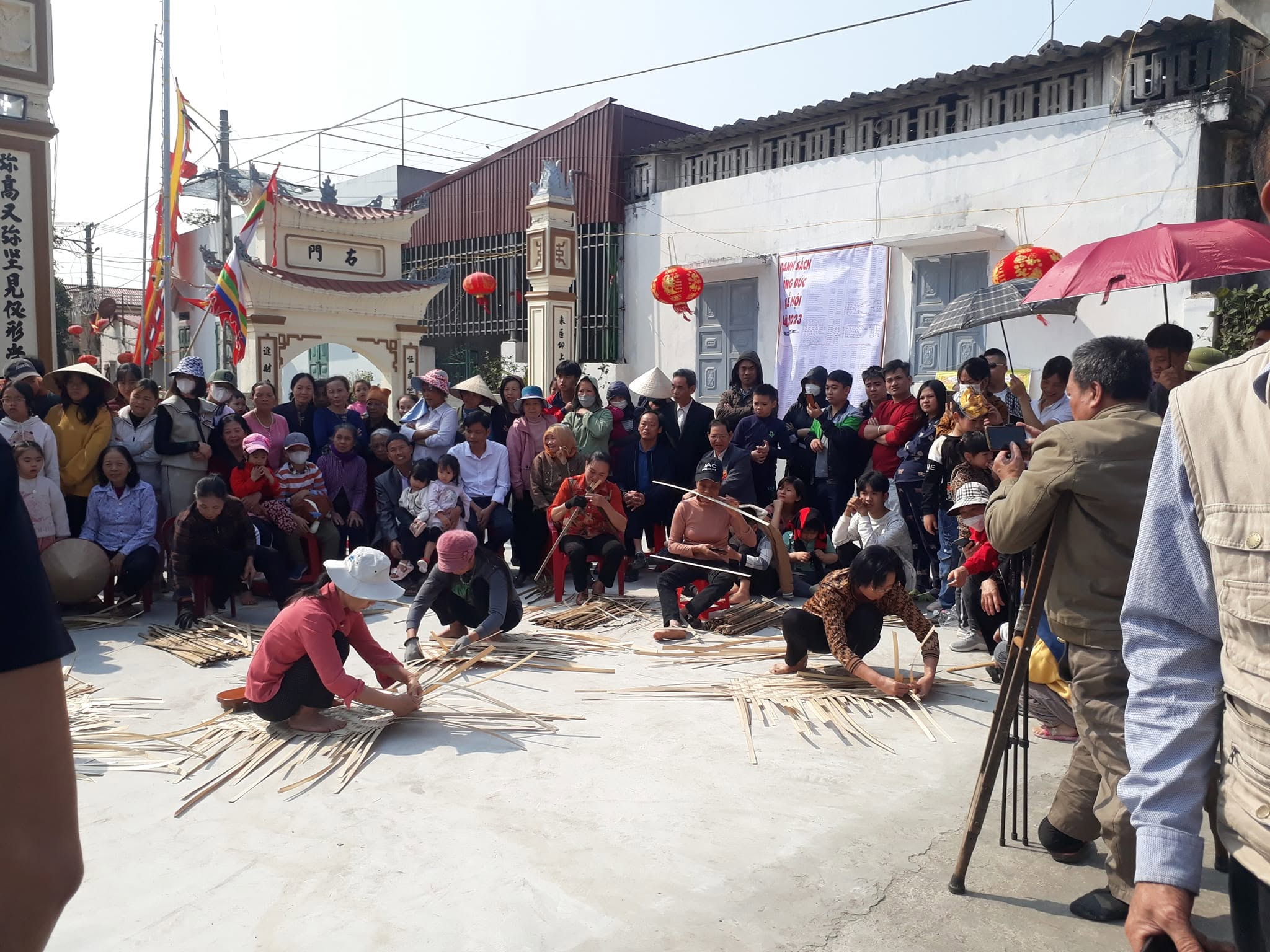
Traditional weaving competitions during spring festivals
An interesting aspect of Vinh Lai’s cultural heritage is the organization of activities celebrating palm-leaf weaving during community festivals.
According to local accounts, palm-leaf weaving competitions have been held on certain occasions during early spring celebrations.
These events provide opportunities for villagers to demonstrate their craftsmanship, exchange experience, and celebrate their shared heritage.
Participants may be asked to prepare weaving materials, complete specific patterns, or produce finished mats within a designated period.
Judging criteria may include technical skill, the consistency of weaving patterns, the quality of finished products, and the efficiency of the weaving process.
Beyond competition, these activities help create a festive atmosphere and encourage younger generations to appreciate traditional handicrafts.
They also provide opportunities for the community to recognize experienced artisans and celebrate skills preserved over many generations.
Festival schedules and competition programs may vary from year to year. Visitors interested in attending should consult local announcements before making travel arrangements.
The cultural significance of traditional weaving
Palm-leaf weaving reflects several important characteristics of traditional rural society in northern Vietnam.
First, it demonstrates how communities adapted natural resources to meet practical everyday needs.
Second, it highlights the importance of patience and careful craftsmanship, since each finished product requires repeated, precise manual movements.
Third, it reflects the communal nature of traditional village life, where skills were shared through families and neighbors.
These values have contributed to the distinctive cultural identity of Vinh Lai.
Although industrial materials have replaced many traditional woven goods, the craft remains meaningful as a source of knowledge about rural livelihoods, historical production techniques, and Vietnamese material culture.
Preserving Vinh Lai Weaving Heritage and Developing Experiential Tourism
As lifestyles and production methods continue to change, traditional palm-leaf weaving in Vinh Lai faces both challenges and new opportunities.
The widespread availability of plastic, metal, and industrially manufactured materials has transformed demand for traditional woven household products.
Many objects once commonly made from palm leaves, bamboo, or rattan have been replaced by mass-produced alternatives.
At the same time, handmade weaving is labor-intensive, and the market value of traditional products may not always reflect the time and effort required to produce them.
These conditions can make it difficult to maintain production and encourage younger workers to continue the craft.
However, growing interest in handmade goods, natural materials, and sustainable lifestyles may create new opportunities for traditional weaving communities.
With suitable designs, woven products could be adapted for home decoration, practical household use, cultural souvenirs, and other contemporary applications.
Product development should take account of material characteristics, production capacity, durability, safety, and actual market demand.
Preserving traditional weaving techniques
One of the most important priorities in craft preservation is safeguarding the knowledge of experienced artisans.
Traditional techniques such as selecting suitable materials, preparing palm leaves, splitting weaving strips, creating interlaced surfaces, and finishing product edges are valuable forms of practical cultural knowledge.
Documenting these techniques through written records, photographs, and videos could help preserve them for future generations.
Craft demonstrations, community workshops, and cultural events may also encourage greater awareness of the village’s heritage.
Experienced artisans play an essential role in these efforts because they possess practical knowledge that cannot always be fully communicated through written instructions.
Introducing the history and cultural identity of Vinh Lai through exhibitions and storytelling could further strengthen public recognition of the village’s traditional craft.
Potential for craft village tourism
With a history believed to extend over 300 years, Vinh Lai has potential to develop experiential tourism connected with palm-leaf weaving.
At workshops or community venues that are able to welcome visitors, travelers may learn how natural materials are prepared and observe craftspeople creating traditional weaving patterns.
Simple-looking operations, such as arranging palm-leaf strips, maintaining consistent tension, and securing the edges of a mat, can reveal the considerable skill involved in handmade production.
Where guided activities are available, visitors may have the opportunity to practice basic weaving techniques and create small handmade items under the supervision of local craftspeople.
Such experiences could be particularly suitable for cultural education programs, rural tourism, and school visits.
Beyond practical demonstrations, stories about historic Ke Si Village, agricultural life, and the transmission of weaving skills between generations offer valuable cultural insights.
However, the village’s tourism potential should not be confused with the availability of established visitor services.
Travelers should not assume that regular guided tours, weaving classes, or permanent exhibition facilities are currently operating.
Those interested in visiting workshops or arranging educational experiences should contact local authorities or production households in advance to confirm whether visits are possible.
Toward sustainable craft development
To support the long-term survival of traditional palm-leaf weaving, Vinh Lai could combine heritage preservation with product innovation and market development.
Promotional activities, participation in cultural exhibitions, and appropriately organized visitor experiences may create additional opportunities for local craftspeople.
At the same time, the use of natural materials should be managed responsibly, with attention to sustainable sourcing and minimizing environmental impacts.
As travelers increasingly seek authentic cultural experiences, Vinh Lai could become a distinctive stop on journeys exploring traditional craft villages in Ninh Binh Province.
Its appeal lies not in elaborate attractions but in the everyday skills, materials, and stories that have shaped generations of rural life.
With a craft history spanning more than 300 years according to local tradition, Vinh Lai’s palm-leaf weaving heritage remains a symbol of patience, resourcefulness, and dedication to traditional craftsmanship. From simple palm leaves and woven strips, generations of villagers have created practical objects while preserving the memories and cultural identity of their community. Amid the changes of modern life, each handmade mat continues to tell the story of a village where traditional skills have been passed down through generations.
Quick Information
| Item | Details |
|---|---|
| Craft village | Vinh Lai Bamboo and Rattan Weaving Village |
| Vietnamese name | Làng nghề mây tre đan Vĩnh Lại |
| Historical name | Ke Si Village |
| Current location | Lien Minh Commune, Ninh Binh Province, Vietnam |
| Historical cultural region | Former Nam Dinh region, northern Vietnam |
| Craft type | Traditional weaving and basketry |
| Main specialty | Palm-leaf mat weaving |
| Traditional history | More than 300 years, according to local tradition |
| Traditional materials | Palm leaves, bamboo, rattan, and other suitable natural weaving materials |
| Main techniques | Material selection, leaf preparation, strip processing, interlacing, shaping, and finishing |
| Representative products | Palm-leaf mats, agricultural drying mats, woven screens, storage containers, and other handmade goods |
| Production methods | Primarily manual weaving techniques |
| Transmission of skills | Family-based and community apprenticeship |
| Cultural activities | Palm-leaf weaving competitions during certain spring festivals |
| Cultural significance | Preservation of traditional weaving techniques and rural cultural memory |
| Economic significance | Handmade production and supplementary household income |
| Tourism potential | Craft demonstrations, educational visits, and guided weaving experiences where available |







