An Khe Bamboo and Rattan Weaving Craft represents a distinctive part of the traditional handicraft industry in Thanh Khe, Da Nang, Vietnam. Closely associated with the establishment and development of the An Khe Bamboo and Rattan Cooperative in 1978, the craft has contributed to preserving traditional weaving techniques while producing a variety of products for everyday use, interior decoration, and export markets. Combining the skilled hands of local artisans with improvements in product design and manufacturing techniques, An Khe’s bamboo and rattan products reflect the continuing adaptation of traditional craftsmanship to modern consumer needs.
Da Nang has long been home to a diverse range of traditional crafts that reflect the cultural identity and working traditions of its communities. Alongside Nam O fish sauce making, Tuy Loan rice paper production, Non Nuoc stone carving, and Cam Ne mat weaving, bamboo and rattan weaving in An Khe contributes to the city’s rich handicraft heritage.
While long-established craft villages preserve the distinctive knowledge and customs of their communities, An Khe bamboo and rattan weaving illustrates how traditional skills can evolve alongside changes in consumer preferences, production methods, and market demand.
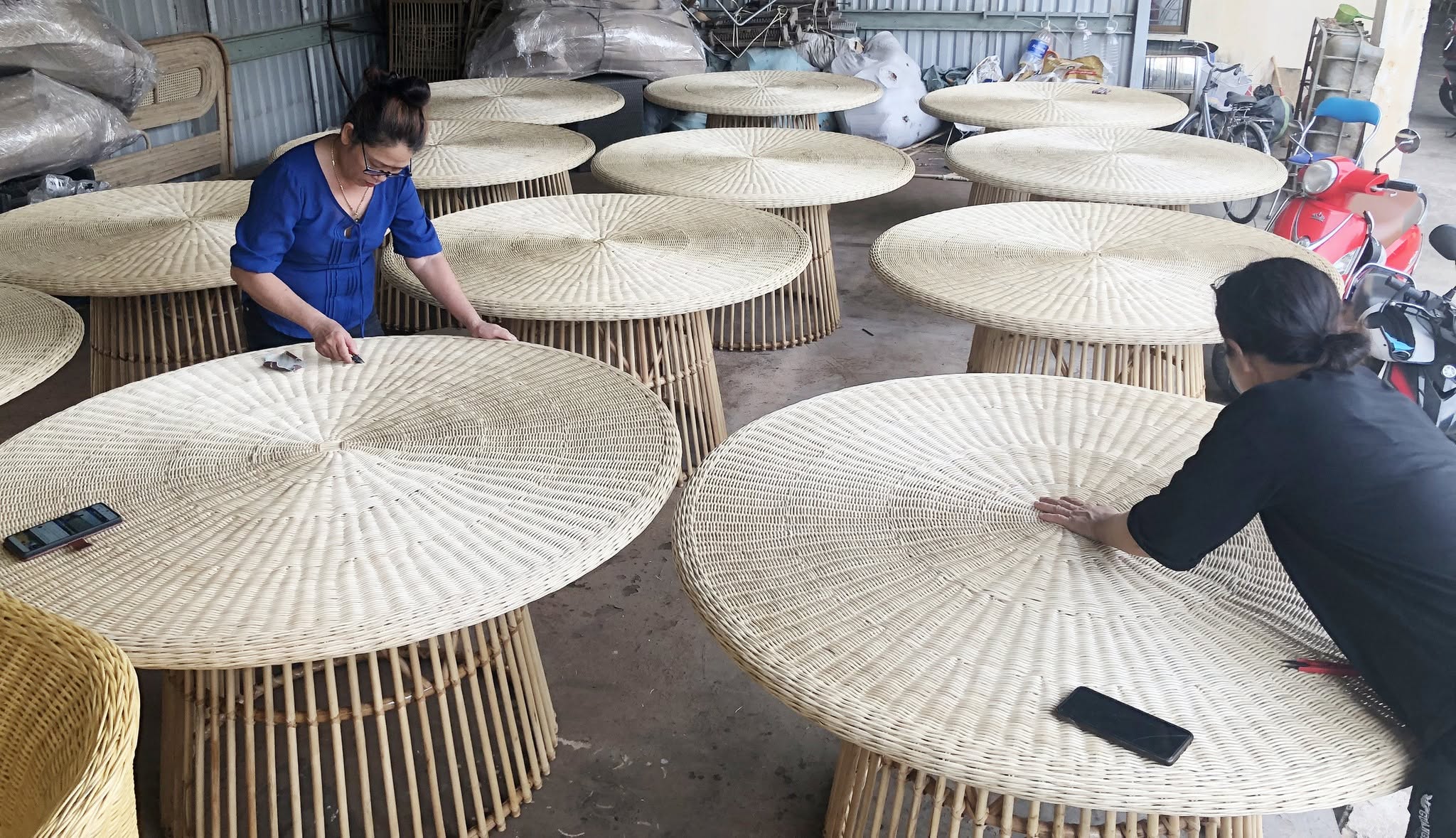
Using familiar natural materials such as bamboo and rattan, artisans create products of different shapes, sizes, and functions. Beyond their practical value, these objects demonstrate craftsmanship through carefully arranged weaving patterns, balanced structures, and the creative use of natural materials.
The story of An Khe is therefore not simply about the production of handicrafts. It is also about the development of a cooperative enterprise, the preservation of occupational knowledge, and the role of traditional industries in the economic and cultural life of Da Nang.
History and Development of An Khe Bamboo and Rattan Weaving
The development of An Khe bamboo and rattan weaving is closely linked to the An Khe Bamboo and Rattan Cooperative, established in 1978 in the Thanh Khe area of Da Nang.
This was a period when collective production organizations were established to develop local industries, make use of available resources, and provide employment opportunities for residents.
During its early years, the cooperative primarily organized the production of bamboo and rattan handicrafts using traditional manual techniques.
Production depended heavily on the skills and experience of workers, with each stage requiring patience, accuracy, and coordination.
From selecting and preparing raw materials to shaping, weaving, and finishing products, the manufacturing process involved numerous specialized tasks.
In December 1999, the cooperative underwent restructuring in accordance with Vietnam’s Cooperative Law, marking an important change in its organizational and business model.
The transition represented a move from a more traditional collective production structure toward a flexible approach that emphasized economic efficiency, product quality, and market development.
Following this restructuring, the cooperative began investing in workshops, storage facilities, production equipment, and vocational training programmes for its members and workers.
Improving technical skills became an important priority as the cooperative sought to meet increasingly diverse requirements for product designs, manufacturing standards, and aesthetic quality.
According to historical introductory materials, the cooperative once had 41 members, approximately 400 workers, and VND 1.8 billion in contributed capital.
These figures reflect the cooperative’s scale at the time the source materials were prepared and should not be interpreted as its current membership, workforce, or financial position.
The same historical materials reported that the cooperative’s total operating capital had exceeded VND 7 billion, with three production facilities responsible for different manufacturing stages.
One workshop at 219 Nguyen Phuoc Nguyen Street specialized in producing rattan blinds for export.
Another facility at 248 Nguyen Phuoc Nguyen Street focused on bamboo and rattan handicrafts intended for export markets.
A third facility in Hoa Cam Industrial Park was responsible for preliminary processing and preparation of raw materials.
The address 327 Nguyen Phuoc Nguyen Street, Thanh Khe Ward, Da Nang was also recorded in introductory information about the An Khe Bamboo and Rattan Cooperative.
These addresses describe the cooperative’s operations during the period covered by the historical materials. Their present-day status should be confirmed before being used as current contact information or visitor destinations.
The organization of several production facilities illustrates the cooperative’s efforts to specialize different manufacturing processes, from raw material preparation to product assembly and finishing.
This development helped establish a more structured production system and supported the cooperative’s transition toward commercial manufacturing.
Throughout its development, the cooperative placed considerable emphasis on improving production techniques, increasing labor productivity, and reducing manufacturing costs.
These efforts were intended to make its products more competitive while allowing traditional bamboo and rattan craftsmanship to reach customers in Vietnam and overseas.
Another important aspect of the cooperative’s development was its investment in vocational training.
Traditional handicraft production depends on practical skills that are usually acquired through observation, repeated practice, and experience.
By providing training opportunities, the cooperative helped workers develop the technical abilities required for different production stages.
The combination of organizational reform, production investment, and workforce development became an important foundation for the growth of An Khe’s bamboo and rattan handicraft industry.
Distinctive Products and the Cultural Value of Traditional Craftsmanship
One of the defining characteristics of An Khe bamboo and rattan weaving is its ability to combine traditional manual craftsmanship with modern design and production requirements.
Using bamboo, rattan, and other suitable natural materials, artisans create products intended for household use, decoration, and interior spaces.
Bamboo and rattan have been familiar materials in Vietnamese daily life for generations.
They have traditionally been used to make household utensils, baskets, storage containers, agricultural tools, and decorative objects.
Their relatively lightweight structure, flexibility, and suitability for different weaving techniques make them useful materials for a wide range of handicrafts.
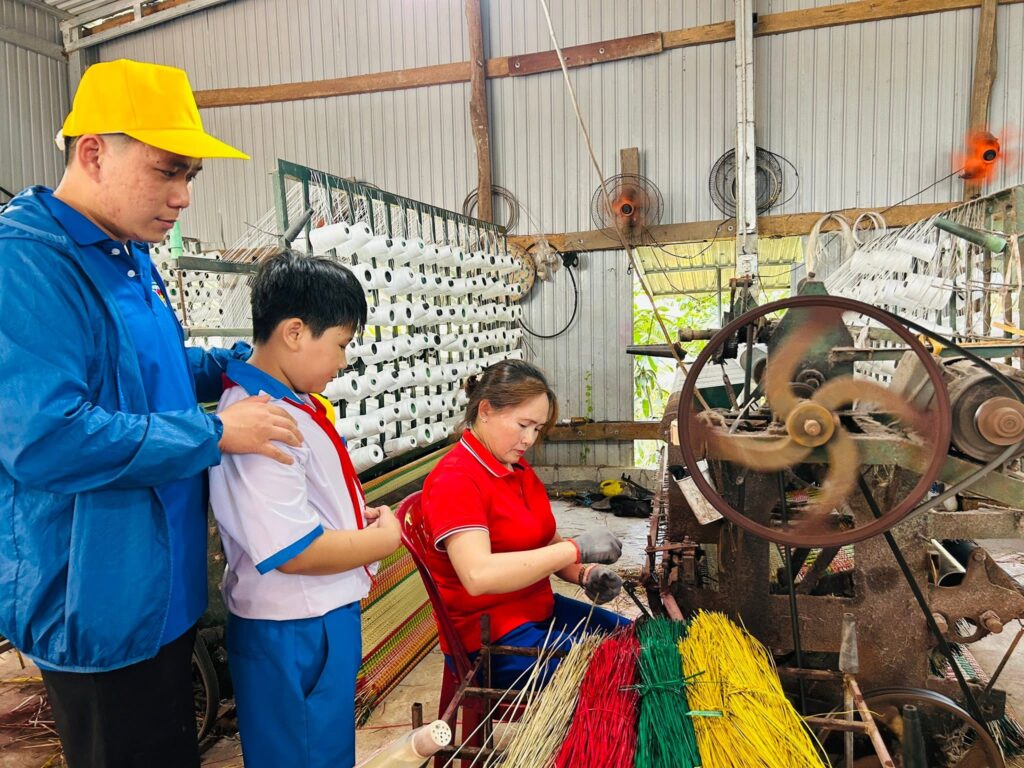
Producing a finished bamboo or rattan item involves several stages.
First, raw materials must be selected and classified according to their characteristics and intended applications.
Depending on the product, bamboo and rattan may be split, trimmed, smoothed, bent, or shaped before weaving begins.
The quality of material preparation directly affects the appearance, durability, and structural stability of the finished product.
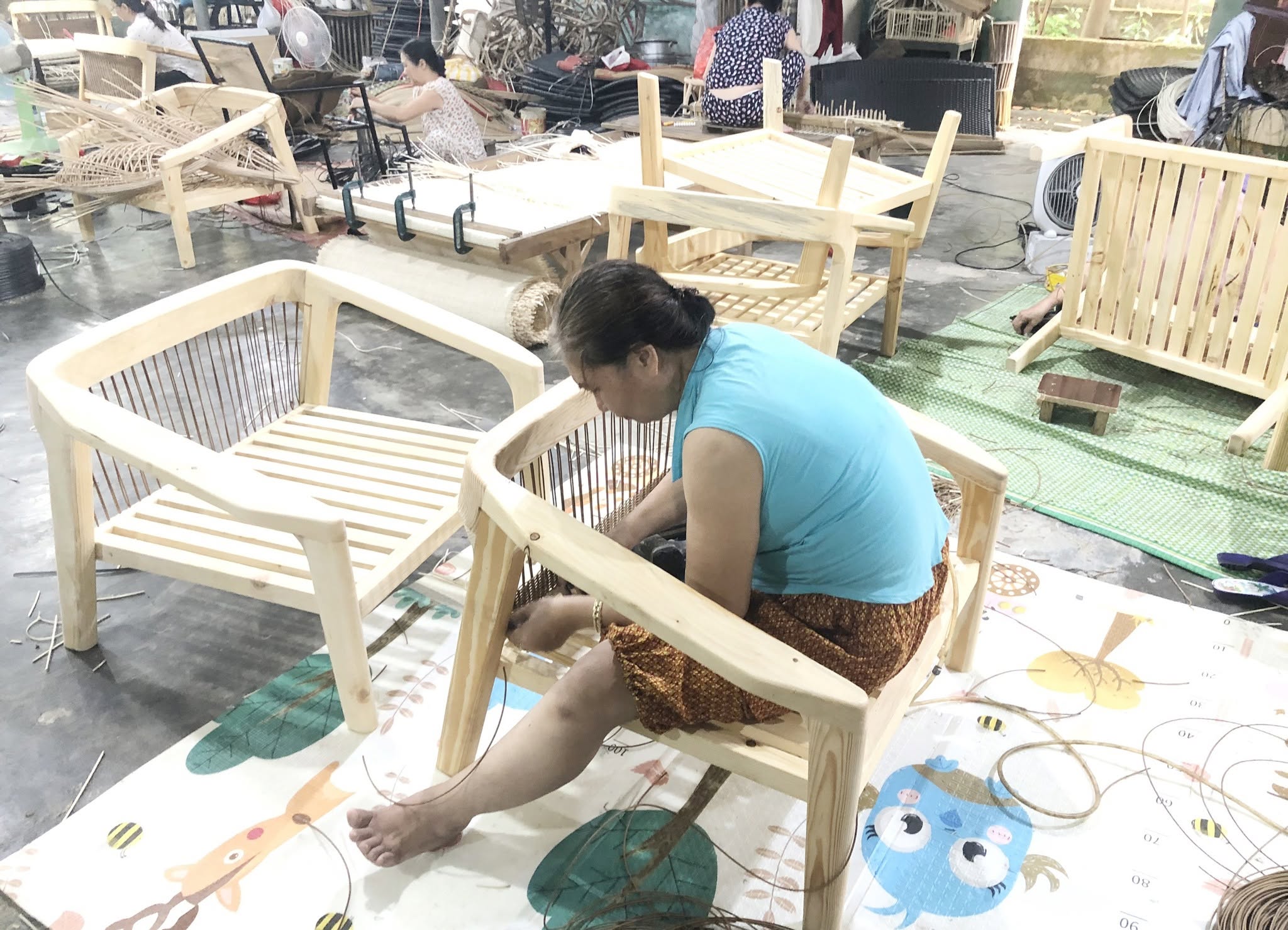
During the weaving process, artisans must carefully control the tension of individual strands, the spacing between woven elements, and the overall proportions of the design.
These seemingly simple details require considerable experience and have a direct influence on product quality.
For more complex products, artisans must also understand how to create curves, form corners, and connect different sections while maintaining a balanced structure.
Their craftsmanship becomes visible through evenly arranged patterns, secure joints, and carefully finished surfaces.
The value of traditional weaving therefore lies not only in the materials used but also in the knowledge and manual precision required to transform those materials into functional objects.
One of the product groups historically associated with the An Khe Bamboo and Rattan Cooperative is rattan blinds manufactured for export.
Depending on their design and intended use, these products can serve decorative, shading, or interior furnishing purposes.
Alongside rattan blinds, the cooperative developed various bamboo and rattan handicrafts to respond to changing customer preferences.
Product diversification became an important strategy for expanding market opportunities.
In earlier periods, woven bamboo and rattan objects were primarily associated with everyday household needs.
As markets developed, however, natural woven products increasingly found applications in interior decoration, furniture accessories, and designs emphasizing a close relationship with nature.
The aesthetic appeal of bamboo and rattan products often comes from the visible texture of natural materials and the rhythmic repetition of weaving patterns.
Different weaving techniques can create distinctive surfaces, from tightly interlaced structures to more open and decorative arrangements.
These visual characteristics allow artisans to produce objects that combine practical functions with artistic expression.
The handcrafted nature of the products also gives them a distinctive identity.
Even when a design follows established production specifications, individual stages may still require careful manual adjustment.
The artisan’s experience plays an important role in achieving consistent proportions, smooth finishes, and reliable structural connections.
For An Khe bamboo and rattan weaving, technical improvement has been an important part of maintaining competitiveness.
According to the cooperative’s historical development orientation, remaining competitive in the market required improvements in production techniques and the appropriate application of new technologies.
The aim was to increase productivity, reduce costs, and maintain product quality.
However, modernization does not necessarily mean eliminating traditional manual craftsmanship.
On the contrary, the distinctive value of bamboo and rattan products often depends on the skills of artisans, particularly during shaping, weaving, and finishing.
A balanced production model can therefore combine improved equipment and organizational efficiency with the preservation of traditional skills.
This relationship between tradition and innovation is an important characteristic of handicraft industries adapting to contemporary markets.
Another notable aspect of An Khe’s development was its cooperation with other craft villages and production establishments both within and outside Da Nang.
Through subcontracting arrangements, production partnerships, and the exchange of technical experience, different enterprises could support one another and expand their manufacturing capabilities.
Such cooperation also provided opportunities to develop new product designs and respond to different market requirements.
This model demonstrates that traditional handicrafts do not necessarily have to remain confined to a single village or isolated workshop.
When organized effectively, handicraft production can connect multiple communities of workers and create a broader value chain extending from raw material suppliers to finished products.
From a cultural perspective, An Khe bamboo and rattan weaving contributes to preserving practical knowledge associated with Vietnamese traditional craftsmanship.
Skills such as material selection, splitting, shaping, weaving, and finishing represent knowledge accumulated through generations of work.
These techniques are more than manufacturing procedures. They are part of the occupational experience and cultural identity of the communities that practice them.
Preserving these skills is especially important as industrially manufactured products increasingly replace traditional household objects.
Without opportunities for training and continued production, specialized manual techniques may gradually disappear.
Maintaining a viable handicraft industry can therefore support both economic activity and the transmission of traditional knowledge.
In recent years, interest in natural materials and sustainable design has also created potential opportunities for bamboo and rattan products.
Their visual warmth, distinctive textures, and versatility make them suitable for various decorative and practical applications.
However, the environmental performance of an individual product depends on more than the natural origin of its materials.
Raw material sourcing, processing methods, chemical treatments, product durability, and transportation all influence its overall environmental impact.
Developing bamboo and rattan handicrafts in a genuinely sustainable direction therefore requires responsible material management and improvements throughout the production process.
For traditional producers, these considerations can become part of a broader strategy to improve product quality, strengthen market confidence, and develop long-term competitiveness.
The enduring appeal of An Khe’s bamboo and rattan products lies in the relationship between natural materials, practical design, and human craftsmanship.
Each finished object reflects a combination of manual skills, production organization, and creativity.
Economic Contributions, Craft Preservation, and Future Development
Throughout its history, the An Khe Bamboo and Rattan Cooperative has contributed to employment and income generation for local workers while supporting the development of Da Nang’s handicraft industry.
For traditional industries that rely heavily on manual labor, maintaining production facilities is important not only for economic reasons but also for preserving occupational knowledge.
At An Khe, vocational training and skill development were identified as essential elements of the cooperative’s operations.
Workers needed to acquire basic weaving techniques while also learning to meet changing requirements for product design, precision, and manufacturing quality.
Training programmes helped establish a workforce capable of handling different stages of production.
They also created opportunities for experienced workers to pass their knowledge to younger generations.
This transmission of practical skills is particularly important in handicraft industries, where expertise often develops through years of observation and repeated practice.
Beyond production efficiency, the cooperative also paid attention to policies and benefits for its members and workers.
Such measures are important for maintaining a stable workforce, particularly in occupations that require time and dedication to master.
According to historical introductory materials, Tran Ba Tuong, identified as the cooperative’s chairman during the period described, attributed its achievements to the collective efforts of members, managers, and workers.
He emphasized the importance of determination, diligence, and the cooperative’s ability to mobilize its internal resources.
These qualities were regarded as important factors in overcoming difficulties and gradually improving the cooperative’s operations.
Over the course of its development, the An Khe Bamboo and Rattan Cooperative also received recognition from several national and local organizations.
According to the source materials, organizations that awarded commendations included the Vietnam Cooperative Alliance, the Da Nang People’s Committee, the Ministry of Finance, the Vietnam Chamber of Commerce and Industry, and the Da Nang Cooperative Alliance.
These awards reflected the cooperative’s contributions to production, business activities, and the development of the collective economic sector during earlier periods.
Looking toward future development, the cooperative’s documented priorities included continued vocational training, the development of skilled artisans, improvements in product quality, and the expansion of market opportunities.
One particularly important objective was the establishment of stable bamboo and rattan raw material supply areas.
Reliable access to raw materials has a direct influence on manufacturing costs, product quality, and the ability to maintain consistent production.
Developing concentrated supply areas, together with responsible harvesting and processing practices, can help handicraft producers plan production more effectively.
A stable supply chain also reduces uncertainty for workshops and supports the development of longer-term relationships between material suppliers and manufacturers.
Access to investment capital represents another important factor in the development of traditional handicraft industries.
Financial resources are required to improve equipment, renovate workshops, develop new products, and strengthen market distribution.
According to the historical development plans described in the source materials, the cooperative sought solutions for accessing credit and banking services while expanding business partnerships.
These strategies were intended to improve competitiveness and allow participating production establishments to take a stronger position within the handicraft value chain.
In a modern commercial environment, maintaining traditional techniques alone may not be sufficient to ensure long-term development.
Handicraft producers also need to consider product design, branding, quality standards, distribution channels, and communication with customers.
Products with a recognizable identity, consistent manufacturing quality, and transparent information about materials and production methods are better positioned to reach both domestic and international markets.
At the same time, efforts to improve commercial performance should remain connected to the preservation of traditional knowledge.
The long-term value of a handicraft industry depends not only on the number of products manufactured but also on the continuity of the skills and cultural practices associated with production.
For An Khe, this means that training, innovation, and economic development should be considered complementary rather than competing objectives.
From the perspective of cultural tourism, An Khe bamboo and rattan weaving is also an interesting part of Da Nang’s wider handicraft story.
The city is internationally recognized for its beaches, urban attractions, regional cuisine, and proximity to important cultural heritage destinations.
However, traditional crafts reveal another dimension of local life: the creativity of working communities and their ability to transform simple materials into objects of practical and aesthetic value.
Craft traditions help visitors understand the relationship between local resources, occupational knowledge, and the development of regional economies.
They also provide opportunities to explore the cultural identities of communities beyond the city’s most familiar tourist attractions.
Where appropriate facilities and visitor programmes are available, activities such as craft demonstrations, product exhibitions, and introductory weaving experiences could create connections between traditional production, education, and tourism.
Such activities may allow visitors to observe the stages of production, learn about natural materials, and appreciate the technical skills involved in handmade products.
However, regular visitor access or organized craft experiences at the An Khe Bamboo and Rattan Cooperative’s facilities have not been independently confirmed.
Visitors interested in exploring the craft should therefore verify current operating conditions and visiting arrangements before traveling to any of the historically recorded addresses.
Over several decades, An Khe bamboo and rattan weaving has demonstrated how a traditional handicraft industry can adapt to urbanization and changing economic conditions.
From the establishment of a collective production organization in 1978 to later efforts to restructure the cooperative, improve manufacturing facilities, and expand markets, the development of An Khe reflects broader changes in Vietnam’s handicraft sector.
Its history also illustrates the relationship between traditional craftsmanship and modern production systems.
While tools, organizational models, and market requirements may change, the value of skilled manual work remains central to the identity of the craft.
An Khe bamboo and rattan weaving represents more than an economic activity. It preserves practical knowledge, craftsmanship, and the working traditions of local artisans. Protecting these values while improving design, product quality, and sustainable raw material management can help traditional handicrafts maintain their relevance in contemporary life and contribute to the cultural diversity of Da Nang.
Quick Information
| Item | Details |
|---|---|
| Craft name | An Khe Bamboo and Rattan Weaving Craft |
| Vietnamese name | Nghề mây tre đan An Khê |
| Heritage category | Traditional handicraft |
| Location | Thanh Khe area, Da Nang, Vietnam |
| Associated organization | An Khe Bamboo and Rattan Cooperative |
| Cooperative establishment | 1978 |
| Cooperative restructuring | December 1999 |
| Historically recorded address | 327 Nguyen Phuoc Nguyen Street, Thanh Khe Ward, Da Nang |
| Historically recorded production facilities | 219 and 248 Nguyen Phuoc Nguyen Street; Hoa Cam Industrial Park |
| Main materials | Bamboo, rattan, and other suitable weaving materials |
| Representative products | Rattan blinds, bamboo and rattan handicrafts, household and decorative products |
| Traditional techniques | Raw material preparation, shaping, weaving, and manual finishing |
| Historically recorded workforce | 41 cooperative members and approximately 400 workers |
| Historically recorded contributed capital | VND 1.8 billion |
| Historically recorded operating capital | More than VND 7 billion |
| Outstanding values | Traditional craftsmanship, practical utility, employment creation, and cooperative economic development |
| Markets | Domestic consumption and export markets, according to historical materials |
| Craft preservation | Vocational training, skill development, and maintenance of weaving techniques |
| Development priorities | Product diversification, technical improvements, production partnerships, and raw material supply development |
| Official heritage designation | No verified information about a separate official intangible cultural heritage designation for this craft |
| Visitor information | Current operating status and visiting arrangements should be confirmed in advance |