


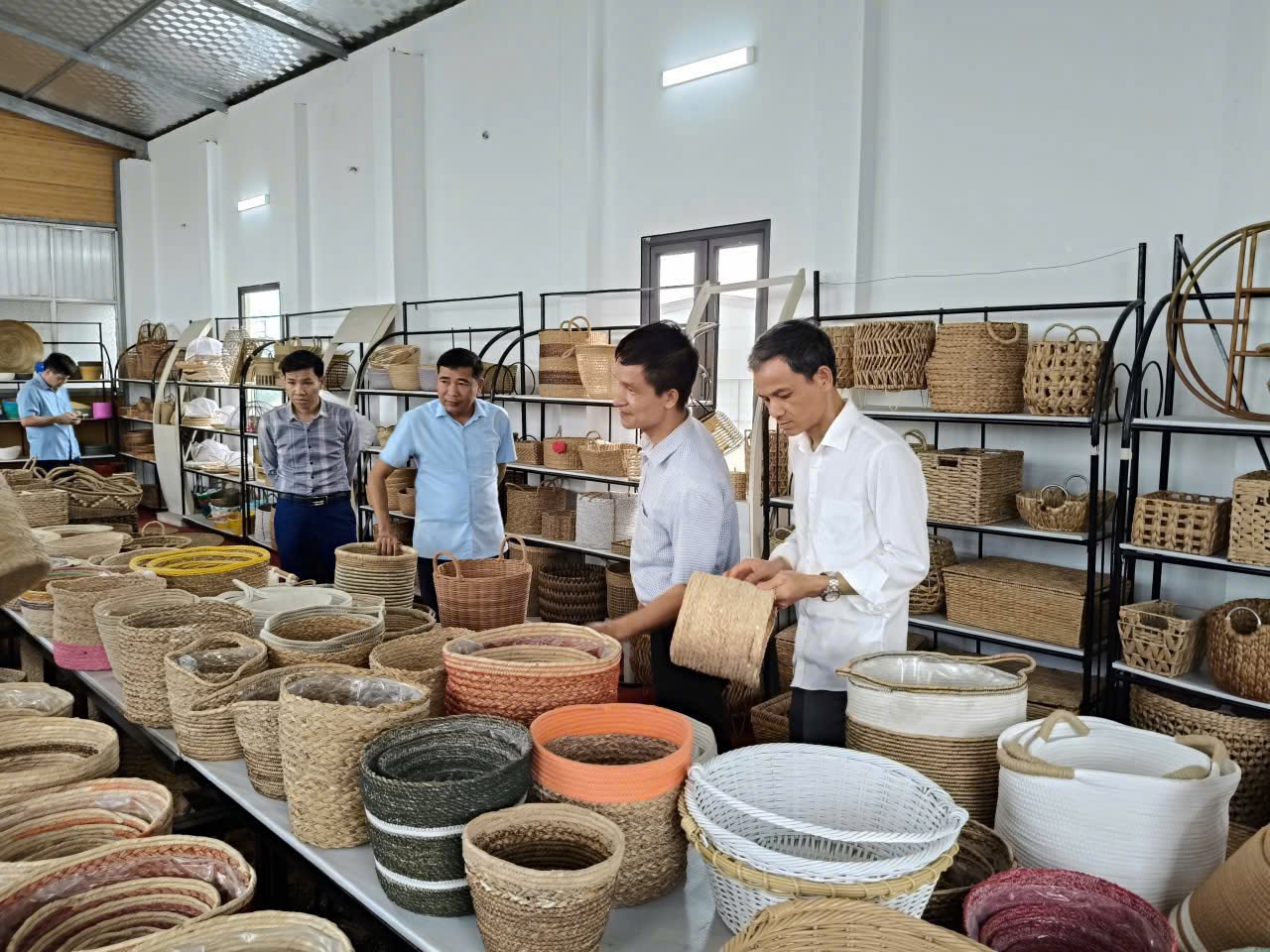
Ngoc Dong Rattan and Bamboo Weaving Village, located in Ngoc Dong Residential Quarter, Duy Ha Ward, Ninh Binh Province, formerly part of Ha Nam Province, is a distinctive traditional handicraft community in Vietnam’s Red River Delta. Situated near the peaceful Chau River, the village is known for its handcrafted products made from rattan, bamboo, and giang, a bamboo species traditionally used in weaving.
Established as an organized craft industry in the 1980s, Ngoc Dong has gradually developed from small cooperative production groups into a handicraft community serving both domestic and international markets. Using familiar natural materials, local artisans create a wide variety of products, including rattan furniture, trays, baskets, storage boxes, household accessories, and decorative items.
One of the village’s most distinctive techniques is diagonal weaving, locally known as dan xien. This method involves arranging and interlocking weaving strips at carefully controlled angles to strengthen the structure, maintain the intended shape, and help reduce deformation.
The technique requires precision at every stage, from selecting raw materials and splitting bamboo strips to weaving, shaping, and finishing the products.
Beyond providing employment and income for local households, Ngoc Dong’s weaving tradition demonstrates the adaptability of Vietnamese handicrafts in a changing economy. Objects once associated mainly with rural households have evolved into contemporary home accessories, furniture, and decorative products.
Today, Ngoc Dong Rattan and Bamboo Weaving Village has potential as a cultural and experiential tourism destination, where visitors can learn about traditional weaving techniques, discover the daily lives of local artisans, and appreciate the quiet beauty of a riverside community.
History and Development of Ngoc Dong Rattan and Bamboo Weaving Village
Ngoc Dong belongs to the cultural landscape of the Red River Delta, where handicrafts using bamboo, rattan, and other plant-based materials have long been associated with agricultural life.
For generations, Vietnamese rural communities have used these materials to produce household utensils, storage containers, agricultural equipment, and everyday accessories.
Within this broader tradition, Ngoc Dong developed its own weaving industry, gradually moving toward organized handicraft production and establishing a recognizable local craft identity.
The Emergence of the Weaving Industry in the 1980s
According to local accounts, rattan and bamboo weaving in Ngoc Dong began developing as an organized industry during the 1980s.
In its early stages, production was mainly carried out by small cooperative groups that brought together local workers with weaving skills.
These groups provided opportunities for households to supplement their income through handicraft production.
Early products were generally practical items intended for everyday use.
Using simple tools and natural materials, artisans split weaving strips, interlaced them, and shaped them into functional household objects.
As demand increased, more households became involved in the industry.
The original small-scale production groups gradually developed into a broader network of artisans and workshops.
Production also became more specialized, with different workers focusing on particular stages of the manufacturing process.
This transition marked the development of weaving from a supplementary household activity into a craft with a more substantial role in the local economy.
From Household Utensils to Artistic Handicrafts
During its early development, Ngoc Dong primarily produced practical woven objects.
Baskets, trays, storage containers, and other household accessories were made from natural materials and designed for everyday use.
As markets expanded, artisans began paying greater attention to product appearance, proportions, and finishing quality.
The range of products gradually grew to include rattan chairs, tables, decorative baskets, storage boxes, and interior accessories.
Rather than focusing exclusively on durability and functionality, producers increasingly considered the aesthetic expectations of customers.
New designs were developed to suit different interior styles and contemporary living spaces.
This transition required artisans to improve their shaping techniques, combine materials effectively, and refine decorative details.
As a result, Ngoc Dong weaving evolved into a handicraft industry capable of serving a wider commercial market.
The Role of Households and Skilled Artisans
One of the defining characteristics of rattan and bamboo weaving is that many production stages can be organized within households.
Local workers may participate in preparing raw materials, splitting weaving strips, creating woven structures, assembling components, or finishing products.
The complexity of each task depends on the product design.
Elaborate furniture and decorative objects require experienced artisans who understand weaving patterns, structural stability, and material behavior.
Beginners may start with basic weaving techniques before progressing to more demanding designs.
Traditional skills are often passed down through practical instruction, observation, and working alongside experienced craftspeople.
This form of apprenticeship helps preserve specialized knowledge within the community.
It also allows younger generations to participate in the continuation and development of the craft.
Expansion into Domestic and International Markets
As Vietnam’s handicraft industry developed, Ngoc Dong products gradually reached markets beyond the immediate locality.
According to descriptions of the village, woven products have been supplied to international markets, where natural-material home accessories and decorative goods attract consumer interest.
Export-oriented production introduces additional requirements concerning design, consistency, durability, and delivery schedules.
Workshops must pay particular attention to raw material preparation, product dimensions, finishing standards, and quality control.
Alongside traditional designs, developing new product styles has become increasingly important.
The ability to respond to changing customer preferences has helped local producers explore broader commercial opportunities.
Market expansion has contributed to the economic value of the craft and encouraged households to continue participating in handicraft production.
Natural Materials and the Distinctive Diagonal Weaving Technique
The quality of Ngoc Dong woven products depends on the combination of natural materials, careful preparation, and the technical experience of local artisans.
Each material has its own characteristics in terms of flexibility, strength, curvature, and surface texture.
Producing an attractive and durable object requires the artisan to select materials suitable for its intended shape and function.
Rattan, Bamboo, and Giang as Traditional Materials
The principal materials associated with Ngoc Dong weaving include rattan and giang, along with bamboo and other suitable natural weaving materials.
Rattan is valued for its flexibility and ability to be bent and woven into various shapes.
It is widely used in furniture, household accessories, and decorative handicrafts.
Giang is a type of bamboo that can be split into thin strips suitable for weaving.
Once prepared, these strips can be used to form the surfaces and structural elements of different products.
Material selection depends on maturity, quality, dimensions, and physical condition.
Unsuitable materials may be difficult to shape or may reduce the durability of the finished product.
For this reason, identifying and selecting appropriate rattan and bamboo materials is an important part of traditional weaving knowledge.
Splitting and Preparing the Weaving Strips
Before weaving begins, raw materials must undergo suitable preparation.
For giang, artisans typically split the bamboo into strips of relatively consistent dimensions.
The width, thickness, and flexibility of each strip are selected according to the intended product.
Strips that are too thick may be difficult to bend, while those that are excessively thin may lack the strength required for a particular structure.
After splitting, the materials are cleaned and treated to reduce moisture and improve their suitability for production.
Traditional descriptions of the craft mention processes such as sun-drying and dyeing before weaving.
Depending on the product and workshop, additional treatments may be applied to improve material quality or meet customer requirements.
For export products, moisture control, mold prevention, and material safety are particularly important.
Careful preparation helps ensure that the strips are suitable for weaving and that the finished products maintain their intended appearance.
The Distinctive Dan Xien Diagonal Weaving Technique
One of the techniques particularly associated with Ngoc Dong is dan xien, or diagonal weaving.
According to traditional descriptions, this method involves passing or interlocking weaving strips diagonally through an arrangement of giang strips to create a firm structure.
The orientation and connection of the strips help strengthen the woven surface and maintain the product’s shape.
The technique requires artisans to control the spacing, direction, and tension of each strip.
If the strips are unevenly positioned or woven with inconsistent tension, the product may become distorted, develop gaps, or fail to achieve the required strength.
For objects with complex shapes, artisans must adjust the weaving pattern to follow curves, corners, and other structural features.
Local craft accounts describe diagonal weaving as a technique that helps reduce warping and deformation when weather conditions change.
However, resistance to shrinkage and warping also depends on the material, moisture content, treatment methods, and storage conditions.
Diagonal weaving should therefore be understood as a technique that contributes to structural stability rather than one that completely eliminates the possibility of deformation.
Shaping and Finishing the Products
Once the materials are prepared, artisans begin shaping the product according to its design.
For baskets, trays, and storage boxes, weaving may begin with the base or another structural foundation.
Additional strips are then interlaced to form the sides, rim, and other necessary components.
Rattan tables and chairs may require separate supporting frames and woven sections.
These components must be assembled carefully to ensure structural stability.
Finishing includes adjusting the shape, trimming excess material, smoothing contact points, and inspecting the woven structure.
Depending on the design, products may also be dyed, treated, or decorated.
The final stages are important for both visual appeal and long-term usability.
Combining Technical Skill with Creative Design
Rattan and bamboo weaving involves much more than simply interlacing strips of natural material.
Artisans must understand structural balance, proportions, and the distribution of forces within a finished object.
A basket needs a sufficiently strong base and body, while a chair must provide stability and appropriate load-bearing capacity.
Decorative products place greater emphasis on patterns, colors, proportions, and the combination of materials.
The ability to balance these requirements demonstrates the close relationship between traditional techniques and creative design.
This combination has allowed Ngoc Dong artisans to develop a diverse range of products suited to different purposes and markets.
Ngoc Dong Woven Products and Their Cultural Significance
Using natural materials, Ngoc Dong artisans produce a broad selection of household items, furniture, and decorative handicrafts.
The variety reflects the village’s transition from making practical rural utensils to producing commercial handicrafts for modern consumers.
Beyond their practical functions, these products express the technical knowledge, patience, and creativity of the people who make them.
Rattan Furniture and Interior Products
Rattan tables and chairs are among the notable product categories associated with the village.
They can be designed in different sizes, shapes, and weaving styles.
Rattan’s flexibility allows artisans to create curved forms that are particularly suitable for furniture.
Depending on the design, products may combine supporting frames with woven surfaces to achieve both strength and a natural appearance.
Rattan furniture is often associated with interiors that emphasize organic materials, understated decoration, and traditional craftsmanship.
Its warm colors and woven textures can complement a variety of interior styles.
However, the durability and load-bearing capacity of individual products depend on their construction, material quality, and manufacturing standards.
Baskets, Trays, and Storage Containers
Household products include baskets, trays, traditional woven containers, and storage boxes.
These objects reflect the longstanding Vietnamese tradition of using bamboo and rattan in everyday life.
Woven baskets can serve practical storage purposes or be used as decorative accessories.
Trays are often designed with simple shapes, even weaving patterns, and convenient surfaces.
Storage boxes may incorporate lids, handles, or decorative details.
Their designs can vary according to size, function, and customer preferences.
By adapting familiar household objects into new forms, Ngoc Dong artisans have expanded the usefulness and appeal of traditional weaving.
Decorative Handicrafts and Gift Items
In addition to household products, Ngoc Dong workshops produce decorative items and handcrafted gifts.
These products emphasize shape, weaving patterns, color combinations, and compatibility with different interior environments.
Some retain the natural color of the raw material, while others may be dyed or finished to achieve a particular appearance.
Woven decorations often appeal to consumers who appreciate natural textures and handcrafted objects.
The visible weaving patterns also communicate the manual skill involved in production.
For buyers interested in Vietnamese handicrafts, these products can represent both functional design and local cultural heritage.
The Cultural Value of Traditional Weaving
Ngoc Dong’s cultural significance lies in the knowledge and techniques developed through generations of practical work.
Selecting suitable materials, splitting strips, controlling moisture, applying diagonal weaving techniques, and finishing products all require experience.
These skills are maintained through teaching and practical training within the community.
Learning the craft involves more than memorizing a weaving pattern.
Artisans must understand how materials respond to bending, tension, and changes in environmental conditions.
They must also know how to adjust their methods to suit different products.
The craft reflects the relationship between rural communities and natural resources.
Bamboo, rattan, and giang have long been used in Vietnamese daily life.
Transforming these materials into useful and artistic objects demonstrates the ingenuity of traditional craftspeople.
Economic Importance and International Market Opportunities
Rattan and bamboo weaving contributes to employment and household income in Ngoc Dong.
Production can involve workers with different levels of experience, from skilled artisans to people learning basic weaving techniques.
The development of furniture and decorative handicrafts has expanded the village’s commercial opportunities.
According to local descriptions, Ngoc Dong products have reached overseas markets.
Maintaining competitiveness, however, requires consistent quality, attractive designs, reliable durability, and the ability to meet customer expectations.
Responsible sourcing, quality control, and improvements in working conditions are also important to the industry’s long-term sustainability.
The economic future of the village is closely connected to its ability to preserve traditional techniques while continuing to innovate.
Visiting Ngoc Dong Weaving Village and Preserving Its Craft Heritage
Located in Ngoc Dong Residential Quarter, Duy Ha Ward, Ninh Binh Province, Ngoc Dong Rattan and Bamboo Weaving Village retains elements of the traditional rural landscape of northern Vietnam.
The nearby Chau River and the community’s handicraft activities provide a setting for exploring the relationship between local livelihoods and cultural heritage.
For travelers interested in traditional crafts, Ngoc Dong has potential as a destination for learning about weaving techniques, observing artisans at work, and discovering locally made products.
Exploring a Traditional Riverside Craft Village
Ngoc Dong’s landscape is associated with village houses, rural lanes, and the everyday activities of local residents.
At households and workshops where weaving remains active, visitors may have opportunities to learn how artisans transform rattan and giang into finished objects.
Bundles of prepared materials, carefully arranged weaving strips, and artisans working by hand are characteristic elements of the craft.
Weaving often requires considerable concentration, particularly when producing complex patterns or structural forms.
Observing these activities can help visitors understand the patience and technical skill required to create a handmade product.
The village also offers an opportunity to explore the relationship between handicraft production, household livelihoods, and community identity.
Learning and Experiencing Traditional Weaving Techniques
One potential tourism activity in Ngoc Dong is the introduction of traditional weaving processes to visitors.
At workshops that are able to receive guests, travelers may learn about the raw materials, strip preparation, and methods used to shape woven products.
The dan xien diagonal weaving technique is particularly interesting because it requires careful control of strip direction, spacing, and tension.
Watching experienced artisans perform these tasks demonstrates that weaving depends not only on manual dexterity but also on an understanding of materials and structure.
Where suitable programs are organized, visitors may be able to try basic weaving activities under the guidance of local craftspeople.
Such experiences can make cultural tourism more engaging while introducing traditional skills to younger generations.
However, workshop access and hands-on activities depend on the arrangements of individual producers.
Travelers should contact workshops in advance to confirm whether visits, demonstrations, or introductory weaving sessions are available.
Choosing Handmade Woven Products as Souvenirs
Ngoc Dong offers a variety of woven products suitable for household use and decoration.
Small baskets, trays, storage boxes, and decorative accessories can make meaningful souvenirs associated with local craftsmanship.
For travelers interested in interior design, rattan furniture and other woven home accessories provide options made from natural materials.
When selecting products, visitors should examine the strength of the woven structure, the consistency of the patterns, the finishing quality, and suitability for the intended purpose.
Rattan, bamboo, and giang products should also be stored under appropriate conditions.
Unless specifically designed for wet environments, prolonged exposure to moisture or direct contact with water may affect their appearance and durability.
Larger items require careful packaging and transportation to reduce the risk of deformation or damage.
Purchasing products from local workshops can help support artisans and sustain the village’s handicraft economy.
Preserving Traditional Skills and Training Future Artisans
The long-term development of Ngoc Dong depends on maintaining a skilled workforce and encouraging younger generations to continue learning the craft.
Distinctive techniques such as diagonal weaving should be documented, taught, and practiced to reduce the risk of their gradual disappearance.
Training can also include contemporary design skills, improved finishing techniques, and the safe use of appropriate tools.
Working conditions are another important consideration.
Weaving can involve prolonged sitting, repetitive hand movements, and the use of sharp tools for splitting and cutting materials.
Workshops should therefore pay attention to ergonomics, lighting, ventilation, and workplace safety.
Responsible material management and suitable treatment methods are equally important.
Where dyes or preservation treatments are used, producers should follow relevant safety and environmental requirements.
Such measures help protect workers while improving product quality and the reputation of the village’s handicrafts.
Developing Cultural Tourism and Sustainable Production
Growing interest in experiential tourism and products made from natural materials creates opportunities for Ngoc Dong to promote its craft heritage.
Potential visitor programs could combine an introduction to the village’s history with demonstrations of material preparation, weaving techniques, and finished products.
Well-organized activities may also allow travelers to meet artisans and understand the work involved in creating handmade objects.
Alongside tourism, the village can continue developing through new product designs, contemporary applications, and online marketing.
For international markets, material traceability, consistent quality, product safety, and environmental standards are increasingly important considerations.
Sustainable development requires responsible sourcing, efficient production methods, and the continued preservation of traditional techniques.
By combining craft heritage, product innovation, and cultural tourism, Ngoc Dong can strengthen its position as a distinctive handicraft community in Ninh Binh Province.
Ngoc Dong Rattan and Bamboo Weaving Village demonstrates the creativity and adaptability of traditional handicrafts in Vietnam’s Red River Delta. Developing from small cooperative groups in the 1980s, the village has grown into a community producing woven goods for domestic and international markets. Its distinctive diagonal weaving technique, skilled artisans, and naturally textured products contribute to both local livelihoods and the preservation of Vietnamese craft traditions. Looking ahead, the combination of traditional skills, sustainable product development, and experiential tourism offers opportunities for Ngoc Dong to become an increasingly meaningful destination for travelers exploring the cultural heritage and craft villages of Ninh Binh Province.
Quick Information
| Item | Details |
|---|---|
| Village name | Ngoc Dong Rattan and Bamboo Weaving Village |
| Vietnamese name | Làng nghề mây tre đan Ngọc Động |
| Current location | Ngoc Dong Residential Quarter, Duy Ha Ward, Ninh Binh Province, Vietnam |
| Province before the 2025 administrative reorganization | Ha Nam Province |
| Geographical setting | Area near the Chau River |
| Cultural region | Red River Delta, northern Vietnam |
| Craft type | Traditional handicraft production |
| Main craft | Rattan and bamboo weaving |
| Reported establishment period | 1980s |
| Original production organization | Small cooperative groups |
| Main materials | Rattan, giang bamboo, and other suitable weaving materials |
| Distinctive technique | Dan xien, or diagonal weaving |
| Production stages | Material selection, splitting, drying, treatment, dyeing, weaving, shaping, and finishing |
| Furniture products | Rattan tables, chairs, and woven furniture |
| Household products | Baskets, trays, traditional woven containers, and storage boxes |
| Decorative products | Interior accessories and handcrafted gifts |
| Product characteristics | Natural materials, handcrafted woven structures, and diverse designs |
| Markets | Domestic and international markets, according to local accounts |
| Cultural significance | Traditional material preparation, weaving techniques, and community-based skills transmission |
| Economic importance | Employment, household income, and handicraft production |
| Tourism potential | Workshop visits, weaving demonstrations, and introductory craft experiences |
| Visitor advice | Contact local workshops in advance to confirm visitor arrangements |
| Product care | Avoid prolonged damp conditions and follow the manufacturer’s care instructions |
| Development priorities | Craft preservation, product innovation, quality improvement, and cultural tourism |







