


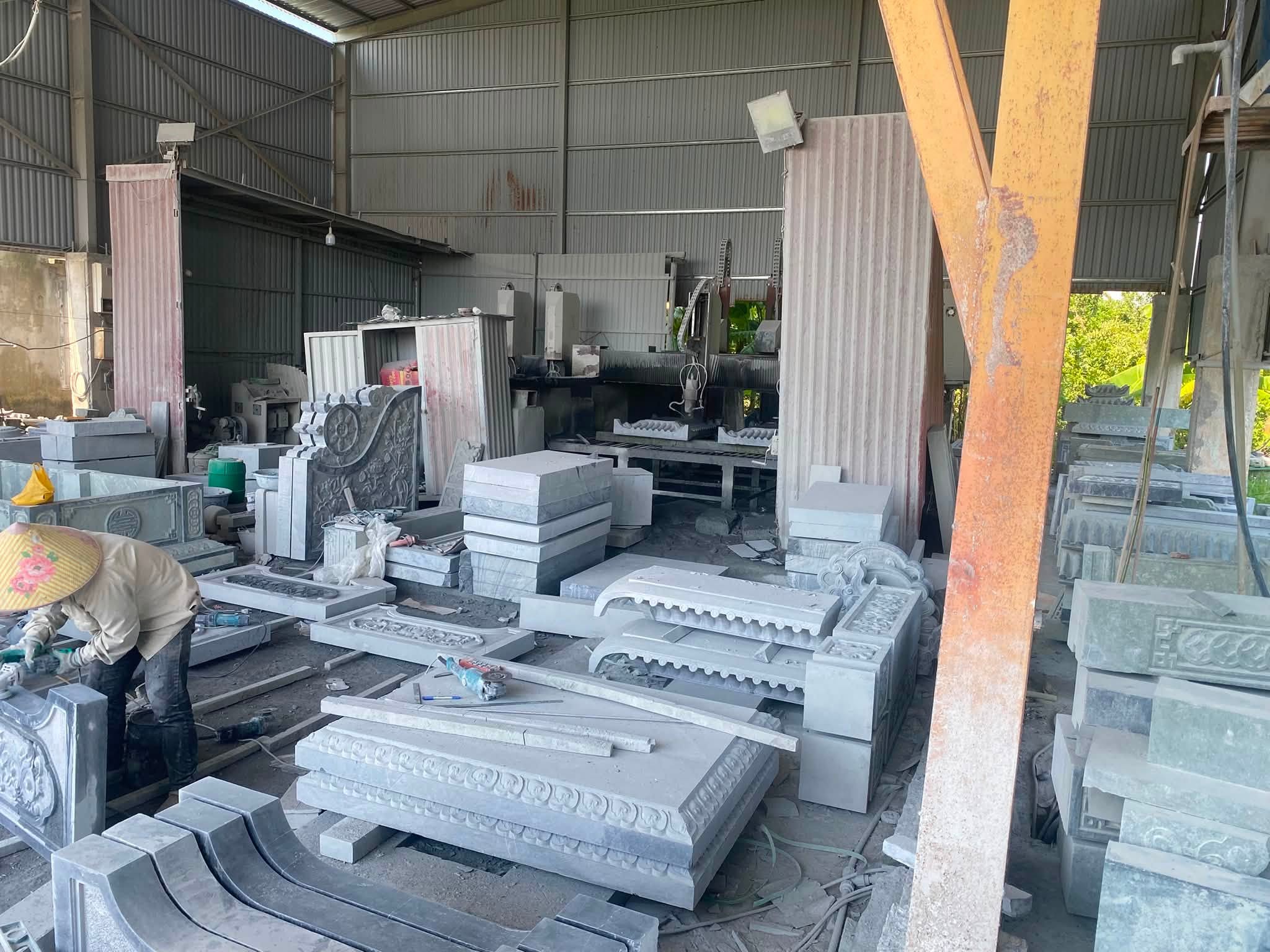
Ninh Van Stone Carving Village, located in Xuan Vu Village, Nam Hoa Lu Ward, Ninh Binh Province, is one of the region’s renowned traditional craft villages. Closely associated with the cultural landscape of the ancient capital of Hoa Lu, the village has preserved the art of stone carving through generations, producing finely crafted sculptures, architectural decorations, and traditional stone handicrafts.
From rough blocks of natural stone, the skilled artisans of Ninh Van create remarkable works featuring graceful lines, intricate patterns, and harmonious proportions. Their craftsmanship is reflected in a wide range of products, from household objects and decorative sculptures to elaborate stone elements used in temples, pagodas, churches, mausoleums, and cultural monuments throughout Vietnam.
More than a traditional occupation, Ninh Van stone carving represents a connection between natural materials, artistic creativity, and the cultural heritage of northern Vietnam. Each finished work reflects the patience, technical knowledge, and aesthetic sensibilities of the artisans who shape it.
History and Traditions of Ninh Van Stone Carving Village
Ninh Van Stone Carving Village has a long history closely connected with Hoa Lu, the former capital of Dai Co Viet during the Dinh and Early Le dynasties.
According to local craft traditions, stone carving has been practiced and passed down through many generations. Despite historical changes and economic challenges, local artisans have continued to preserve and develop their skills, making stone craftsmanship an important part of the community’s cultural and economic identity.
The craft developed within the distinctive cultural setting of the Hoa Lu region, where ancient temples, pagodas, shrines, and historical monuments demonstrate the importance of stone in traditional Vietnamese architecture.
The demand for carved stone elements in religious buildings, commemorative structures, and decorative architecture helped create an environment in which stone-working techniques could flourish.
For Ninh Van artisans, stone is more than a construction material. It is a medium through which cultural symbols, artistic ideas, and traditional aesthetic values can be expressed.
Stone reliefs, statues, mythical creatures, and architectural ornaments frequently feature motifs inspired by nature and Vietnamese cultural traditions.
Dragons, phoenixes, lotus flowers, clouds, waves, and sacred animals are among the familiar decorative themes found in traditional stone sculpture.
These motifs demonstrate the close relationship between the natural world, spiritual beliefs, and Vietnamese artistic expression.
One of the distinctive characteristics of Ninh Van stone carving is the combination of practical craftsmanship and artistic creativity.
Each product requires technical precision, structural stability, balanced proportions, and careful attention to decorative details.
Traditional knowledge of stone selection, cutting, shaping, carving, and finishing has been transmitted from experienced craftsmen to younger generations, helping preserve the identity of the village.
Over time, Ninh Van stone carving has adapted to changing consumer demands while maintaining its connection to the artistic traditions of the ancient Hoa Lu region.
Stone Carving Techniques and Traditional Handicraft Products
Ninh Van stone handicrafts are distinguished by their wide variety of forms, sizes, functions, and decorative styles.
From practical household objects to large-scale sculptures and architectural features, local artisans transform natural stone into products that combine functionality with artistic value.
Traditional products include ornamental plant pots, stone mortars, column bases, pedestal supports, stone tables and chairs, platforms, and decorative animal sculptures.
The village is also known for producing stone statues, Buddhist sculptures, portrait figures, mythical creatures, memorial steles, carved screens, relief panels, balustrades, and architectural components for temples, pagodas, churches, ancestral houses, and mausoleums.
Particularly elaborate works feature the traditional motifs of the dragon, qilin, turtle, and phoenix, collectively known in Vietnamese culture as long, lan, quy, phung.
Creating these designs requires not only advanced carving skills but also a strong understanding of traditional artistic symbolism and sculptural composition.
In stone carving, every movement of the chisel influences the form, texture, and expression of the finished work.
Artisans must carefully calculate proportions and depth while maintaining the structural integrity of the stone.
A finely carved relief requires more than recognizable images. Its composition must convey movement, visual rhythm, and harmony between raised and recessed surfaces.
Similarly, a successful stone statue depends on accurate proportions, carefully defined contours, and the ability to express character or emotion through sculptural form.
The production process generally involves several stages, beginning with selecting suitable stone and determining the dimensions of the intended work.
Artisans then prepare sketches or designs, cut the stone into a rough shape, refine the main forms, carve decorative details, and finish the surface.
The number and complexity of these stages vary according to the type of stone, the size of the product, and its artistic requirements.
Traditional hand tools remain important, although modern machinery may be used to assist with cutting, shaping, and other production stages.
For intricate decorative work, the artisan’s experience and manual skills continue to play a decisive role.
Stone carvers must understand the characteristics of different materials, including hardness, natural grain, and structural properties, to select appropriate techniques.
Large sculptures and architectural components require careful consideration of balance and durability, while smaller decorative details demand exceptional precision.
This combination of technical knowledge, artistic judgment, and craftsmanship gives Ninh Van stone products their distinctive character.
Stone Sculpture in the Historic Monuments of Hoa Lu
Ninh Binh is home to numerous historical and religious monuments where stone sculpture forms an important part of the architectural landscape.
Visitors exploring the ancient capital of Hoa Lu can admire remarkable examples of traditional Vietnamese stone craftsmanship, reflecting the artistic achievements of different historical periods.
One of the most significant surviving monuments is the Stone Buddhist Scripture Pillar at Nhat Tru Pagoda.
Associated with the Early Le dynasty, this distinctive stone pillar bears inscriptions in classical Chinese characters and represents an important example of the region’s Buddhist, historical, and artistic heritage.
At the Temple of King Dinh Tien Hoang, visitors can observe finely carved stone elements, particularly the ceremonial stone dragon bed, known in Vietnamese as long sang.
Its intricate dragon motifs and ornamental details demonstrate the sophistication of traditional Vietnamese stone carving.
The flowing lines and carefully arranged decorative patterns contribute to the solemn architectural setting of the temple.
Another notable destination is Thai Vi Temple, located in the Tam Coc area.
Stone columns, architectural details, and carved decorative elements contribute to the temple’s distinctive historical character.
These features reflect the importance of stone craftsmanship in the design and construction of traditional religious buildings.
Bai Dinh Pagoda is another prominent destination associated with monumental stone sculpture.
The pagoda complex is particularly famous for its corridor of 500 Arhat statues, carved from stone and distinguished by their varied postures, facial expressions, and individual characteristics.
Each statue presents a different interpretation of a Buddhist figure, demonstrating the expressive possibilities of stone sculpture.
Together, these monuments reveal the important role stone has played in the architecture, religious traditions, and artistic heritage of Ninh Binh.
They also provide inspiration for contemporary artisans working in the region.
However, it is important to distinguish between historical stone sculptures preserved at these monuments and works specifically documented as having been created by Ninh Van craftsmen.
Not every stone artifact in Hoa Lu can be conclusively attributed to Ninh Van Stone Carving Village.
Nevertheless, the rich tradition of stone sculpture throughout the Hoa Lu region illustrates the close relationship between traditional craftsmanship, architectural heritage, and the cultural history of Ninh Binh.
Preserving Ninh Van Stone Carving and Developing Craft Village Tourism
Today, Ninh Van stone carving continues to contribute to local economic development and the preservation of traditional handicraft skills.
The growth of stone-processing workshops has created employment opportunities, supported household incomes, and helped maintain specialized knowledge passed down through generations.
Alongside traditional products, local producers have introduced new designs, adopted machinery for selected production stages, and expanded their capacity to undertake projects of different sizes and technical requirements.
Despite changes in production methods, the essential value of the craft remains rooted in the knowledge, experience, and creativity of its artisans.
For highly detailed sculptures, the ability to interpret forms, control carving techniques, and express artistic character continues to depend heavily on skilled craftsmanship.
As part of a journey through Ninh Binh, Ninh Van Stone Carving Village offers potential for cultural tourism and traditional craft experiences.
Visitors may combine an exploration of the village with nearby attractions such as the Hoa Lu Ancient Capital, Trang An Scenic Landscape Complex, Tam Coc – Bich Dong, and Bai Dinh Pagoda.
At workshops that welcome visitors, travelers may have opportunities to learn about stone selection, rough shaping, carving techniques, and the creation of decorative patterns.
Observing artisans at work can provide a deeper appreciation of the time, physical effort, technical precision, and creativity involved in completing a stone sculpture.
Smaller stone handicrafts and decorative items may also appeal to visitors looking for souvenirs associated with the region’s traditional craftsmanship.
However, workshop visits should be arranged in advance to confirm availability and ensure that visitors can be accommodated safely.
The development of craft village tourism should be accompanied by efforts to preserve traditional techniques, improve product quality, and maintain safe working conditions.
Responsible production also requires attention to the sustainable use of stone resources, dust control, noise management, and occupational health.
Preserving Ninh Van stone carving is therefore about more than maintaining commercial production.
It also involves safeguarding traditional knowledge, supporting the next generation of artisans, and protecting the artistic values that connect the craft with the cultural heritage of Hoa Lu.
From seemingly ordinary blocks of natural stone, the artisans of Ninh Van create sculptures filled with form, movement, and artistic expression. Passed down through generations, this traditional craft continues to enrich the cultural identity of the ancient Hoa Lu region and reflects the enduring vitality of Vietnamese craftsmanship in Ninh Binh.
Quick Information
| Item | Details |
|---|---|
| Craft village | Ninh Van Stone Carving Village |
| Vietnamese name | Làng nghề chạm khắc đá Ninh Vân |
| Alternative name | Ninh Van Stone Handicraft Village |
| Location | Xuan Vu Village, Nam Hoa Lu Ward, Ninh Binh Province, Vietnam |
| Traditional locality | Ninh Van, Hoa Lu |
| Craft type | Traditional stone carving and sculpture |
| History | A long-established craft passed down through generations |
| Main materials | Natural stone selected according to product requirements |
| Typical products | Stone statues, reliefs, mythical creatures, stone furniture, ornamental pots, mortars, column bases, steles, and architectural decorations |
| Traditional techniques | Stone cutting, shaping, chiseling, decorative carving, sculpting, and surface finishing |
| Cultural significance | Traditional sculpture, artisanal knowledge, and architectural heritage |
| Nearby attractions | Hoa Lu Ancient Capital, Temple of King Dinh, Nhat Tru Pagoda, Thai Vi Temple, Bai Dinh Pagoda |
| Tourism potential | Craft village visits, stone-carving demonstrations, and traditional handicraft shopping |







