The Núi Thành Victory was an important milestone in the history of the revolutionary struggle in Quảng Nam, associated with the battle fought in May 1965, when revolutionary forces launched a deliberate offensive and inflicted a significant defeat on American troops on the Military Region 5 battlefield. The victory demonstrated the initiative, determination, and fighting spirit of local forces and marked the beginning of a widespread emulation movement to defeat American troops across southern Vietnam.
Today, the Núi Thành Victory Site commemorates a notable battle in the resistance war against the United States. It stands as a reminder of the courage, tactical skill, and determination of the people and armed forces of Quảng Nam in their struggle for independence and freedom.
The Strategic Location of Núi Thành in 1965
The Núi Thành Victory Site is located in Núi Thành Commune, Đà Nẵng City. During the resistance war against the United States, the area held considerable strategic importance because of its proximity to the Chu Lai military base and military transport routes along the coast.
On March 8, 1965, the first unit of U.S. Marines landed in the coastal area of Đà Nẵng. On May 7, 1965, the U.S. 3rd Marine Division arrived at Chu Lai. Later, on May 17, 1965, an American company was deployed to Núi Thành to protect the outer perimeter of the Chu Lai base.
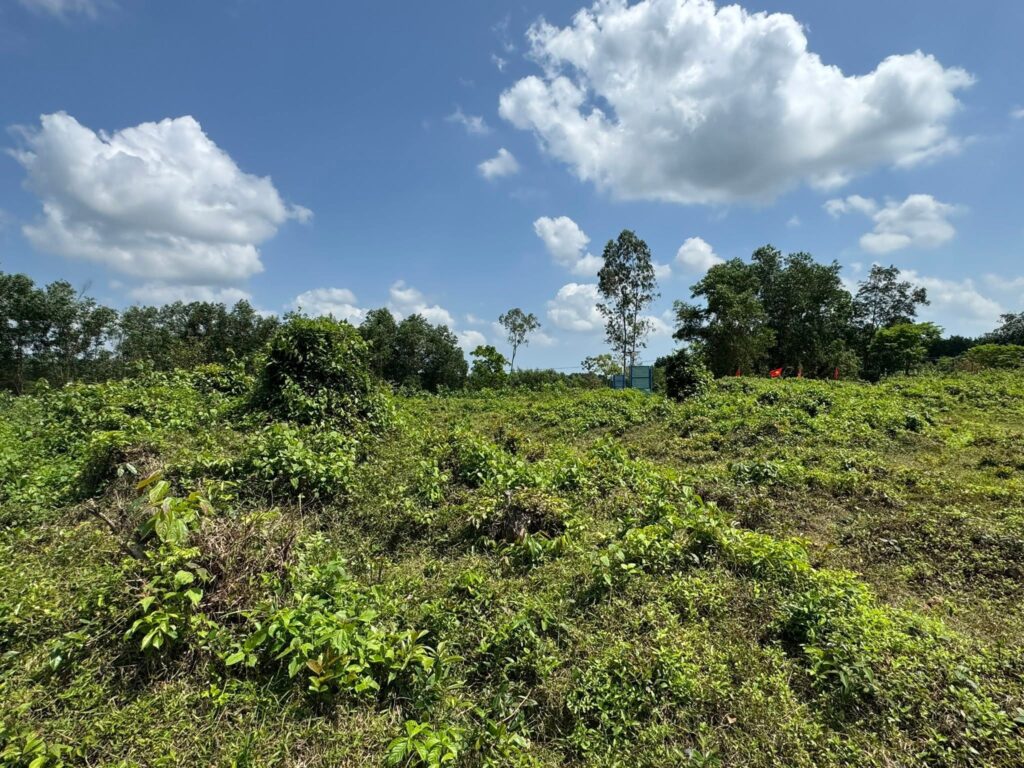
Núi Thành is a hill with distinctive terrain, consisting of two main peaks and a subsidiary peak connected by a saddle. According to the supplied source, the hill is approximately 1,200 meters long, 500 meters wide, and 50 meters high. It lies about 6 kilometers from the coast and 4 kilometers from Chu Lai Airport.
Its elevated terrain and proximity to the military base enabled American forces to establish defensive positions to control the surrounding area and protect Chu Lai. This was also the target selected by revolutionary forces to launch the campaign against American troops on the Military Region 5 battlefield.
The Decision to Attack and the Determination to Fight American Forces
After American troops landed in the Kỳ Liên and Kỳ Hà areas, the Command of Military Region 5 determined that the mindset and combat methods of regular troops and guerrilla forces needed to shift from fighting the Army of the Republic of Vietnam alone to engaging both South Vietnamese and American forces.
On May 10, 1965, the Command of Military Region 5 assigned the Quảng Nam Provincial Military Command the task of initiating a campaign against American troops. The immediate objective was to destroy an American company, with the target and attacking unit to be selected by the provincial command.
After conducting reconnaissance, gathering intelligence, and studying the terrain, the Quảng Nam Provincial Military Command selected Núi Thành as the first target. This decision had strategic significance, demonstrating the determination to confront American forces, which possessed modern equipment and substantial firepower.
According to the supplied historical account, American troops were organized into three groups occupying three hilltops. Their defenses consisted of field fortifications arranged in ascending tiers, interspersed with bushes and protected by two rows of barbed-wire obstacles. If the position came under attack, the garrison could receive supporting fire from artillery positions at Ao Vuông and Chu Lai, naval guns offshore, and aircraft operating from Chu Lai.
Facing this defensive system, revolutionary forces adopted a clear tactical principle: strike first, attack rapidly, destroy the American company, and quickly gain control of the battlefield.
Force Deployment and Operational Planning
In accordance with the orders of the Command of Military Region 5, the Quảng Nam Provincial Military Command deployed Infantry Company 2 of Infantry Battalion 70, reinforced by a special forces detachment from Special Forces Company 16 of the provincial local forces.
Based on the terrain and the American defensive layout, the attacking force was organized along two main directions.
- Main direction: Attack Hill 50 using two assault groups, including teams assigned to penetrate the defenses, outflank enemy positions, attack the subsidiary hilltop, and remain in reserve.
- Secondary direction: Attack Hill 49, with assault teams advancing from the southeast and a reserve force available for reinforcement.
- Ambush force: A three-person team was positioned to the east to intercept and attack American troops attempting to retreat.
This deployment enabled revolutionary forces to attack from multiple directions, approach the target covertly, divide the defensive formation, and limit the ability of the American groups to support one another.
The selection of forces, organization of the assault formations, and choice of suitable attack routes were important factors contributing to the outcome of the battle.
The Battle of Núi Thành
According to the detailed historical account provided, the battle took place on the night of May 26, 1965. Assault teams used grenades, demolition charges, and submachine guns to capture the outer fortifications before advancing against individual American-held positions.
The Assault on Hill 50
Along the main attack direction, the first assault group quickly penetrated the defenses and captured approximately two-thirds of its objective within two minutes. However, it was halted by intense enemy fire.
The second assault group advanced more successfully. Its penetration team captured the hilltop and raised a flag bearing the words “Determined to Fight and Win Against the American Aggressors” at the American company command post.
The surviving American troops attempted to retreat toward Ao Vuông but were intercepted and attacked by the ambush force. Revolutionary troops subsequently gained control of Hill 50 and the subsidiary hilltop.
The Assault on Hill 49
Along the secondary direction, two assault teams initially captured the outer fortifications. However, American troops on the hilltop mounted fierce resistance using 75 mm DKZ recoilless guns, heavy machine guns, and grenades.
The steep terrain slowed the advance, forcing the attacking troops to pause, reorganize, and commit their reserve force. The reinforcements attacked from the northeast, coordinating with the two assault teams advancing from the southeast to capture Hill 49.
After approximately 30 minutes of determined fighting, revolutionary forces gained control of the position. According to the supplied source, the battle resulted in 139 American troops being put out of action. The attacking force also captured four Garand M2 rifles, destroyed one 81 mm mortar and two 75 mm DKZ recoilless guns, and seized or destroyed additional weapons, uniforms, and military equipment.
The Núi Thành Victory demonstrated the ability of local revolutionary forces to organize a surprise assault, coordinate attacks from several directions, and rapidly seize their objectives against an American unit equipped with substantial firepower.
Historical Significance of the Núi Thành Victory
The 1965 Núi Thành Victory marked an important advance in the capabilities of the revolutionary armed forces in southern Vietnam, particularly their ability to select targets proactively, deploy forces effectively, and organize flexible combat operations during their first major engagement against American troops on the Military Region 5 battlefield.
The battle demonstrated the effectiveness of covertly moving forces close to a target, establishing an encirclement, penetrating the defenses, dividing the opposing formation, and defeating its units in succession. These methods were especially significant in confronting American forces, which enjoyed advantages in weapons, firepower, and air and artillery support.
The victory also strengthened confidence in the ability of the people and armed forces of Military Region 5, as well as revolutionary forces throughout southern Vietnam, to defeat American troops. It helped inspire a broader military emulation movement under the famous slogan:
“Seek out the Americans and fight; engage them and destroy them.”
The slogan became a prominent expression of the determination to take the initiative, maintain an offensive spirit, and overcome the opponent’s military advantages. Through successive engagements, revolutionary forces accumulated combat experience, improved their operational capabilities, and contributed to the eventual defeat of the American strategy known as “Limited War.”
The Traditional Banner: “Courageous and Resilient, Taking the Lead in Defeating the Americans”
The victory at Núi Thành established the people and armed forces of Quảng Nam–Đà Nẵng as pioneers in the campaign against American troops in southern Vietnam.
At the 1968 Congress of Heroes and Emulation Fighters of Southern Vietnam, organized by the National Liberation Front of South Vietnam and the Command of the Liberation Army of South Vietnam, the people and armed forces of Quảng Nam–Đà Nẵng were awarded a banner embroidered with eight golden words:
“Courageous and resilient, taking the lead in defeating the Americans.”
The award recognized the courage, resilience, and contributions of local forces and residents during the resistance war against the United States. The banner became a lasting symbol of tradition, local pride, and the determination to continue the struggle for national liberation.
The Núi Thành Victory Monument
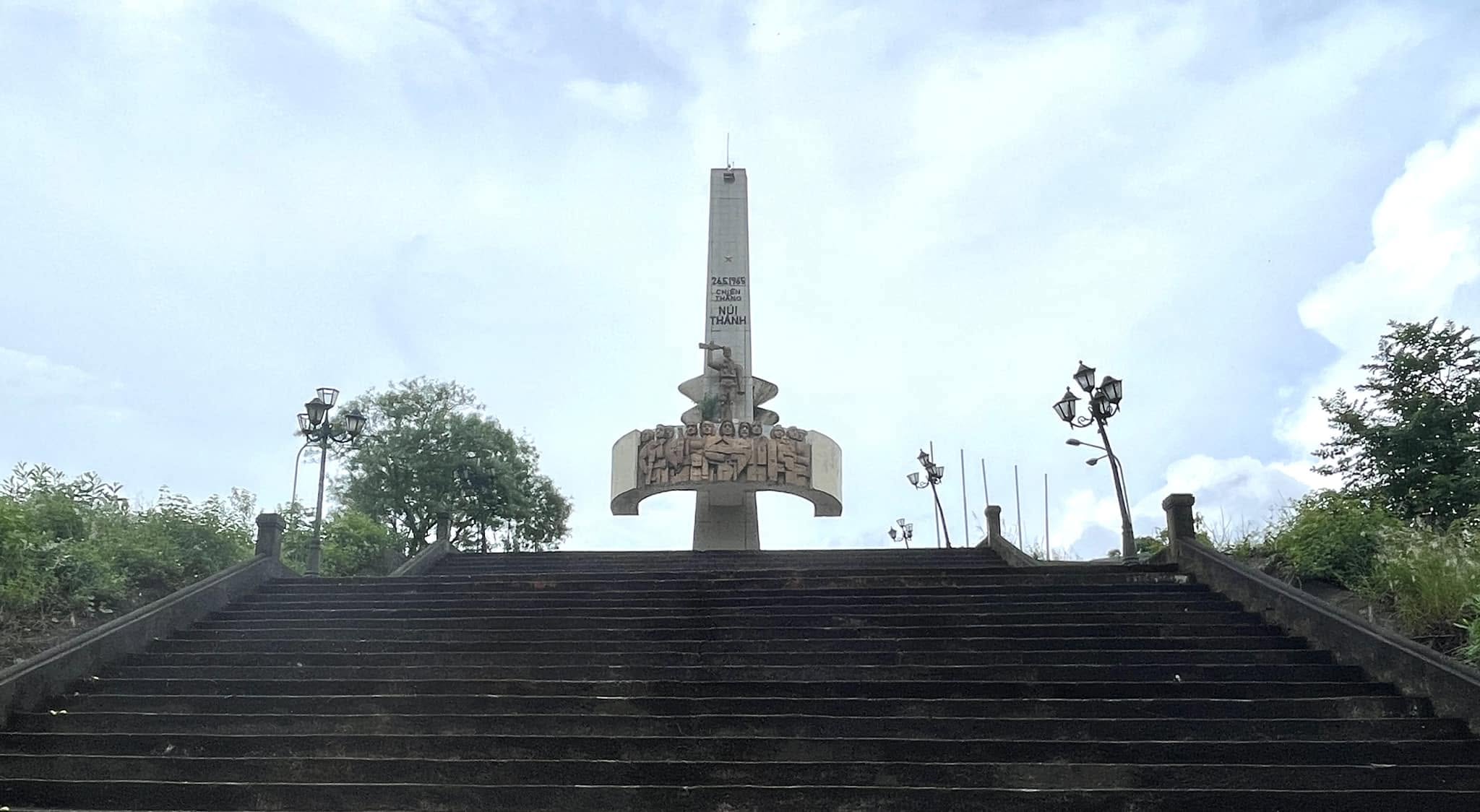
After liberation, the Núi Thành Victory Monument was built at a site approximately 43 meters above sea level. The monument commemorates the historic battle and honors those who fought and sacrificed their lives for the independence and freedom of their homeland and country.
Together with the surrounding historical site, the monument provides an opportunity for residents, visitors, and younger generations to learn about the 1965 victory, the soldiers who participated in the battle, and the determination of revolutionary forces during the early period of direct confrontation with American troops.
Preserving and promoting the value of the site helps safeguard historical memory, educate visitors about patriotism, and deepen understanding of the sacrifices and hardships endured during the struggle for independence and national reunification.
The Site’s Role in Historical Education
The Núi Thành Victory Site commemorates not only an important battle but also the development of military thinking and combat methods among the revolutionary armed forces in southern Vietnam during the resistance war against the United States.
By learning about the terrain, operational plans, course of the battle, and significance of the victory, visitors can better understand how revolutionary forces organized an offensive against an opponent with superior weapons and military resources.
As a place of historical education, the site helps younger generations explore local history, appreciate the sacrifices of previous generations, and strengthen their commitment to preserving peace, independence, and national sovereignty.
Quick Information
| Item | Details |
|---|---|
| Name | Núi Thành Victory Site |
| Location | Núi Thành Commune, Đà Nẵng City, Vietnam |
| Historical event | The Battle of Núi Thành in 1965 |
| Date of the battle | Night of May 26, 1965, according to the detailed account provided |
| Participating forces | Infantry Company 2, Infantry Battalion 70, reinforced by a special forces detachment from Special Forces Company 16 of the Quảng Nam provincial local forces |
| Objectives | American military positions on Núi Thành |
| Reported result | 139 American troops put out of action, according to the supplied source |
| Associated slogan | “Seek out the Americans and fight; engage them and destroy them.” |
| Traditional motto | “Courageous and resilient, taking the lead in defeating the Americans.” |
| Memorial structure | Núi Thành Victory Monument |
| Historical significance | Commemorates a landmark battle that helped launch the campaign against American troops on the Military Region 5 battlefield |