Ông Ngư Shrine is located in the Xóm Đình residential area of Bãi Làng Village, Tân Hiệp Commune, on Cù Lao Chàm. It is a traditional religious monument associated with the worship of the Whale, a long-standing belief among fishing communities along the central coast of Vietnam. For generations, fishermen on Cù Lao Chàm have believed that the Whale is a benevolent sea deity that comes to the aid of people in danger at sea.
The shrine was built around the late 19th century to worship the Whale and deities believed to protect the local fishing community. The structure features traditional architecture, including a low vaulted roof, rear sanctuary, yin-yang tiled roofs and a rich system of sacred decorative motifs. The monument was recognized as a national historical and cultural monument in 2006.
Location and Access
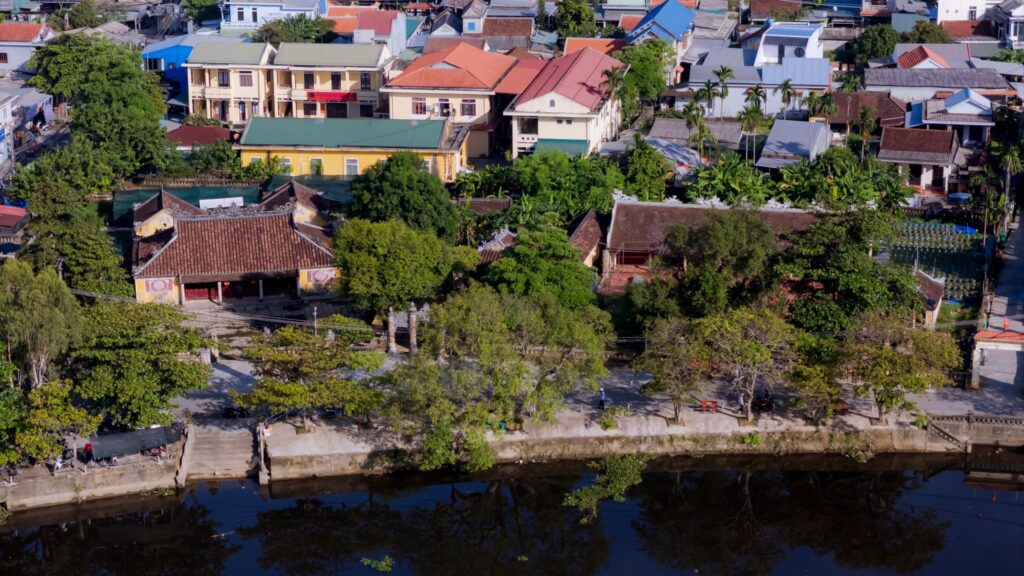
Ông Ngư Shrine stands within the Xóm Đình residential area of Bãi Làng Village, Tân Hiệp Commune. It is approximately 10 meters from the shoreline, with its rear facing the mountain and its front looking toward the sea according to traditional geomantic principles.
From Bãi Làng Pier, follow the concrete coastal road southeast for approximately 60 meters, then turn right into a small lane and continue for about 6 to 7 meters to reach the shrine.
The Whale-Worship Tradition of Cù Lao Chàm
Worship of the Whale has long been practiced among fishing communities along the central coast of Vietnam. According to local belief, the Whale is a benevolent sea deity who appears to rescue people caught in storms, accidents or other dangers at sea.
When a Whale is found dead and washed ashore, known locally as a cá Ông lụy, fishermen traditionally organize a funeral according to customary rites before burying the remains and eventually bringing the bones to a shrine for worship.
On Cù Lao Chàm, when fishermen discovered a dead Whale, they traditionally buried it at Bãi Ông in Bãi Ông Village. The beach’s gentle slope and relatively spacious land made it suitable for burial. After approximately three years, the bones were exhumed, washed with rice wine and ceremonially brought to Ông Ngư Shrine.
The Whale was also recognized within the traditional Vietnamese imperial system. Historical dynasties repeatedly granted imperial titles and honorific names to the Whale, including “Nam Hải Cự Tộc Ngọc Lân Tôn Thần,” while fishing communities were permitted to establish shrines and temples dedicated to its worship.
According to Đại Nam Nhất Thống Chí, Cù Lao Chàm was home to numerous religious shrines dedicated to maritime and protective deities, including Ngọc Lân, Thành Hoàng, Chúa Lồi, Bạch Mã, the Five Elements and the Phục Ba Generals. The Ngọc Lân Shrine mentioned in the historical text has been associated with Ông Ngư Shrine on Cù Lao Chàm, where Nam Hải Cự Tộc Ngọc Lân Tôn Thần is worshipped.
The Cầu Ngư Festival and Bả Trạo Singing
Every year, before the beginning of the southern fishing season, fishermen on Cù Lao Chàm traditionally hold a ceremony at Ông Ngư Shrine known as the Cầu Ngư Festival, or Whale-Worship and Fishermen’s Prayer Festival. It is an important community ritual attended by many fishermen from across the island.
One of the most distinctive cultural performances associated with the festival is bả trạo singing, locally known as hát bạn chèo. Performers sing while holding oars and imitating rowing movements, creating a dramatic representation of life aboard fishing boats. This form should not be confused with the traditional chèo theatre of northern Vietnam.
The Cầu Ngư ceremony traditionally lasts two days. The first day is devoted to preparing and decorating the shrine and arranging the ceremonial space. In the evening, the community conducts the lễ túc, also known as the announcement or preliminary offering ceremony.
The following day features the deity-welcoming procession. A sacred palanquin is placed on a large boat decorated with flags and ceremonial ornaments. Gongs, drums and musicians accompany the procession as it travels through the waters.
After the deity-welcoming ceremony, the community conducts a ritual for wandering spirits and a prayer for peace. This is followed by the ceremony honoring Ông Ngọc Lân Nam Hải. The main ritual consists of three stages: sơ hiến lễ, á hiến lễ and chung hiến lễ, accompanied by ritual announcements, the reading of ceremonial texts and ritual processions.
Bả trạo singing traditionally follows the main ceremonies. Historical accounts also record that performances of hát bội were once held for six or seven days during the festival.
Participants mainly include village elders, local residents and fishermen from nearby areas. After the Cầu Ngư ceremony, the community may organize recreational activities such as boat racing, basket-boat shaking and tug-of-war.
The principal purpose of the Cầu Ngư ceremony and bả trạo performance is to pray to Ông Nam Hải and the protective deities for peace in the community, safe voyages, favorable winds and abundant catches for those going out to sea.
Architecture of Ông Ngư Shrine
Ông Ngư Shrine stands within the residential area, approximately 10 meters from the sea. Its rear rests against the mountain while the front faces the sea, following traditional geomantic principles.
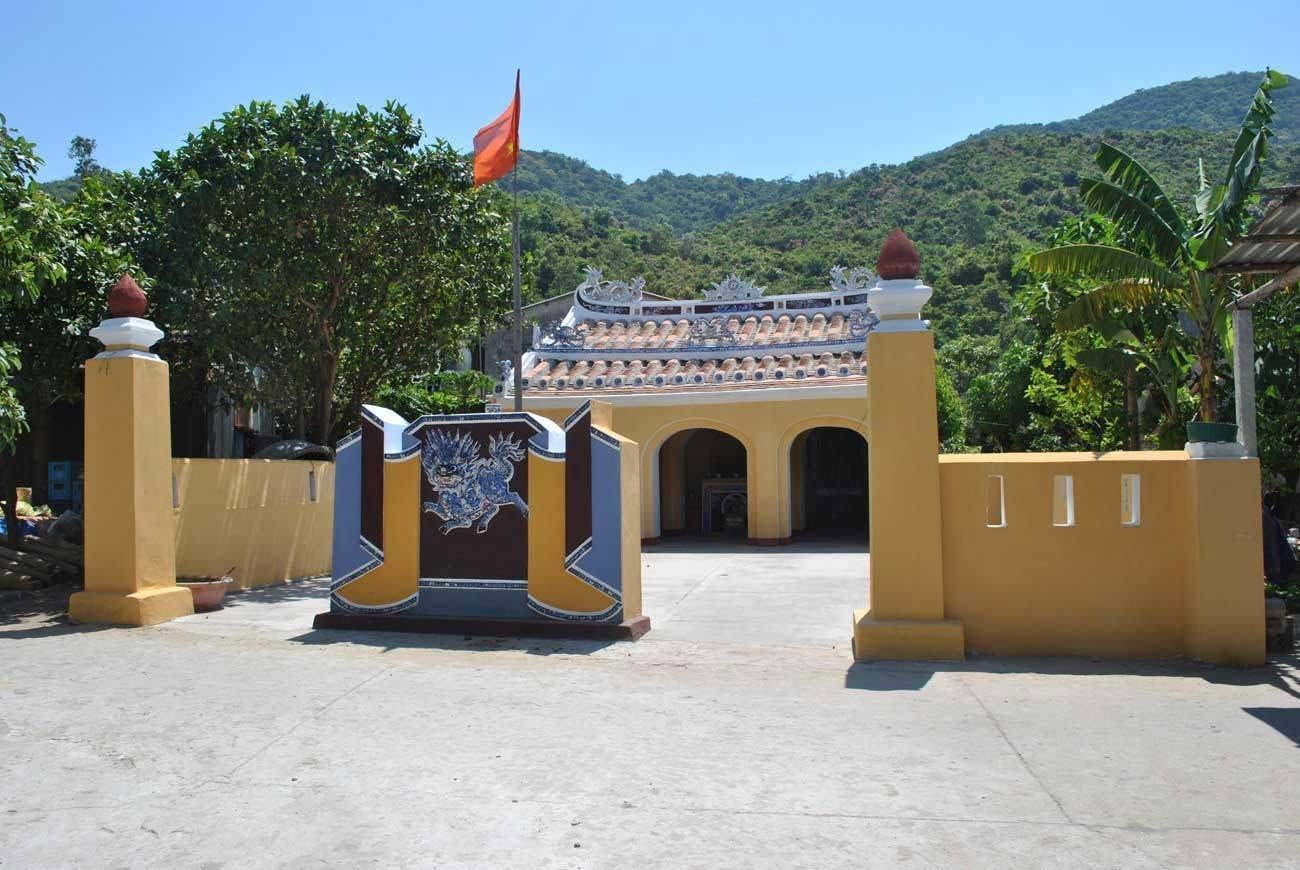
The shrine is constructed from lime, brick and coral, with a low vaulted roof and a rear sanctuary used to house the bones of the Whales. The roof is covered with yin-yang tiles and richly decorated with traditional sacred motifs.
The front roof ridge features two dragons facing the sun. The roof ridge of the second section is decorated with a phoenix, while the two gable ends feature kỳ lân motifs. The roof also incorporates the turtle-and-scroll motif, traditionally known as quy thư.
The interior is relatively spacious and consists of two three-bay sections. The central bay connects directly to the rear sanctuary and contains the containers holding Whale bones. The main altar contains 13 lacquered and gilded wooden ancestral tablets bearing the sacred titles of the Whales, including Nam Hải Cự Tộc Ngọc Lân Đại Tướng Quân, Nam Hải Cự Tộc Ngọc Lân Ông Mực Tôn Thần and Nam Hải Cự Tộc Ngọc Lân Ông Hổ Tôn Thần.
In front of the rear sanctuary is a brick altar used for ceremonial offerings during commemorative rituals. The two side bays are dedicated to attendant deities and other figures serving the main divine presence.
Approximately 7 meters in front of the shrine stands a screen wall in the form of a traditional scroll. Its front features a relief of a tiger, while the rear depicts a gracefully curving carp.
Notable Artifact
The most important surviving artifact at Ông Ngư Shrine is a collection of 13 lacquered and gilded wooden ancestral tablets carved with the sacred titles of the Whales worshipped by the local community.
These tablets reflect the richness of Whale-worship traditions on Cù Lao Chàm and the important place of the sea in the spiritual life of the island’s fishing community.
Historical and Cultural Value
Ông Ngư Shrine provides important evidence of the diverse religious and cultural practices of the people of Cù Lao Chàm. In particular, it represents the spiritual traditions of communities whose livelihoods depend on rivers and the sea, where the marine environment is both a source of livelihood and a space filled with spiritual beliefs.
The Whale-worship tradition expresses fishermen’s gratitude and faith toward a sea deity believed to have rescued people from danger. The Cầu Ngư ceremonies, deity-welcoming processions, Whale rituals and bả trạo performances also create a communal cultural space in which generations continue to preserve traditions associated with maritime life.
Architecturally, Ông Ngư Shrine enriches the religious and spiritual heritage of Tân Hiệp Commune and represents a distinctive form of maritime folk belief within the wider heritage landscape of Cù Lao Chàm.
Conservation
Because of its location close to the sea and the absence of a permanent caretaker for a period of time, the monument experienced deterioration. Lime plaster on the walls became damaged, several decorative elements on the roof were broken, the roof developed leaks and cracks appeared in the walls. Some areas around the monument were also encroached upon.
In 1997, specialists from the Hội An Centre for Heritage Management and Preservation surveyed the monument, assessed its values and prepared an initial documentation record. Further architectural measurement, protection zoning and scientific documentation have been carried out as part of the long-term conservation process.
Ông Ngư Shrine was recognized as a national historical and cultural monument in 2006, confirming its importance within the heritage system of Cù Lao Chàm.
Quick Information
| Item | Information |
|---|---|
| Name | Ông Ngư Shrine on Cù Lao Chàm |
| Object of worship | The Whale, Nam Hải Cự Tộc Ngọc Lân Tôn Thần and attendant deities |
| Location | Xóm Đình, Bãi Làng Village, Tân Hiệp Commune, Cù Lao Chàm |
| Construction period | Around the late 19th century |
| Heritage type | Religious heritage monument |
| Architecture | Low vaulted roof, rear sanctuary and yin-yang tiled roof |
| Decorative motifs | Dragons facing the sun, phoenix, qilin, turtle-and-scroll motifs and the “Sacred Fish Playing with the Moon” theme |
| Notable artifacts | 13 lacquered and gilded wooden Whale ancestral tablets |
| Traditional ceremonies | Cầu Ngư Festival, deity-welcoming procession, Whale worship and bả trạo singing |
| Heritage status | National historical and cultural monument, 2006 |
| Access | From Bãi Làng Pier, follow the coastal road for about 60 m, then turn right into a lane for approximately 6-7 m |