Pang Phoóng Festival, also known as the Thanksgiving Ceremony, is a traditional ritual deeply rooted in the cultural life of the Kháng ethnic community in Điện Biên. It is a time for descendants to express gratitude to their ancestors and deities for protecting their families and clans, bringing good health, favorable weather, abundant harvests, thriving livestock, and success in their work.
The ceremony also provides an important opportunity for members of the extended clan to gather, exchange stories, offer good wishes, and strengthen bonds within the community.
Today, the Kháng people in Pú Nhung Commune and across Điện Biên Province continue to preserve traditional ceremonies such as Xên Bản, Xên Pang Ả, and Pang Phoóng. Among them, Pang Phoóng clearly reflects the Kháng people’s understanding of the connection between the present and the past, between descendants and their ancestors, and between the community and its origins.
The Legend Behind Pang Phoóng
The Pang Phoóng Festival is associated with a traditional story about an unfinished love between the son of a Kháng village lord, from the Lò clan and Lò Khul lineage, and a female gibbon who took the form of a young woman.
According to the legend, fearing that the villagers would discover her true identity, the gibbon woman eventually left and asked her husband to prepare a feast in her memory after the harvest season.
From this story, Pang Phoóng has been preserved as a ritual of remembrance and gratitude toward the “Mother Gibbon,” who is regarded as an ancestral figure of the Lò Khul lineage.
When and Where the Festival Takes Place
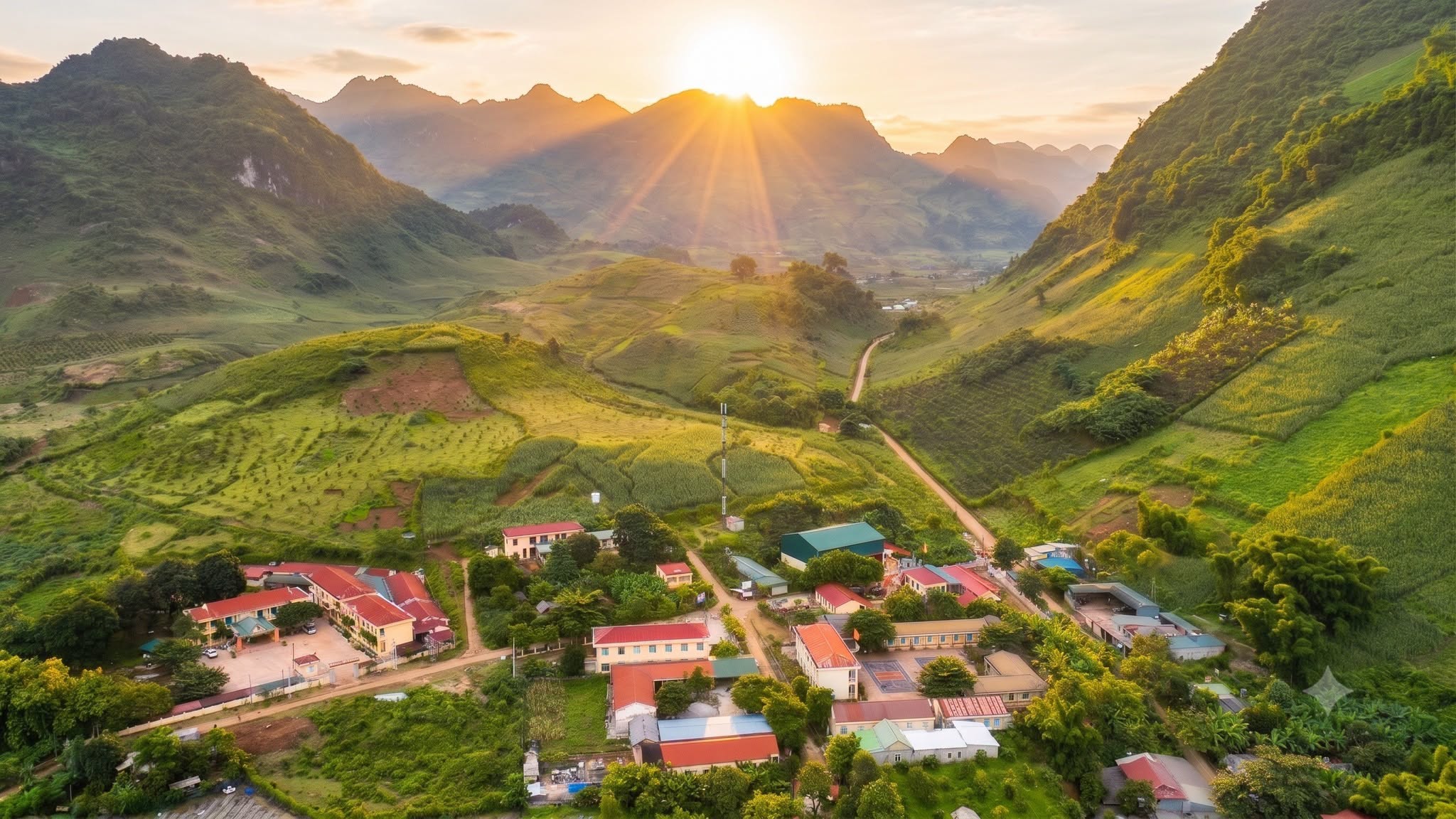
Pang Phoóng is generally held once every three or four years, usually between the 10th and 12th lunar months, when cockscomb flowers bloom red across the upland fields and local families have completed the harvest.
According to Kháng tradition, the festival should not take place on the death anniversary of a parent or grandparent within the clan. The chosen day is also usually associated with a bright moon. After the ritual ceremonies, the festival continues with communal celebrations, so moonlight is considered favorable for people to stay together and enjoy the festivities.
As the clan itself is the organizing community, the ceremonies and celebrations take place at the head of the clan’s household, with contributions from families throughout the lineage. The Mo shaman, often the clan head or a person deeply knowledgeable about the clan’s history and origins, presides over the ritual ceremonies.
Offerings and Preparations
The offerings used during Pang Phoóng are closely connected with the agricultural life and everyday culture of the Kháng people. They include wild fig leaves (mắc chát), sugarcane (mía phan), cockscomb flowers (bảnh cảng hoong só), wild fig branches (mắc chắc), bamboo tubes (bẳng om xe pang), incense bowls (chỏ khưởng), bundles of straw (piếng), jars of rice wine (kha xả), pigs (ẹc), chickens (diên), fish (ca), cymbals (le xẻng), drums (le củng), sticky rice (mả dum), young-rice sticky rice (mả giủn), water basins (ảng om), and buffalo horns (coi khạ), together with various household objects.
For the Lò Khul lineage, special importance is attached to vegetables, roots and fruits associated with the “Mother Gibbon,” the clan’s ancestral figure. These include sweet potatoes (quai hók), papaya (pe hoỏng), pumpkin (pe ử), taro (quai kho), bananas (tỷ), banana blossoms (le đửa), and corn (nung lý).
From early morning on the chosen day, the host family prepares sticky rice, slaughters the pig, chicken and fish, and arranges the offerings in the ancestral worship space.
Ancestral Worship and the Ceremony for the Earth Deity
Before the ritual begins, the shaman opens a wooden panel in the ancestral worship space to invite the ancestors back home. He then sounds three rounds of gongs, calling upon the ancestors to receive the offerings and bless the family and clan with good health, favorable weather and abundant harvests.
Members of the clan then enter the worship space one by one and take an A-shaped object made from split bamboo strips, known as “Peng nhả khạ,” to perform the ritual of sprinkling rice wine as an offering to the ancestors.
After this ritual, the pig and chicken are brought to the offering area. The shaman asks the ancestors for permission for the descendants to present the sacrificial offerings. The animals are then prepared, cooked and arranged on the offering trays before the ceremony continues with the invitation to the ancestors to partake in the feast.
Once the ancestral ceremony is completed, the shaman goes outside to perform the ritual honoring the earth deity, asking for protection and blessings for the family and the village, including good health, prosperous livelihoods and productive crops.
The offering tray for the earth deity includes one chicken, half a fish, half a sweet potato, a handful of young-rice sticky rice and purple sticky rice, a small amount of pumpkin, one bottle of rice wine and two small cups.
After completing the prayer, the shaman sounds the gong, signaling that the earth deity has given permission for the clan to proceed with the festival celebrations.
From Sacred Ritual to Communal Celebration
After the ceremonies honoring the ancestors and earth deity are completed, the host family opens the communal feast, inviting everyone to drink rice wine and enjoy the food. It is a time for members of the clan to share stories, exchange good wishes, and discuss experiences in farming, work and economic development.
While the ritual part of Pang Phoóng is solemn and reverent, the festival portion is lively, open and strongly communal. It takes place at the clan head’s house.
The oldest members of the clan begin the celebration by playing gongs and cymbals. As the traditional instruments fill the house with sound, people gather in a circle and perform the Tăng Bu dance, also known as “Xépang.”
From elders to children, participants each hold a bamboo tube more than one meter long. Moving in a circle, they rhythmically strike the bamboo against the floor. The dance stylizes the agricultural movement of making holes in the soil to plant seeds, reflecting the importance of upland farming in Kháng life.
Traditional Dances, Performances and Folk Games
During the festival, the Kháng community also presents a variety of traditional cultural performances, including antiphonal singing (khắp tọp), courtship singing (khắp báo sao), Tầm Đao dance (tỏi điểng), and bamboo dance (xék loỏng).
Communal folk games are also held, including tug of war (chặc cáng), còn throwing (tọt cón), stick pushing (xu điêng), crossbow shooting (bén nak), and spinning-top games (tók sáng).
These activities create a vibrant atmosphere following the solemn rituals and provide a shared space where different generations can participate, interact and pass traditional forms of folk culture from one generation to the next.
Cultural Significance of Pang Phoóng
Pang Phoóng reflects an important belief in the spiritual life of the Kháng people: ancestral origins and the lineage provide a foundation toward which descendants turn, nurturing moral values and expressing their hopes for peace, good fortune and a prosperous life.
Through the thanksgiving rituals, the community expresses gratitude to its ancestors while praying for the protection of the clan, good health for its families, favorable agricultural conditions and an increasingly prosperous life.
The festival also strengthens relationships among members of the extended clan. It is an opportunity for elders to teach younger generations about their origins, customs and cultural values, while allowing different generations to participate together in rituals, dances, songs and folk games.
Today, Pang Phoóng continues to preserve its distinctive identity within the cultural life of the Kháng community. Beyond meeting spiritual and cultural needs, the festival contributes to educating younger generations, strengthening community solidarity and safeguarding traditional Kháng cultural values.
Recognizing its cultural significance, the Pang Phoóng Thanksgiving Ceremony of the Kháng people was included in the National Intangible Cultural Heritage List by the Minister of Culture, Sports and Tourism under Decision No. 2742/QD-BVHTTDL dated September 30, 2020.
Quick Facts
| Category | Information |
|---|---|
| Heritage | Pang Phoóng Thanksgiving Ceremony of the Kháng people |
| Ethnic group | Kháng |
| Location | Pú Nhung Commune, Điện Biên Province |
| Representative lineage | Lò, Lò Khul lineage |
| Frequency | Approximately once every 3 to 4 years |
| Time | Around the 10th to 12th lunar months, after the harvest |
| Ritual leader | Mo shaman, usually the clan head |
| Main venue | The clan head’s household |
| Main rituals | Ancestral worship, earth deity worship, opening of the communal feast |
| Representative dance | Tăng Bu, Xépang |
| Traditional performances | Khắp tọp, khắp báo sao, tỏi điểng, xék loỏng |
| Folk games | Tug of war, còn throwing, stick pushing, crossbow shooting, spinning tops |
| Cultural significance | Giving thanks to ancestors, honoring origins, praying for peace and favorable harvests, and strengthening community solidarity |
| Heritage status | National Intangible Cultural Heritage |
| Decision | No. 2742/QD-BVHTTDL, September 30, 2020 |