The Phuc Giang School Woodblocks are an exceptional collection of ancient wooden printing blocks used to produce educational books in Vietnam. Created in the mid-18th century at Phuc Giang School in Truong Luu Village, Ha Tinh Province, the collection is closely associated with the scholarly traditions of the Nguyen Huy family. Beyond preserving classical Confucian textbooks, the woodblocks provide valuable evidence of traditional teaching methods, textbook compilation, and printing techniques in Vietnamese history.
Unlike woodblock collections produced by government institutions or religious establishments, the Phuc Giang School Woodblocks originated from the educational activities of a private family. Scholars and teachers of the Nguyen Huy lineage selected, compiled, and commissioned the carving of texts specifically for teaching, learning, and preparation for the imperial civil service examinations.
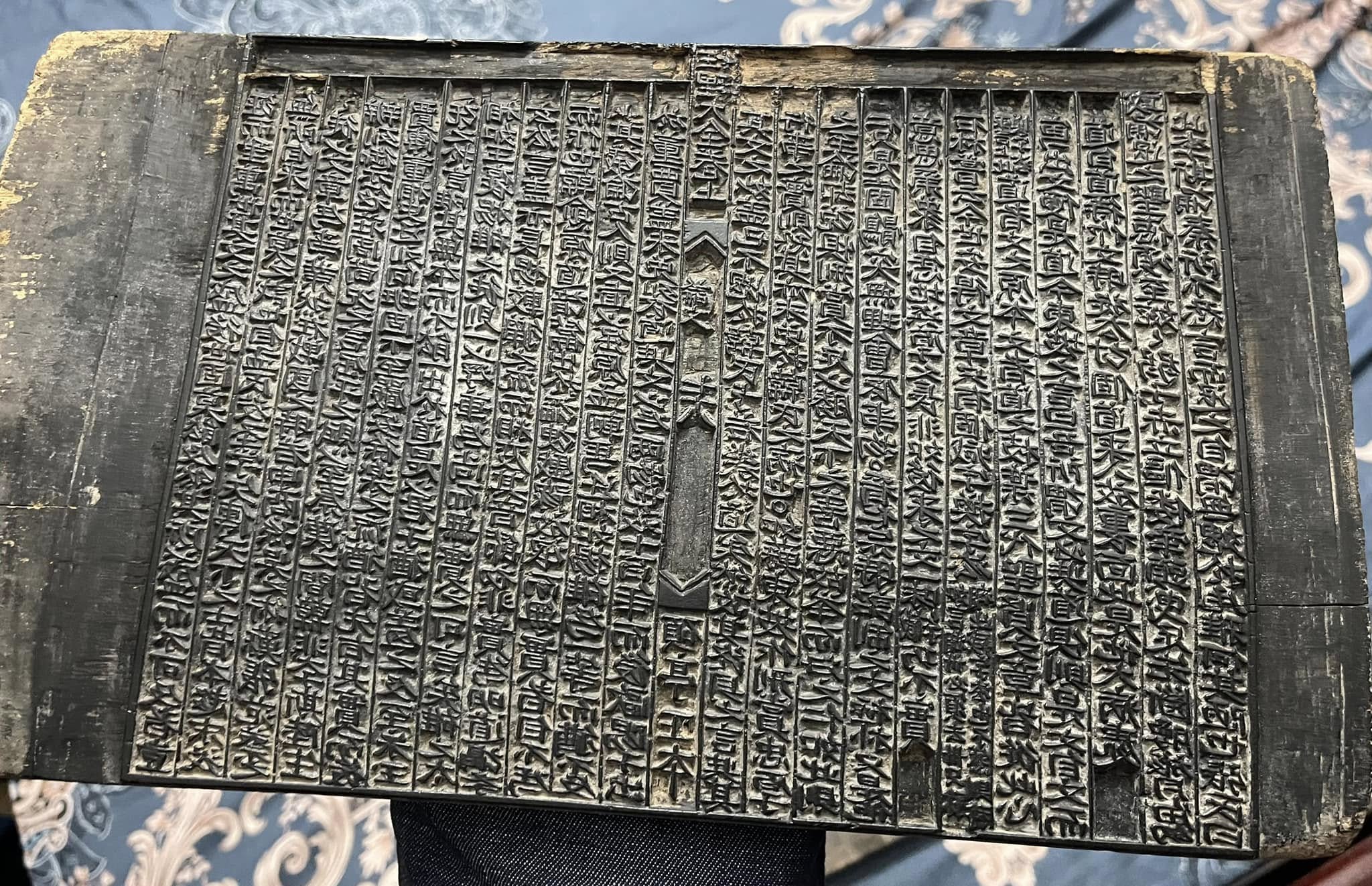
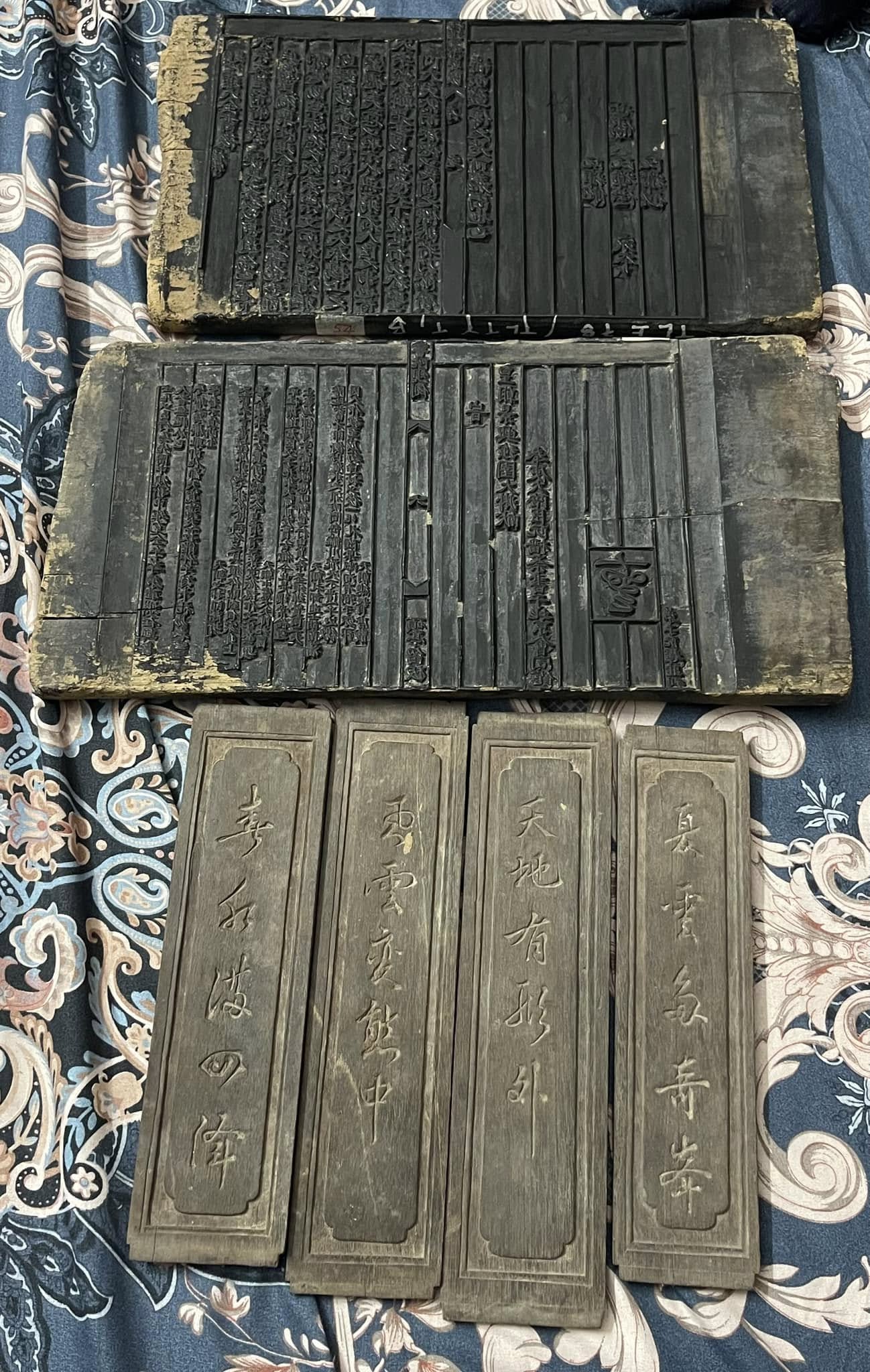
The collection is documented as comprising 379 surviving wooden printing blocks, engraved with reversed Chinese characters for printing educational materials. Most of the blocks date from 1758 to 1788 and are associated with several generations of distinguished Nguyen Huy scholars, particularly Nguyen Huy Oanh, who achieved the prestigious academic title of Tham Hoa, or Third-Ranked Doctoral Laureate.
On May 19, 2016, during the Seventh General Meeting of the Memory of the World Committee for Asia and the Pacific, held in Hue, the Phuc Giang School Woodblocks were inscribed on the UNESCO Memory of the World Asia-Pacific Regional Register (MOWCAP).
This recognition acknowledged the exceptional value of a rare educational documentary collection and honored the contributions of Truong Luu Village and the Nguyen Huy family to Vietnam’s educational, cultural, and intellectual history.
Historical Origins of Phuc Giang School and the Scholarly Traditions of the Nguyen Huy Family
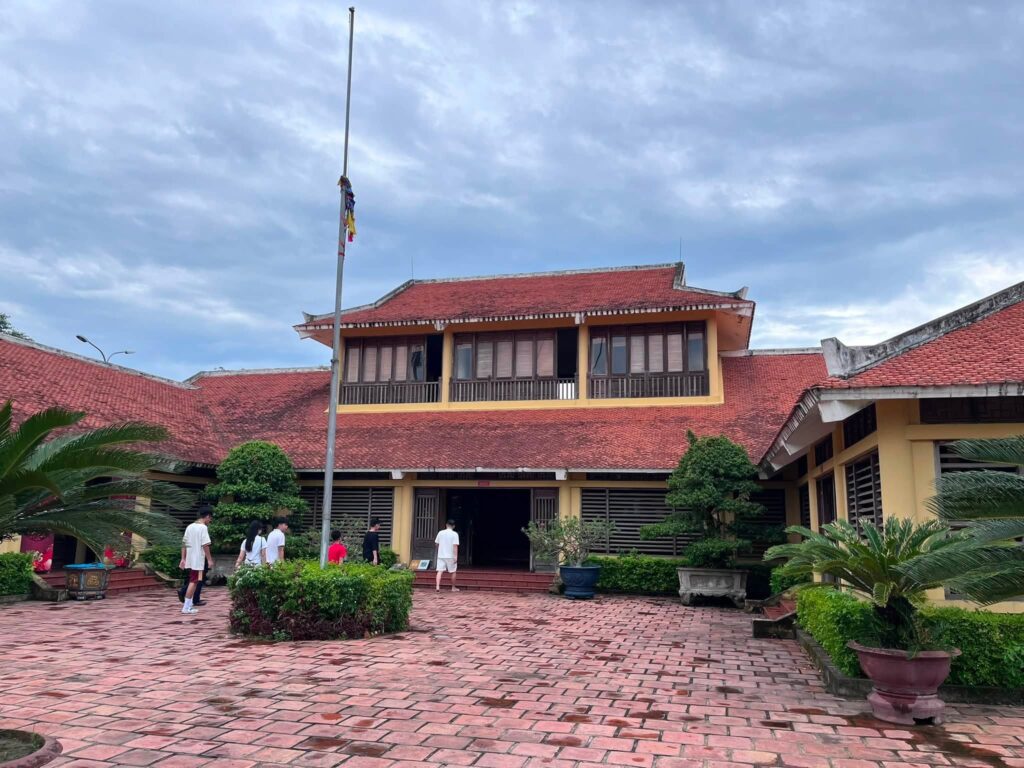
The Phuc Giang School Woodblocks originated in Truong Luu Village, a community renowned for its literary, educational, and scholarly traditions in Ha Tinh Province.
Historically, the village belonged to Lai Thach Commune, Lai Thach Canton, La Son District, Duc Tho Prefecture, Nghe An Region. Following successive administrative changes, Truong Luu became part of Can Loc District, Ha Tinh Province, and, after Vietnam’s 2025 administrative reorganization, is located in Truong Luu Commune, Ha Tinh Province.
For centuries, Truong Luu developed a distinctive intellectual environment in which generations of Confucian scholars engaged in teaching, literary composition, textbook compilation, and the education of talented students.
The Nguyen Huy family played a particularly prominent role in this tradition. Several members achieved academic distinction, held important positions in the royal administration, and made significant contributions to Vietnamese literature and education.
The establishment of Phuc Giang School reflected the need for an organized educational institution where students could study Confucian classics and acquire the knowledge required for the imperial civil service examinations.
It represented a family-operated educational model that combined classroom instruction with textbook compilation, the preservation of scholarly materials, and traditional printing activities.
The most prominent historical figure associated with the school’s development was Nguyen Huy Oanh (1713–1789), a distinguished scholar, educator, cultural figure, and official during the Le-Trinh period.
Born into the scholarly Nguyen Huy family, he held important official positions and exercised considerable influence on the educational and intellectual life of his time.
Together with his father, Nguyen Huy Tuu, and other members of the family, Nguyen Huy Oanh participated in compiling, editing, and organizing the engraving of educational texts for Phuc Giang School.
The collection is also associated with distinguished family members such as Nguyen Huy Cu, Nguyen Huy Quynh, and Nguyen Huy Tu, reflecting the continuity of scholarly activities across several generations.
Most of the woodblocks were produced between 1758 and 1788, a period when Confucian education and the imperial examination system occupied an important position in Vietnamese society.
The fact that a private family independently organized the compilation and printing of textbooks demonstrates considerable initiative in curriculum development, knowledge selection, and the dissemination of learning.
Rather than relying exclusively on existing books, Phuc Giang teachers consulted classical texts, summarized essential concepts, and incorporated additional materials to produce textbooks suited to their educational objectives.
These books were used in teaching and learning, enabling students to study central aspects of Confucian philosophy, history, ethics, and political thought.
According to heritage documentation, Phuc Giang School attracted numerous students and contributed to the education of scholars who subsequently achieved academic success and entered government service.
The Nguyen Huy family’s influence extended beyond Truong Luu Village to major educational institutions throughout the country.
In 1759, Nguyen Huy Oanh was appointed Tu Nghiep, a senior academic administrator at the Imperial Academy, or Quoc Tu Giam. He later served as Te Tuu, the academy’s highest educational office.
Educational materials associated with the Phuc Giang woodblocks were also used in his teaching activities, contributing to the transmission of Confucian knowledge and educational methods.
Later generations of the Nguyen Huy family continued this scholarly tradition. Some members participated in educational activities in the imperial capital of Hue during the Nguyen Dynasty, including Nguyen Huy Ta.
Phuc Giang School therefore became more than a local educational institution. It developed into a symbol of the scholarly achievements, examination traditions, and commitment to education associated with Truong Luu Village.
The Collection of 379 Woodblocks and 18th-Century Educational Printing Techniques
The Phuc Giang School Woodblocks are described in heritage documentation as a collection of 379 wooden printing blocks, most of which date from the mid-to-late 18th century.
Some other materials refer to 383 surviving blocks. This difference should be checked against the inventory records for the relevant period. This article follows the figure of 379 provided in the original heritage description.
The blocks were made from persimmon wood, a material with a relatively fine grain and characteristics suitable for carving printing surfaces.
According to the heritage documentation, many blocks were produced from mature persimmon trees. When properly prepared and preserved, the wood offers reasonable resistance to warping, cracking, and insect damage.
The printing blocks generally measure approximately 25–30 cm in length, 15–18 cm in width, and 1–2 cm in thickness.
Some blocks used for title pages or other special sections vary in size and thickness.
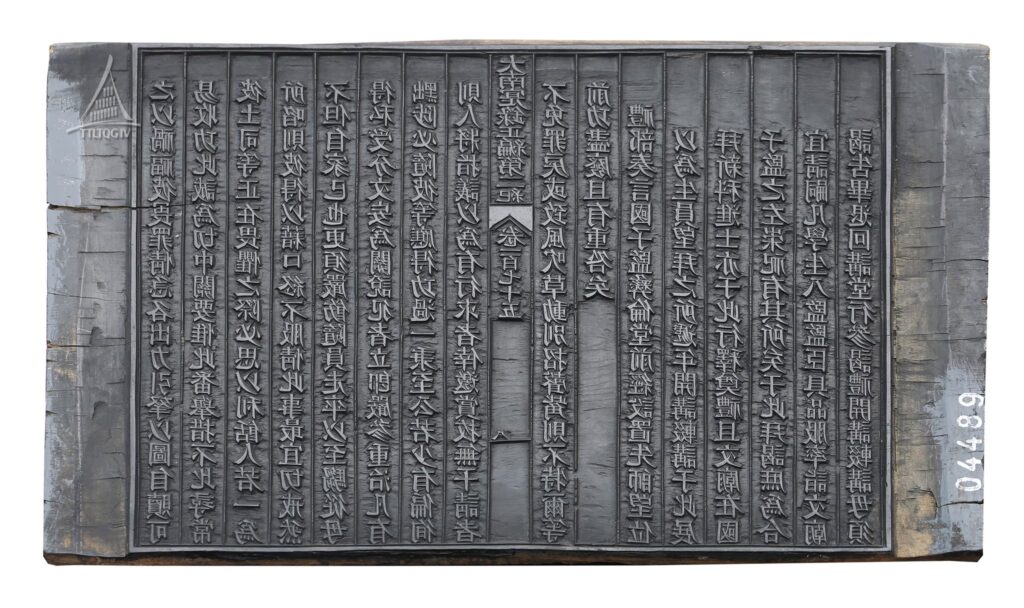
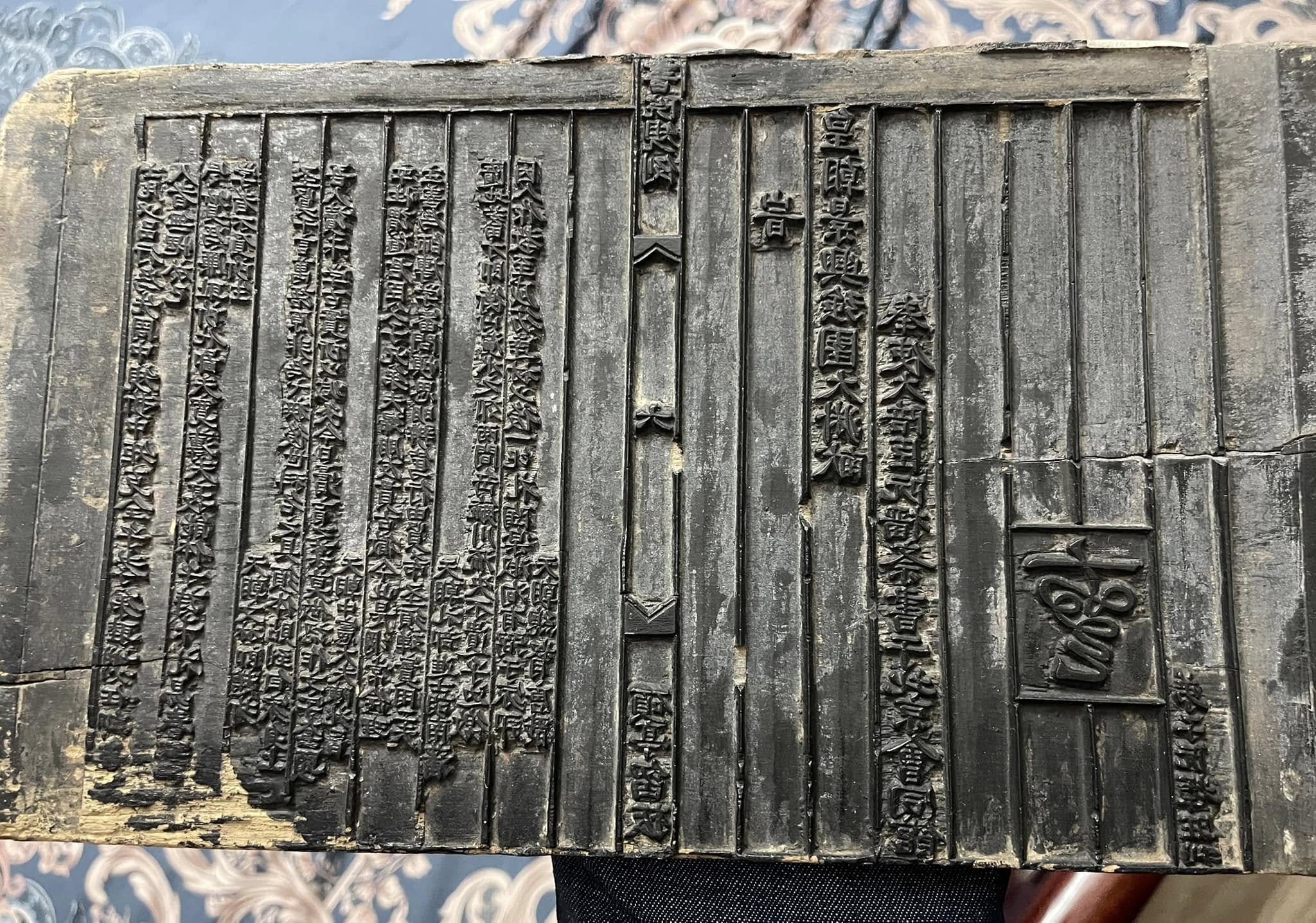
The most distinctive technical feature is the use of reversed Chinese characters, carved as mirror images on the wooden surface.
When ink is applied to the raised printing surface and paper is pressed against it, the characters appear in the correct orientation on the printed page.
This is the fundamental principle of traditional woodblock printing, a technique with a long history in Vietnam and other East Asian countries.
The Phuc Giang blocks were designed to accommodate traditional bookbinding methods.
A printing surface could contain the text corresponding to two adjacent pages. After printing, the paper was folded and bound into a book according to traditional East Asian bookmaking practices.
Margins were carefully arranged along the upper, lower, and side edges to ensure balanced page composition and clear presentation.
The layout varied according to the function of each section, including title pages, prefaces, postscripts, tables of contents, main texts, and annotations.
This diversity reveals the organizational structure of traditional educational books, from the preparation of manuscripts to engraving, printing, and classroom use.
The woodblocks also preserve valuable evidence of historical Chinese writing styles.
The engraved texts include standard characters, abbreviated forms, variant characters, and writing conventions associated with different historical periods.
Some inscriptions contain features related to naming taboos, calligraphic traditions, and classical textual presentation.
The carving required exceptional precision because even a minor error could alter the meaning of the printed text.
In addition to the characters themselves, some blocks preserve seals, family emblems, identifying marks, or information associated with the compilation and production process.
These features are important for studying textual origins, ownership, publishing practices, and the history of the Nguyen Huy family.
According to the heritage documentation, some of the craftsmen involved in engraving the blocks were associated with the traditional printing villages of Hong Luc and Lieu Chang in the historical Hai Duong region.
The participation of specialized engravers suggests that the printing activities of Phuc Giang School were connected to established centers of traditional craftsmanship and publishing.
Producing a wooden printing block required several stages, including selecting and preparing the timber, smoothing the surface, preparing the calligraphic model, transferring the text, engraving the characters, and examining trial prints.
The craftsmen needed both technical skill and an understanding of textual layout to ensure that the printed pages were clear, accurate, and suitable for repeated use.
Having survived for more than 250 years, the remaining blocks are valuable historical artifacts that demonstrate the technical sophistication and artistic standards of Vietnamese woodblock printing in the 18th century.
Educational Textbooks and Teaching Methods at Phuc Giang School
The exceptional significance of the Phuc Giang School Woodblocks lies not only in their materials and production techniques but also in the educational content of the books they were designed to print.
The collection was used to reproduce Confucian educational texts selected, compiled, and edited by scholars and teachers of the Nguyen Huy family.
According to the original heritage description, the woodblocks are associated with three principal works comprising 12 volumes:
Tinh Ly Toan Yeu Dai Toan, Ngu Kinh Toan Yeu Dai Toan, and Thu Vien Quy Le.
These works reflect the educational approach adopted at Phuc Giang School, where classical knowledge was systematically organized to support teaching and learning.
Tinh Ly Toan Yeu Dai Toan addresses subjects within Confucian philosophy, particularly ethical principles, human nature, cosmology, and philosophical ideas developed within the Neo-Confucian tradition.
Such materials helped students understand the intellectual foundations of Confucian scholarship, ranging from personal moral cultivation to social responsibilities and ethical conduct.
Ngu Kinh Toan Yeu Dai Toan is associated with the Five Classics of Confucianism: the Classic of Poetry, Book of Documents, Book of Rites, Book of Changes, and Spring and Autumn Annals.
These works formed an essential foundation of traditional Confucian education and the imperial examination system.
Rather than reproducing the entire extensive body of classical literature, the compilers selected and summarized important ideas to make them easier for students to understand and remember.
Thu Vien Quy Le contains material relating to regulations, organization, and scholarly activities within the library, providing insight into the management of knowledge in the educational environment of the Nguyen Huy family.
In addition to drawing upon Confucian classics, the compilers incorporated material related to Vietnamese history and culture.
Some sections discuss Vietnamese dynasties from the Dinh to the Tran periods, accompanied by comments and assessments of historical rulers.
This demonstrates that the Phuc Giang educational tradition involved more than the passive adoption of external knowledge.
The teachers actively selected, adapted, and supplemented classical materials to suit the historical and cultural circumstances of Vietnam.
In certain ethical and political discussions, the compilers’ interpretations also reveal a careful consideration of traditional Confucian principles alongside responsibilities toward the country.
This selective approach reflects the flexible application of Confucian learning within Vietnamese intellectual and educational life.
The Phuc Giang School Woodblocks therefore provide valuable evidence of the local adaptation of Confucian knowledge in Vietnam.
The textbooks also reveal a practical approach to educational compilation.
Rather than requiring students to begin with lengthy and complex classical works, the teachers organized essential knowledge into more accessible subjects and summaries.
This method enabled learners to understand key principles before progressing to more advanced studies.
The systematic compilation of textbooks also helped maintain consistency in teaching across successive generations of teachers and students.
Printed copies could be produced repeatedly from the same wooden blocks, increasing access to educational materials at a time when manually copying books required considerable labor.
This was one of Phuc Giang School’s important contributions to the history of traditional Vietnamese education.
The textbooks were not confined to students in Truong Luu Village.
They were also associated with the educational activities of Nguyen Huy family members at major institutions.
According to heritage documentation, Nguyen Huy Oanh used educational materials related to the Phuc Giang woodblocks during his teaching activities at the Imperial Academy.
Later generations continued to preserve and transmit the knowledge contained in these works.
The collection consequently illustrates the relationship between private education, local scholarly traditions, and the official system for training talented individuals in premodern Vietnam.
Historical Authenticity, Cultural Significance, and International Value
The Phuc Giang School Woodblocks are highly valued for their authenticity, rarity, and significance across several fields of historical and cultural research.
First, they constitute an original documentary collection associated with the educational activities of a private family, created in the mid-18th century and preserved through successive generations.
Unlike printed books that could be copied or distributed in numerous locations, the wooden printing blocks were the physical instruments used to produce the printed texts.
Each block preserves direct evidence of engraving techniques, writing styles, page composition, and the material characteristics of traditional publishing.
Features such as the wood itself, seals, family emblems, calligraphic styles, and textual layouts can help researchers establish the origins and historical context of individual artifacts.
The authenticity of the collection can also be examined through historical documents associated with the Nguyen Huy family.
According to heritage documentation, relevant evidence includes royal decrees issued during the Le and Nguyen dynasties, scholarly records concerning distinguished figures from Truong Luu, and historical works such as Dai Nam Thuc Luc, Dai Nam Nhat Thong Chi, Lich Trieu Hien Chuong Loai Chi, and Nghe An Ky.
Comparing the surviving artifacts with written historical sources helps clarify the collection’s origins, the educational activities of the family, and the contributions of its compilers.
In terms of educational history, the woodblocks provide important evidence of a school established and operated by a private family.
They demonstrate the existence of an organized scholarly environment in an 18th-century Vietnamese village, where teachers compiled textbooks, commissioned printing blocks, and maintained educational activities.
The collection is therefore particularly valuable for studying the history of private education, imperial examinations, and the development of the Confucian scholarly class.
From the perspective of textual studies, the blocks offer material for examining Chinese character forms, historical writing variants, page design, and traditional methods of book compilation.
Evidence of editorial changes, page organization, and differences between types of texts also provides insight into historical publishing practices.
Artistically, the collection reflects the high level of craftsmanship involved in wood engraving and Chinese calligraphy.
Carving reversed characters into wooden surfaces demanded accuracy, patience, and considerable technical expertise.
The finished blocks demonstrate the relationship between traditional craftsmanship and calligraphic aesthetics.
Culturally, the woodblocks embody the Nguyen Huy family’s commitment to education, respect for knowledge, and determination to preserve scholarly traditions.
Their survival through more than two centuries of political upheaval, warfare, and natural disasters illustrates the importance of community involvement in heritage preservation.
At the international level, the collection provides valuable evidence for studying the transmission and development of Confucianism in Vietnam.
Historically, Chinese characters and Confucian classical texts were widely used across several East Asian societies, creating intellectual and cultural connections between Vietnam, China, Korea, and Japan.
However, each country interpreted and adapted these traditions according to its own political, historical, and cultural circumstances.
The Phuc Giang School Woodblocks demonstrate that Vietnamese scholars did not merely reproduce classical texts.
They actively selected, summarized, supplemented, and reorganized knowledge to meet the educational needs of Vietnamese students.
The collection therefore offers important material for comparative studies of educational history, Chinese-character culture, and intellectual exchange in East Asia.
Members of the Nguyen Huy family were also involved in political, diplomatic, and cultural activities.
Nguyen Huy Oanh maintained scholarly connections and participated in literary exchanges involving intellectuals and diplomatic representatives from the wider region.
Historical materials associated with him and his family contribute to our understanding of Vietnam’s intellectual and diplomatic networks during this period.
The family’s scholarly achievements are also documented through surviving literary works, historical records, and cultural artifacts.
The Phuc Giang woodblocks can be studied alongside other documentary and cultural heritage collections from Truong Luu Village, providing a broader understanding of the village’s contributions to Vietnamese literature and education.
From an interdisciplinary perspective, the collection is relevant to educational history, Han-Nom studies, textual scholarship, printing history, traditional fine arts, intellectual history, and community cultural studies.
Its combination of original historical materials, educational content, craftsmanship, and scholarly context gives the Phuc Giang School Woodblocks a distinctive position within Vietnam’s documentary heritage.
UNESCO Recognition in 2016 and Heritage Preservation in Truong Luu Village
In May 2016, the Seventh General Meeting of the Memory of the World Committee for Asia and the Pacific (MOWCAP) was held in the former imperial capital of Hue.
During the meeting, the Phuc Giang School Woodblocks were inscribed on the UNESCO Memory of the World Asia-Pacific Regional Register, with the recognition dated May 19, 2016.
The event marked an important milestone in recognizing and promoting the documentary heritage of Truong Luu Village and Ha Tinh Province.
UNESCO recognition acknowledged the significance of this rare collection of educational printing blocks and helped raise awareness of the role played by families and local communities in preserving knowledge across generations.
It is important to distinguish that the Phuc Giang School Woodblocks were inscribed on the Asia-Pacific Regional Register, rather than the International Memory of the World Register.
From a conservation perspective, the wooden blocks require specialized care because of their age and organic materials.
Environmental factors such as temperature, humidity, light exposure, insects, and storage conditions can directly affect their physical stability.
Safeguarding the collection requires careful inventory management, condition assessment, preventive conservation, and appropriate storage environments.
Digitization, high-resolution photography, and the development of electronic databases can help preserve the textual content while reducing the need for direct handling of the original artifacts.
In addition, Han-Nom research, transcription, translation, and the publication of related materials are essential for making the collection more accessible to contemporary audiences.
The original textbooks use classical Chinese and historical textual conventions that require interpretation within their educational and cultural context.
Academic exhibitions, conferences, and educational programmes can also help introduce the scholarly achievements of the Nguyen Huy family to a wider audience.
For Truong Luu Village, the Phuc Giang School Woodblocks offer important opportunities for developing cultural and educational tourism.
The village is associated with numerous historical figures, monuments, and documentary heritage collections that reflect a longstanding tradition of literature and scholarship.
Visitors interested in this heritage can explore the story of a family that established an educational environment, compiled textbooks, and organized printing activities during the 18th century.
This history is particularly appealing to those interested in traditional Vietnamese education, historical printing techniques, village culture, and the contributions of Vietnamese scholars.
However, public interpretation and tourism activities must be carefully balanced with the need to protect the original artifacts.
Activities that could damage the historic wooden blocks should be avoided.
A sustainable approach may include exhibitions featuring replicas, digitized images, demonstrations of traditional woodblock printing, and interpretive displays about distinguished members of the Nguyen Huy family.
Such activities can help visitors appreciate the significance of the collection while ensuring its long-term preservation.
The Phuc Giang School Woodblocks are more than the surviving remains of an ancient educational institution.
They represent a commitment to learning, intellectual creativity, and the transmission of knowledge within Vietnamese society.
Through wooden blocks engraved with reversed Chinese characters, later generations can discover how 18th-century teachers organized knowledge, compiled textbooks, and passed scholarly traditions on to their students.
Originating from a family-operated school in Truong Luu Village, the Phuc Giang School Woodblocks have become an internationally recognized documentary heritage collection, preserving the story of Vietnam’s scholarly traditions and the enduring contributions of its intellectual communities to the nation’s educational history.
Quick Information
| Item | Details |
|---|---|
| Heritage name | Phuc Giang School Woodblocks |
| Vietnamese name | Mộc bản trường học Phúc Giang |
| Alternative names | Phuc Giang Woodblocks, Phuc Giang Library Woodblocks |
| Location | Truong Luu Village, Truong Luu Commune, Ha Tinh Province, Vietnam |
| Heritage type | Documentary heritage; wooden printing blocks for educational books |
| Historical period | 18th century |
| Main engraving period | 1758–1788 |
| Collection size | 379 blocks, according to the original heritage description |
| Material | Persimmon wood |
| Typical dimensions | 25–30 cm long, 15–18 cm wide, approximately 1–2 cm thick |
| Writing system | Reversed Classical Chinese characters |
| Printing technique | Traditional woodblock printing |
| Creators | Nguyen Huy family and traditional woodblock engravers |
| Notable historical figures | Nguyen Huy Tuu, Nguyen Huy Oanh, Nguyen Huy Cu, Nguyen Huy Quynh, Nguyen Huy Tu |
| Associated institution | Phuc Giang School and Phuc Giang Library |
| Main textbook collection | Three principal works comprising 12 volumes, according to heritage documentation |
| Representative works | Tinh Ly Toan Yeu Dai Toan, Ngu Kinh Toan Yeu Dai Toan, Thu Vien Quy Le |
| Main subjects | Confucian classics, philosophy, ethics, history, and education |
| Outstanding values | Educational history, Han-Nom studies, traditional printing, calligraphy, and family cultural heritage |
| UNESCO recognition | Memory of the World Asia-Pacific Regional Register |
| Registering body | Memory of the World Committee for Asia and the Pacific (MOWCAP) |
| Recognition date | May 19, 2016 |
| Related heritage | Cultural and documentary heritage of Truong Luu Village |