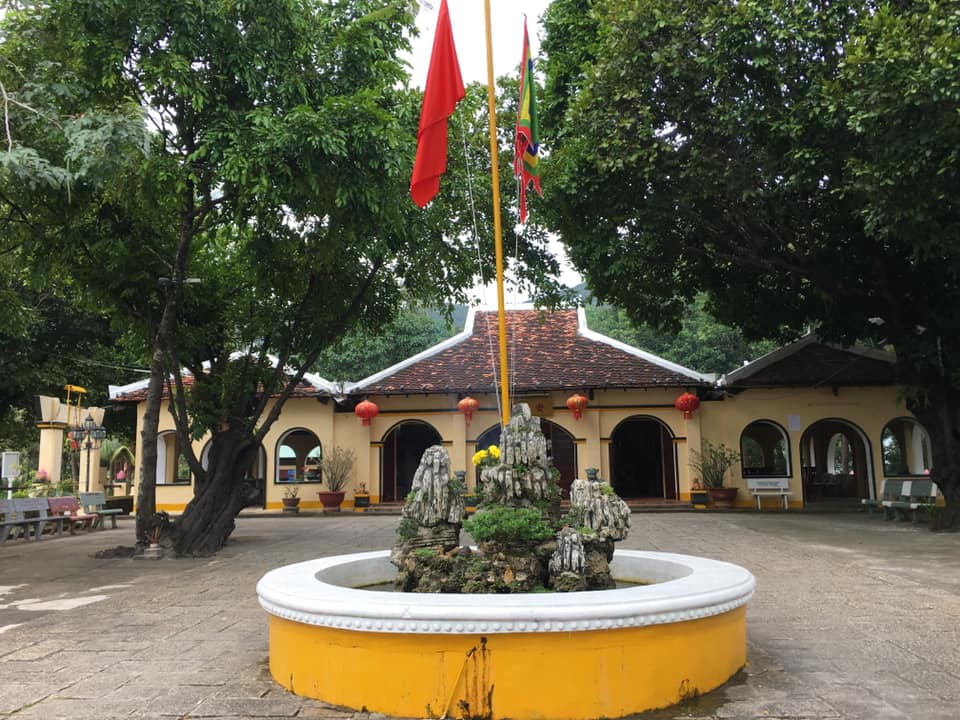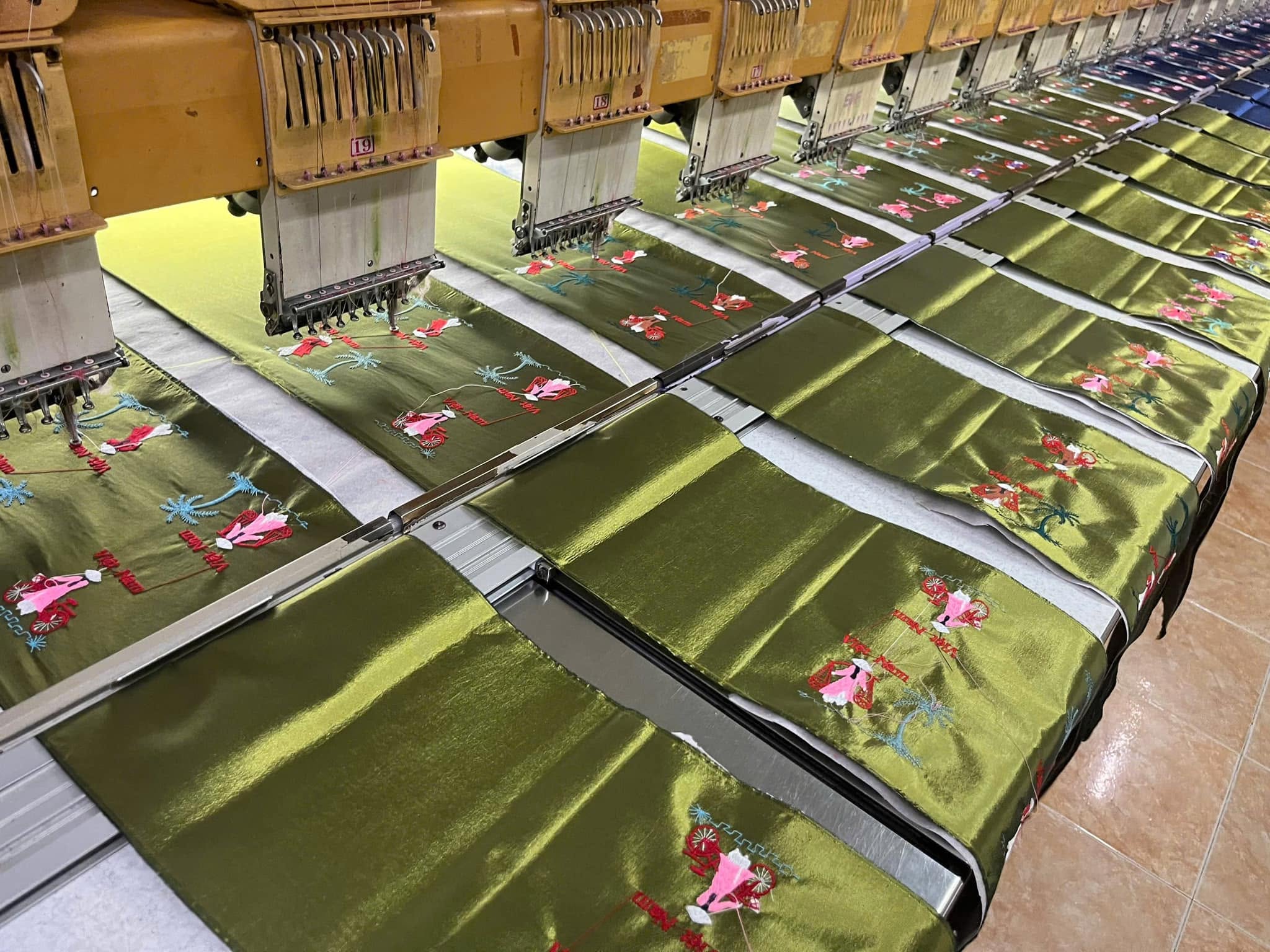
Thanh Ha Embroidery and Lace-Making Village, located in Liem Ha Commune, Ninh Binh Province, formerly part of Ha Nam Province, is one of the traditional handicraft communities of northern Vietnam. With a history dating back to the late nineteenth century, the village is renowned for its intricate hand embroidery, delicate drawn-thread lacework, and refined textile products. More than a source of livelihood, embroidery and lace-making represent a valuable cultural tradition that has been preserved and passed down through generations of local craftspeople.
For over a century, Thanh Ha has been associated with the artistry of needle and thread. From handkerchiefs, tablecloths, and embroidered pillowcases to curtains, bed linens, and decorative textiles, its products reflect the patience, precision, and artistic sensitivity of skilled artisans.
During its flourishing years, Thanh Ha was regarded as an important embroidery and lace-making center in northern Vietnam. Its handcrafted products reached markets throughout the Red River Delta and were traded in major commercial centers such as Hanoi and Hai Phong.
Like many traditional craft villages, Thanh Ha has faced challenges arising from industrialization, changing consumer preferences, and competition from mass-produced textiles. Nevertheless, local artisans and craft businesses have continued to preserve traditional techniques while exploring new designs, markets, and opportunities for cultural tourism.
A significant milestone came on May 27, 2021, when Thanh Ha Embroidery and Lace-Making Craft was included in Vietnam’s National List of Intangible Cultural Heritage under Decision No. 1736/QD-BVHTTDL, issued by the Ministry of Culture, Sports and Tourism.
This recognition acknowledges the cultural significance of the village’s inherited craftsmanship and provides an important foundation for preserving and promoting its traditional skills.
Today, Thanh Ha is not only known for its beautiful handcrafted textiles but also holds potential as a cultural destination where visitors can discover traditional Vietnamese embroidery, learn about lace-making techniques, and experience the heritage of a rural artisan community.
History and Development of Thanh Ha Embroidery and Lace-Making Village
The embroidery and lace-making tradition of Thanh Ha dates back to the late nineteenth century, when textile handicrafts gradually became an important part of the local economy.
According to accounts preserved within the community, the craft developed particularly strongly in An Hoa and Hoa Ngai hamlets, where families practiced embroidery and passed their skills from one generation to the next.
In its early stages, embroidery was primarily a household activity, often undertaken alongside agricultural work. Using simple tools such as needles, thread, fabric, and wooden embroidery frames, local craftspeople produced textile items for domestic use and decoration.
As experience accumulated, artisans refined their techniques, introduced more elaborate patterns, and expanded the range of products. What began as a supplementary household occupation gradually developed into a recognized handicraft industry.
The Flourishing Years of Thanh Ha Embroidery
From the early twentieth century, Thanh Ha’s embroidery and lace-making industry experienced a period of considerable development.
Products from the village were distributed throughout the Red River Delta, reaching commercial centers including Hanoi and Hai Phong. Handkerchiefs, embroidered tablecloths, lace curtains, pillowcases, and decorative household textiles became popular for their delicate craftsmanship and attractive designs.
During this period, embroidery provided an important source of income for many local families. Craft production was closely integrated into everyday life, with artisans spending long hours carefully stitching patterns onto fabric.
The work required not only technical ability but also patience, concentration, and a refined understanding of composition and color.
A distinctive feature of Thanh Ha was the transmission of skills within the community. Experienced craftspeople taught younger learners how to hold needles, stretch fabric, select thread, transfer patterns, and execute different embroidery stitches.
More complex techniques, particularly drawn-thread lacework, required additional practice and careful guidance.
Through this process, embroidery became more than a means of earning a living. It developed into a shared cultural tradition that connected families, generations, and the wider community.
Challenges in the Era of Industrialization
As Vietnam’s economy modernized, Thanh Ha’s embroidery industry encountered significant changes.
The expansion of industrial textile production introduced cheaper, mass-produced alternatives to handmade embroidery. At the same time, factories and industrial businesses created new employment opportunities, encouraging many younger workers to pursue jobs outside traditional handicrafts.
Hand embroidery is labor-intensive, and the time required to complete an intricate product is not always reflected in its selling price.
This imbalance between production costs and market demand has made it increasingly difficult for some artisans to earn a sustainable income from traditional embroidery alone.
As a result, the number of people practicing the craft regularly has declined compared with earlier periods of prosperity.
Nevertheless, the embroidery tradition has not disappeared from Thanh Ha.
Some craftspeople continue to produce handmade textiles, accept customized orders, and preserve the techniques learned from previous generations.
Local businesses have also explored new approaches to marketing, including social media, online sales, and collaborations with retailers specializing in handicrafts and souvenirs.
These developments demonstrate the adaptability of Thanh Ha’s embroidery tradition and its potential to remain relevant in a changing economy.
Traditional Embroidery Techniques and the Art of Handmade Lace
Thanh Ha embroidery is distinguished by the combination of hand stitching, decorative design, and traditional fabric-working techniques.
Producing a finished piece involves several stages, including material selection, pattern preparation, fabric stretching, embroidery, drawn-thread lacework, washing, ironing, inspection, and packaging.
Each stage requires precision because even a small mistake can affect the balance, appearance, or durability of the finished product.
For elaborate textiles featuring complex patterns, production may take many days or several weeks, depending on the size and technical requirements.
Selecting Materials and Preparing Embroidery Patterns
The first stage involves selecting suitable fabric and thread.
Different products require different textile characteristics, including thickness, softness, weave structure, and durability.
The material must be appropriate for the intended embroidery technique and capable of maintaining its shape during stitching, washing, and finishing.
Patterns may be based on traditional decorative motifs or developed according to customer requirements.
Common designs include flowers, leaves, birds, geometric arrangements, and symmetrical ornamental compositions.
Once a pattern has been selected, it is transferred onto the fabric using an appropriate marking method.
This process establishes the position, scale, and outlines of the design before stitching begins.
For products with numerous small details, careful planning is necessary to maintain a harmonious relationship between the embroidered areas and the surrounding fabric.
Hand Embroidery and the Precision of Every Stitch
Hand embroidery is one of the most important stages of Thanh Ha’s traditional craft.
Depending on the design, artisans use different stitching techniques to create outlines, decorative surfaces, color variations, and textured effects.
The stitches must be consistent and carefully controlled to prevent the fabric from becoming distorted or wrinkled.
When a pattern involves several colors, the artisan must also consider how shades transition between different areas of the design.
The result should be visually balanced, with details that complement the fabric and the intended use of the product.
Unlike textiles produced entirely by industrial embroidery machines, handmade pieces carry the individual characteristics of the artisan’s work.
Subtle variations in stitching, composition, and finishing reflect the personal judgment and experience of the craftsperson.
Creating a high-quality embroidered product therefore requires more than mechanical repetition. It demands artistic sensitivity, an understanding of materials, and the ability to adapt techniques to different designs.
Traditional Drawn-Thread Lacework
Alongside hand embroidery, drawn-thread lacework is a defining technique of Thanh Ha’s textile tradition.
This method involves carefully withdrawing selected threads from woven fabric and securing or rearranging the remaining threads to create decorative openings, borders, and geometric patterns.
The process requires considerable accuracy because the artisan must preserve the structural integrity of the fabric while creating the intended design.
Incorrect handling may cause threads to break, patterns to become uneven, or the textile to lose its shape.
When combined with traditional embroidery, drawn-thread techniques produce delicate openwork effects that give the finished fabric a light and elegant appearance.
These decorative details are especially suitable for table linens, curtains, pillowcases, and other household textiles.
The combination of embroidery and openwork lace contributes to the distinctive identity of Thanh Ha products and distinguishes them from many mass-produced alternatives.
Finishing and Quality Inspection
After the embroidery and lacework have been completed, the product undergoes several finishing stages.
Loose threads are trimmed, the fabric is cleaned and ironed, and the decorative patterns are carefully inspected.
The finishing process must preserve the original shape, color, and texture of the embroidered design.
For larger products such as tablecloths, bed linens, and curtains, artisans check the alignment and consistency of decorative elements across the entire surface.
Any imperfections may need to be corrected before the product is packaged or delivered.
The value of Thanh Ha embroidery therefore lies not only in the materials used but also in the time, skill, and attention devoted to every stage of production.
Traditional Products and National Intangible Cultural Heritage Recognition
Thanh Ha’s embroidery and lace-making tradition encompasses a wide variety of textile products, ranging from everyday household items to decorative works of art.
Traditional products include handkerchiefs, napkins, tablecloths, bed linens, pillowcases, curtains, and embroidered fabric accessories.
The village is also associated with decorative embroidery, textile souvenirs, handmade gifts, and customized products created according to specific designs.
Distinctive Embroidered Products
Handkerchiefs and napkins often feature delicate patterns placed along their edges or in individual corners.
These small decorative details enhance the appearance of otherwise simple textile products without overwhelming their practical function.
Tablecloths, curtains, and bed linens generally provide larger surfaces for embroidery and lacework.
Their designs may combine floral motifs, symmetrical arrangements, embroidered borders, and openwork details.
Decorative embroidered pictures require a different approach, with greater emphasis on visual composition, color transitions, and the representation of shapes.
Such works demonstrate the artistic possibilities of traditional embroidery beyond its use in household textiles.
The diversity of these products allows Thanh Ha artisans to apply inherited techniques to different purposes, from interior decoration to gifts and cultural souvenirs.
The Cultural Value of Traditional Craft Knowledge
The importance of Thanh Ha embroidery extends beyond its finished products.
At the heart of the tradition is a body of knowledge involving fabric selection, stitching techniques, pattern design, color coordination, drawn-thread work, and finishing methods.
These skills are acquired primarily through practice and repeated experience.
Experienced artisans develop an understanding of how different fabrics respond to particular stitches, how thread tension affects the finished surface, and how decorative patterns should be arranged.
Such knowledge is an important form of intangible cultural heritage because it exists through the skills and practices of the people who maintain the craft.
The embroidery tradition also reflects local aesthetic values.
Floral motifs, delicate borders, balanced compositions, and carefully selected colors express a preference for elegance, harmony, and attention to detail.
Equally important is the social role of craft transmission.
When experienced embroiderers teach younger generations, they pass on not only technical skills but also cultural memories, working traditions, and a shared sense of community identity.
National Intangible Cultural Heritage Recognition in 2021
On May 27, 2021, the Ministry of Culture, Sports and Tourism issued Decision No. 1736/QD-BVHTTDL, including Thanh Ha Embroidery and Lace-Making Craft in Vietnam’s National List of Intangible Cultural Heritage.
The craft was recognized under the category of traditional handicrafts, with entry number 394 in the heritage list, according to the designation information.
At the time of recognition, the heritage was located in Ha Nam Province. Following Vietnam’s administrative reorganization in 2025, the village’s current administrative location is Liem Ha Commune, Ninh Binh Province.
The designation represents an important acknowledgment of the community’s longstanding craftsmanship and the cultural value of its inherited techniques.
It also provides a foundation for preservation initiatives, educational activities, and efforts to introduce the craft to wider audiences.
For traditional handicraft heritage, preservation involves more than collecting or displaying finished objects.
It requires maintaining the practical knowledge, techniques, skills, and community environments in which the craft continues to be practiced.
Supporting artisans and creating viable economic opportunities are therefore important elements of sustainable heritage preservation.
Thanh Ha Embroidery in Contemporary Markets
Digital technology and online commerce have introduced new opportunities for traditional embroidery businesses.
Alongside conventional sales methods, websites, social media platforms, and online marketplaces can help local producers reach customers in different regions.
Some businesses have explored ways to combine traditional embroidery techniques with contemporary product designs.
Adjustments in color, size, and function can make handmade textiles suitable for modern interiors, gifts, and tourism-related products.
Handcrafted embroidery may also appeal to international customers who value distinctive products, cultural authenticity, and traditional production methods.
However, maintaining a sustainable business requires consistent quality, reliable production schedules, suitable pricing, and effective communication with customers.
The combination of traditional craftsmanship and modern marketing methods offers opportunities to preserve Thanh Ha’s textile heritage while expanding its commercial potential.
Visiting Thanh Ha Embroidery Village and Preserving Its Cultural Heritage
With a history spanning more than a century and recognition as a national intangible cultural heritage, Thanh Ha Embroidery and Lace-Making Village has considerable potential as a cultural tourism destination.
It is particularly appealing to travelers interested in traditional Vietnamese crafts, textile arts, and rural cultural experiences.
Unlike craft industries that rely heavily on large industrial equipment, traditional hand embroidery is often practiced in relatively quiet environments.
Simple tools such as embroidery frames, needles, thread, and fabric remain central to the production process.
These familiar objects form an important part of the village’s cultural identity.
Exploring Traditional Embroidery Workshops
At workshops that are able to welcome visitors, travelers may have opportunities to learn how artisans select materials, prepare patterns, execute stitches, and create drawn-thread lacework.
Observing the process offers a clearer understanding of the skill and patience required to produce handmade textiles.
One particularly interesting experience is watching artisans work on small decorative details.
Each stitch must be carefully positioned to maintain the intended shape, texture, and composition.
The repetitive yet precise movements demonstrate the concentration and experience involved in traditional embroidery.
Where suitable visitor programs are available, travelers may also have opportunities to try basic embroidery techniques under the guidance of experienced craftspeople.
Even a simple stitching exercise can help participants appreciate the technical challenges involved in producing more elaborate designs.
Visitors may also explore collections of traditional embroidery products and purchase handmade souvenirs such as handkerchiefs, decorative fabric accessories, pillowcases, or small embroidered pictures.
These products offer a meaningful connection to the village’s craft heritage and the work of local artisans.
However, workshop access and hands-on activities depend on the conditions of individual establishments.
Travelers are advised to contact local producers or hosts in advance to confirm visiting arrangements and the availability of craft experiences.
Preserving Traditional Embroidery in an Industrialized Economy
One of the major challenges facing Thanh Ha is competition from machine-made textile products.
Industrial embroidery can produce large quantities of standardized goods quickly and at relatively low cost.
Traditional hand embroidery, by contrast, requires considerable time, specialized skills, and careful manual work.
This difference makes it difficult for handmade products to compete in markets where price is the primary purchasing consideration.
Changes in local employment patterns present another challenge.
Factories and other industries offer alternative career opportunities, particularly for younger workers who may prefer more predictable incomes.
When embroidery does not provide sufficient economic rewards, fewer people may choose to learn and practice the craft professionally.
Preservation efforts therefore need to address both cultural and economic concerns.
Training programs, product development, market connections, and support for small craft businesses can help create conditions in which artisans are able to continue their work.
Documenting traditional patterns, embroidery methods, drawn-thread techniques, and the knowledge of experienced craftspeople is also important.
Such records can support cultural research, heritage education, and the transmission of skills to future generations.
Developing Cultural Tourism and Handmade Products
The growing interest in cultural and experiential tourism creates opportunities for Thanh Ha to introduce its embroidery heritage to visitors.
Potential activities include guided introductions to the village’s history, demonstrations of hand embroidery, beginner workshops, and exhibitions of traditional textile products.
When carefully organized, these experiences can help travelers appreciate the cultural value of embroidery while creating additional opportunities for local artisans.
Developing compact, practical souvenirs may also support craft tourism.
Hand-embroidered handkerchiefs, fabric pouches, small decorative pictures, and household accessories featuring traditional motifs are examples of products that could appeal to visitors.
The cultural story behind each product can be an important part of its appeal.
A handmade embroidered item represents not only a decorative object but also the time, patience, and specialized knowledge invested by its maker.
Nevertheless, tourism development should respect the daily lives and working conditions of the local community.
Visitor activities should be organized according to the capacity of individual workshops and should not interfere with normal production.
Authentic experiences that highlight the real skills of local artisans are more valuable than activities designed solely for display.
The Future of Thanh Ha’s Embroidery Heritage
The long-term development of Thanh Ha Embroidery and Lace-Making Village depends on finding a balance between heritage preservation and economic sustainability.
Traditional techniques need to be maintained through practical training and continued production, while new designs and marketing approaches can help products remain attractive to contemporary customers.
Encouraging younger generations to learn the craft is particularly important.
When embroidery provides viable opportunities for employment and creative expression, the knowledge inherited from previous generations is more likely to remain part of community life.
Collaboration among artisans, local businesses, cultural organizations, and tourism operators may also help expand the visibility of Thanh Ha’s embroidery heritage.
By strengthening product quality, promoting traditional skills, and developing responsible cultural tourism, the village can continue to preserve its distinctive identity while adapting to modern economic conditions.
Thanh Ha Embroidery and Lace-Making Village is more than a traditional handicraft community with over 100 years of history. It is a living cultural landscape shaped by the patience, creativity, and refined skills of generations of artisans. From delicate handkerchiefs and lace curtains to intricate decorative textiles, every stitch reflects the enduring value of Vietnamese handmade craftsmanship. Its recognition as a National Intangible Cultural Heritage in 2021 acknowledges the significance of this tradition and offers new opportunities for preservation, cultural education, and sustainable development. Through the continued dedication of local craftspeople, Thanh Ha’s embroidery heritage can remain a meaningful connection between Vietnam’s cultural past and its creative future.
Quick Information
| Item | Details |
|---|---|
| Heritage name | Thanh Ha Embroidery and Lace-Making Craft |
| Village name | Thanh Ha Embroidery and Lace-Making Village |
| Vietnamese name | Làng nghề thêu ren Thanh Hà |
| Current location | Liem Ha Commune, Ninh Binh Province, Vietnam |
| Province before the 2025 administrative reorganization | Ha Nam Province |
| Traditional craft area | An Hoa and Hoa Ngai hamlets |
| Heritage category | Traditional handicrafts |
| Historical origins | Late nineteenth century |
| Craft history | More than 100 years |
| Main craft | Hand embroidery and traditional lace-making |
| Distinctive techniques | Hand stitching, drawn-thread lacework, decorative pattern making, and textile finishing |
| Traditional products | Handkerchiefs, tablecloths, bed linens, pillowcases, and curtains |
| Decorative products | Embroidered pictures, textile ornaments, and handmade gifts |
| Cultural significance | Traditional craft knowledge, embroidery skills, and intergenerational transmission |
| Heritage designation | National Intangible Cultural Heritage |
| Category in the designation | Traditional handicrafts |
| Recognition year | 2021 |
| Recognition date | May 27, 2021 |
| Decision number | 1736/QD-BVHTTDL |
| Issuing authority | Ministry of Culture, Sports and Tourism of Vietnam |
| Heritage list entry number | 394 |
| Tourism potential | Learning about traditional embroidery, craft demonstrations, and hands-on experiences |
| Visitor advice | Contact workshops in advance to confirm visiting arrangements |
| Preservation priorities | Skills transmission, product development, market expansion, and experiential tourism |