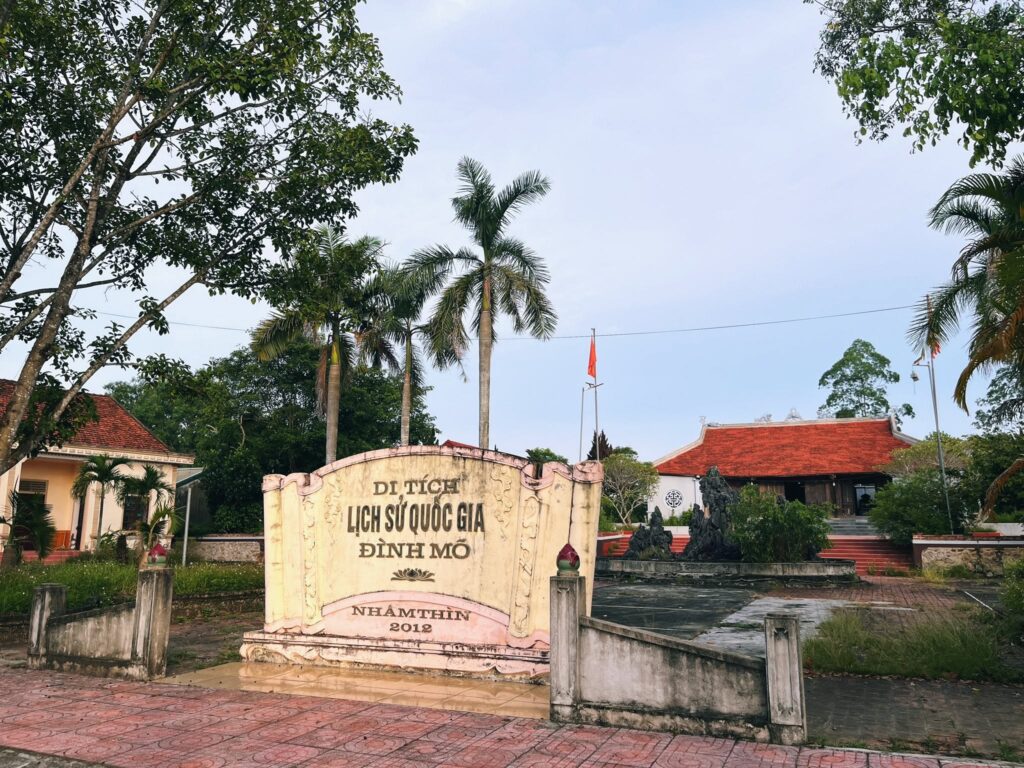
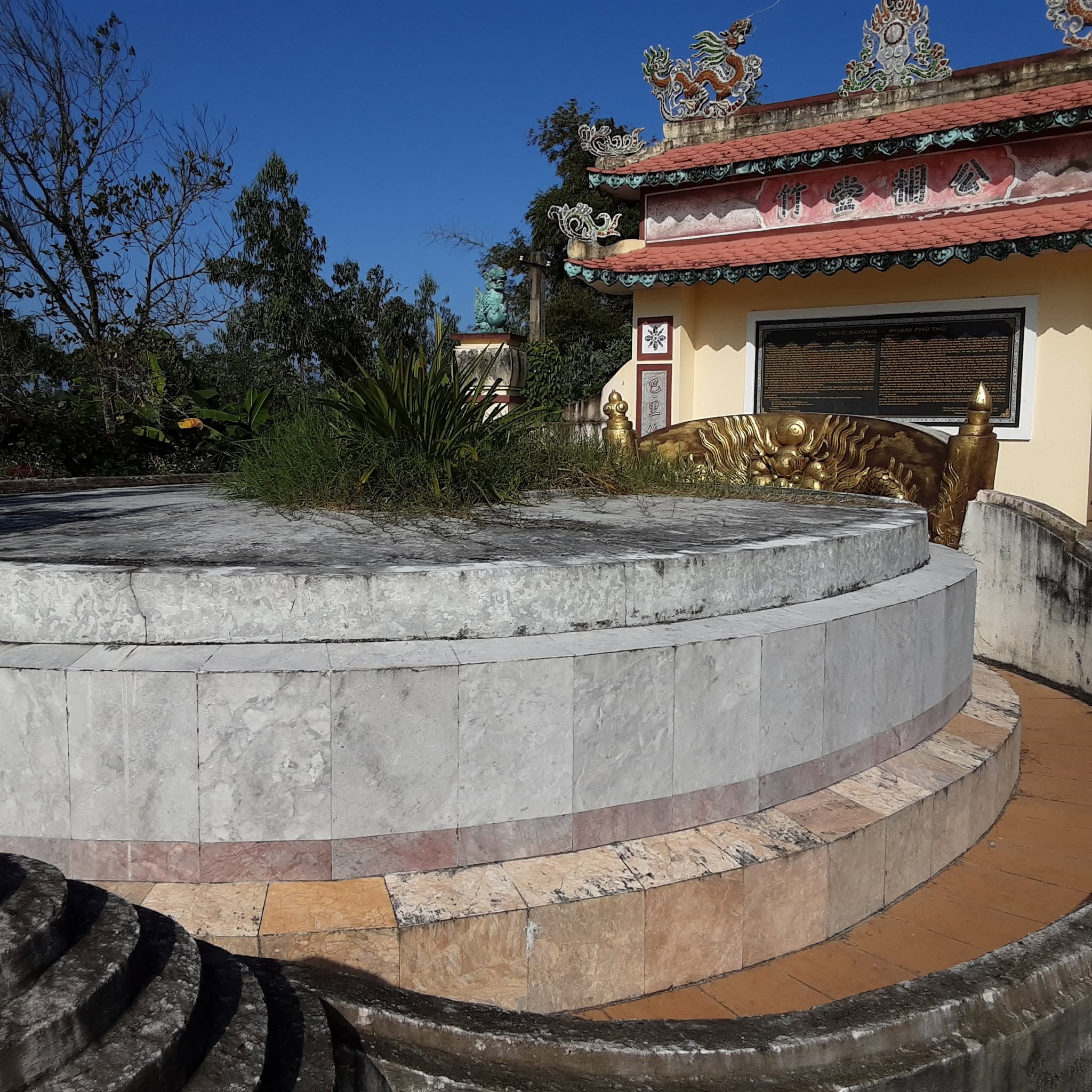
The Tomb of Phạm Phú Thứ is located in his hometown of Đông Bàn, in what is now Go Noi Commune, Da Nang City, Vietnam. The site commemorates a distinguished statesman of the Nguyễn Dynasty, renowned for his integrity, intellectual achievements, and vision for national reform. Beyond its historical significance, the tomb complex serves as a cultural and educational destination, preserving the legacy of a prominent scholar whose contributions left a lasting mark on his homeland and the nation.
Phạm Phú Thứ: A Distinguished Statesman with a Vision for Reform
Phạm Phú Thứ was born on January 27, 1821, in Đông Bàn Village, Đa Hòa Thượng Canton, Diên Phước District, Điện Bàn Prefecture, Quảng Nam Province, under the administrative system of the time. He came from a Confucian family and was recognized from an early age for his intelligence, academic ability, and ambition.
As a child, he was named Phạm Hào. When he began his studies, he adopted the name Thứ, meaning generosity. After he achieved high success in the imperial examinations, the emperor formally bestowed upon him the name Phạm Phú Thứ. He was also known by the literary name Trúc Đường and the alternative name Giá Viên.
In 1842, at the age of just 22, Phạm Phú Thứ passed the regional examination as its top candidate, earning the title Giải nguyên. In 1843, he again ranked first in the metropolitan examination and received the degree of Đệ tam giáp đồng Tiến sĩ xuất thân in the palace examination under Emperor Thiệu Trị. His outstanding performance in successive examinations made him one of the notable scholars from Quảng Nam in Vietnam’s imperial examination tradition.
Following his success, he was appointed Prefect of Lạng Giang and subsequently held several important government positions, including Governor-General of Hải An, Governor of Hải Yên, Senior Trade Official, Deputy Minister in various ministries, and Minister of Revenue. Throughout his career, he demonstrated a strong sense of responsibility, personal integrity, and a willingness to speak frankly about national affairs.
In 1850, Phạm Phú Thứ submitted a memorial advising Emperor Tự Đức not to neglect the affairs of state. As a consequence, he was dismissed from office and assigned to work at a relay station in Thừa Thiên Huế for a period before being reinstated.
His Journey to the West and Vision for National Modernization
In 1863, Phạm Phú Thứ was appointed deputy envoy in a diplomatic mission led by chief envoy Phan Thanh Giản to France. The mission sought to negotiate the return of the three eastern provinces of southern Vietnam occupied by France in 1862. During his diplomatic journey, he also visited other European countries, including Britain, Spain, and Portugal.
The journey allowed him to observe advances in science, technology, and social organization in the West. Through these experiences, he came to believe that Vietnam needed to actively acquire new knowledge and implement reforms if it was to overcome backwardness and strengthen itself.
Upon returning to Vietnam, he presented Emperor Tự Đức and the royal court with documents and observations from his mission. He also proposed policy changes intended to strengthen the country’s capacity for self-reliance. However, most of his reform proposals were rejected by the emperor and conservative officials at the time.
In 1865, he was promoted to Minister of Revenue. In 1874, he became Governor-General of Hải Yên while also overseeing customs affairs, contributing to efforts to develop Hải Phòng as a commercial port. These responsibilities reflected his interest in economic development, trade, and national modernization.
In 1881, Phạm Phú Thứ retired to his hometown. During this period, he compiled Giá Viên Thi Tập, a collection of poetry comprising 26 volumes, and continued applying knowledge and technical ideas acquired during his travels to introduce improvements in his local community.
He died in 1882 at an advanced age. After his death, the Nguyễn court posthumously awarded him the rank of Hiệp biện Đại học sĩ, a senior court title.
Architecture and Layout of the Tomb Complex
The tomb of Phạm Phú Thứ was restored and maintained by local authorities and his descendants in his hometown of Đông Bàn. According to information about the site, the entire complex covers approximately 750 square meters and consists of two adjoining areas: the tomb of Phạm Phú Thứ and Trúc Đường Garden.
The complex includes perimeter walls, an entrance gate, a memorial pavilion, the tomb, a biographical stele, and landscaped garden areas. Its layout creates a solemn commemorative space that combines the resting place of the distinguished statesman with facilities dedicated to preserving historical records and honoring his intellectual legacy.
The tomb area itself covers approximately 350 square meters and is built on a substantial, solid foundation. Behind the tomb stands a large wall inscribed with information about Phạm Phú Thứ’s life, writings, and career.
Two small pillars on this wall bear a couplet in Chinese characters, accompanied by a Vietnamese transcription. The couplet is taken from the eulogy delivered by Emperor Tự Đức upon Phạm Phú Thứ’s death in 1882:
“Thị nam trung tối – Duy thiên hạ kỳ”
The couplet praises him as an outstanding figure of central Vietnam and a person of exceptional talent in the wider world.
Two inner pillars near the stone stele feature another pair of verses from a poem Phạm Phú Thứ wrote during his diplomatic mission to France in 1863:
“Tảo giao đông thổ kiêm trường kỷ
Pha-lý, Long-đơn vị túc hiền”
These verses express his aspiration for scientific and technological advancement in the East, reflecting his commitment to national self-strengthening and reform.
Trúc Đường Garden and the Phạm Phú Thứ Memorial House
Adjacent to the tomb is Trúc Đường Garden, developed by local authorities and descendants of the Phạm Phú family during a restoration project in 2007. The garden serves as a commemorative space honoring the statesman’s life and ideas.
A stone stele stands in the garden. Its front face features a carved portrait of Phạm Phú Thứ, with inspirational passages from his collection Giá Viên Thi Văn Tập inscribed below. The reverse bears eight lines from the poem Lighting a Stick of Incense in Remembrance of Phạm Phú Thứ, written by poet Mai Hương for a symposium on Phạm Phú Thứ’s reformist thought held in Ho Chi Minh City in 1994.
The verses recall his years in public service, patriotism, desire for modernization, and perseverance in pursuing what he believed would benefit the country.
In 2024, alongside the recognition of the tomb as a national historical relic, local authorities and representatives of the family inaugurated the Phạm Phú Thứ Memorial House. The building serves both as a place of worship and as an exhibition space displaying photographs, documents, and information about his life, career, and literary works.
Together, the memorial house, tomb complex, and other local heritage sites are intended to support historical visits, cultural exploration, and educational activities for future generations.
Historical and Cultural Significance
Phạm Phú Thứ was a prominent intellectual and statesman of the Nguyễn Dynasty who contributed to political affairs, economics, culture, society, and diplomacy. He is remembered for his integrity, strong sense of responsibility, and reformist thinking at a time when Vietnam faced significant challenges.
Although many of his reform proposals were not accepted by the royal court, his efforts demonstrated an understanding of the importance of science, technology, commerce, and the adoption of new knowledge in national development.
The tomb and memorial house therefore commemorate not only a distinguished statesman but also his historical legacy and vision for reform. The site offers visitors an opportunity to learn about the scholarly traditions of Quảng Nam, the value placed on practical knowledge, and the aspiration for national progress that shaped his life and work.
In 2024, the Tomb of Phạm Phú Thứ was recognized as a National Historical Relic by Vietnam’s Ministry of Culture, Sports and Tourism. Preserving and promoting the site’s heritage values helps safeguard the legacy of this distinguished figure while establishing another meaningful cultural and educational destination in Da Nang City.
Quick Information
| Item | Information |
|---|---|
| Name | Tomb of Phạm Phú Thứ |
| Historical figure | Phạm Phú Thứ (1821–1882) |
| Location | Go Noi Commune, Da Nang City, Vietnam |
| Historical hometown | Đông Bàn Village, in the former Điện Bàn area |
| Main features | Tomb complex, Trúc Đường Garden, Phạm Phú Thứ Memorial House |
| Key significance | Memorial to a distinguished Nguyễn Dynasty statesman and advocate of national reform |
| Heritage designation | National Historical Relic |
| Year of recognition | 2024 |