

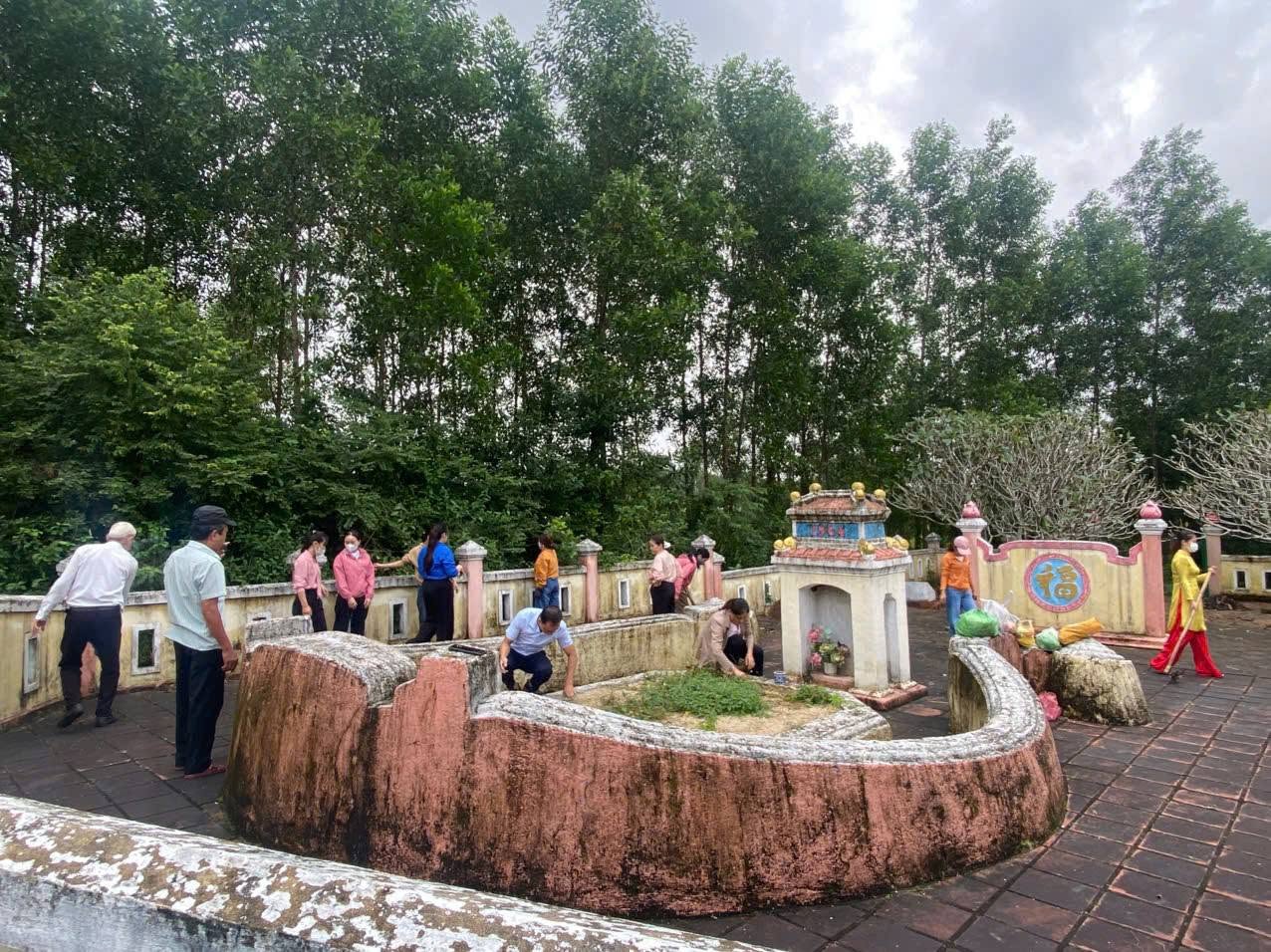
The Tomb of Dr. Do Thuc Tinh is a historical monument associated with one of the most distinguished scholars and officials from the former Quang Nam region, now part of Da Nang City. A successful scholar during the Nguyen Dynasty, Do Thuc Tinh was also remembered as an honest and dedicated official who cared deeply for the people and voluntarily joined the resistance against French colonial forces in southern Vietnam.
Born in 1818 in La Chau Village, Do Thuc Tinh made significant contributions to education, local administration, and military affairs during the early period of Vietnam’s resistance against French invasion. His tomb in the Huong Lam area commemorates an accomplished scholar, a principled official, and an important representative of his homeland’s tradition of learning and patriotism.
Location and Historical Background
The Tomb of Dr. Do Thuc Tinh is located in Huong Lam Hamlet, formerly part of Hoa Khuong Commune, Hoa Vang District, Da Nang. The monument lies approximately 20 kilometers southwest of central Da Nang, near National Highway 14B.
Do Thuc Tinh was born in La Chau Village, a community known for its long-standing educational traditions. According to historical documents from the former Hoa Vang District Party Committee’s Propaganda Department, La Chau once belonged to Phuoc Tuong Thuong Canton, Hoa Vang District, Quang Nam Province.
During Emperor Khai Dinh’s reign, the village became an administrative commune within An Phuoc Canton, Hoa Vang District.
The exact date of La Chau Village’s establishment remains uncertain. Local historical records identify the Dinh family as one of the earliest lineages to settle and cultivate land in the area, with a history spanning approximately 17 generations.
According to the Do family genealogy, their ancestors originally came from Quang Ngai. In the sixth generation, Do Huu Nghi traveled to Quang Nam to study and married a woman from the Vo family in An Trach Village, an area now associated with Hoa Khuong.
He later settled in La Chau with his family, becoming the founding ancestor of the local Do lineage around the second half of the eighteenth century.
Over subsequent generations, the Do family produced several educated individuals who served in local administrative positions. Despite difficult economic conditions, La Chau residents continued to value education and scholarly achievement.
The village’s traditional Confucian educational site, known as Van Chi La Chau, reflects this commitment to learning. Do Thuc Tinh became one of its most distinguished historical figures.
Early Life and Academic Achievements
Do Thuc Tinh, whose name is sometimes recorded as Do Thuc Tinh with an alternative Vietnamese spelling, had the courtesy name Can Trai and the personal name Nhu Chuong.
He was born on the 16th day of the first lunar month in the Mau Dan year, corresponding to February 20, 1818.
From childhood, he was recognized for his intelligence, dedication to learning, gentle character, and deep devotion to his mother.
In 1846, during the sixth year of Emperor Thieu Tri’s reign, he passed the provincial imperial examination and earned the degree of Cu Nhan.
Two years later, in 1848, under Emperor Tu Duc, he passed the imperial doctoral examination and received the rank of De Tam Giap Dong Tien Si, a third-class doctoral degree.
According to local historical records, he became the first person from Hoa Vang District to earn a doctoral degree through the imperial examination system.
His academic achievements brought great pride to his family and hometown. However, his lasting reputation was built not only on scholarship but also on his integrity, dedication to public service, and commitment to defending his country.
After completing his examinations, he was appointed Prefect of Thieu Hoa in Thanh Hoa Province.
When he learned that his elderly mother was seriously ill, he requested permission to return home to care for her.
The Do family genealogy describes his devotion to his mother and his reluctance to leave her side during her illness.
Following her death in 1851, he observed the traditional three-year mourning period before returning to public service.
This episode reflects the Confucian values of filial piety and personal responsibility that shaped his character.
An Honest Official Dedicated to the People
In 1853, Do Thuc Tinh was appointed Prefect of Dien Khanh in Khanh Hoa Province. During this period, he demonstrated his administrative abilities and strong concern for the well-being of local residents.
When he assumed office, Dien Khanh faced numerous difficulties, including poor agricultural conditions, poverty, disease, and banditry.
According to historical accounts, Do Thuc Tinh introduced several measures to improve living conditions and restore stability.
He organized assistance for impoverished families, distributed medicine to sick residents, and encouraged individuals involved in banditry to return to peaceful livelihoods.
He also implemented longer-term development measures, including road repairs, land reclamation, agricultural expansion, the establishment of new settlements, and the development of local markets.
Historical materials credit these efforts with bringing approximately 242 mau of additional farmland into cultivation and helping around 960 families establish stable homes.
His policies gradually improved living conditions and strengthened the local economy.
Because of his dedication, residents affectionately called him “Do Phu,” meaning “Father Do.”
In 1854, the imperial court summoned him to the capital to serve as a supervisory official. However, residents and local authorities in Dien Khanh petitioned for him to remain because of his contributions to the community.
He subsequently held several additional administrative and military appointments.
His career reflected a progressive understanding of public service for his time: an official should not merely fulfill administrative duties but should also improve people’s livelihoods, protect communities, and promote long-term prosperity.
Patriotism and Resistance Against French Colonial Forces
In 1858, French and Spanish allied forces attacked Da Nang, marking the beginning of France’s military conquest of Vietnam.
In February 1859, French forces captured the Gia Dinh Citadel and expanded their operations in southern Vietnam.
Concerned about the country’s future, Do Thuc Tinh submitted a petition requesting permission to travel south and participate in the resistance.
Emperor Tu Duc recognized his willingness to undertake this responsibility and appointed him to a special military assignment involving the mobilization of soldiers and civilians and preparations for resistance against the invading forces.
He was subsequently assigned responsibilities associated with the governorship of Dinh Tuong Province.
During this period, he proposed recruiting and organizing troops, stockpiling food supplies, establishing defensive positions in strategically important locations, and coordinating local forces to resist French advances.
These actions demonstrated his determination to defend Vietnam during a period of national crisis.
Rather than limiting himself to administrative responsibilities, Do Thuc Tinh actively participated in military planning and efforts to strengthen the resistance.
While carrying out his duties in southern Vietnam, he became seriously ill and died at a military headquarters in Vinh Long on the 26th day of the first lunar month of the Nham Tuat year, corresponding to 1862.
He was 45 years old according to the traditional Vietnamese age-counting system used in the historical materials.
Although his life was relatively short, his contributions to public administration and his patriotic commitment established his reputation as an important historical figure from the former Quang Nam region.
Recognition by the Nguyen Court and Later Generations
Following Do Thuc Tinh’s death, Emperor Tu Duc posthumously honored him with the title associated with the governorship of Dinh Tuong and sent an imperial representative to pay respects.
His family also received financial assistance and ceremonial gifts in recognition of his service.
According to the supplied historical materials, he was additionally honored with the title “Van Vo Toan Tai Dai Tuong Cong,” reflecting recognition of his abilities in both civil and military affairs.
His life and career were recorded by the Nguyen Dynasty’s official historians in important historical works, including Dai Nam Thuc Luc Chinh Bien and Dai Nam Liet Truyen Chinh Bien.
These records provide valuable information about a scholar-official who devoted his career to serving the imperial administration, improving people’s lives, and resisting foreign invasion.
In 1982, the former Quang Nam–Da Nang Department of Culture and Information restored his tomb and erected a commemorative stele.
The inscription describes him as:
“Do Thuc Tinh, a pioneer in the resistance movement against the French.”
This statement summarizes his historical role and highlights the patriotic contributions of a scholar who became actively involved in defending his country.
Historical and Educational Significance
The Tomb of Dr. Do Thuc Tinh commemorates a distinguished scholar and public official whose life reflected the values of education, integrity, compassion, and patriotism.
The monument is closely associated with La Chau Village’s tradition of academic achievement and serves as a reminder of the responsibilities of public officials toward their communities.
Preserving the tomb and its commemorative stele helps maintain historical memory and introduces younger generations to individuals who contributed to Vietnam during the turbulent nineteenth century.
Today, streets and schools in Da Nang bear the name Do Thuc Tinh, ensuring that his legacy remains visible in contemporary life.
For visitors interested in Vietnamese history, Confucian scholarship, and notable figures from the former Quang Nam region, the tomb offers a meaningful destination for understanding Da Nang’s cultural and historical heritage.
Recognition as a National Historical Monument
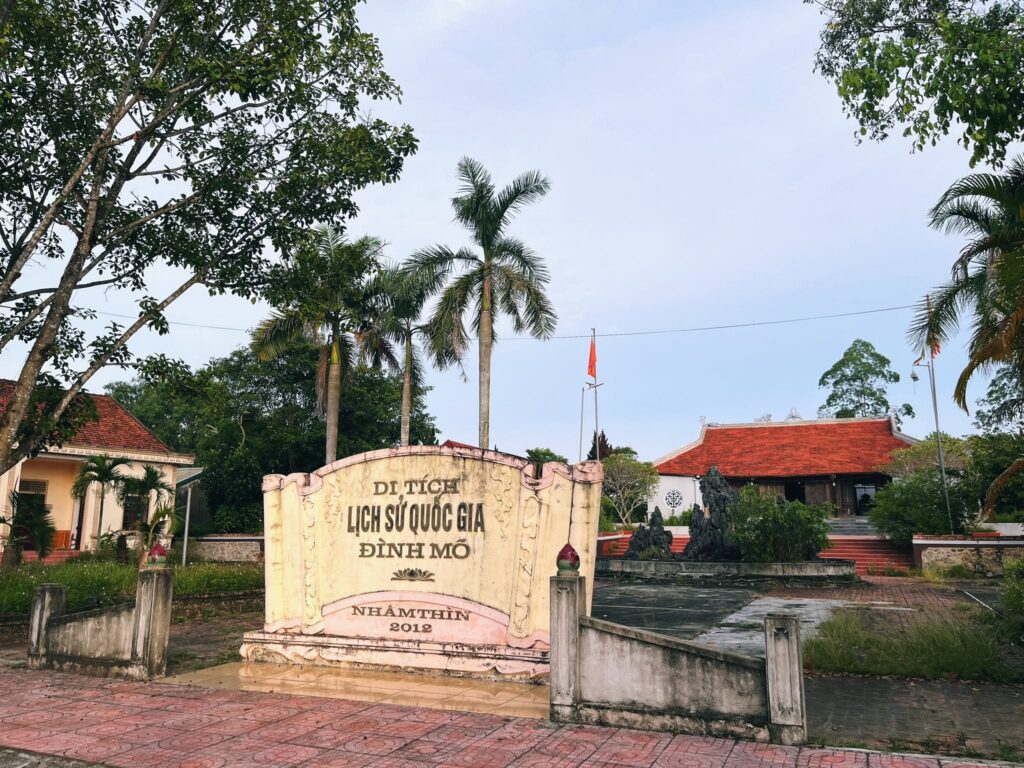
The Tomb of Dr. Do Thuc Tinh was recognized as a National Historical Monument in 2007, under Decision No. 45/2007/QD-BVHTT issued by Vietnam’s Ministry of Culture and Information.
This designation acknowledges the historical importance of the burial site and provides a foundation for its conservation and preservation.
The monument is not only the resting place of an accomplished scholar but also an educational heritage site representing Vietnam’s traditions of learning, public responsibility, and patriotism.
Quick Facts About the Tomb of Dr. Do Thuc Tinh
| Information | Details |
|---|---|
| Monument name | Tomb of Dr. Do Thuc Tinh |
| Historical figure | Do Thuc Tinh (Đỗ Thúc Tịnh) |
| Courtesy name | Can Trai |
| Personal name | Nhu Chuong |
| Born | February 20, 1818 |
| Died | 1862 |
| Birthplace | La Chau Village, former Quang Nam Province |
| Tomb location | Huong Lam Hamlet, former Hoa Khuong Commune, Da Nang |
| Academic achievements | Cu Nhan in 1846; imperial doctoral degree in 1848 |
| Notable positions | Prefect of Dien Khanh; Governor of Dinh Tuong |
| Popular nickname | Do Phu (“Father Do”) |
| National monument recognition | 2007 |
| Historical significance | Scholarship, public administration, patriotism, and early resistance against French colonialism |