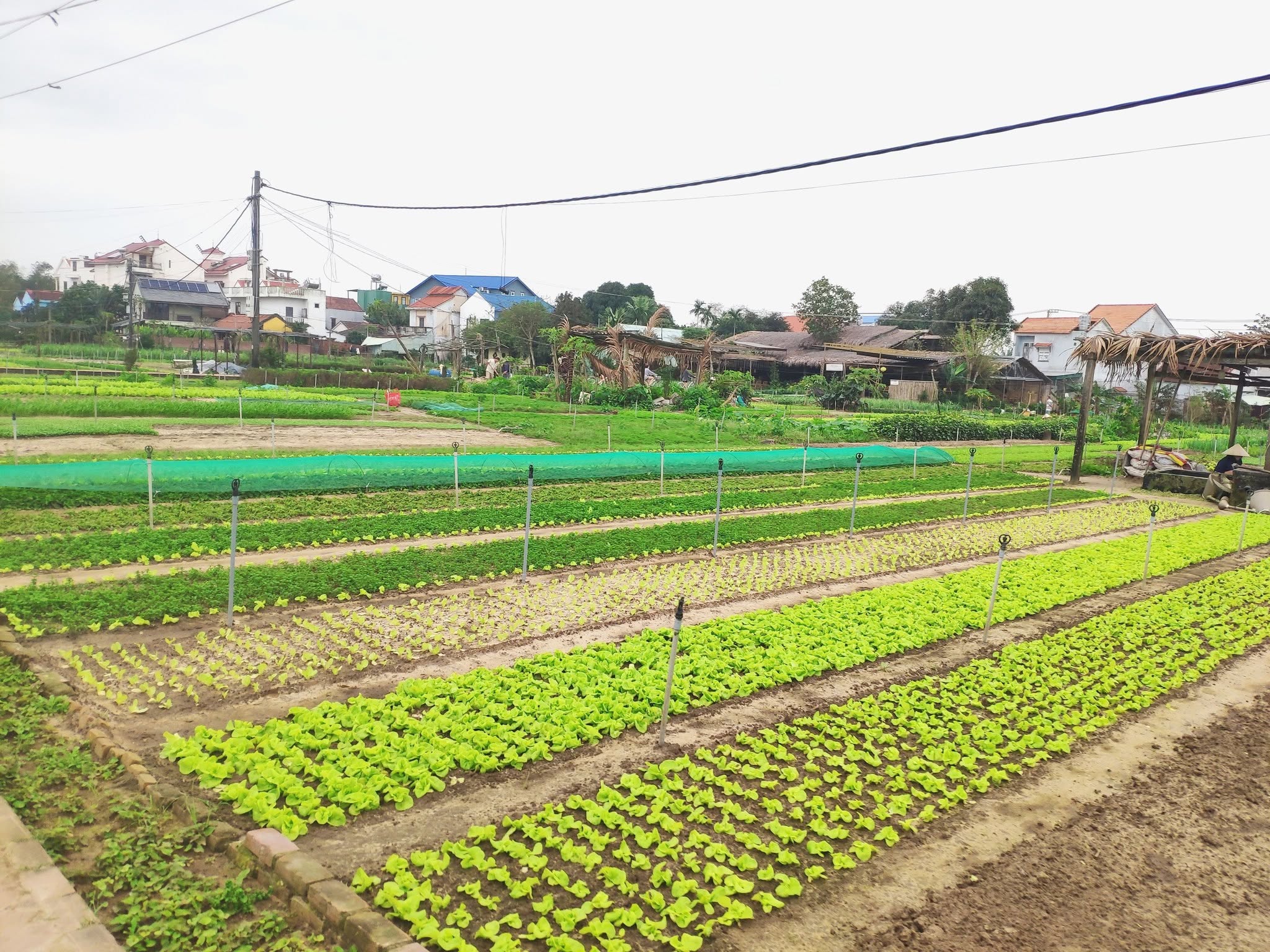
Nestled along the peaceful De Vong River, Tra Que Vegetable Village has long been one of Hoi An’s most distinctive traditional farming communities. Known for its lush vegetable gardens, aromatic herbs, and unique cultivation methods, the village preserves a remarkable body of indigenous agricultural knowledge developed over more than 300 years.
What makes Tra Que vegetables distinctive is the combination of local soil conditions, natural aquatic plants collected from nearby waterways, traditional vegetable varieties, and cultivation techniques passed down through generations. From basil, aromatic herbs, chives, and mustard greens to a wide range of leafy vegetables, each crop reflects the character of the riverine landscape and the dedication of local farmers.
On April 4, 2022, Tra Que Vegetable Farming was inscribed on Vietnam’s National List of Intangible Cultural Heritage under Decision No. 784/QĐ-BVHTTDL issued by the Ministry of Culture, Sports and Tourism. Classified under Traditional Folk Knowledge and Traditional Craftsmanship, the recognition acknowledges the village’s agricultural practices, cultural traditions, and generations of accumulated farming experience.
Tra Que Village and Its Riverside Cultural Landscape
Tra Que Vegetable Village was formerly part of Cam Ha Commune, Hoi An City, Quang Nam Province. Following administrative reorganization, it is now located in Hoi An Tay Ward, Da Nang City.
Situated approximately 2.5 kilometers north of central Hoi An, the village is surrounded by the De Vong River and Tra Que Lagoon, creating a distinctive agricultural landscape shaped by water, fertile land, and traditional rural settlements.
The village is characterized by neatly arranged vegetable beds, narrow pathways, houses, and irrigation channels. Together, these features form a landscape that reflects the close relationship between farming activities and the local environment.
Tra Que also has a long history of human settlement. Archaeological traces associated with the Sa Huynh culture, dating back approximately 2,000 years, have been discovered in the area. Historical features such as Ba Yang Shrine, ancient stone wells, and traces of Cham cultural influence reveal the region’s deep historical roots.
Later generations of Vietnamese settlers continued to develop the area, establishing villages, community institutions, and traditional occupations.
According to local research, the earliest Vietnamese families settled in Tra Que more than 300 years ago. They belonged to the Pham, Mai, Nguyen, and Le lineages, followed by families from the Tran and Ho lineages.
Initially, local residents relied mainly on fishing and collecting shrimp and other aquatic resources from the surrounding waterways. Over time, they discovered edible herbs and vegetables that complemented dishes made with fish, shrimp, and crab.
They began collecting and cultivating these plants near their homes. Small vegetable plots gradually expanded as residents cleared more land for growing herbs, leafy vegetables, and rice.
Thanks to favorable soil conditions and increasingly refined cultivation techniques, the vegetables developed distinctive aromas and flavors. Tra Que gradually became known throughout the surrounding region for the quality of its produce.
More Than 300 Years of Vegetable Farming Tradition
Throughout its history, Tra Que has also been known by names such as Nhu Que, Thanh Que, and Nha Que.
According to a local legend, sometime during the 18th century, a king traveling along the De Vong River stopped at the village and tasted a fragrant herb. Impressed by its tea-like aroma and cinnamon-like spiciness, he supposedly gave the village the name Tra Que, combining the Vietnamese words for tea and cinnamon.
Although this story belongs to local oral tradition rather than verified historical records, it illustrates how the village’s identity has long been associated with the fragrance of its vegetables.
The names Tra Que or Nha Que appear in the Thanh Ha cadastral records compiled in 1818, during the 17th year of Emperor Gia Long’s reign. This indicates that the place name was already in use by the early 19th century.
During the 1940s, the Quang Nam Xa Chi documents compiled by the École française d’Extrême-Orient recorded fresh vegetables as an important local product of Thanh Ha Village.
Alongside pottery, brick and tile production, fishing, and other agricultural activities, vegetable farming had become a significant part of the local economy.
During the wars against French colonial rule and later American military involvement, Tra Que was also associated with revolutionary activities in the Cam Ha and Hoi An areas.
According to local historical accounts, villagers cultivated vegetables during the day while helping shelter and support revolutionary personnel at night. Their vegetable harvests contributed not only to household livelihoods but also to wartime food supplies.
After 1975, local residents gradually restored farmland, rebuilt their communities, and resumed traditional vegetable production.
In 2001, Hoi An authorities designated approximately 15 hectares for concentrated vegetable cultivation, helping organize production and support the village’s agricultural economy.
Historical local reports recorded 207 vegetable-growing households employing 345 workers, with the cultivated area later reaching approximately 18 hectares.
In 2018, the village reportedly produced 792 tonnes of vegetables, with a production value of approximately VND 10.73 billion. These figures describe the village’s economic situation at the time of the surveys and should not be interpreted as current statistics.
Despite historical changes and economic development, vegetable farming has remained central to Tra Que’s identity and community life.
Traditional Cultivation Knowledge and the Distinctive Flavor of Tra Que Vegetables
The most important cultural value of Tra Que vegetable farming lies in the traditional knowledge involved in every stage of production.
This includes selecting and preserving seeds, preparing the soil, planting, watering, fertilizing, caring for crops, harvesting, and distributing produce.
Farmers pay particular attention to soil quality, moisture, water availability, and the growing characteristics of different vegetable varieties.
One of the village’s most distinctive practices is the traditional use of aquatic plants collected from Tra Que Lagoon and the De Vong River as green fertilizer.
Through generations of experience, farmers have developed methods of incorporating these natural materials into the soil to support vegetable growth.
According to local farming knowledge, the combination of suitable soil, organic fertilization, and careful cultivation contributes to the vegetables’ characteristic appearance and flavor.
Many Tra Que herbs have relatively small, thick leaves and compact, sturdy stems. They are especially valued for their pronounced fragrance, rich flavor, and tender texture.
Another distinctive feature is the diversity of tastes found among the village’s vegetables.
When several varieties are combined, they can create a balance of five traditional flavor sensations: spicy, sweet, bitter, sour, and astringent.
Choosing the appropriate combination of herbs and vegetables for each dish is itself part of local culinary knowledge.
Behind every vegetable bed is a considerable amount of patient work. Farmers prepare the soil, select suitable varieties, monitor plant growth, and adjust their methods according to weather and seasonal conditions.
These techniques are not simply the knowledge of individual farmers. They represent a shared body of experience continuously developed and transmitted within the community.
Indigenous Vegetable Varieties and Seed Preservation
One of the defining characteristics of Tra Que vegetable farming is the preservation of local plant varieties cultivated over many generations.
According to historical surveys, approximately 55 vegetable varieties were once grown in the village.
Over time, certain varieties, including hanh huong, rau diep, xa lach son, and rau hung dai, were no longer maintained at the time of the research, while many others continued to be cultivated.
For vegetables propagated from seeds, farmers traditionally favor small, firm, healthy seeds.
For varieties propagated through stems or cuttings, they select plants with sturdy, relatively small stems, strong aromas, and good adaptation to local growing conditions.
Preserving these varieties requires more than simply storing seeds.
Farmers must understand when to collect planting material, how to preserve it, how to propagate each crop, and how to maintain its desirable characteristics through repeated cultivation.
Traditional varieties are valued for their familiar flavors, suitability for local soil conditions, relative resistance to pests and diseases, and stable productivity under appropriate growing conditions.
Through generations of practice, seed preservation has become an important component of Tra Que’s indigenous agricultural knowledge.
It is also one of the factors that distinguishes the village’s traditional farming system from more standardized forms of vegetable production.
Tra Que Vegetables in Hoi An’s Culinary Culture
Tra Que vegetables are not merely agricultural products. They are closely connected to the culinary identity of Hoi An and the wider Quang Nam region.
Aromatic herbs, mustard greens, chives, and other vegetables are common ingredients in everyday family meals and many traditional dishes.
One of the best-known local specialties is tam huu, a dish traditionally combining shrimp, pork, and fresh herbs.
Tra Que vegetables also contribute to the flavors of regional dishes such as mi Quang (Quang-style turmeric noodles), cao lau (Hoi An’s signature noodle dish), banh xeo (Vietnamese savory pancakes), and ram cuon (rolled fried spring rolls).
In local cooking, vegetables are selected not only as accompaniments but also for their ability to balance flavors, add freshness, and complement other ingredients.
Knowing which herbs to combine and how much of each to use is an important part of the culinary knowledge passed down within local families.
Some herbs have also traditionally been used in folk remedies for common ailments. Such uses belong to traditional health practices and should not be considered substitutes for medical treatment.
The close connection between vegetable cultivation and local cuisine has helped establish Tra Que as an important destination for visitors interested in Hoi An’s food heritage.
Visiting Tra Que Vegetable Village and Preserving a Living Heritage
Today, Tra Que is known not only as a traditional vegetable-growing community but also as a destination for agricultural tourism and cultural experiences.
Its green vegetable beds, peaceful village pathways, and everyday farming activities offer visitors an opportunity to discover a way of life shaped by centuries of agricultural knowledge.
Depending on the activities available, visitors may observe farmers preparing soil, planting seeds, watering crops, and tending vegetable beds.
Some visitor experiences also introduce traditional cooking methods and demonstrate how Tra Que herbs are used in local Hoi An dishes.
These activities help visitors understand that the village’s heritage extends beyond its agricultural products.
Its cultural significance lies in traditional farming techniques, community knowledge, rural landscapes, and the enduring relationship between residents and their natural environment.
At the same time, tourism development presents challenges for heritage preservation.
Maintaining traditional cultivation areas, conserving indigenous vegetable varieties, and ensuring that farmers remain central to heritage-related activities are essential for the village’s long-term sustainability.
Responsible agricultural tourism can support local livelihoods while helping protect the landscape, environment, and traditional knowledge that make Tra Que distinctive.
Recognition as National Intangible Cultural Heritage
On April 4, 2022, the Ministry of Culture, Sports and Tourism issued Decision No. 784/QĐ-BVHTTDL, officially including Tra Que Vegetable Farming on Vietnam’s National List of Intangible Cultural Heritage.
The heritage is classified under Traditional Folk Knowledge and Traditional Craftsmanship.
This recognition acknowledges generations of agricultural knowledge preserved by the Tra Que community, particularly traditional seed selection, the use of aquatic plants as green fertilizer, cultivation techniques, and the conservation of indigenous vegetable varieties.
The heritage also reflects the history of village settlement, traditional livelihoods, and the relationship between local residents and the De Vong River landscape.
From small vegetable plots supplying family meals to a well-known agricultural village associated with Hoi An’s culinary culture and tourism, Tra Que has undergone a long process of development.
Today, its green gardens continue to provide livelihoods while preserving the memories, knowledge, and cultural identity of a community deeply connected to the land.
Basic Information
| Item | Details |
|---|---|
| Heritage name | Tra Que Vegetable Farming |
| Location | Hoi An Tay Ward, Da Nang City, Vietnam |
| Former administrative location | Cam Ha Commune, Hoi An City, Quang Nam Province |
| Distance from central Hoi An | Approximately 2.5 km north |
| Cultural landscape | Tra Que Village, De Vong River, and Tra Que Lagoon |
| Traditional history | More than 300 years, according to local historical sources |
| Main products | Aromatic herbs, basil, mustard greens, chives, and other vegetables |
| Distinctive farming practices | Indigenous vegetable varieties, traditional cultivation techniques, and aquatic plants used as green fertilizer |
| Cultural significance | Traditional agricultural knowledge, seed preservation, culinary heritage, and community livelihoods |
| Heritage classification | Traditional Folk Knowledge and Traditional Craftsmanship |
| Recognition | National Intangible Cultural Heritage |
| Decision number | 784/QĐ-BVHTTDL |
| Recognition date | April 4, 2022 |