The traditional craft of making conical hats, locally known as nón lá or chằm nón, has been closely associated with Van The Village, now in Thanh Thuy Ward, Hue City, since 1553. According to Geography of Huong Thuy published by Thuan Hoa Publishing House in 1998, the craft has been maintained and developed in Van The for generations, becoming one of the village’s principal traditional cottage industries.
Over the centuries, Van The conical hats have continued to evolve in design while maintaining their reputation for quality and aesthetic appeal. Using familiar natural materials such as palm leaves, bamboo, nứa and lồ ô, local artisans transform simple materials into carefully crafted products that combine practical use with the distinctive character of a traditional Vietnamese handicraft.
A Craft Woven into Village Life
In Van The, conical hat making is more than a handicraft. It is also a livelihood that has provided work and income for local households. Because many stages of production can be carried out at home, the craft has long been closely connected with family life and the rhythm of the village community.
The craft relies on a combination of natural materials and skilled manual work. Leaves form the main surface of the hat, while bamboo, nứa and lồ ô are used to construct the frame and brim. Before becoming a finished product, these materials must be carefully selected and prepared to ensure that the hat is balanced, durable and visually appealing.
Over time, Van The artisans have also adapted the shape and appearance of their hats to meet changing market preferences while retaining the fundamental techniques of traditional conical hat making.
From the Frame to Every Stitch
Creating a finished conical hat involves a series of meticulous steps. The artisan first selects and prepares the frame before shaping the circular ribs and brim that determine the form of the hat.
The next stage is covering the frame with leaves. The leaves are carefully selected and arranged so that they overlap evenly across the frame, creating a smooth and balanced surface. This stage requires precision because the arrangement of the leaves directly affects both the appearance and quality of the finished hat.
Once the leaves have been arranged, the artisan begins chằm nón, stitching the layers of leaves securely to the frame. This technique requires dexterity and careful control of the needle and thread. Each stitch must be firm and even while maintaining a harmonious appearance across the surface of the hat.
Patterns and the Beauty of Van The Hats
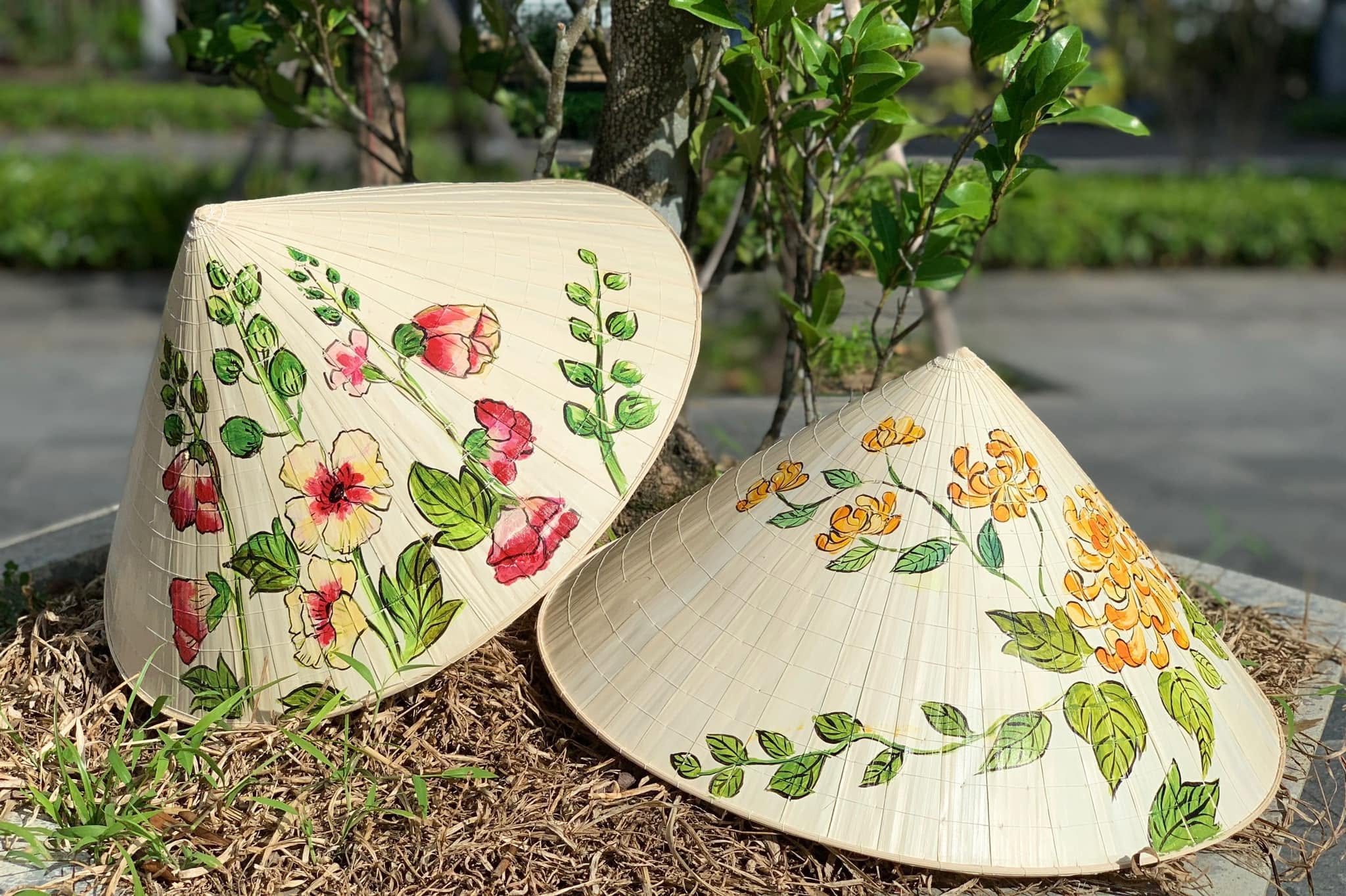
The craft does not end with shaping and stitching. Some hats are further decorated with patterns or painted images, adding another layer of visual appeal to the finished product.
These decorative details require patience and an artistic eye. From cutting patterns and painting images to refining the surface, artisans work carefully on each element so that it complements the overall form of the hat.
Once all the details have been completed, the hat is polished and treated for preservation before being introduced to the market. The many stages of handcrafting allow each product to retain the distinctive touch of its maker while reflecting skills accumulated and passed down through generations.
A Traditional Craft in Modern Life
As the craft has developed, Van The hat makers have continued to adjust product designs to respond to changing market demand. Such adaptations have helped maintain the market presence of the products while preserving the foundation of traditional conical hat-making techniques.
The craft also provides local residents with opportunities for employment and income within their own community. Its household-based character allows different stages of production to remain connected to family life, creating a network of work ranging from material preparation to the completion of finished hats.
For Van The, maintaining the craft therefore carries both economic and cultural significance. It preserves traditional skills while keeping alive the identity of a village whose craft heritage has become part of the cultural landscape of Hue.
Van The Conical Hat Making Recognized as a Traditional Craft
Van The conical hat making, formerly associated with Van The Village in Thuy Thanh Commune, Huong Thuy Town, and now located in Thanh Thuy Ward, Hue City, was recognized as a Traditional Craft of Hue City under Decision No. 1915/QD-UBND dated August 10, 2022.
The recognition acknowledges the long-standing practice of conical hat making in Van The and provides a basis for preserving and promoting the value of the traditional craft, while connecting its handmade products with contemporary livelihoods and markets.
Basic Information
| Item | Information |
|---|---|
| Craft | Van The Conical Hat Making |
| Local name | Nón lá / Chằm nón |
| Current location | Thanh Thuy Ward, Hue City |
| Historical location | Van The Village, Thuy Thanh Commune, Huong Thuy Town |
| Traditional history according to the source | Since 1553 |
| Main materials | Leaves, bamboo, nứa, lồ ô |
| Main processes | Frame selection, brim shaping, leaf covering, pattern cutting, painting, stitching, polishing and preservation |
| Main product | Van The conical hat |
| Values | Traditional craftsmanship, community livelihood and aesthetic value |
| Recognition | Traditional Craft of Hue City |
| Decision | No. 1915/QD-UBND, August 10, 2022 |