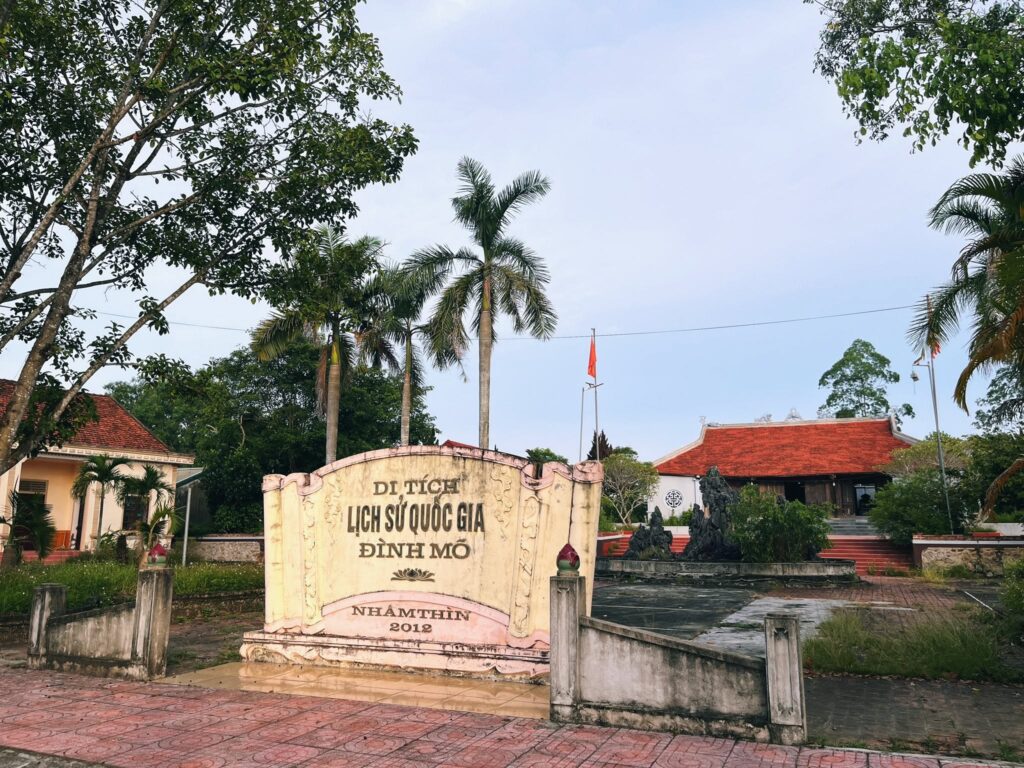
The Võ Chí Công Memorial Site is a historically and culturally significant landmark associated with the life, revolutionary career, and contributions of Võ Chí Công to Vietnam’s struggle for national liberation, nation-building, and national defense. Located in Khương Mỹ Hamlet, Tam Xuân Commune, Đà Nẵng City, the memorial is not only a place to honor an outstanding revolutionary leader but also an educational destination that helps preserve historical values for future generations.
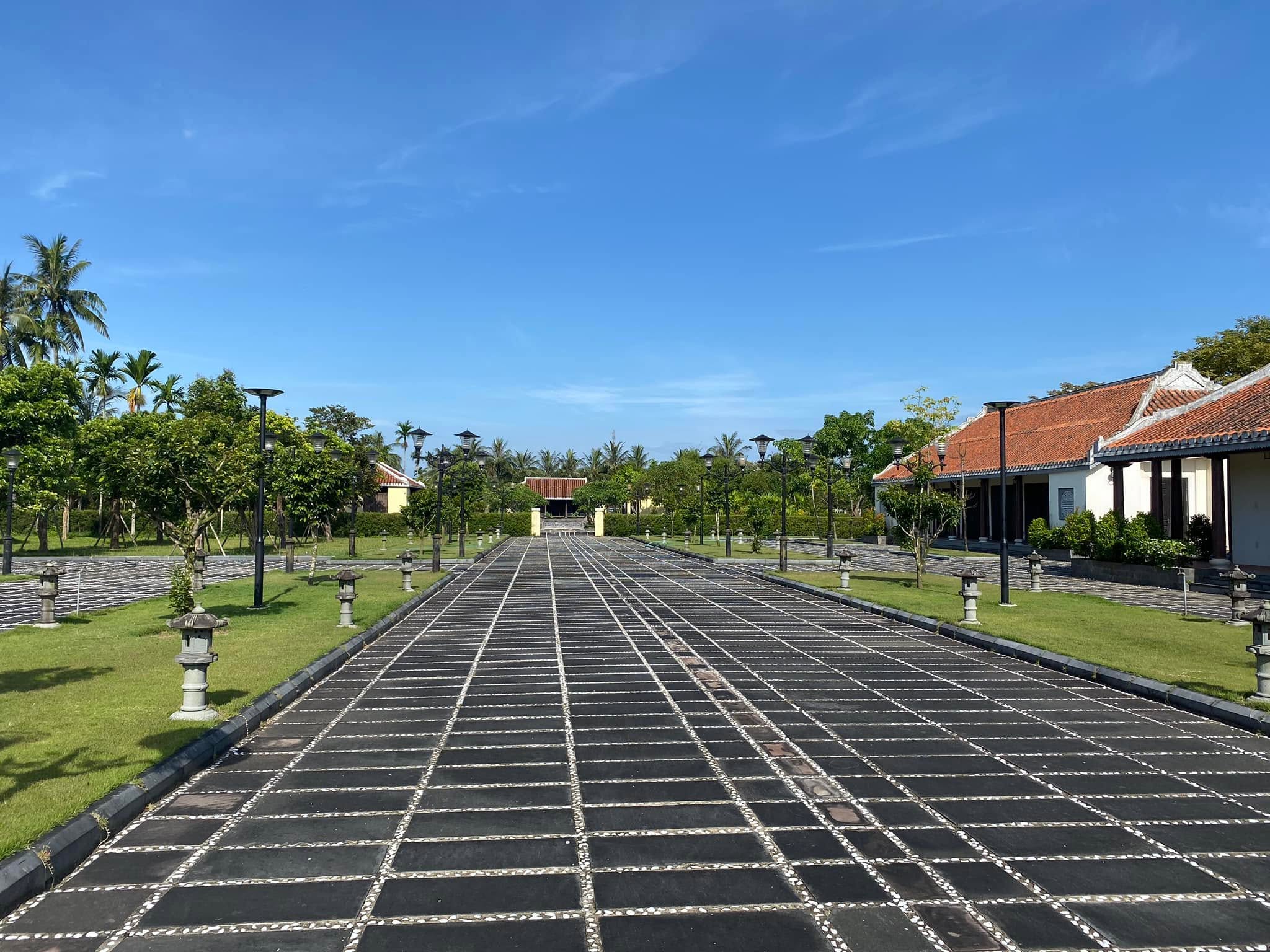
Featuring the traditional vernacular architecture of Quảng Nam, complemented by green spaces, gardens, areca palms, and jasmine, the memorial creates an atmosphere that is both solemn and welcoming. Its simple, rustic character reflects the landscape and cultural traditions of his homeland.
History of the Võ Chí Công Memorial Site
Covering nearly 16,000 square meters, the memorial site began construction on March 29, 2003, and was completed on March 24, 2004. The project was established to preserve the memories and historical legacy of Võ Chí Công’s life and revolutionary career.
In 2013, the former Quảng Nam Provincial People’s Committee approved a project to renovate, upgrade, and expand the memorial. The project was completed in January 2017, after which the site was opened to visitors. Following the expansion, additional structures were built and completed in a style inspired by traditional vernacular architecture, harmonizing with the surrounding natural landscape.
On July 18, 2012, the Ministry of Culture, Sports and Tourism issued Decision No. 2624/QĐ-BVHTTDL, recognizing the Võ Chí Công Memorial Site as a national relic. This designation acknowledged the historical and cultural significance of the place associated with his life and revolutionary activities.
The main facilities include the ancestral worship house, reception house, exhibition building, screening room, and community library. Each structure serves a distinct purpose while contributing to the site’s overall role as a place for remembrance, historical research, and education.
The Worship House: A Solemn Space for Remembrance
The worship house is the central structure of the memorial complex. It follows the traditional vernacular architectural style of Quảng Nam, with a central altar, two side chambers, a front veranda, and two interconnected side wings. A passage connects the building to the reception area.
The house follows a traditional three-section layout, featuring a wooden column system and structural components, with a roof covered in traditional yin-yang tiles. According to the source material, the building has 34 columns and faces east-northeast.
Its architecture is simple and dignified, befitting a place dedicated to honoring Võ Chí Công. The traditional design also recreates aspects of the cultural environment of rural Quảng Nam, the region closely associated with his childhood and formative years.
The Exhibition Building: The Life and Revolutionary Career of Võ Chí Công
Situated in the central area of the memorial complex, the exhibition building preserves and presents artifacts, documents, and photographs related to Võ Chí Công’s life and revolutionary activities.
The building covers approximately 456 square meters. It features reinforced concrete designed to resemble wood and imitates a traditional three-bay house with two side wings. The yin-yang tiled roof and fired-clay brick flooring create an appearance consistent with the region’s vernacular architecture.
The exhibition space is arranged around historical periods in Võ Chí Công’s revolutionary career, from his participation in the resistance wars to the period of national reconstruction and development following reunification.
According to the source material, Quảng Nam Museum presented 50 artifacts and documents, along with nearly 200 photographs of various sizes, directly related to Võ Chí Công’s life and activities from 1945 onward.
Artifacts Associated with His Revolutionary Career
The artifacts on display reflect both Võ Chí Công’s everyday life and the working conditions he experienced during different historical periods.
Among the personal items are a landline telephone, a food plate, a flask used to hold traditional herbal medicine, and a medical instrument set used to treat throat inflammation. The exhibition also includes a cloth bag, a pistol, a homemade lamp, and a military map that he used while working at the Central Office for South Vietnam and the Party Committee of Military Region 5 between 1961 and 1966.
These seemingly ordinary objects help recreate the living and working conditions of wartime. They also offer visitors a deeper understanding of the hardships experienced by revolutionary cadres during those years.
The exhibition further features two photographic collections and four albums documenting Võ Chí Công’s affection for children and young people, his homeland of Quảng Nam–Đà Nẵng, and the people and comrades in the areas where he fought and worked.
Some photographs record his return visits to former revolutionary bases, including Phước Trà Base in Hiệp Đức District and the base of the Party Committee of Military Region 5 in Trà Tân Commune, Bắc Trà My District, Quảng Nam Province, according to the place names recorded in the source material.
Through these artifacts and photographs, the exhibition allows visitors to explore history through tangible evidence, gaining a deeper understanding of Võ Chí Công as a person, his revolutionary activities, and his contributions to Vietnam’s revolutionary cause.
The Memorial House and Memories of His Homeland
The memorial house recreates the traditional residential architecture of Quảng Nam, following the layout known as “reception space in front, worship space behind.” The reception area occupies the front section, while the worship space is located at the rear. The house features a central altar, two side chambers, a front veranda, two interconnected side wings, and an exit leading toward the reception house.
The structure uses wooden components and a traditional yin-yang tiled roof, reflecting the understated character of local vernacular architecture. Inside, furnishings associated with family life include a wooden chest, a bench made from jackfruit wood, portraits of his father and mother, photographs from Võ Chí Công’s childhood, and family pictures.
The grounds also contain a garden and fish pond, features associated with the rural home environment that Võ Chí Công cherished during his lifetime. Together, these elements create an intimate memorial space, helping visitors visualize the place where he was born and raised.
During one visit to his former home, Võ Chí Công recorded his emotions in the guestbook, expressing his feelings upon returning to the house connected with his childhood and the early days of his revolutionary activities:
“I am deeply moved to visit the memorial house built by the Party organization and government of Quảng Nam Province to recognize my contributions to the nation’s revolutionary cause. Returning to the house where I was born, I recall many profound memories of my childhood, from the earliest days of my participation in the revolution…”
These handwritten reflections provide a moving glimpse into his attachment to his homeland and the memories that helped shape his revolutionary path.
Traditional Architecture and the Memorial’s Landscape
One of the distinctive features of the Võ Chí Công Memorial Site is the combination of traditional architecture and natural surroundings. The buildings draw on Quảng Nam’s vernacular residential style, incorporating yin-yang tiled roofs and column systems that evoke the living spaces of traditional Vietnamese households.
Greenery, gardens, rows of areca palms, and jasmine create a peaceful landscape suited to a place of remembrance. The garden and fish pond also evoke the atmosphere of his childhood home, adding warmth and emotional depth to the historical site.
The grounds serve both as a place for incense offerings and remembrance and as a setting where visitors can learn about local history, architecture, and traditional culture.
Connecting the Memorial with Historical and Cultural Tourism
The Võ Chí Công Memorial Site holds significant historical and cultural value and is a suitable destination for itineraries exploring Vietnam’s revolutionary heritage in Đà Nẵng and the former Quảng Nam region.
On May 30, 2012, the Secretariat of the Party Central Committee announced plans for a formal commemoration of the 100th anniversary of Võ Chí Công’s birth. The ceremonies took place on August 6 and 7, 2012, in Tam Kỳ City, Núi Thành District, and other localities in Quảng Nam Province at that time.
On the occasion of the centenary of his birth and the first anniversary of his death, Quảng Nam Province implemented a plan to renovate, upgrade, and expand the memorial. The source material records the total investment at nearly VND 80 billion.
The proposed works included renovating the existing exhibition building, constructing a new exhibition building and an artifact preservation and storage facility, and adopting traditional architectural features such as wooden columns and beams and yin-yang tiled roofs.
Other proposed facilities included a community library, reception and service facilities, a management building, a screening room, and improvements to the access road leading to the memorial.
Investment in these facilities has helped improve the preservation of historical documents and artifacts, visitor services, and opportunities to promote the site’s heritage value within the local cultural landscape.
As part of historical tourism itineraries, the memorial can be combined with other cultural and revolutionary heritage destinations in the region, creating opportunities to explore the people, landscape, and history of Quảng Nam. It also offers students, younger generations, and other visitors a chance to engage with history through personal stories, artifacts, and preserved architectural spaces.
Historical and Cultural Significance of the Memorial Site
The Võ Chí Công Memorial Site is more than a place to honor a revolutionary leader. It is also a repository of historical evidence associated with Vietnam’s struggle for independence and the subsequent process of national development.
Through its architecture, artifacts, photographs, and historical documents, the memorial introduces visitors to Võ Chí Công’s revolutionary career while reflecting aspects of Quảng Nam’s history during some of the country’s most turbulent periods.
Its significance also lies in connecting individual memories with the broader history of the nation. From the modest rural house and everyday household objects to documents relating to revolutionary activities, each element helps illustrate the relationship between an individual, their homeland, and their commitment to serving the country.
Preserving, interpreting, and promoting the Võ Chí Công Memorial Site therefore contributes to historical education, research, and cultural tourism. It provides a place where present and future generations can learn about the past, appreciate the contributions of earlier generations, and carry forward a sense of responsibility toward their homeland and country.
Quick Information
| Category | Details |
|---|---|
| Site name | Võ Chí Công Memorial Site |
| Location | Khương Mỹ Hamlet, Tam Xuân Commune, Đà Nẵng City |
| Area | Nearly 16,000 m² |
| Construction began | March 29, 2003 |
| Initial completion | March 24, 2004 |
| Renovation and expansion completed | January 2017 |
| Heritage designation | National historical and cultural relic |
| Recognition decision | No. 2624/QĐ-BVHTTDL, dated July 18, 2012 |
| Main facilities | Worship house, reception house, exhibition building, screening room, community library |
| Key significance | Preserves documents, artifacts, and memories of Võ Chí Công’s life and revolutionary career |