Vu Dai Village Braised Fish, also known as Dai Hoang Braised Fish (Ca Kho Lang Vu Dai or Ca Kho Dai Hoang), is one of the best-known traditional dishes of Vietnam’s Red River Delta. Originating from Dai Hoang Village, now part of Nam Ly Commune, Ninh Binh Province, formerly Ha Nam Province, this regional specialty is celebrated for its firm black carp, aromatic galangal and ginger, and a slow-braising method that produces deeply seasoned fish in traditional earthenware pots.
The appeal of Vu Dai braised fish lies not in elaborate presentation but in the care devoted to its preparation. Creating a well-balanced pot of fish requires carefully selected ingredients, traditional seasonings, and many hours of controlled cooking over a wood-fired stove. As the fish slowly braises, its flesh becomes firm and absorbs the seasonings, while the cooking liquid gradually reduces into a rich, dark brown glaze.
The name Vu Dai Village is closely associated with Vietnamese literature, particularly Chi Pheo, a celebrated short story by writer Nam Cao. The fictional village of Vu Dai is commonly linked to Dai Hoang, the writer’s birthplace. Through this connection between literature and everyday life, the local braised fish specialty became widely recognized under the name Vu Dai Village Braised Fish.
Originally prepared for family meals, Dai Hoang braised fish has gradually developed into a popular regional specialty, particularly during Tet, the Vietnamese Lunar New Year. Carefully prepared clay pots of fish are now purchased as gifts and delivered to customers in different parts of Vietnam.
Today, the dish represents more than a traditional cooking technique. It reflects the culinary knowledge, patience, family traditions, and cultural memories of rural northern Vietnam. Behind every pot is a story of carefully selected ingredients, slow cooking, and culinary skills passed down through generations.
Origins of Vu Dai Village Braised Fish and the Culinary Heritage of Dai Hoang
Dai Hoang Village lies within the agricultural landscape of the Red River Delta, where rural life has long been shaped by rice cultivation, rivers, ponds, and low-lying fields.
These natural conditions historically provided local communities with a variety of freshwater fish and other ingredients.
From these familiar resources, villagers developed cooking methods suited to their daily needs. Braising fish with aromatic seasonings became one of the techniques preserved through generations.
From an Everyday Family Dish to a Regional Specialty
Before becoming a widely recognized specialty, Dai Hoang braised fish was a familiar part of local home cooking.
In traditional northern Vietnamese households, freshwater fish could be prepared in numerous ways, including frying, steaming, boiling, making soup, or braising.
Braising was particularly valued because it produced a richly flavored dish that could be enjoyed over several meals when stored appropriately.
Families combined freshwater fish with ingredients such as galangal, ginger, shallots, fish sauce, and pepper.
Slow cooking allowed the seasonings to penetrate the fish and gradually develop a concentrated flavor.
Recipes differed between households according to available ingredients, family preferences, and cooking experience.
The proportions of seasonings, length of cooking, and techniques used to control the fire could all vary.
Through generations of practice, these methods developed into the distinctive braised fish tradition associated with Dai Hoang.
Why Is It Called Vu Dai Village Braised Fish?
The name Vu Dai Village Braised Fish has a particularly interesting connection with Vietnamese literature.
Dai Hoang is the birthplace of Nam Cao, one of Vietnam’s most influential twentieth-century writers.
His notable works include Chi Pheo, Lao Hac (Old Hac), and Doi Thua (A Life of Excess).
In Chi Pheo, Vu Dai Village serves as the fictional setting for a powerful portrayal of rural Vietnamese society before the August Revolution of 1945.
This literary village is commonly associated with Dai Hoang, where Nam Cao was born and raised.
As the local braised fish specialty gained wider recognition, the name Ca Kho Lang Vu Dai, meaning Vu Dai Village Braised Fish, became increasingly popular.
The name connects a traditional dish with one of the most recognizable fictional villages in Vietnamese literature.
However, Dai Hoang is a real village, while Vu Dai is a literary setting.
The name Vu Dai Village Braised Fish functions primarily as a cultural and commercial identity, whereas Dai Hoang Braised Fish refers directly to the dish’s geographical origins.
A Traditional Dish Associated with Tet
Richly seasoned braised dishes occupy an important place in northern Vietnamese family meals, especially during gatherings and festive occasions.
Dai Hoang braised fish is also closely associated with food preparation for Tet, the Vietnamese Lunar New Year.
A carefully prepared pot of fish can be served with steamed rice and other traditional dishes during family celebrations.
Over time, purchasing braised fish as a seasonal gift became increasingly popular.
Many local producers prepare orders during the weeks leading up to Tet, when demand for traditional specialties often increases.
As a result, a dish once prepared mainly for household consumption has developed into a commercially valuable regional food product.
The Development of a Famous Local Specialty
The growing reputation of Vu Dai Village Braised Fish is closely connected to its distinctive flavor, long cooking process, and the cultural story of Dai Hoang.
Producers prepare clay pots of fish using carefully selected ingredients and traditional cooking methods.
Finished products are packaged and transported to customers in different regions.
As awareness of Vietnamese regional cuisine has increased, Dai Hoang braised fish has attracted wider interest.
However, product quality can vary between producers depending on the fish, seasonings, cooking time, and food preparation standards.
The identity of this specialty therefore depends not only on its famous name but also on ingredient quality, craftsmanship, and consistent production methods.
Ingredients and the Traditional Clay Pot Braising Process
The distinctive character of Vu Dai Village Braised Fish comes from the combination of fresh ingredients, aromatic seasonings, and prolonged cooking.
Each stage influences the final color, aroma, texture, and flavor.
Although recipes differ between families and commercial producers, the traditional method generally involves selecting black carp, preparing seasonings, arranging the ingredients in an earthenware pot, and cooking them slowly over a carefully controlled fire.
Black Carp – The Main Ingredient
Black carp, known in Vietnamese as ca tram den, is commonly preferred for preparing Vu Dai Village Braised Fish.
This freshwater fish is valued for its relatively firm flesh, substantial body size, and comparatively limited number of fine bones.
These characteristics make it suitable for prolonged braising.
When selecting fish, producers pay particular attention to freshness, flesh quality, and appropriate size.
The fish is cleaned, prepared, and cut into relatively thick sections.
The thickness of each piece is important because the fish must cook evenly, absorb the seasonings, and retain its shape during the long cooking process.
Pieces that are too thin may break apart more easily.
Very large pieces may require additional time for the seasonings to penetrate the flesh.
Proper preparation therefore plays an important role in achieving the desired final texture.
Galangal, Ginger, and Traditional Seasonings
Alongside black carp, the characteristic seasonings include galangal, ginger, shallots, fish sauce, black pepper, and chili.
Galangal is particularly important, contributing a warm, earthy aroma and a distinctive mildly pungent flavor.
Ginger adds fragrance and helps balance the overall taste of the fish.
Fish sauce provides the savory, salty foundation of the dish, while shallots, pepper, and chili add further layers of flavor.
Some traditional recipes also include freshwater field crab extract, known in Vietnamese as nuoc cot cua dong, to enrich the braising liquid.
However, not every producer uses the same ingredients or proportions.
Additional seasonings and preparation techniques may vary according to individual family recipes.
The aim is to achieve a harmonious balance between savory intensity, the fish’s natural sweetness, aromatic spices, and the concentrated cooking liquid.
The Traditional Earthenware Pot
The clay pot, or nieu dat, is one of the most recognizable features of Vu Dai Village Braised Fish.
Unlike conventional metal cookware, earthenware has distinctive heat-transfer and heat-retention characteristics.
When suitable cookware is used correctly, it can support slow cooking over a controlled heat source.
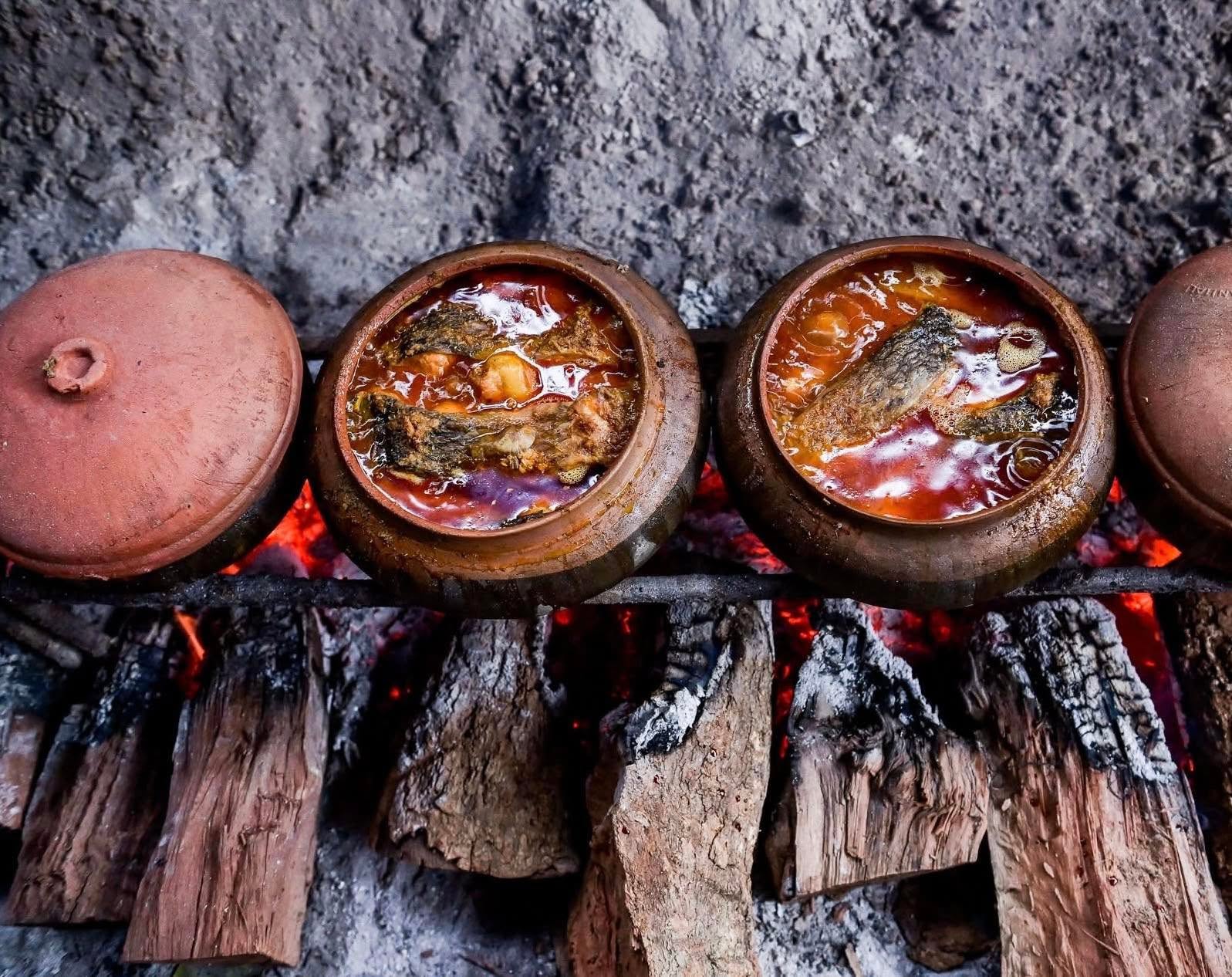
Traditionally, the pot is placed over a wood-fired stove, allowing the fish to cook gradually.
The cook must carefully regulate the fire to prevent the liquid from evaporating too quickly or the ingredients from burning.
The clay pot also contributes to the dish’s visual identity.
A finished pot of braised fish evokes the atmosphere of a traditional Vietnamese countryside kitchen, with wood fires, aromatic spices, and food prepared over many hours.
For food safety, however, earthenware should be sourced from reputable manufacturers and be suitable for cooking at the required temperatures.
Any glaze or surface treatment must also meet applicable food-contact safety requirements.
Arranging the Fish and Marinating the Ingredients
After cleaning and cutting, the fish is marinated with seasonings according to the cook’s preferred recipe.
Marinating time may vary depending on the size of the fish pieces and the preparation method.
Slices of galangal, ginger, or other suitable ingredients are often arranged at the bottom of the clay pot.
This layer helps reduce direct contact between the fish and the pot’s base while contributing additional aroma.
The fish pieces are then carefully arranged to allow reasonably even exposure to heat and braising liquid.
Seasonings and cooking liquid are added according to the chosen proportions.
The arrangement must take into account the size of the pot and the quantity of fish.
Overcrowding may make the cooking process more difficult to control.
Slow Braising Over a Wood-Fired Stove
Slow braising is the most time-consuming and technically demanding stage.
Once the ingredients have been prepared, the clay pot is placed over a wood-fired stove and cooked for many hours.
According to descriptions of traditional production, some establishments braise their fish for approximately 10 to 16 hours, depending on the pot size, quantity of fish, and cooking method.
Throughout this period, the cook must monitor the fire, the level of liquid, and the condition of the fish.
During the early stages, heat cooks the ingredients and allows the seasonings to begin penetrating the flesh.
As the process continues, the liquid gradually reduces, the flavors become more concentrated, and the fish develops its characteristic firm texture.
Careful heat management is essential.
If the liquid evaporates too quickly, the fish may dry out or burn.
If too much liquid remains near the end of cooking, the final dish may lack the desired concentrated consistency.
The ability to control heat and moisture over many hours is one of the defining skills behind traditional Dai Hoang braised fish.
Finishing the Braised Fish
When the fish reaches the desired stage, the cooking liquid has usually reduced into a concentrated coating around the pieces.
The finished fish typically has a deep golden-brown to dark brown appearance.
Its flesh is firm, richly seasoned, and sufficiently intact to retain its recognizable shape.
The aromas of galangal, ginger, pepper, and fish sauce blend into a distinctive fragrance.
The final texture and moisture content can vary according to the recipe and cooking time.
After cooking, products intended for later consumption must be cooled, packaged, and stored under appropriate food safety conditions.
Importantly, prolonged braising does not automatically make fish safe for extended storage at room temperature.
Shelf life and storage requirements depend on the actual cooking, cooling, packaging, and preservation processes used by the producer.
Flavor, Dining Traditions, and the Cultural Value of Vu Dai Braised Fish
The appeal of Vu Dai Village Braised Fish lies in its rich flavor and careful preparation rather than elaborate presentation.
A well-made clay pot of fish reflects the successful combination of ingredients, seasoning, and controlled cooking.
The dish embodies several familiar characteristics of northern Vietnamese cuisine: pronounced savory flavors, traditional aromatic ingredients, and an emphasis on balance when served with rice.
The Distinctive Aroma of Galangal, Ginger, and Braising Sauce
When the lid is removed from a freshly prepared pot, galangal and ginger are often among the first aromas to emerge.
After hours of cooking, these ingredients develop a deeper fragrance than they have when freshly sliced.
Fish sauce, shallots, pepper, and other seasonings contribute additional savory complexity.
As the liquid reduces, the flavors become more concentrated.
The aroma may also be influenced by the use of a wood-fired stove and traditional clay cookware.
Nevertheless, the quality of the final dish depends primarily on the ingredients, recipe, and cooking technique.
Firm, Tender, and Deeply Seasoned Fish
Black carp is preferred partly because its firm flesh responds well to prolonged braising.
When properly prepared, the pieces can retain their shape while absorbing the seasonings.
The surface typically develops a deep brown color, while the interior carries a balanced savory flavor with the fish’s natural sweetness.
The tenderness of the flesh and bones depends on the cooking time, fish size, and preparation method.
It should not be assumed that every pot of braised fish has completely softened, edible bones.
Care is still necessary when serving the dish to children, older adults, or anyone who may have difficulty handling fish bones.
What to Eat with Vu Dai Village Braised Fish
The most familiar way to enjoy the dish is with hot steamed white rice.
The rice’s mild flavor and soft texture help balance the concentrated seasonings of the fish.
A piece of richly braised carp served over freshly cooked rice creates a simple but satisfying meal.
Other suitable accompaniments include pickled shallots, boiled vegetables, light vegetable soups, and mildly seasoned side dishes.
During Tet, braised fish may be served alongside other traditional foods as part of a family meal.
These combinations reflect a broader characteristic of Vietnamese cuisine, where dishes with contrasting flavors and textures are often enjoyed together.
A Dish Connected with Family Memories
For many families in northern Vietnam, braised fish evokes memories of home kitchens, shared meals, and recipes passed down through generations.
Preparing the dish involves more than combining ingredients and heating them until cooked.
The cook must understand how to select fish, balance seasonings, arrange the ingredients, and maintain the fire.
Such knowledge has traditionally been acquired through observation and repeated practice within families.
As a result, the flavor of braised fish is closely connected with personal memories and local food traditions.
In Dai Hoang, preserving and developing this cooking method has transformed a familiar household skill into a distinctive regional culinary identity.
Preserving Traditional Culinary Knowledge
The cultural value of Vu Dai Village Braised Fish extends beyond the finished dish.
It also lies in the knowledge required to prepare it.
Selecting black carp, preparing galangal and ginger, arranging the clay pot, and managing a wood-fired stove all involve practical experience.
These techniques may be passed down through families or refined within local food businesses.
Maintaining the traditional clay pot method helps preserve a recognizable style of Vietnamese cooking.
At the same time, the growth of commercial production creates new responsibilities concerning food safety, ingredient sourcing, and product consistency.
Preserving the dish therefore means retaining its essential culinary characteristics while adapting production practices to modern quality and safety requirements.
Discovering Vu Dai Village Braised Fish and Buying This Ninh Binh Specialty
Vu Dai Village Braised Fish is not only known for its taste but also for its association with Dai Hoang, the birthplace of writer Nam Cao.
For travelers interested in Vietnamese food and literature, exploring the dish can add a distinctive cultural dimension to a journey through Ninh Binh Province.
From clay pots simmering over wood fires to stories associated with the fictional village in Chi Pheo, Dai Hoang connects food, literature, and rural Vietnamese life.
Learning About Traditional Fish Braising in Dai Hoang
At production establishments that welcome visitors, travelers may have opportunities to learn about the traditional braising process.
Preparing the fish, slicing galangal and ginger, arranging the clay pot, and controlling the wood fire all involve specialized techniques.
The extended cooking period is particularly noteworthy because it requires continuous attention.
Observing the process can help visitors understand why traditional clay pot braised fish requires considerable time and effort.
However, not every producer offers workshop visits or cooking demonstrations.
Travelers interested in observing production should contact establishments in advance to confirm arrangements.
A Traditional Food Gift from Northern Vietnam
Thanks to its rich flavor and cultural associations, Vu Dai Village Braised Fish has become a popular regional gift.
Producers may offer clay pots in different sizes and quantities to suit household consumption or gift-giving.
The earthenware pot itself contributes to the product’s traditional appearance.
However, when purchasing fish for delivery over long distances, buyers should pay particular attention to packaging and storage conditions.
The fact that the fish has been cooked for many hours does not, by itself, guarantee safe preservation.
Products should include clear storage instructions and be transported under appropriate conditions.
How to Choose Quality Vu Dai Braised Fish
When buying this specialty, consumers should consider the producer’s reputation and the information provided about the product.
Several factors are worth checking:
- Ingredient quality: The fish should be appropriately selected and prepared, with clear information about the species used.
- Appearance: Pieces should generally retain their shape and show coloring consistent with the cooking method, without visible signs of spoilage.
- Aroma: The fish should have the expected fragrance of braised fish and seasonings, without unusual odors.
- Product information: Packaging should provide the producer’s name, production date, shelf life, and suitable storage instructions.
- Packaging and transport: Clay pots or other containers should be securely protected and handled according to food safety requirements.
Prices vary depending on the fish, portion size, pot dimensions, ingredients, and ordering period.
Buyers should therefore consult individual producers for current prices rather than relying on a fixed estimate.
Storing and Serving Braised Fish Safely
Although braised fish has undergone heat treatment, it can still spoil if stored improperly.
Consumers should follow the producer’s instructions concerning storage temperature and shelf life.
Depending on the packaging and production process, refrigeration or freezing may be necessary if the fish is not consumed immediately.
When serving, the fish should be reheated appropriately and should not be left at room temperature for extended periods.
For products transported over long distances, buyers should inspect the packaging and consider the time and conditions of delivery.
If the product develops an unusual smell, shows signs of spoilage, or arrives in compromised packaging, it should not be consumed.
Combining Local Cuisine with the Literary Heritage of Nam Cao
One of the most distinctive aspects of Vu Dai Village Braised Fish is its connection with the birthplace of Nam Cao.
Dai Hoang evokes the rural settings and social themes portrayed in his literary works.
Travelers interested in Vietnamese literature may explore the writer’s life, career, and the local places associated with him.
Combining cultural exploration with traditional food experiences can make a visit more meaningful.
Through this connection, braised fish becomes more than something to taste.
It offers an introduction to the people, stories, and everyday traditions of the northern Vietnamese countryside.
Developing Culinary Tourism Around Dai Hoang Braised Fish
Dai Hoang braised fish has potential to develop further as a culinary tourism product of Ninh Binh Province.
Visitor experiences could combine introductions to local ingredients, demonstrations of clay pot cooking, and presentations about the village’s cultural heritage.
Improved packaging, product traceability, and e-commerce may also help producers reach wider markets.
For sustainable development, businesses should prioritize ingredient quality, food safety, and the reputation of the local specialty.
Preserving traditional cooking techniques while meeting modern production standards can help protect the dish’s cultural value and improve consumer confidence.
Vu Dai Village Braised Fish is a distinctive specialty of Vietnam’s Red River Delta, where familiar ingredients such as black carp, galangal, ginger, and fish sauce are transformed through patient clay pot cooking into a deeply flavorful dish. Originating from Dai Hoang Village, the birthplace of writer Nam Cao, it brings together culinary traditions, rural memories, and an important connection with Vietnamese literature. Over generations, Dai Hoang braised fish has evolved from an everyday family meal into a widely recognized regional specialty and traditional gift. Beyond its rich aroma and savory taste, each clay pot reflects the patience, craftsmanship, and commitment to preserving local food traditions that continue to enrich the culinary heritage of Ninh Binh Province.
Quick Information
| Item | Details |
|---|---|
| Specialty name | Vu Dai Village Braised Fish |
| Vietnamese name | Cá kho làng Vũ Đại |
| Alternative name | Dai Hoang Braised Fish (Ca Kho Dai Hoang) |
| Origin | Dai Hoang Village |
| Current location | Nam Ly Commune, Ninh Binh Province, Vietnam |
| Province before the 2025 administrative reorganization | Ha Nam Province |
| Culinary region | Red River Delta, northern Vietnam |
| Food category | Traditional dish, regional specialty |
| Main ingredient | Black carp (ca tram den) |
| Characteristic seasonings | Galangal, ginger, shallots, fish sauce, pepper, and chili |
| Additional ingredient in some recipes | Freshwater field crab extract |
| Traditional cookware | Earthenware clay pot |
| Traditional fuel | Firewood |
| Cooking method | Slow braising in a clay pot over controlled heat |
| Approximate cooking time | Around 10–16 hours at some establishments, depending on the process |
| Finished texture | Firm, well-seasoned fish with concentrated braising liquid |
| Characteristic color | Deep golden brown to dark brown |
| Flavor profile | Rich, savory, aromatic with galangal and ginger, and naturally sweet fish |
| Traditional serving suggestion | Hot steamed white rice |
| Common accompaniments | Pickled shallots, boiled vegetables, and light vegetable soups |
| Popular occasions | Family meals, Tet celebrations, and traditional gifts |
| Literary character associated with the name | Chi Pheo |
| Writer associated with the village | Nam Cao |
| Related literary work | Chi Pheo |
| Cultural significance | Traditional cooking knowledge, family food memories, and rural culinary heritage |
| Tourism potential | Learning about clay pot braising, exploring regional cuisine, and discovering Nam Cao’s hometown |
| Buying advice | Choose reputable producers and check product information and storage requirements |
| Storage advice | Follow the producer’s refrigeration, shelf-life, and reheating instructions |
| Development priorities | Culinary heritage preservation, product quality, traceability, and food tourism |