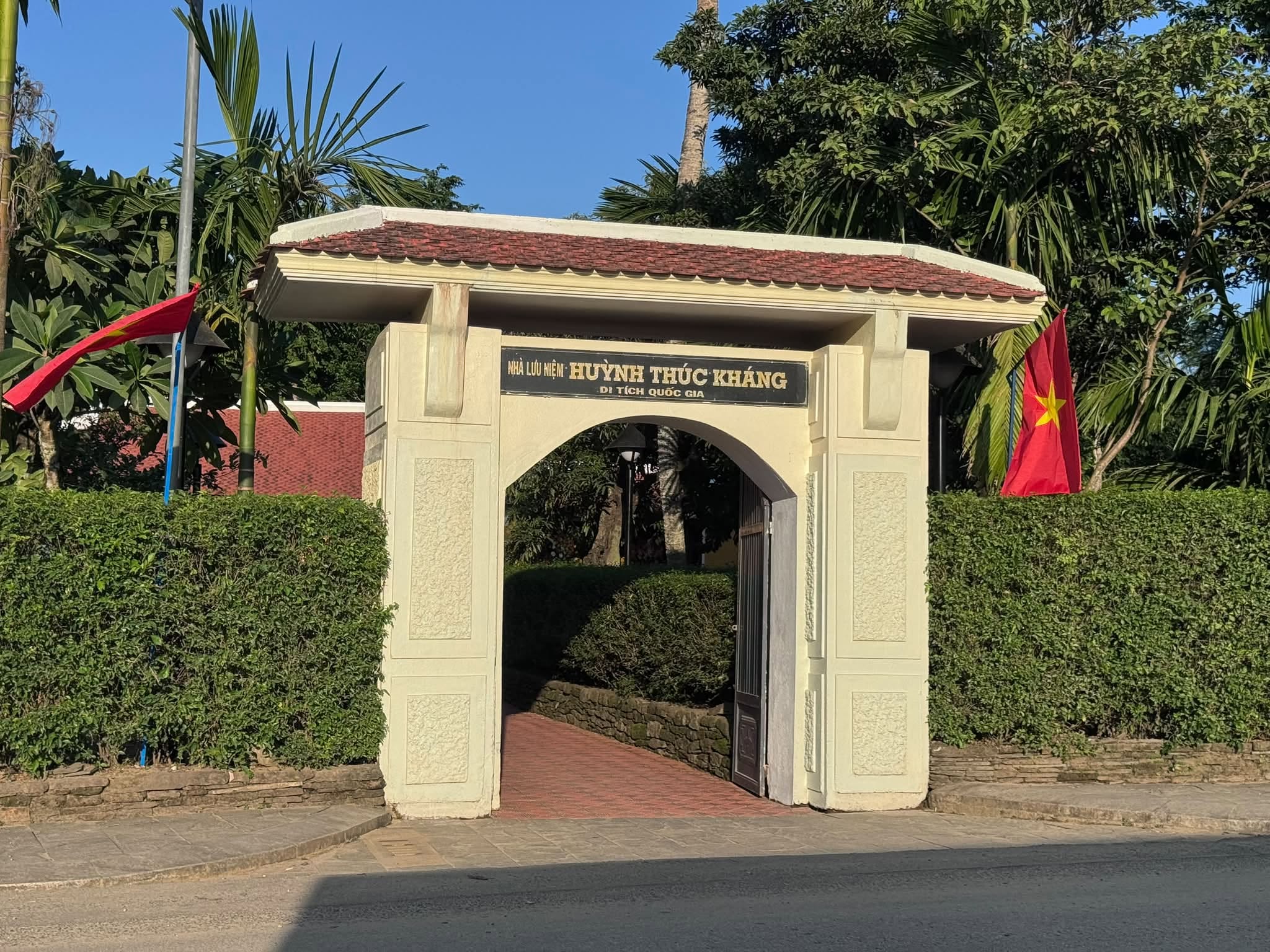
Located along National Highway 40B in the peaceful countryside of Tiên Cảnh, formerly part of Tiên Phước District, Quảng Nam Province, and now within Thạnh Bình Commune, Đà Nẵng City, the Huỳnh Thúc Kháng Memorial House is a historical site associated with the life and legacy of one of Vietnam’s prominent patriots in the early 20th century. Its historical artifacts, old newspaper pages, and intricate traditional carvings preserve the memory of a distinguished figure while helping nurture patriotism, integrity, and a spirit of public service among younger generations.
From the center of Tam Kỳ, visitors can travel approximately 35 kilometers westward to reach his hometown. Set within a garden covering more than 1,000 square meters, the memorial house retains a peaceful, dignified, and time-honored atmosphere. The site evokes the life of a patriot who devoted himself wholeheartedly to the cause of the nation.
History and Architecture of the Huỳnh Thúc Kháng Memorial House
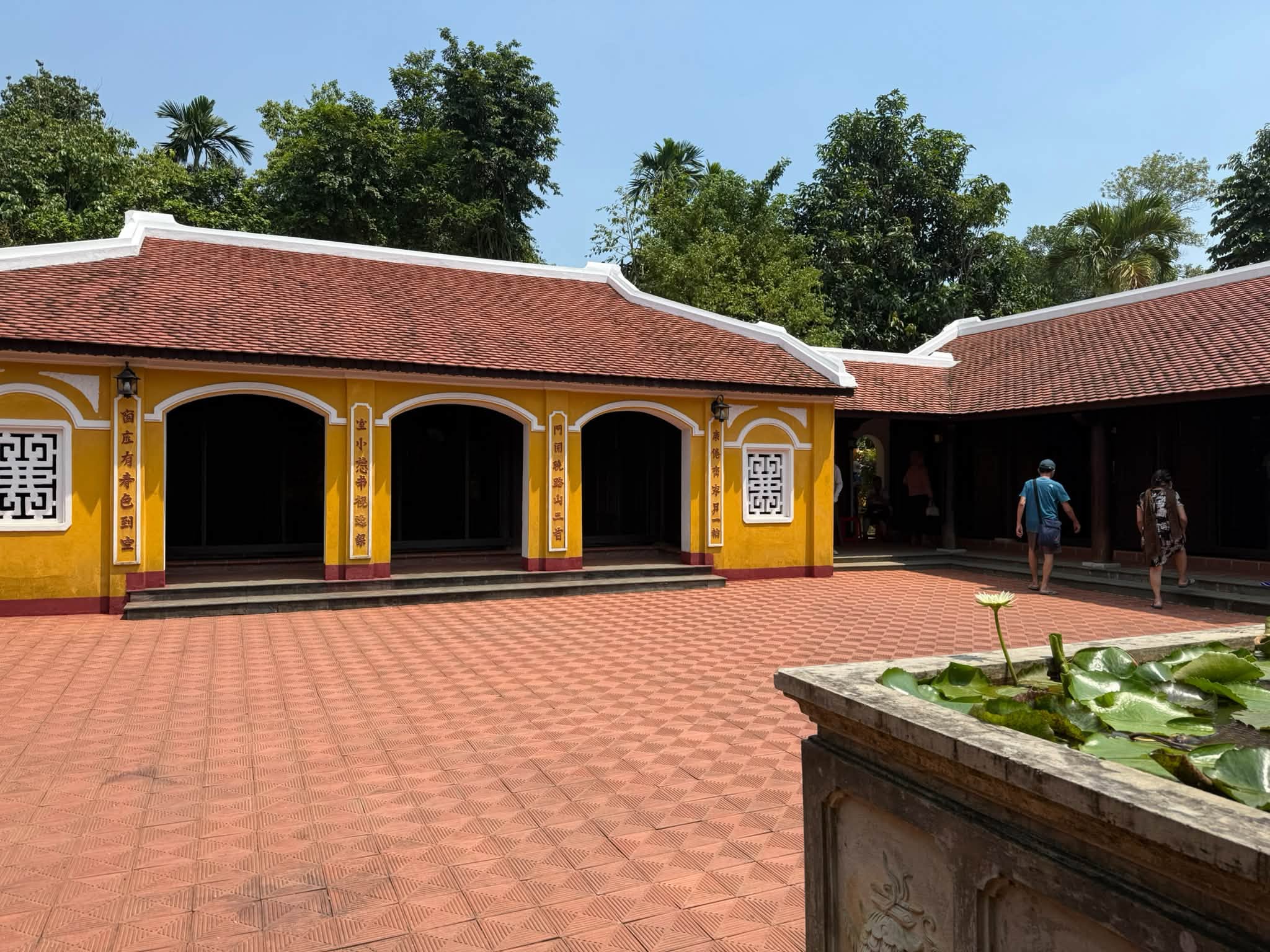
The house was built in 1869 by Huỳnh Văn Phương, Huỳnh Thúc Kháng’s father, in the architectural style of the Nguyễn Dynasty. Covering approximately 90 square meters, the house features three main bays and two side wings, supported by a sturdy wooden framework and decorated with finely carved details.
Despite undergoing several restoration and conservation projects, the house has largely retained its original architectural appearance. Its traditional tiled roof, timber structure, and carefully arranged interior reflect the vernacular architecture of Quảng Nam, combining rustic simplicity with a dignified presence.
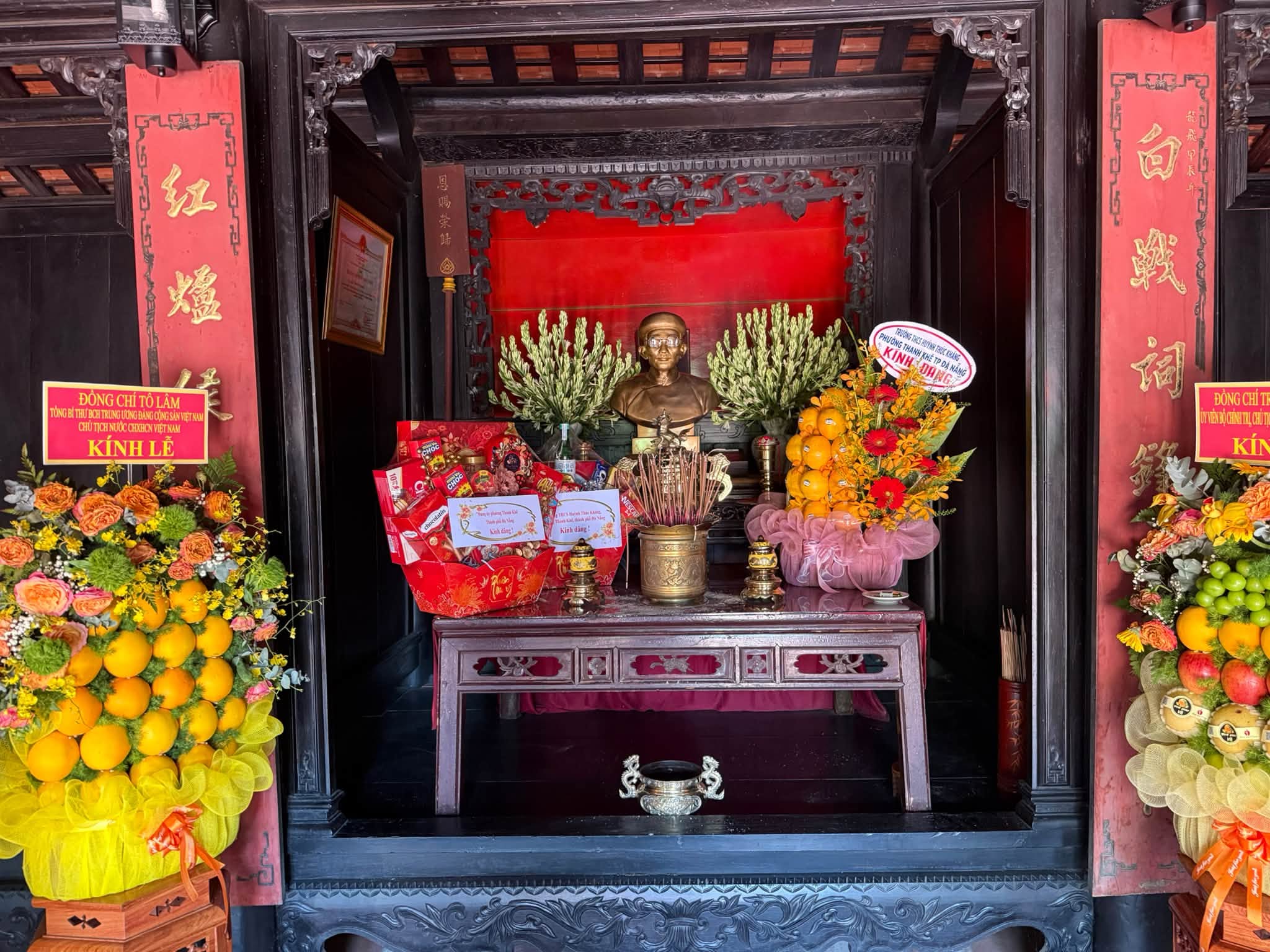
Upon entering the central room, visitors encounter a solemn and tranquil worship space. The ancestral altar features intricate carvings, including a bat holding a string of beads and a pair of dragons carved from jackfruit wood. At the center is an ancestral tablet bearing the names of deceased family members, with an altar dedicated to Huỳnh Thúc Kháng placed in front.
Every detail contributes to recreating the domestic and spiritual life of a traditional Vietnamese family, while recalling a family with a strong scholarly tradition and patriotic ideals.
Huỳnh Thúc Kháng: The Life and Career of a Vietnamese Patriot
According to the information displayed at the memorial site, Huỳnh Thúc Kháng was born in 1876 in Thạnh Bình Village, Tiên Giang Thượng Canton, Hà Đông District, Thăng Bình Prefecture, now within Thạnh Bình Commune, Đà Nẵng City.
As a child, he was named Thước. When he began his studies, he used the name Hanh. In 1900, he adopted the name Huỳnh Thúc Kháng, with the courtesy name Giới Sanh and the literary name Mính Viên.
His academic achievements emerged early. At the age of 16, he passed the third-level regional examination. In 1900, at the age of 25, he earned the cử nhân degree, and in 1904, he passed the highest-level imperial examination, earning the title of tiến sĩ.
Despite his success in the traditional examination system, Huỳnh Thúc Kháng did not confine himself to a scholarly career. He became actively involved in patriotic movements and emerged as one of the leading figures of the Duy Tân Reform Movement in central Vietnam.
In 1908, when the anti-tax protests erupted in Quảng Nam and spread across central Vietnam, Huỳnh Thúc Kháng and many other patriotic scholars were arrested by the French colonial authorities, sentenced to life imprisonment, and exiled to Côn Đảo Prison Island. He was not released until 1921, after which he resumed his efforts in service of the nation.
His life became a sustained journey of patriotic commitment, encompassing reform advocacy, political engagement, and the use of journalism to promote progressive ideas.
Political Activities and His Role in the Duy Tân Reform Movement
After returning from Côn Đảo, Huỳnh Thúc Kháng continued his political activities, seeking social improvements and defending the interests of the Vietnamese people.
In 1926, when the French administration reorganized the Consultative Council into the Representative Assembly of Central Vietnam, he ran for office and was elected its president. He hoped to use the assembly as a platform to advocate democratic reforms and speak up for national interests.
However, after two years, he concluded that the assembly lacked genuine authority and primarily served the political objectives of the colonial administration. He therefore resigned.
This decision reflected his determination not to compromise his principles or ideals for a nominal position. For Huỳnh Thúc Kháng, political participation was meaningful only when it could help protect the people’s interests and bring about substantive change.
Tiếng Dân Newspaper: A Voice for National Consciousness
In 1927, Huỳnh Thúc Kháng founded Tiếng Dân in Huế. The newspaper became an influential Quốc ngữ publication in central Vietnam during that period.
Over its 16 years of operation, from 1927 to 1943, Tiếng Dân published a total of 1,766 issues. It served as a forum for discussing contemporary political, social, and public affairs, while helping bring together progressive intellectuals, raise national awareness, and sustain aspirations for independence.
At a time when the colonial authorities closely controlled the press, maintaining an independent editorial voice required persistence, courage, and a strong sense of responsibility. Tiếng Dân gained influence not only in central Vietnam but also in other parts of the country before the authorities forced it to cease publication in 1943.
The newspaper remains an important part of Huỳnh Thúc Kháng’s legacy, demonstrating the role of journalism in public life and in shaping the political awareness of Vietnamese society in the early 20th century.
Huỳnh Thúc Kháng After the August Revolution of 1945
Following the August Revolution of 1945, Huỳnh Thúc Kháng was invited by President Hồ Chí Minh to serve as Minister of the Interior in the Government of the Democratic Republic of Vietnam.
In June 1946, when President Hồ Chí Minh traveled to France for negotiations, Huỳnh Thúc Kháng was entrusted with the position of Acting President. He was also one of the founders of the Vietnam National Union and served as its president.
In late 1946, when the nationwide resistance against French forces began, the central government assigned him to undertake an inspection tour of central Vietnam. Despite his advanced age, he continued to carry out his responsibilities during a difficult period for the country.
On April 21, 1947, Huỳnh Thúc Kháng passed away in Quảng Ngãi due to old age and declining health. In accordance with his wishes, local people arranged for him to be buried on the summit of Thiên Ấn Mountain in Quảng Ngãi.
Remembered for his talent, integrity, and deep patriotism, he was affectionately known by the Vietnamese people as “Cụ Huỳnh,” an expression of the respect and affection they held for a man who devoted his life to the nation.
Historical Artifacts That Tell a Story
Inside the Huỳnh Thúc Kháng Memorial House, numerous artifacts associated with his life are preserved and displayed for visitors. Each object connects personal memories with the broader events that shaped Vietnam’s history.
On an old wooden table, personal belongings such as his spectacles, storage box, and watch evoke the everyday life of the patriot behind the public figure. These modest objects help visitors imagine the person behind the political milestones and social activities recorded in history.
Particularly notable are surviving copies of Tiếng Dân, whose pages have yellowed with age. They recall a vibrant period in the development of Quốc ngữ journalism, when the written word became an important means of communicating ideas, reflecting social conditions, and nurturing national consciousness.
The collection also includes a simple pair of wooden clogs, a reproduction based on an original artifact in Quảng Ngãi, according to the site’s introductory material. The clogs evoke the tireless efforts of Huỳnh Thúc Kháng throughout his years of public service and dedication to the country.
From personal belongings to old newspaper pages, the artifacts make history more tangible. Rather than encountering historical events solely through books, visitors can gain a more immediate sense of the daily life, character, and steadfast principles of a Vietnamese patriot.
Historical Value and Educational Significance
Surrounded by the shade of garden trees, the old wooden house stands quietly as a witness to the passage of time. Its carved details, newspaper pages, and preserved artifacts tell not only the story of Huỳnh Thúc Kháng but also reflect a turbulent period in Vietnam’s history.
The site’s value lies in the connection between a traditional family home and the lifelong dedication of a historical figure to his country. By exploring the house where he was born and raised, visitors can learn more about the cultural environment that helped shape his character, determination, and ideals.
The memorial also has considerable educational value for younger generations. Stories of Huỳnh Thúc Kháng’s perseverance, his refusal to remain in positions that conflicted with his principles, and his use of journalism to speak up for the nation offer lessons in courage, integrity, and civic responsibility.
For travelers interested in history and culture, the site provides an opportunity to learn about a prominent Vietnamese patriot while discovering the traditional architecture and scholarly heritage of the former Quảng Nam region.
Visiting the Huỳnh Thúc Kháng Memorial House
The memorial house is located along National Highway 40B in Thạnh Bình Commune, Đà Nẵng City. According to the source material, it lies approximately 35 kilometers west of central Tam Kỳ.
During a visit, travelers can explore the traditional architecture, examine the preserved artifacts, read historical materials about Huỳnh Thúc Kháng, and learn about the role of Tiếng Dân in the history of Vietnamese journalism.
As the site includes a memorial and ancestral worship space, visitors are encouraged to dress respectfully, maintain a quiet atmosphere, and follow the site’s regulations.
A visit offers more than a history lesson. It is an opportunity to reflect on enduring values passed down by earlier generations: patriotism, integrity, and wholehearted service to the community.
Quick Information
| Category | Details |
|---|---|
| Site name | Huỳnh Thúc Kháng Memorial House |
| Historical figure commemorated | Huỳnh Thúc Kháng |
| Location | Thạnh Bình Commune, Đà Nẵng City |
| Setting | Along National Highway 40B |
| Approximate distance | 35 km west of central Tam Kỳ |
| Year built | 1869 |
| Original builder | Huỳnh Văn Phương, Huỳnh Thúc Kháng’s father |
| House area | Approximately 90 m² |
| Garden area | More than 1,000 m² |
| Architectural style | Traditional Nguyễn Dynasty-era wooden house with three main bays and two side wings |
| Notable artifacts | Copies of Tiếng Dân, spectacles, a watch, and personal belongings associated with Huỳnh Thúc Kháng |
| Key significance | History, culture, patriotism, and education for younger generations |