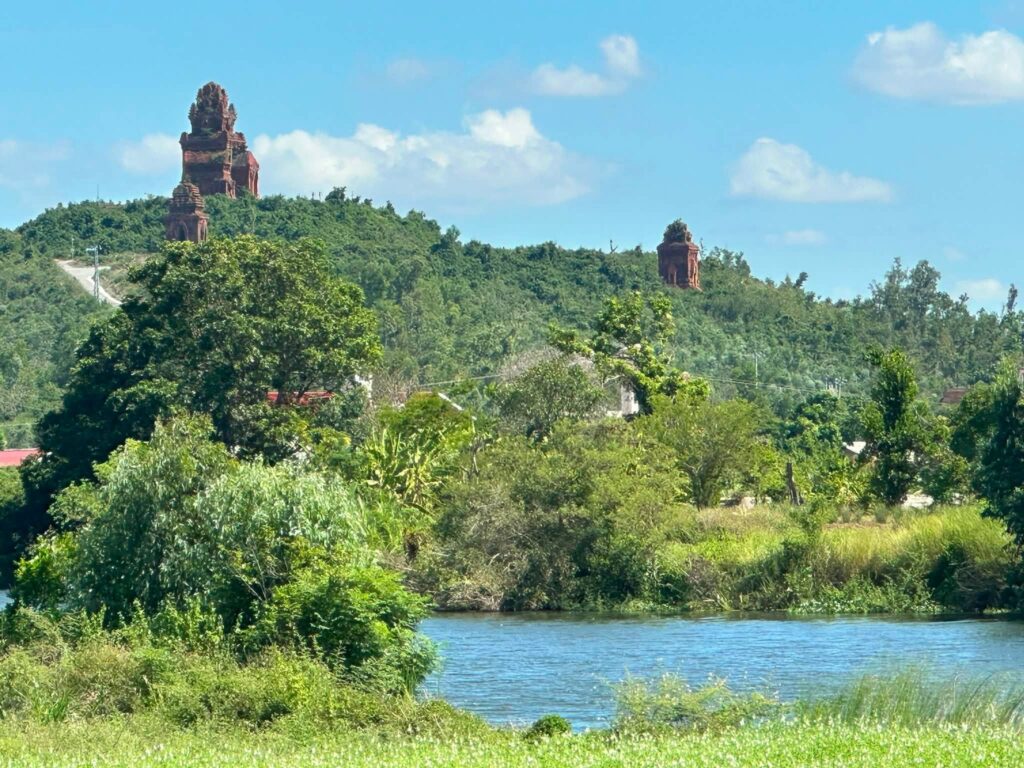
Bang An Tower is one of the most distinctive surviving examples of ancient Champa architecture in Central Vietnam. Located in Bang An Residential Quarter, An Thang Ward, Da Nang City, the tower is renowned for its rare octagonal ground plan, its form reminiscent of the sacred Linga symbol, and a history stretching back approximately one thousand years.
Situated near Provincial Road DT609, about 14 km from Hoi An Ancient Town, Bang An Tower is a fascinating destination for visitors interested in history, architecture, and Cham culture. Unlike the grand temple complexes found elsewhere in Central Vietnam, the tower possesses a quiet, understated beauty, preserving remarkable traces of the Champa civilization that once flourished throughout the region.
Location and Setting of Bang An Tower
Bang An Tower is located in Bang An Residential Quarter, An Thang Ward, Da Nang City. Before Vietnam’s administrative reorganization, the monument belonged to Dien An Ward, Dien Ban Town, Quang Nam Province.
The present-day Bang An Residential Quarter was formed through the merger of the former Bang An Dong and Bang An Trung residential areas.
From Hoi An Ancient Town, visitors can travel approximately 14 km north to reach the tower. The distance from central Da Nang is around 30 km, making it convenient to combine a visit with other historical and cultural attractions in the Hoi An and Dien Ban areas.
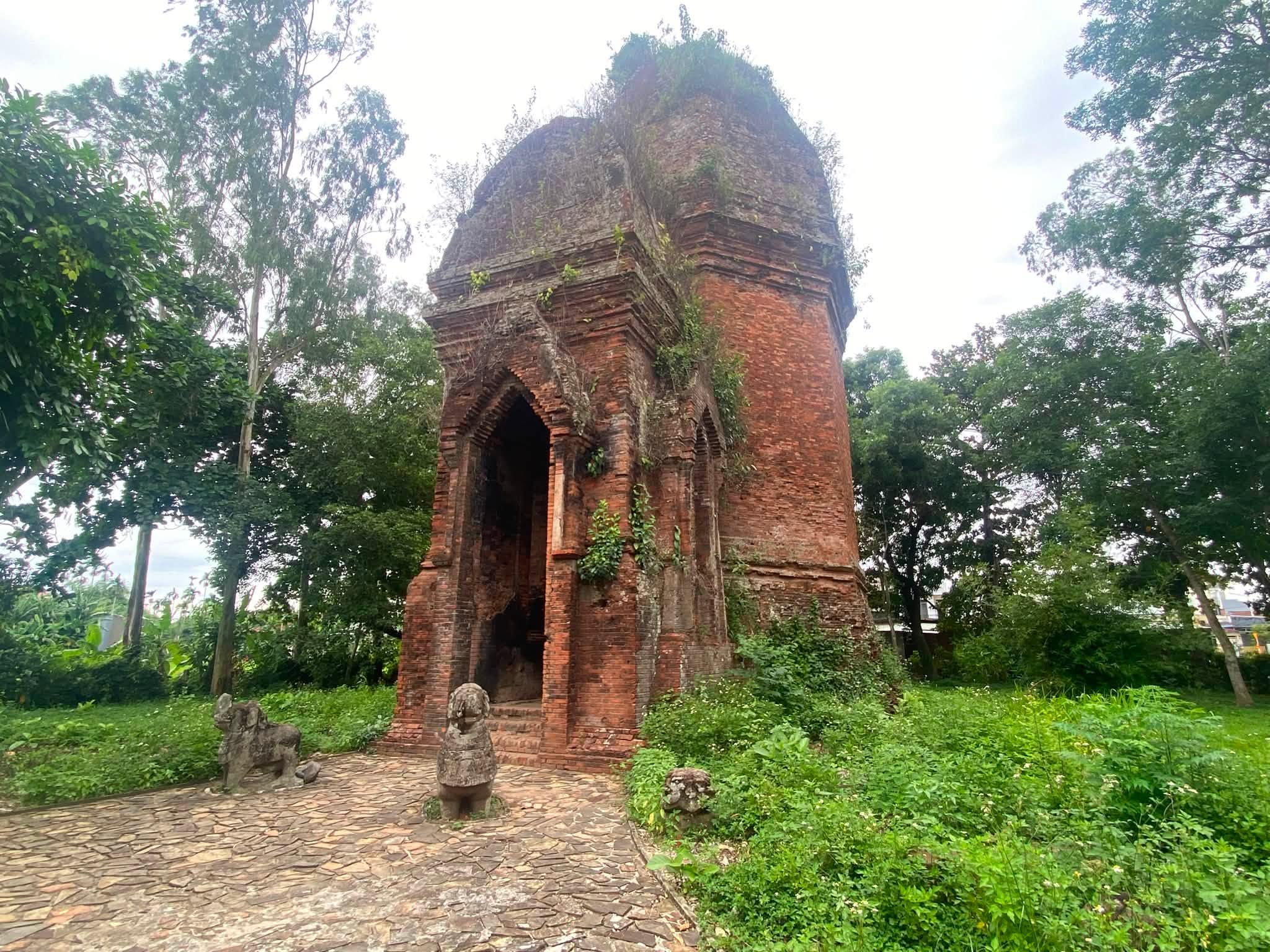
Surrounded by greenery and a peaceful residential setting, the ancient brick tower rises gracefully above its surroundings. Its weathered brickwork, restrained architectural details, and tranquil atmosphere give the monument a distinctive charm.
Rare Octagonal Architecture in the Cham Temple System
The most remarkable feature of Bang An Tower is its octagonal ground plan, an exceptionally rare architectural form among the surviving Cham temples in Vietnam.
Standing approximately 21 meters tall, the tower was constructed primarily from brick and consists of two main sections: an entrance vestibule and a sanctuary.
East-Facing Entrance Vestibule
The tower’s entrance vestibule extends eastward, with the main doorway also facing east. This orientation is commonly found in Cham religious architecture and reflects the spiritual traditions and religious beliefs of the ancient Champa civilization.
The vestibule connects the exterior with the sacred interior, establishing the principal axis of access to the sanctuary.
The Distinctive Octagonal Sanctuary
The sanctuary behind the entrance vestibule has an octagonal ground plan and consists of three principal architectural elements:
- Base: Provides a solid foundation for the entire structure.
- Tower body: Features eight relatively smooth surfaces with minimal decorative details.
- Roof: Consists of eight gently curving surfaces that gradually taper toward the summit, forming the tower’s distinctive pointed silhouette.
Unlike many Cham temples decorated with elaborate pilasters, false doors, and sculptural reliefs, Bang An Tower is distinguished by its restrained architectural ornamentation.
Horizontal moldings encircle the tower body and roof, while the carefully balanced proportions and smooth transition from the octagonal walls to the tapering summit create an elegant overall composition.
Viewed from a distance, the tower resembles a monumental Linga rising above the landscape. Some descriptions compare its silhouette to a giant bamboo shoot, emphasizing the originality of ancient Cham architectural design.
French archaeologist and scholar Henri Parmentier also recognized Bang An as a particularly distinctive structure within the architectural heritage of ancient Champa.
The Influence of Shiva Worship on Bang An Tower
Bang An Tower was once dedicated to Shiva, one of the principal deities of Hinduism and an important figure in the religious traditions of the Champa civilization.
In Shaivite worship, the Linga is a sacred symbol associated with divine creative power and the vitality of the universe. The Yoni, commonly represented in association with the Linga, symbolizes creation, fertility, and the origins of life.
At Bang An Tower, researchers have associated the sanctuary’s vertical form with the symbolism of the Linga. The overall architectural layout has also been interpreted in relation to the Yoni.
These interpretations suggest that the tower was not merely a place of worship but may also have embodied deeper symbolic meanings associated with Shiva worship.
The relationship between architectural form, sacred space, and religious symbolism contributes significantly to the monument’s distinctive place in the history of Champa art and architecture.
History and Dating of Bang An Tower
Bang An Tower is generally considered to be approximately one thousand years old. However, scholars have proposed different dates for its original construction.
Based on epigraphic evidence, some researchers suggest that the tower may have originated in the late 9th century.
Other studies, drawing on architectural style and associated sculptural artifacts, place its construction later, around the 11th century. Some specialist publications propose a date between the 11th and 12th centuries.
These differing interpretations highlight the challenges of dating ancient Champa monuments, particularly when historical inscriptions, archaeological evidence, and stylistic analysis do not provide entirely consistent conclusions.
Regardless of its precise construction date, Bang An Tower remains an important testament to the development of Cham architecture, art, and religious traditions in the historical region of Amaravati.
Despite centuries of historical change and exposure to natural elements, the tower has retained much of its original architectural form, making it one of the most unusual surviving Cham monuments in Central Vietnam.
Archaeological Artifacts and the Artistic Heritage of Champa
Beyond its remarkable octagonal architecture, Bang An Tower is associated with sandstone sculptures, including representations of sacred animals recorded in the area in front of the monument.
These artifacts provide valuable insights into Cham artistic traditions and religious practices.
The tower’s brick construction is another noteworthy feature. Carefully arranged layers of brick form its tall walls, octagonal sanctuary, and gracefully tapering roof.
The structure’s survival over many centuries demonstrates the technical knowledge and building expertise of ancient Cham craftsmen.
In addition to its architectural significance, Bang An Tower provides important material for studying settlement history, cultural exchange, and the development of Cham religious centers in Central Vietnam.
Bang An Tower on a Cham Heritage Journey Through Da Nang
One of Bang An Tower’s advantages is its convenient location, allowing visitors to combine it with other cultural destinations in southern Da Nang.
From Hoi An, the tower can easily be included in a morning or afternoon excursion without major changes to a travel itinerary.
While Hoi An Ancient Town tells the story of a thriving international trading port along the Thu Bon River, Bang An Tower reveals an earlier chapter of the region’s history, when Champa culture left a profound legacy through its religious architecture, sculpture, and spiritual traditions.
For travelers interested in history and cultural heritage, Bang An Tower can form part of a broader journey exploring Cham civilization in Central Vietnam, including:
- Da Nang Museum of Cham Sculpture: Home to an important collection of Champa sculptures and artistic masterpieces.
- Cham Cultural Sites in the Dien Ban Area: Offering further insights into ancient Cham settlements and religious activities.
- My Son Sanctuary: A renowned complex of ancient Cham temples recognized by UNESCO as a World Cultural Heritage Site.
Together, these destinations provide a broader understanding of the Champa civilization, from its sacred monuments and architectural achievements to its surviving sculptures and historical remains.
According to the information provided, Da Nang is also studying opportunities to connect Bang An Tower with cultural and tourism routes along the Thu Bon River and throughout the Hoi An and Dien Ban areas, helping promote the preservation and appreciation of local heritage.
Visiting Bang An Tower: Practical Tips
Bang An Tower is particularly appealing to travelers interested in ancient architecture, history, and peaceful cultural attractions.
Visitors can explore the monument’s distinctive octagonal form from different viewpoints, observe the ancient brickwork, and appreciate the traces of time preserved in its architectural details.
Morning and late afternoon are generally pleasant times to visit, especially for those interested in architectural photography.
As Bang An Tower is a protected historical monument, visitors should respect the site by keeping it clean, avoiding climbing on the structure, and refraining from touching, marking, or damaging its ancient brickwork and artifacts.
Important notice for 2026: According to the supplied information, conservation and restoration activities are taking place at Bang An Tower during 2026. Visitors are advised to check current access conditions, permitted areas, and any temporary restrictions before traveling to the site.
Quick Information About Bang An Tower
| Category | Information |
|---|---|
| Monument name | Bang An Tower (Bang An Cham Tower) |
| Current location | Bang An Residential Quarter, An Thang Ward, Da Nang City, Vietnam |
| Former administrative location | Dien An Ward, Dien Ban Town, Quang Nam Province |
| Road access | Near Provincial Road DT609 |
| Heritage classification | National Architectural and Artistic Monument |
| Estimated construction period | Various scholarly interpretations, from the late 9th to the 12th century |
| Height | Approximately 21 meters |
| Architectural highlight | Octagonal sanctuary with an eight-sided tapering roof |
| Religious association | Worship of Shiva in Hinduism |
| Main construction material | Brick |
| Distance from Hoi An Ancient Town | Approximately 14 km |
| Distance from central Da Nang | Approximately 30 km |
| Admission fee | VND 20,000 per person per visit, according to the supplied rate effective from August 10, 2026 |
| Visitor access | Conservation and restoration activities are taking place in 2026; check current conditions before visiting |
Bang An Tower: A Thousand-Year-Old Legacy in the Heart of Central Vietnam
Along the journey between central Da Nang and Hoi An, Bang An Tower offers a relatively small but culturally significant stop.
Its rare octagonal architecture, Linga-inspired silhouette, and ancient brickwork preserved through nearly a millennium give the monument a remarkable identity.
More than an architectural and artistic monument, Bang An Tower stands as a lasting testament to the presence and achievements of the Champa civilization in what is now Da Nang, adding another fascinating dimension to the cultural heritage of Central Vietnam.