Located in the mountainous areas west and northwest of Hoa Vang, Da Nang, the Hoa Vang District Party Committee Revolutionary Base is a historical site closely associated with the determined resistance of local forces and communities during Vietnam’s two wars of resistance against French colonial rule and American military intervention. The area once served as a strategic base for revolutionary leadership organizations, hosted important political conferences, and provided training for officials and soldiers during some of the most challenging periods of the country’s modern history.
Beyond its military and political significance, the revolutionary base preserves valuable historical traces that reflect the patriotism, solidarity, and resilience of the people of Hoa Vang. Today, it serves as an important place for historical education, remembrance, and the preservation of local revolutionary heritage.
Establishment and Early Development of the Revolutionary Base
According to an article by Tran Van Truong, former Secretary of the Hoa Vang District Party Committee, published on the official website of the Da Nang City Party Committee, revolutionary forces recognized the strategic advantages of the mountainous terrain west and northwest of Hoa Vang during the period 1947–1949.
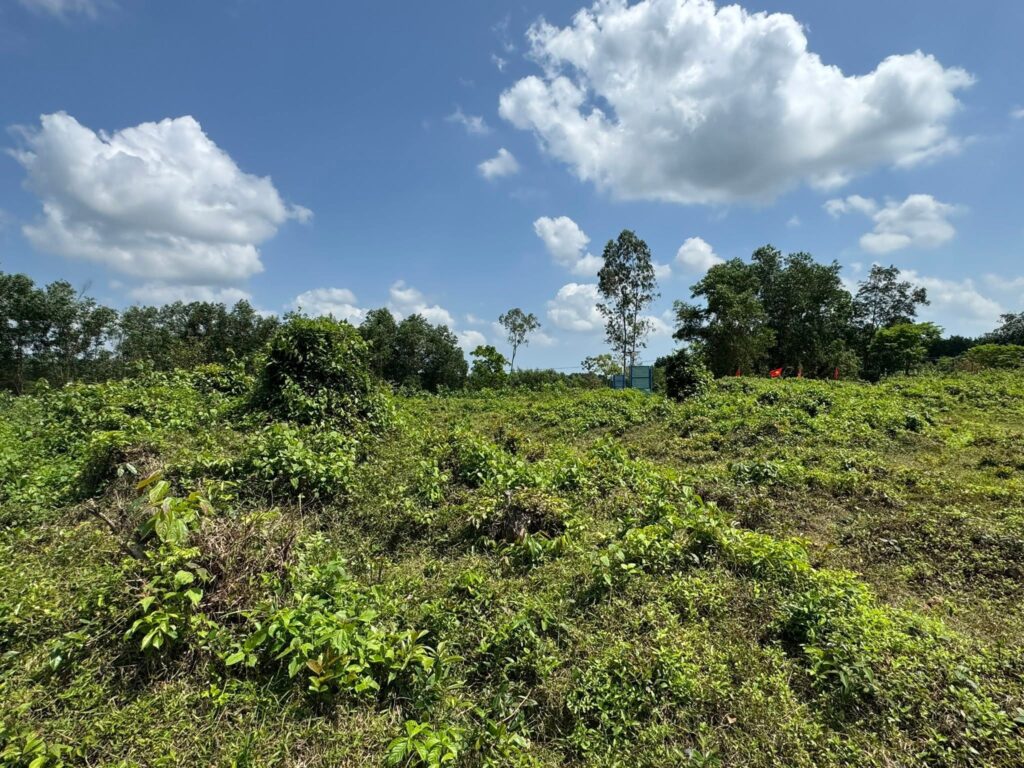
The dense forests, rugged terrain, and relatively remote location provided favorable conditions for establishing secure revolutionary bases and maintaining communication between different operational areas.
During this period, the Dong Xanh – Dong Nghe Revolutionary Base was established in what is now the Hoa Khuong area of Hoa Vang.
The district’s revolutionary leadership organizations were stationed there to facilitate command, coordination, and communication between the western and northwestern regions.
The establishment of this base marked an important step in the development of the local resistance movement.
It provided a relatively secure location from which revolutionary forces could organize activities, maintain contact with surrounding communities, and support the broader resistance effort.
In 1955, the Quang Da Provincial Party Committee decided to establish a shared provincial revolutionary base known as the Western Hoa Vang Revolutionary Base, with the codename B1.
From that time, the area became an important operational center for revolutionary activities in the northern and northwestern districts of the former Quang Da region.
It also provided a base for revolutionary leaders and organizations during periods of intense political repression and armed conflict.
Two locations known as Hon Da Da Nang and Hon Da Non Nuoc became closely associated with the revolutionary base during this period.
Over time, these landmarks came to symbolize the patriotism, determination, and resilience of local revolutionary forces and communities.
Their historical significance continues to be recognized as part of the collective memory of the resistance movement in Hoa Vang.
Phu Tuc – O Ray – Tong Coi: A Strategic Center of Revolutionary Leadership
In February 1960, the mountainous triangle formed by Phu Tuc, O Ray, and Tong Coi was selected as the resistance base of Hoa Vang District.
Its rugged forested terrain offered important natural protection for revolutionary leadership organizations and military units.
The area provided a strategic location for organizing activities, maintaining communication, and directing revolutionary operations throughout the district.
Among the revolutionary leaders who operated in this area were Mai Dang Chon, Tran Van Dan, Tran Van Hoa, and Dao Ngoc Chua, together with many other local officials and resistance members.
The difficult terrain helped protect revolutionary personnel from military sweeps, searches, and arrests carried out during the anti-communist campaigns of the Ngo Dinh Diem administration.
These campaigns, commonly referred to in Vietnamese historical accounts as “to cong – diet cong”, or anti-communist denunciation and suppression campaigns, created severe challenges for revolutionary organizations operating in the region.
Under such circumstances, the Phu Tuc – O Ray – Tong Coi area became particularly important for maintaining leadership continuity and protecting personnel.
Throughout much of the two resistance periods, the area retained a strategic position within the revolutionary network of Hoa Vang.
Although its specific functions and operational boundaries changed over time, it remained one of the district’s most important revolutionary bases.
The mountainous landscape not only provided natural defensive advantages but also supported the organization of political activities, military training, and communication between revolutionary units.
The continued use of this area demonstrates its significance in the history of the resistance movement in the former Quang Da region.
Important Events During the Resistance Against American Military Intervention
Beginning in March 1965, large numbers of American combat troops were deployed to South Vietnam as the United States implemented its strategy of direct military intervention, known in Vietnamese historical accounts as the “Local War” strategy (Chiến tranh cục bộ).
Against this background, the Hoa Vang District Party Committee Revolutionary Base became an important location for directing, organizing, and developing the local resistance movement.
During 1965–1966, the base hosted numerous conferences, Party congresses, and political and military training programmes for officials and soldiers.
These activities played an important role in strengthening organizational capacity and preparing local forces for the increasingly intense conflict.
Several significant events recorded in the historical materials include:
- March 1965: The Fourth Congress of the Hoa Vang District Party Organization was held at the district Party School, attended by 50 delegates.
- April 1965: The District Military Command organized a programme to study strategic policies and provide training in methods of fighting American forces.
- June 1966: The Fifth Congress of the Hoa Vang District Party Organization was held with 250 delegates. The congress was attended and guided by Tran Than, representing the Provincial Party Committee.
These events demonstrate that the revolutionary base served a purpose far beyond providing physical shelter for resistance forces.
It was also a center for political leadership, strategic planning, military preparation, and organizational development.
The ability to hold major conferences and training programmes under difficult wartime conditions reflects the importance of the base within the district’s revolutionary network.
The site therefore represents both the operational challenges faced by local resistance organizations and their determination to maintain coordinated leadership throughout the conflict.
Continued Revolutionary Activities During 1967–1968
In October 1967, the Quang Da Special Zone Party Committee decided to divide Hoa Vang into three administrative and operational zones: Zone I, Zone II, and Zone III, all placed under the Quang Da Special Zone.
Following this reorganization, the leadership organizations and administrative offices of Zones I and III relocated their bases to the lowland areas under their respective responsibility.
For Zone II, corresponding to the Hoa Vang area, revolutionary leaders decided to continue using the Phu Tuc base as their operational center.
Officials including Le Tich, Nguyen Ba Tung, Nguyen Thai, and Nguyen Van Chi continued to work in the area during 1967–1968 and subsequent periods.
This decision reflected the continuing strategic importance of the Phu Tuc base despite changes in the organizational structure of revolutionary activities.
Over different stages of the resistance, the Phu Tuc – O Ray – Tong Coi base witnessed the activities of numerous revolutionary officials.
These included senior figures associated with the Provincial Party Committee and the Party Committee of Military Region 5, such as Ho Nghinh and Tran Than.
Their presence further illustrates the role of the area within the wider revolutionary base network of Quang Da.
The site was therefore not merely a local district headquarters but also formed part of a broader system of revolutionary leadership and coordination.
Its history reflects the close relationship between local resistance organizations and higher-level revolutionary authorities during the conflict.
Exhibition House and Historical Remains at the Revolutionary Base
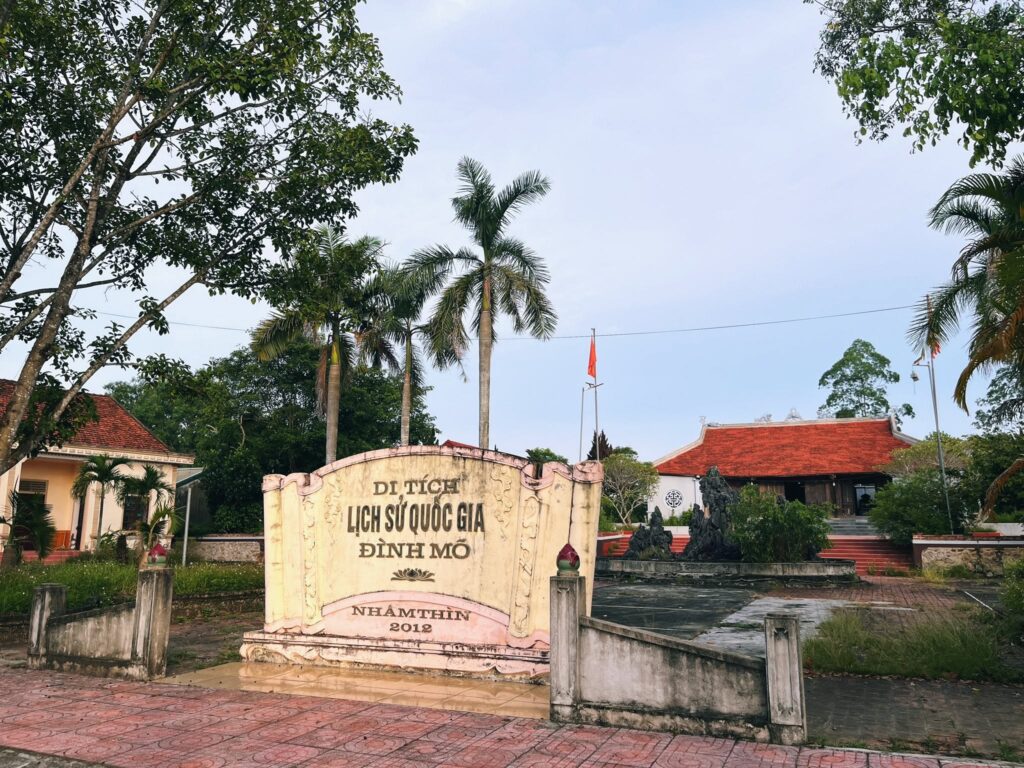
To preserve and promote the historical significance of the site, the Da Nang authorities began constructing the Hoa Vang District Party Committee Revolutionary Base Exhibition House in 2003.
The project had a reported investment of VND 3.345 billion and was completed in 2004.
The heritage complex was developed to include an exhibition house, a series of steps leading to the historical memorial stele, and preserved landmarks associated with Hon Da Da Nang and Hon Da Non Nuoc.
These facilities were intended to help visitors better understand the establishment, development, and historical role of the revolutionary base.
The exhibition space provides a setting for introducing the history of the local resistance movement and the experiences of revolutionary officials and soldiers who operated in the mountainous area.
The preserved landmarks also help connect historical accounts with the physical landscape in which many important events took place.
For visitors, these historical traces provide a tangible connection to the challenges faced by revolutionary forces during wartime.
The exhibition house and surrounding memorial features also serve educational and commemorative purposes.
They provide opportunities for students, researchers, local residents, and visitors to learn about the history of Hoa Vang and the contributions of earlier generations.
Through exhibitions, historical interpretation, and remembrance activities, the site contributes to preserving the collective memory of the district’s revolutionary past.
Scientific Conference on the Historical Significance of the Base
On June 7, 2018, Da Nang organized a scientific conference entitled “The Position and Role of the Hoa Vang District Party Committee Revolutionary Base.”
The conference featured nearly ten presentations by former resistance participants who had been active in Hoa Vang during the war against American military intervention, as well as historical researchers.
The presentations focused on three principal areas of study:
- Clarifying the establishment, construction, and development of the Hoa Vang District Party Committee Revolutionary Base.
- Examining the relationship between the revolutionary base and neighboring districts and communes, the Trung Mang Resistance Zone, and smaller revolutionary strongholds in the lowland areas.
- Proposing solutions for preserving, protecting, and promoting the historical significance of the base in contemporary society.
The conference contributed additional documentation and perspectives to the study of local revolutionary history.
It also emphasized the importance of combining heritage conservation with historical research, education, and public interpretation.
The participation of former resistance members was particularly meaningful because their recollections provided firsthand perspectives on the activities and conditions associated with the base.
Such accounts can help supplement written records and contribute to a more comprehensive understanding of the site’s historical role.
The conference therefore represented an important effort to preserve historical knowledge while encouraging continued research into the revolutionary heritage of Hoa Vang.
Investment in Heritage Preservation and Development
According to the cited historical article, the Da Nang People’s Committee approved an investment policy for a project to preserve and develop the Hoa Vang District Party Committee Revolutionary Base.
The project had a reported total investment of VND 11.7 billion, funded through the city’s budget.
The Hoa Vang District People’s Committee was assigned responsibility for project investment and management during the 2019–2021 period.
The project’s objectives included protecting historical remains, improving the interpretation of the site, and creating suitable conditions for commemorative and educational activities.
It also aimed to support public awareness of the revolutionary base and introduce its historical significance to a wider audience.
The preservation of historical landmarks and the organization of educational programmes were considered important ways to pass on knowledge of the resistance movement to younger generations.
Through these activities, the site could continue to promote awareness of patriotism, solidarity, determination, and the sacrifices made by earlier generations in the struggle for national independence.
The historical investment figures and project timeline refer to the approved plans described in the source materials and do not, by themselves, confirm the present completion status of every proposed conservation component.
Historical Significance and Educational Value
The Hoa Vang District Party Committee Revolutionary Base is an important historical testament to the role of mountainous terrain in protecting revolutionary forces and maintaining resistance activities in central Vietnam.
Across the two resistance periods, the area served as a leadership center, a venue for important political conferences, a training location, and an operational base for numerous revolutionary officials.
Its history illustrates how local geography influenced the organization and development of resistance movements.
The surrounding forests and mountains provided natural protection, while the base’s strategic location helped maintain communication between different revolutionary areas.
At the same time, the site’s significance extends beyond military strategy and political organization.
It preserves stories of loyalty, solidarity, endurance, and determination among the people of Hoa Vang.
The individuals who worked and fought in the area contributed to a broader historical movement that shaped the modern history of Vietnam.
Today, the preservation of the revolutionary base is important for historical research, local heritage education, and the commemoration of those who dedicated or sacrificed their lives in the struggle for national independence.
By maintaining the surviving landmarks and communicating their historical meaning, the site helps future generations understand the challenges faced by earlier communities and the historical experiences that shaped the region.
The Hoa Vang District Party Committee Revolutionary Base is not only a historical site associated with wartime leadership and resistance activities but also a place of collective remembrance. Its preserved landmarks, historical records, and commemorative spaces continue to reflect the patriotism, resilience, and solidarity of the people of Hoa Vang, making it a meaningful part of Da Nang’s revolutionary heritage.
Quick Information
| Item | Details |
|---|---|
| Heritage name | Hoa Vang District Party Committee Revolutionary Base |
| Vietnamese name | Khu căn cứ cách mạng Huyện ủy Hòa Vang |
| Heritage category | Revolutionary historical site |
| Principal base area | Phu Tuc – O Ray – Tong Coi |
| Historical location | Hoa Vang, formerly part of the Quang Da region |
| Early revolutionary base | Dong Xanh – Dong Nghe |
| Early establishment period | 1947–1949 |
| Western Hoa Vang Base established | 1955 |
| Base codename | B1 |
| Phu Tuc – O Ray – Tong Coi selected as district base | February 1960 |
| Historical period | Associated with Vietnam’s two wars of resistance |
| Major historical events | District Party congresses, military training programmes, and revolutionary leadership activities |
| Notable landmarks | Hon Da Da Nang and Hon Da Non Nuoc |
| Preserved facilities | Exhibition house, memorial stele, and historical landmarks |
| Exhibition house construction | Began in 2003 |
| Exhibition house completion | 2004 |
| Exhibition house investment | VND 3.345 billion |
| Scientific conference | June 7, 2018 |
| Conservation investment plan | VND 11.7 billion |
| Planned project period | 2019–2021 |
| Outstanding significance | Revolutionary history, wartime leadership, heritage preservation, and historical education |