Located in Thanh Khe Ward, Da Nang, Mother Nhu’s House Historical Site commemorates the sacrifice of Le Thi Danh, a patriotic Vietnamese mother, and the determined resistance of the District II urban guerrilla fighters during the battle of December 26, 1968.
During the war against American military intervention, this modest family home served as a secret revolutionary shelter, providing refuge for underground operatives and urban guerrilla fighters operating in an area controlled by opposing forces. The battle at Mother Nhu’s house and the nearby home of Mother Hien became an important event in Da Nang’s revolutionary history, reflecting the courage, resourcefulness, and determination of those who risked their lives to protect their comrades.
Today, the site is an important place of remembrance, honoring those who sacrificed their lives during the struggle for national independence. It also serves as a destination for historical education, helping younger generations understand the experiences and contributions of local communities during the war.
Location and Origins of Mother Nhu’s House
Mother Nhu’s House Historical Site is located in Alley K748, Tran Cao Van Street, Thanh Khe Ward, Da Nang, Vietnam.
According to the supplied historical materials, the site covers approximately 636 square meters and includes a memorial house, the graves of Mother Nhu and her husband, and a commemorative stele marking the events of December 26, 1968.
Mother Nhu’s birth name is recorded as Le Thi Danh, although some historical accounts use the spellings Le Thi Danh with different Vietnamese diacritics, corresponding to Lê Thị Dảnh, Lê Thị Đảnh, or Lê Thị Dãnh.
She was born in 1912 in Thanh Khe Village, into a poor fishing family.
Despite variations in the spelling of her name, Mother Nhu is remembered by the people of Da Nang as a symbol of patriotism, resilience, compassion, and self-sacrifice.
Beginning in 1967, her family constructed two secret underground shelters inside their home to protect members of the District II urban guerrilla force.
During a period of intense conflict, the house became an important underground revolutionary base, helping protect personnel and sustain resistance activities within an area controlled by opposing forces.
Thanh Khe occupied a strategically important position in the revolutionary movement in Da Nang.
Together with other underground locations in Phu Loc and neighboring areas, Mother Nhu’s house formed part of a network of secret shelters and support facilities that enabled revolutionary forces to maintain their presence within the city.
Mother Nhu’s House in Thanh Khe’s Underground Revolutionary Network
Following the Tet Offensive of 1968, revolutionary organizations operating within Da Nang continued to consolidate and expand their underground networks under the direction of the Quang Da Special Zone Party Committee.
Thanh Khe became one of the important areas for revolutionary activities near the city’s urban approaches.
District II urban guerrilla fighters were assigned to operate in areas controlled by opposing forces.
Their activities included attacks on selected opposing personnel and installations, disrupting local security operations, weakening opposing military capabilities, and developing support networks among residents.
These operations required carefully organized systems of shelter, communication, transportation, and logistical assistance.
Within this network, the homes of Mother Nhu and Mother Hien played particularly important roles.
The two families provided more than temporary accommodation. They helped protect underground personnel, supported their daily needs, and assisted with communication and operational arrangements.
According to the historical materials, revolutionary forces conducted several operations in the area over a period of less than three months, while gradually strengthening their presence among local communities.
However, underground activities carried a constant risk of discovery, particularly when informants revealed the locations of secret shelters.
It was under these circumstances that Mother Nhu’s modest home became the scene of a fierce confrontation that would leave a lasting mark on Da Nang’s wartime history.
The Battle of December 26, 1968
Guerrilla Fighters Take Shelter in the Two Houses
On the night of December 23, 1968, following an attack on a security outpost in the Phu Loc area, several District II urban guerrilla fighters were brought to secret shelters at Mother Nhu’s house and the nearby home of Mother Hien, whose real name was Le Thi Hien.
According to the supplied accounts, the fighters were divided between the two houses to maintain secrecy and facilitate their activities.
However, the underground network was subsequently exposed after information was reportedly passed to the opposing forces by an informant.
Shortly after 5:00 a.m. on December 26, 1968, opposing forces surrounded both houses and blocked their entrances and exits.
The operation was intended to capture or eliminate the guerrilla fighters believed to be hiding inside.
Mother Nhu Refuses to Reveal the Secret Shelters
When the forces entered Mother Nhu’s house, they detained and interrogated her son, Pham Phu Long, in an attempt to obtain information about the underground fighters.
According to the historical account, Long was beaten until he lost consciousness but refused to disclose information that could endanger the hidden personnel.
The opposing forces then questioned Mother Nhu herself.
Despite threats and physical violence, she refused to reveal the locations of the fighters concealed in the underground shelters.
Unable to obtain the information they sought, the forces shot and killed her.
Mother Nhu died while protecting the secrecy of the revolutionary base and the people taking refuge in her home.
Her sacrifice became a lasting symbol of the determination and loyalty of local civilians who supported the revolutionary movement in Thanh Khe.
The Guerrilla Fighters’ Counterattack
While the houses were surrounded, the fighters hiding in the underground shelters prepared to defend themselves.
When an opportunity arose, they opened the concealed entrances and launched a surprise counterattack, using their weapons to resist the surrounding forces and attempt to break through the encirclement.
At Mother Nhu’s house, the historical materials identify Nguyen Thi Tam, Nguyen Van Hue, and Tran Thanh Trung as fighters who emerged from the shelter and engaged in combat.
At Mother Hien’s nearby home, other fighters also mounted resistance from defensive positions within the building.
The confrontation unfolded in a densely populated residential area, with the guerrilla fighters facing a much larger surrounding force.
With assistance from local revolutionary supporters and residents, the fighters attempted to coordinate their movements, move between positions, and escape the encirclement.
According to the supplied accounts, some fighters succeeded in reaching safer revolutionary-controlled areas, while others were captured and subsequently imprisoned.
The battle resulted in casualties among the opposing forces and became a notable event in the history of Da Nang’s urban guerrilla movement.
The historical materials record that Mother Nhu and Nguyen Van Hue were killed during the confrontation.
Their deaths became central to the commemorative significance of the site.
Historical Artifacts Preserved at Mother Nhu’s House
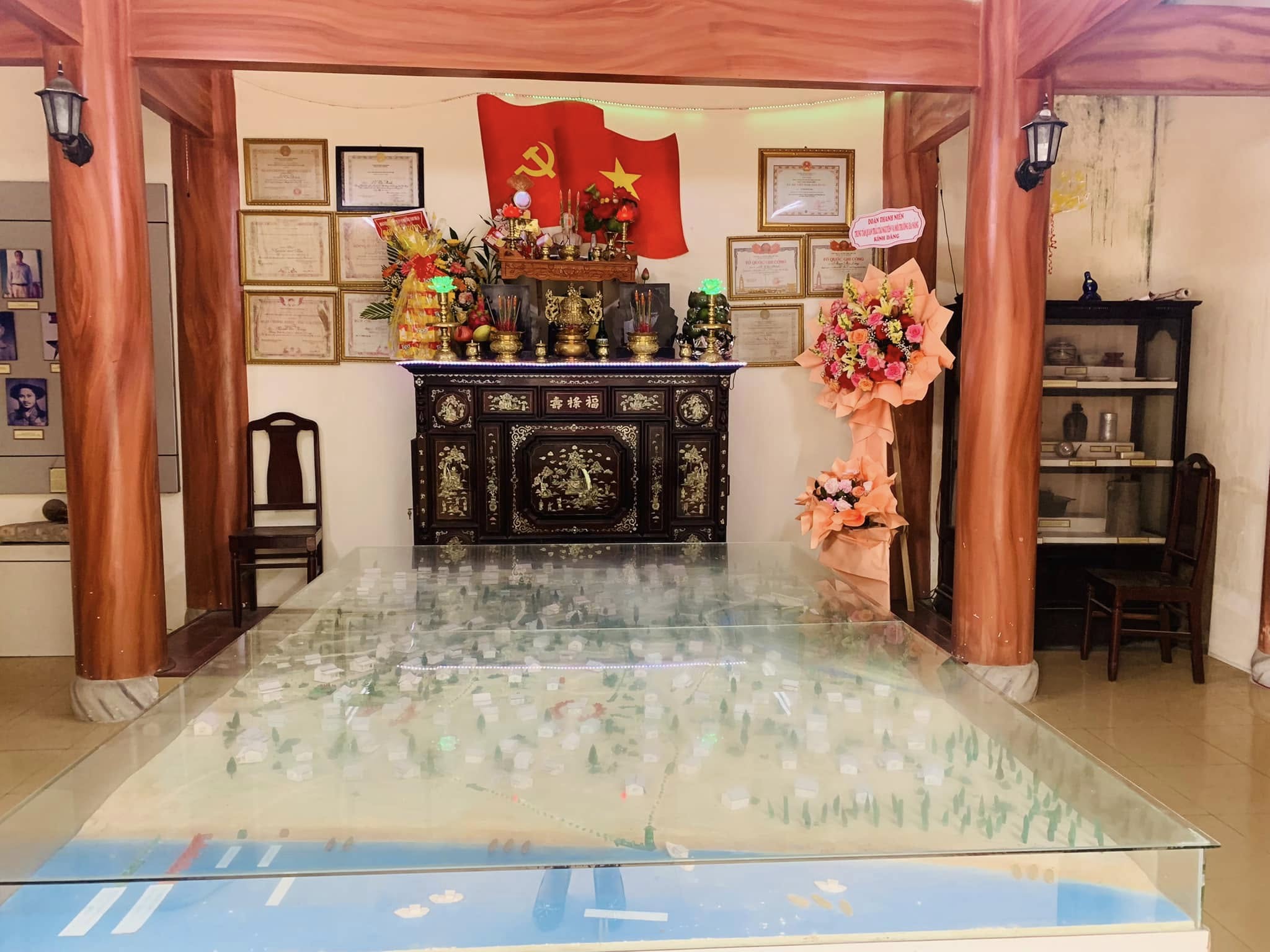
In 1985, local authorities built a memorial house on the site of the original family home to commemorate Mother Nhu and the District II urban guerrilla fighters.
The initial memorial building was a modest single-story structure containing an altar, a portrait of Mother Nhu, and an exhibition area for historical artifacts.
Today, the site preserves documents and objects associated with the family’s daily life and the events of December 26, 1968.
Mother Nhu’s Clothing and Household Belongings
Among the most meaningful artifacts are everyday objects once used by Mother Nhu.
These items help visitors understand how an ordinary working-class household became part of a secret revolutionary network during wartime.
According to the historical materials, the collection includes Mother Nhu’s clothing, bowls, plates, and a metal food container that she used to deliver meals to the fighters hiding underground.
Although simple in appearance, these objects represent the quiet but essential support provided by civilians to underground revolutionary forces.
They also offer a personal perspective on Mother Nhu’s life, showing how daily household activities became closely connected to the dangerous work of protecting resistance personnel.
Secret Shelter Entrances and Battle Diorama
The underground shelter system is among the most distinctive historical features associated with the site.
These concealed spaces provided protection for revolutionary officials and fighters during periods of surveillance and military operations.
The memorial also includes a battle diorama illustrating the counterattack carried out by the urban guerrilla fighters.
Through this reconstruction, visitors can gain a clearer understanding of the layout of the houses, the positions of the fighters, and the circumstances surrounding the confrontation.
The combination of physical artifacts and historical interpretation helps explain the important role of civilian safe houses within Da Nang’s underground revolutionary network.
Memorial Stele and Family Graves
A commemorative stele within the site records the events of December 26, 1968.
The graves of Mother Nhu and her husband are located near the memorial house, connecting the place of remembrance with the location of the family’s wartime activities.
Together, these features create a solemn commemorative space where residents and visitors can offer incense and pay their respects.
The memorial honors not only Mother Nhu’s sacrifice but also the broader contributions of civilians who supported underground revolutionary activities during the conflict.
Restoration and National Historical Relic Recognition
Over the years, Mother Nhu’s House Historical Site has undergone conservation and restoration work intended to protect its historical significance and improve conditions for visitors.
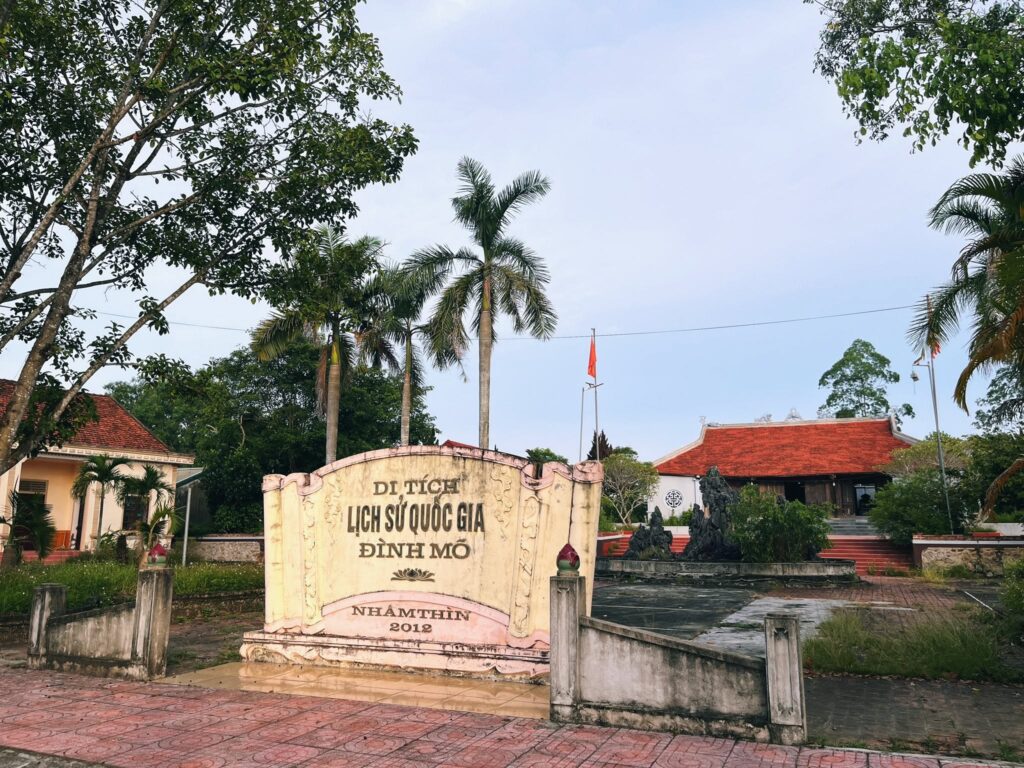
On December 28, 2009, the Minister of Culture, Sports and Tourism issued Decision No. 4699/QD-BVHTTDL, officially recognizing Mother Nhu’s House as a National Historical Relic.
The designation acknowledged the historical importance of the site, particularly its association with Mother Nhu’s sacrifice and the battle involving the District II urban guerrilla fighters.
It also provided an important foundation for continued preservation and educational activities.
According to the supplied materials, Da Nang implemented a restoration and conservation project during 2023–2025, with reported funding of more than VND 1.7 billion.
The project was associated with activities commemorating the 55th anniversary of the battle involving Mother Nhu and the Thanh Khe fighters.
The conservation work aimed to maintain the memorial environment, protect historical artifacts, and improve opportunities for visitors to learn about the site.
These efforts also help ensure that the story of Mother Nhu and the urban guerrilla fighters remains accessible to younger generations.
Monument to Mother Nhu and the Seven Thanh Khe Fighters
In addition to the historical house site, Mother Nhu and the urban guerrilla fighters are commemorated by the Monument to Mother Nhu and the Seven Thanh Khe Fighters, located along Dien Bien Phu Street, one of Da Nang’s major thoroughfares.
The monument symbolizes the courage, determination, and sacrifices of those involved in protecting underground revolutionary activities under dangerous circumstances.
While the memorial house preserves the physical setting associated with daily life, secret shelters, and the historical battle, the monument provides a broader public space for remembrance within the modern city.
Together, the two locations help preserve the memory of ordinary individuals whose actions became part of Da Nang’s wartime history.
They also demonstrate how historical remembrance can be maintained through both preserved heritage sites and public monuments.
Historical Significance and Educational Value
Mother Nhu’s House Historical Site illustrates the importance of underground civilian support networks in Da Nang during the war.
Within this small family home, ordinary activities such as preparing meals, receiving visitors, and maintaining a household became essential parts of a clandestine support system.
The site also highlights the role of local residents in protecting revolutionary personnel and sustaining resistance activities.
Mother Nhu’s sacrifice demonstrates how wartime courage was not limited to soldiers on the battlefield.
It could also be expressed through the determination of civilians to protect others, preserve confidential information, and resist intimidation despite the risks to their own lives.
Today, the historical site welcomes commemorative visits and serves as a place where students, community groups, and travelers interested in Da Nang’s history can learn about the events of December 1968.
The stories of Mother Nhu, her family, and the District II urban guerrilla fighters provide insight into the human experiences of war and the sacrifices associated with Vietnam’s struggle for independence.
The preserved artifacts, memorial structures, and historical accounts also encourage reflection on the importance of peace and the responsibility to protect historical memory.
Amid the modern streets of Da Nang, the memorial house tucked away in an alley off Tran Cao Van Street remains a meaningful historical landmark.
It preserves the memory of a wartime confrontation while honoring the courage, compassion, and quiet sacrifices of local residents.
Mother Nhu’s House is more than a preserved wartime location. It is a place of remembrance that tells the story of an ordinary mother whose courage and sacrifice became part of Da Nang’s revolutionary history. Through its historical artifacts, memorial spaces, and educational activities, the site continues to connect present-day visitors with the experiences of those who lived through the conflict.
Quick Information
| Item | Details |
|---|---|
| Heritage name | Mother Nhu’s House Historical Site |
| Vietnamese name | Di tích Địa điểm nhà Mẹ Nhu |
| Heritage category | National Historical Relic |
| Historical figure | Mother Nhu, commonly recorded as Le Thi Danh |
| Year of birth | 1912 |
| Address | Alley K748, Tran Cao Van Street, Thanh Khe Ward, Da Nang, Vietnam |
| Site area | Approximately 636 m², according to the supplied materials |
| Major historical event | Battle of December 26, 1968 |
| Historical significance | Secret revolutionary shelter and urban guerrilla resistance |
| Associated location | Mother Hien’s House |
| Key artifacts and features | Memorial house, secret shelters, Mother Nhu’s personal belongings, battle diorama, memorial stele, and family graves |
| Memorial house established | 1985 |
| National Historical Relic designation | December 28, 2009 |
| Recognition decision | No. 4699/QD-BVHTTDL |
| Reported restoration period | 2023–2025 |
| Related monument | Monument to Mother Nhu and the Seven Thanh Khe Fighters, Dien Bien Phu Street |
| Outstanding values | Revolutionary history, civilian sacrifice, remembrance, and historical education |