Nestled along the peaceful Truong Giang River, Tan Phu Clam Village, located in Tan Phu Quarter, Quang Phu Ward, Da Nang City, is a traditional riverside community closely associated with freshwater clam harvesting and processing. For generations, this occupation has provided an important source of livelihood while shaping the cultural identity of local residents.
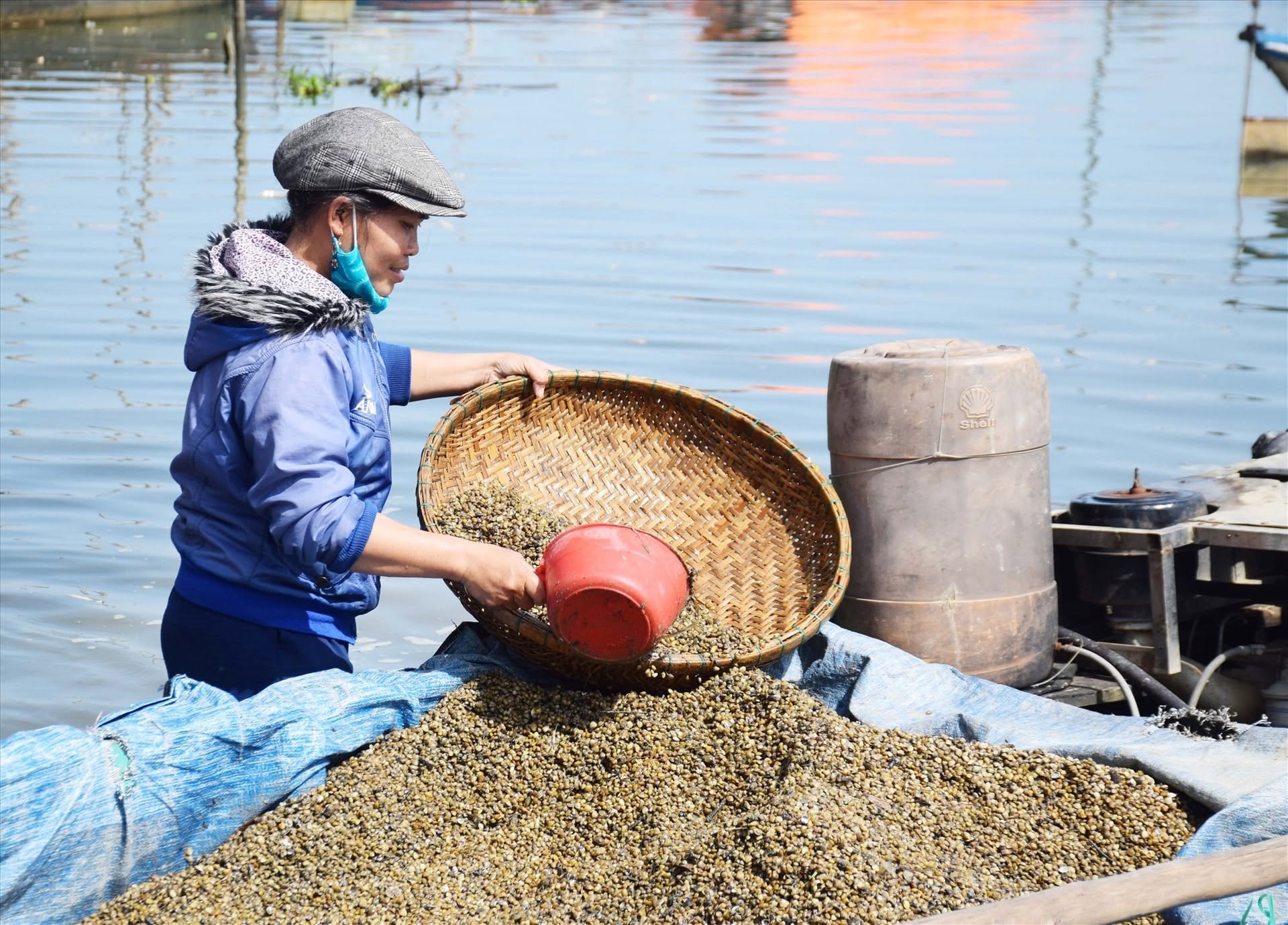
Every morning, as the first sunlight reaches the river, motorized boats set out to collect clams from the Ban Thach and Truong Giang rivers. Along the riverbanks, processing stoves are lit, boats arrive with freshly harvested clams, and workers begin their daily tasks. Together, these familiar scenes create a distinctive picture of rural life in Central Vietnam.
Behind every batch of processed clams lies a demanding series of activities requiring experience, patience, and an understanding of the river environment.
In December 2023, Tan Phu’s traditional clam harvesting and processing occupation was officially recognized as a traditional craft village, marking an important milestone in acknowledging and preserving the community’s longstanding livelihood and cultural traditions.
Tan Phu Clam Village and Life Along the Truong Giang River
Tan Phu is a riverside residential community where clam harvesting and processing have developed in close connection with the natural conditions of the Ban Thach and Truong Giang rivers.
These waterways have long supported transportation, fishing, food production, and everyday life in the coastal lowlands of the former Quang Nam region.
According to local records, Tan Phu Quarter has more than 300 households, over half of which depend primarily on clam harvesting for their livelihoods.
The occupation provides income not only for those who collect clams directly from the river but also for workers involved in transportation, purchasing, boiling, shell separation, and preliminary processing.
For local residents, clam harvesting is more than an economic activity. It is a traditional occupation sustained through generations of practical experience.
Harvesters must understand river currents, the locations of natural clam beds, seasonal changes, and the conditions that influence clam populations.
Clams occur naturally in suitable areas of the Ban Thach and Truong Giang rivers and may be harvested at different times throughout the year.
However, the busiest harvesting season generally extends from April to July, when river activities and processing operations become particularly lively.
During these months, boats regularly travel between harvesting grounds and riverside collection points, bringing fresh clams to local processing facilities.
This daily rhythm of river-based work has become an integral part of Tan Phu’s community identity.
From Traditional Clam Raking to Riverside Processing Workshops
In the past, clam harvesting relied heavily on manual labor.
Local residents would enter the river and remain partly submerged while using traditional raking tools to collect clams from the riverbed.
The work demanded physical endurance, patience, and an ability to identify productive harvesting areas.
Over time, harvesting methods gradually changed.
Many households began using motorized boats, making transportation and collection more convenient while reducing some of the physical demands associated with traditional methods.
According to figures recorded in local village materials, a harvesting boat could collect approximately 30 to 35 ang, a traditional local unit of volume, of clams per day, depending on weather conditions and the availability of natural resources.
The harvested clams are then transported to processing facilities along the river.
Local records identify approximately seven clam-processing workshops operating regularly in Tan Phu.
Most are located close to the riverbank, allowing boats to unload their catches and making the transportation of raw materials more efficient.
Processing activities often begin early in the morning.
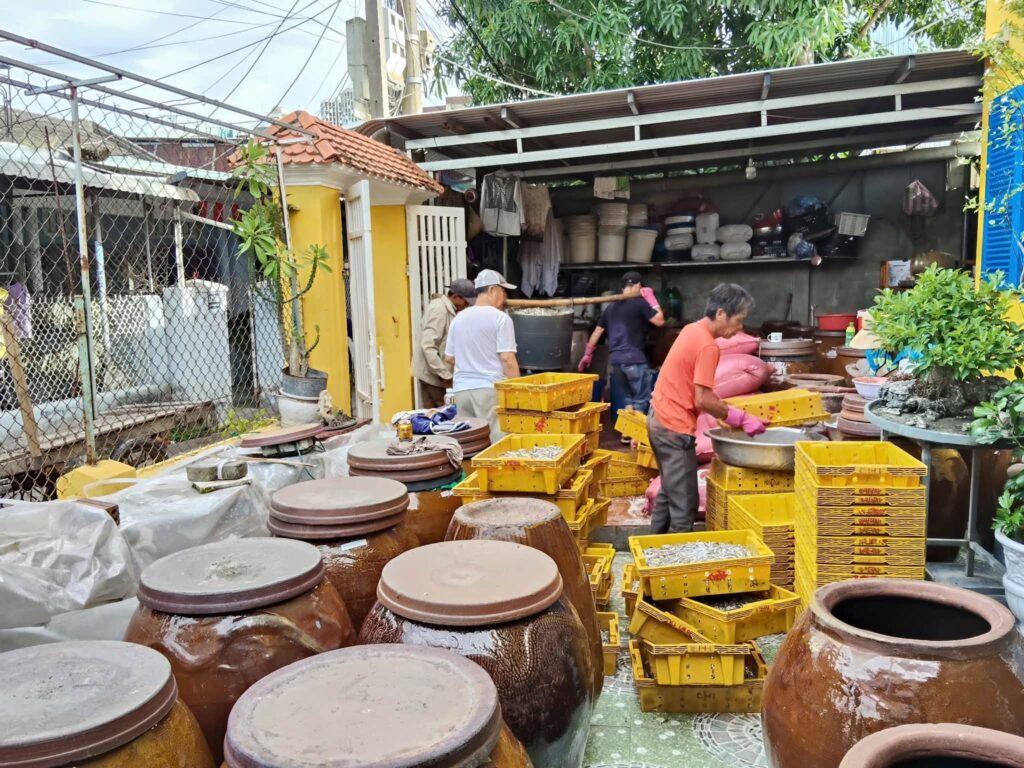
After arriving at the workshops, the clams undergo several stages, including cleaning, boiling, separating the shells, and collecting the edible clam meat.
Each stage requires coordination among workers and familiarity with the characteristics of the raw materials.
Boiling and shell separation are particularly important because they directly affect processing efficiency and the quality of the finished product.
Experienced workers know how to control cooking times, handle the clams, and separate the meat while minimizing waste.
The riverside workshops are therefore more than places of food production.
They are also shared working spaces where family members and neighbors cooperate, exchange practical knowledge, and maintain relationships developed through years of working together.
The connection between harvesting activities on the river and processing operations along its banks has created a distinctive local production system that supports many Tan Phu households.
Tan Phu Clams in the Culinary Culture of Central Vietnam
Clams are a familiar ingredient in the cuisine of Central Vietnam, particularly in communities living along rivers and estuaries.
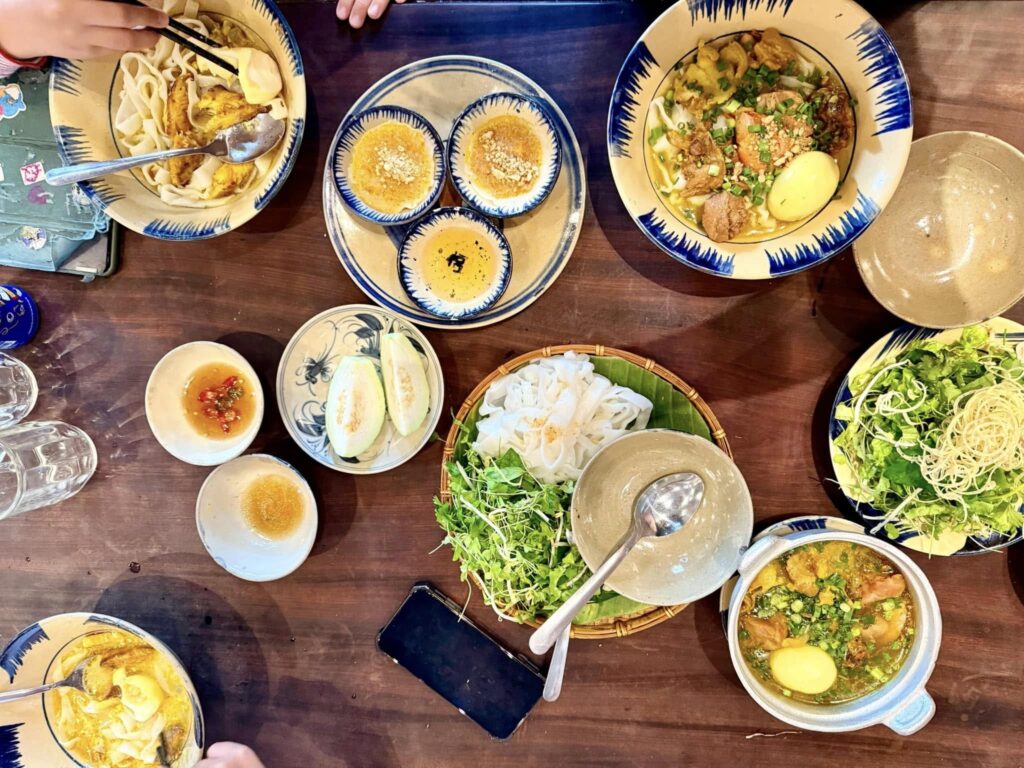
Freshly processed clam meat can be used to prepare a variety of traditional dishes, including clam soup, stir-fried clams, clam porridge, and simple home-style meals combining clams with local vegetables and seasonings.
For Tan Phu residents, clams represent more than a natural food resource.
They are associated with family memories, everyday meals, and a way of life shaped by the river.
A simple clam dish reflects the work of many people, from those who harvest clams in the river to the workers who clean, cook, and prepare them at riverside workshops.
This connection between local produce, traditional occupations, and daily life gives Tan Phu’s clam village its cultural significance.
The occupation also demonstrates how communities in the former Quang Nam region have adapted to their natural surroundings, developed production methods suited to local conditions, and maintained strong relationships through shared labor.
Although clam harvesting is primarily an economic activity, its continued practice contributes to the preservation of the region’s culinary traditions and riverside cultural identity.
Traditional Craft Village Recognition and Conservation Challenges
In December 2023, Tan Phu’s clam harvesting and processing occupation received official recognition as a traditional craft village.
The recognition was an important milestone for the local community, acknowledging generations of experience and the occupation’s contribution to livelihoods and cultural identity.
It also created opportunities for promoting local products, supporting traditional production, and raising awareness of the village’s heritage.
Nevertheless, Tan Phu’s clam industry faces several challenges, particularly the decline of natural clam resources.
According to local reports, water pollution has affected the environmental conditions necessary for clams to grow and reproduce.
Some river areas that once supported abundant clam populations have experienced significant declines in natural resources.
In addition, the use of high-powered harvesting equipment, prohibited tools, and destructive collection methods can place further pressure on clam populations and the surrounding river ecosystem.
These problems highlight the need for improved water quality, responsible harvesting practices, and more effective management of natural aquatic resources.
The long-term future of Tan Phu’s traditional occupation depends on balancing economic needs with environmental protection.
Maintaining natural clam beds, preventing destructive harvesting, and improving hygiene and processing conditions are important steps toward a more sustainable local industry.
In the longer term, introducing the village through cultural tourism, community-based experiences, and regional culinary promotion may provide additional opportunities for local development.
Such activities should remain compatible with the everyday lives of residents and the need to protect the river environment.
Despite the challenges brought by environmental changes and modern economic development, the people of Tan Phu continue to preserve their traditional occupation.
Boats returning from the river, the warmth of working stoves, and the steady movements of workers separating clam meat tell a story that extends beyond the need to earn a living.
They reflect the resilience, knowledge, and cultural memory of a community whose identity has been shaped by the Truong Giang River for generations.
Today, Tan Phu Clam Village remains a distinctive example of Central Vietnam’s traditional riverside livelihoods, where the relationship between people, local food, and the natural environment continues to define community life.
Basic Information
| Item | Details |
|---|---|
| Village name | Tan Phu Clam Village |
| Location | Tan Phu Quarter, Quang Phu Ward, Da Nang City, Vietnam |
| Natural setting | Truong Giang River and Ban Thach River |
| Traditional occupation | Clam harvesting and processing |
| Main products | Fresh clams and preliminarily processed clam meat |
| Peak harvesting season | April to July |
| Community participation | More than half of approximately 300 households depend on clam harvesting, according to local records |
| Processing facilities | Approximately seven workshops, according to available village records |
| Harvesting methods | Traditional manual clam raking and motorized boat harvesting |
| Cultural significance | Riverside livelihoods, traditional labor culture, and regional cuisine |
| Recognition | Traditional Craft Village |
| Recognition date | December 2023 |
| Conservation challenges | Declining natural clam populations, water pollution, and unsustainable harvesting practices |