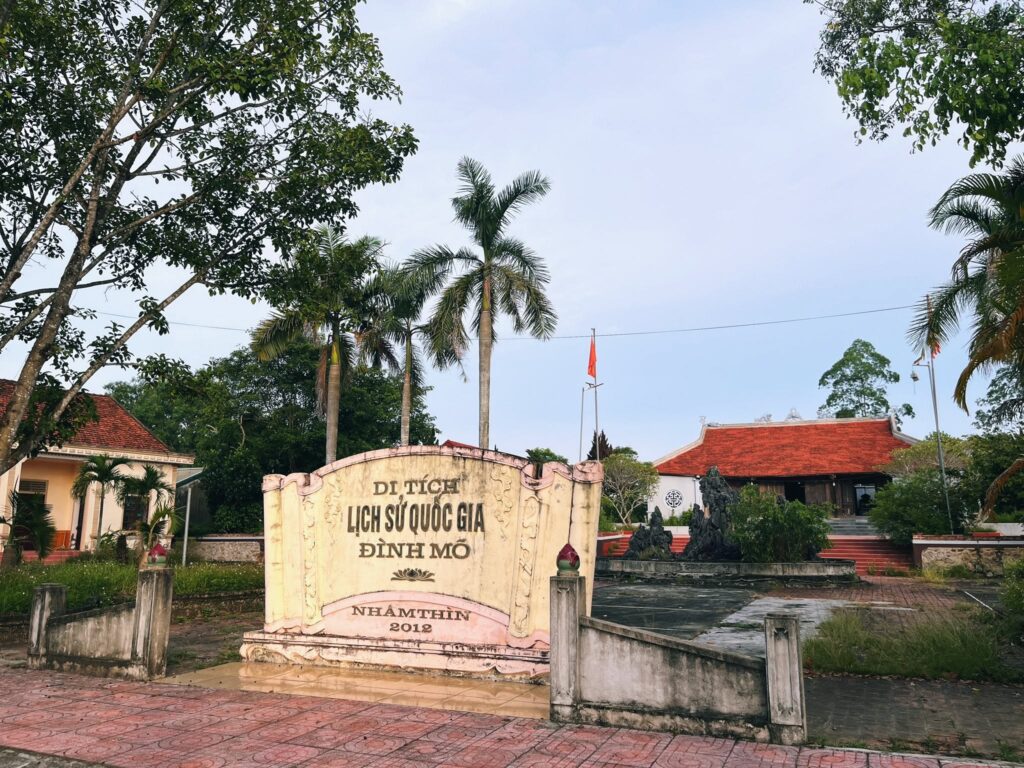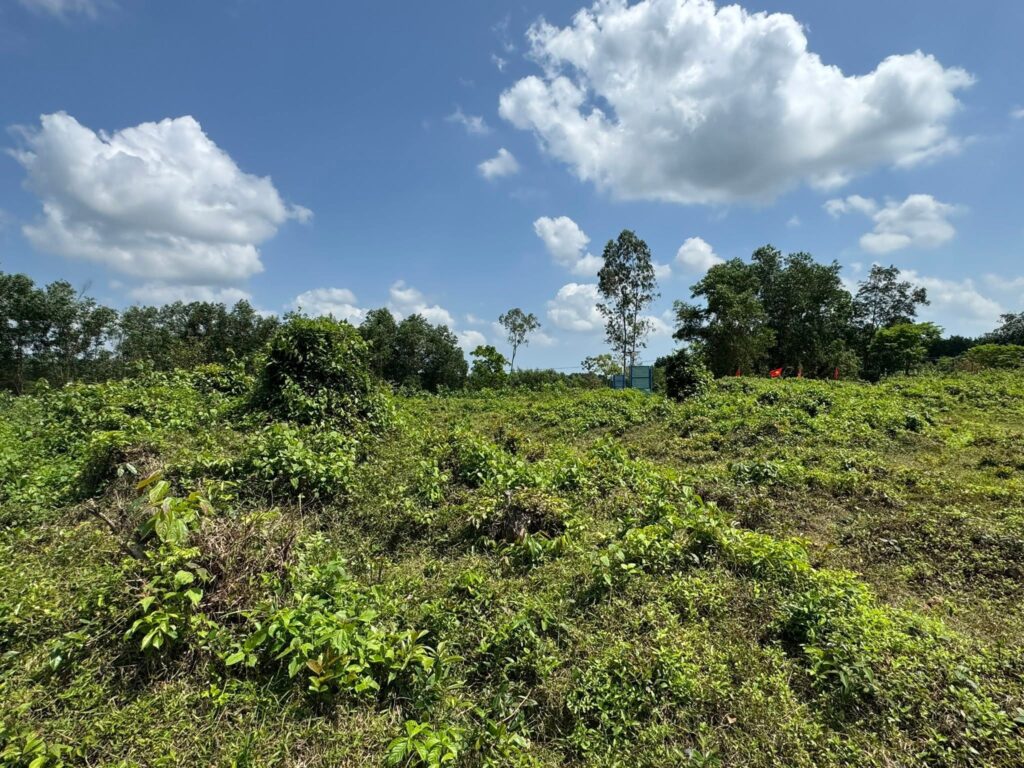
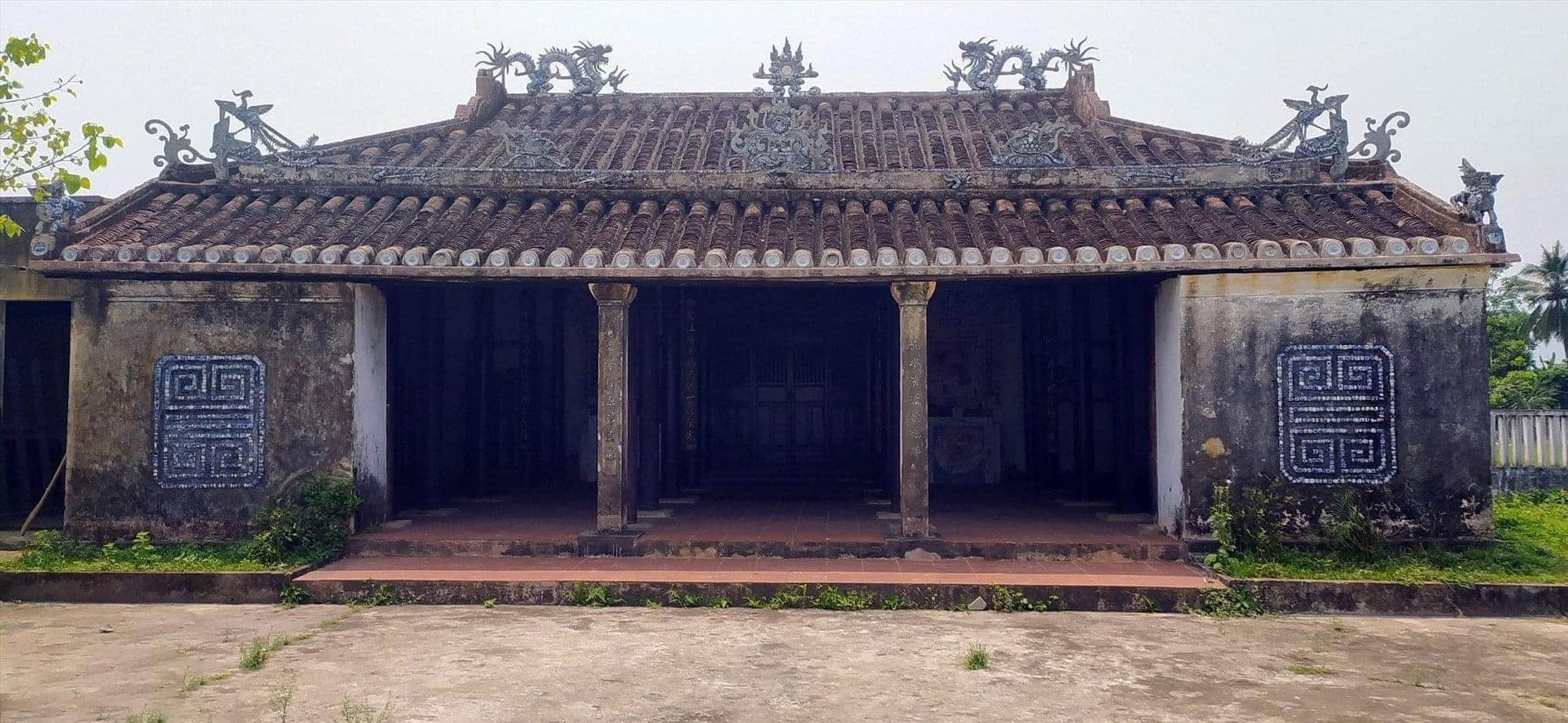
The historic site associated with the beginning of the 1908 anti-tax movement in Central Vietnam is closely linked to Phiếm Ái Village, where patriotic individuals and local residents of Đại Lộc rose up against the heavy taxes and compulsory labor imposed by French colonial authorities. What began as a petition seeking tax relief quickly spread throughout Quảng Nam Province and many other provinces in Central Vietnam, becoming a major event in Vietnam’s early twentieth-century history of resistance against oppression.
The site was recognized as a National Historical Relic by the Ministry of Culture, Sports and Tourism under Decision No. 5400/QĐ-BVHTTDL, dated December 29, 2017.
Historical Background of the 1908 Anti-Tax Movement
In the late nineteenth and early twentieth centuries, the French colonial administration intensified its First Colonial Exploitation program to extract natural resources, labor, and economic benefits for France. To meet its financial and labor demands, the colonial government increased taxes and imposed a heavy system of compulsory labor. These burdens placed immense pressure on rural communities, pushing many Vietnamese peasants into poverty and hardship.
Against this backdrop, the ideas of civil rights and social reform associated with the Duy Tân Reform Movement helped awaken political awareness among a number of scholars, local officials, and students in Quảng Nam. In Phiếm Ái Village, patriotic individuals began discussing ways to mobilize residents, prepare petitions, and request reductions in taxes and compulsory labor obligations.
According to historical accounts, in early February 1908, during a clan death-anniversary gathering of the Trương family in Phiếm Ái Village, the men Trương Tốn, Trương Côn, Trương Đỉnh, Trương Hoành, Hứa Tao, and Lương Châu discussed collecting signatures from villages throughout the district. Their initial objective was to submit a petition to the district authorities, who would forward it to the provincial administration and the French Resident’s Office, requesting tax relief so that residents could sustain their livelihoods.
The campaign soon went beyond an ordinary petition. It became a collective expression of public discontent with the harsh policies of French colonial rule.
From Phiếm Ái to a Wave of Resistance Across Central Vietnam
On March 11, 1908, more than 400 residents of Đại Lộc gathered and marched to the district headquarters at Đông Lâm. They then continued toward the provincial authorities and the French Resident’s Office to demand reductions in taxes and compulsory labor. Along the way, more people joined the demonstration.
In Hội An, thousands of people dressed in worn clothing, with their hair cut short, took turns surrounding the French Resident’s Office for an extended period. These determined crowds, carrying simple provisions and remaining steadfast in their demands, became a defining image of the movement.
From Đại Lộc, the anti-tax movement spread rapidly to other parts of Quảng Nam Province. Groups of residents gathered outside government offices, surrounded district administrations, and demanded that local officials address their grievances. Historical accounts record several notable developments:
- March 22, 1908: Residents surrounded the Điện Bàn district administration and compelled district prefect Trần Văn Thống to accompany them in petitioning for the abolition of compulsory labor obligations.
- March 26, 1908: Residents led by a local figure known as Hương Quần surrounded the Thăng Bình district administration.
- March 30, 1908: Trùm Thuyết led residents in surrounding the Tam Kỳ district administration.
- April 7, 1908: Residents of Duy Xuyên surrounded and seized Trần Quát. On the same day, Ông Ích Đường led residents of Hòa Vang in surrounding and seizing Lãnh Điềm, burning the house of a powerful local landholder in Quá Giáng, and organizing protests against road construction and market taxation.
The movement did not remain confined to Quảng Nam. It spread to Quảng Ngãi, Bình Định, Phú Yên, and Thừa Thiên–Huế, before reaching Thanh Hóa, Nghệ An, and Hà Tĩnh. Its geographical reach demonstrated that resentment over taxation and compulsory labor was not unique to one locality but reflected widespread dissatisfaction with colonial rule throughout Central Vietnam.
As the movement developed, demands for tax relief became increasingly associated with broader aspirations for civil rights, democracy, and the right to live with dignity. The French colonial authorities regarded the demonstrations as a threat to their rule and deployed forces to suppress them.
The Crackdown and the Persecution of Patriots
By late May 1908, the anti-tax movement in Central Vietnam had been brutally suppressed by the colonial authorities. Numerous scholars, patriotic activists, and participants were arrested, sentenced, or exiled to distant locations.
Among those sentenced to death were Trần Quý Cáp, Lê Khiết, Nguyễn Bá Loan, Ông Ích Đường, Trịnh Khắc Lập, and Nguyễn Hàng Chi. Many other patriotic figures were exiled to Côn Đảo Island, including Phan Châu Trinh, Huỳnh Thúc Kháng, Đỗ Đăng Tuyển, Phan Thúc Duyện, Trần Cao Vân, Đặng Nguyên Cẩn, and Ngô Đức Kế.
The repression brought the movement to a temporary halt, but it could not erase the spirit of resistance awakened among the people. Those who participated, despite facing imprisonment, exile, and sacrifice, left a lasting mark on the history of the struggle for popular rights and national independence.
The Historical Significance of the 1908 Anti-Tax Movement
The 1908 anti-tax movement was a prominent event in Vietnam’s patriotic history during the early twentieth century. Beginning with demands to ease the economic burden on ordinary people, it mobilized large numbers of peasants and laborers, demonstrating the ability of the masses to organize and act collectively against injustice under colonial rule.
The movement also highlighted the role of scholars, local officials, and individuals influenced by the Duy Tân Reform Movement in mobilizing and guiding the public. What began with petitions for tax relief developed into a broad wave of resistance, demonstrating that peasants constituted a large social force capable of participating in political movements and revolutionary struggles.
Although the movement was suppressed, it left valuable lessons about solidarity, popular organization, and resistance to oppression. The site in Phiếm Ái is therefore associated not only with a specific historical event but also with the determination of Quảng Nam’s people to challenge injustice and seek social change in the early twentieth century.
From the Anti-Tax Movement to the Cultural Stereotype “People from Quảng Nam Love to Argue”
People from Quảng Nam are often associated with the Vietnamese saying “Quảng Nam hay cãi,” which can be translated as “People from Quảng Nam love to argue.” The expression is commonly used to describe people who enjoy debate and are reluctant to accept what they consider unreasonable. Viewed through a historical lens, the saying can also be connected to a tradition of questioning authority, advocating reform, and demanding fairness.
During the 1908 anti-tax movement, residents spoke out collectively against policies that made their lives increasingly difficult. What began as petitions for tax relief developed into public demonstrations, expressing aspirations for rights and a fairer society. However, the saying “Quảng Nam hay cãi” is a cultural interpretation of local character and should not be regarded as the sole cause or a complete explanation of the historical movement.
Debate as a Search for a Better Path
Quảng Nam was the birthplace of many patriotic intellectuals in the early twentieth century, some of whom held different views on how Vietnam should regain its independence.
Phan Châu Trinh advocated the principles of “enlightening the people, revitalizing public spirit, and improving people’s livelihoods.” He emphasized social reform and education. Huỳnh Thúc Kháng was also a major patriot who developed his own views and responses to the political circumstances of the time. The two men differed in their approaches to national liberation, yet both were committed to the interests of the country and its people.
In journalism, Huỳnh Thúc Kháng and Phan Khôi were also notable figures associated with the debating tradition of Quảng Nam’s intellectual community. Phan Khôi became well known for his polemics on culture, ideology, literature, and the modernization of the Vietnamese language. He also played an important role in the development of the New Poetry Movement through his poem Tình già (Old Love).
The newspaper debates of the period demonstrate how disagreement could stimulate new ideas and intellectual development, provided that arguments were made through reason and a willingness to engage with opposing views.
From Major Issues to Everyday Conversations
The debating spirit associated with Quảng Nam can also be found in everyday life. Mì Quảng, the region’s famous noodle dish, can itself become the subject of endless discussion. Some people prefer a relatively dry bowl with only a little broth, while others believe that more broth makes the dish richer and more flavorful. Each person has their own taste, and restaurant owners often understand that flexibility is the best way to satisfy their customers.
Relations between Quảng Nam and Đà Nẵng have also been the subject of lively discussions about history, geography, and regional development. Before Đà Nẵng became a centrally governed municipality in 1997, the two areas were part of Quảng Nam–Đà Nẵng Province. Stories and jokes about which area contributed more to regional prosperity, sometimes even involving water from the Vu Gia and Thu Bồn rivers, reflect the close relationship between the two communities, as well as their characteristic exchanges of sharp remarks.
Of course, arguing does not always mean being right. What matters is the ability to present sound reasoning, listen to different perspectives, and work together toward better solutions. When grounded in mutual respect and a constructive spirit, the practice of arguing a point thoroughly can become a valuable form of critical thinking.
From the demonstrations demanding tax relief in 1908 to debates in everyday life, people from Quảng Nam are often remembered for their determination not to submit easily to what they consider unjust. The saying “Quảng Nam hay cãi” can therefore be understood in several ways: sometimes as affectionate teasing, sometimes as a description of strong-willed character, and sometimes as a reminder of a tradition of speaking out against what is perceived as unreasonable.
The Site’s Heritage Value Today
The historic site associated with the beginning of the 1908 anti-tax movement in Central Vietnam commemorates an event whose influence extended far beyond its place of origin. It serves as a reminder of the hardships endured by people under colonial rule, the power of collective action, and the sacrifices made by scholars and patriots in their struggle for popular rights.
Its recognition as a National Historical Relic in 2017 affirms the site’s importance for preserving and promoting Vietnam’s historical heritage. It is also a valuable destination for local history education, the study of patriotic traditions, and helping younger generations understand the movements that contributed to the development of modern Vietnamese history.
Quick Information
| Item | Details |
|---|---|
| Name | Historic Site of the Beginning of the 1908 Anti-Tax Movement in Central Vietnam |
| Historical location | Phiếm Ái Village, in the former Đại Lộc area of Quảng Nam |
| Address provided | Phiếm Ái 1, Đại Lộc Commune |
| Historical period | 1908 |
| Date of the major mobilization | March 11, 1908 |
| Geographical reach | Quảng Nam and several provinces in Central Vietnam |
| Recognizing authority | Ministry of Culture, Sports and Tourism |
| Recognition decision | No. 5400/QĐ-BVHTTDL |
| Date of recognition | December 29, 2017 |
| Heritage classification | National Historical Relic |
Editorial note: The supplied source contains some variations in personal names and present-day place names. This article retains the dates, names, and recognition details provided in the source; they have not been independently cross-checked against the official heritage dossier.