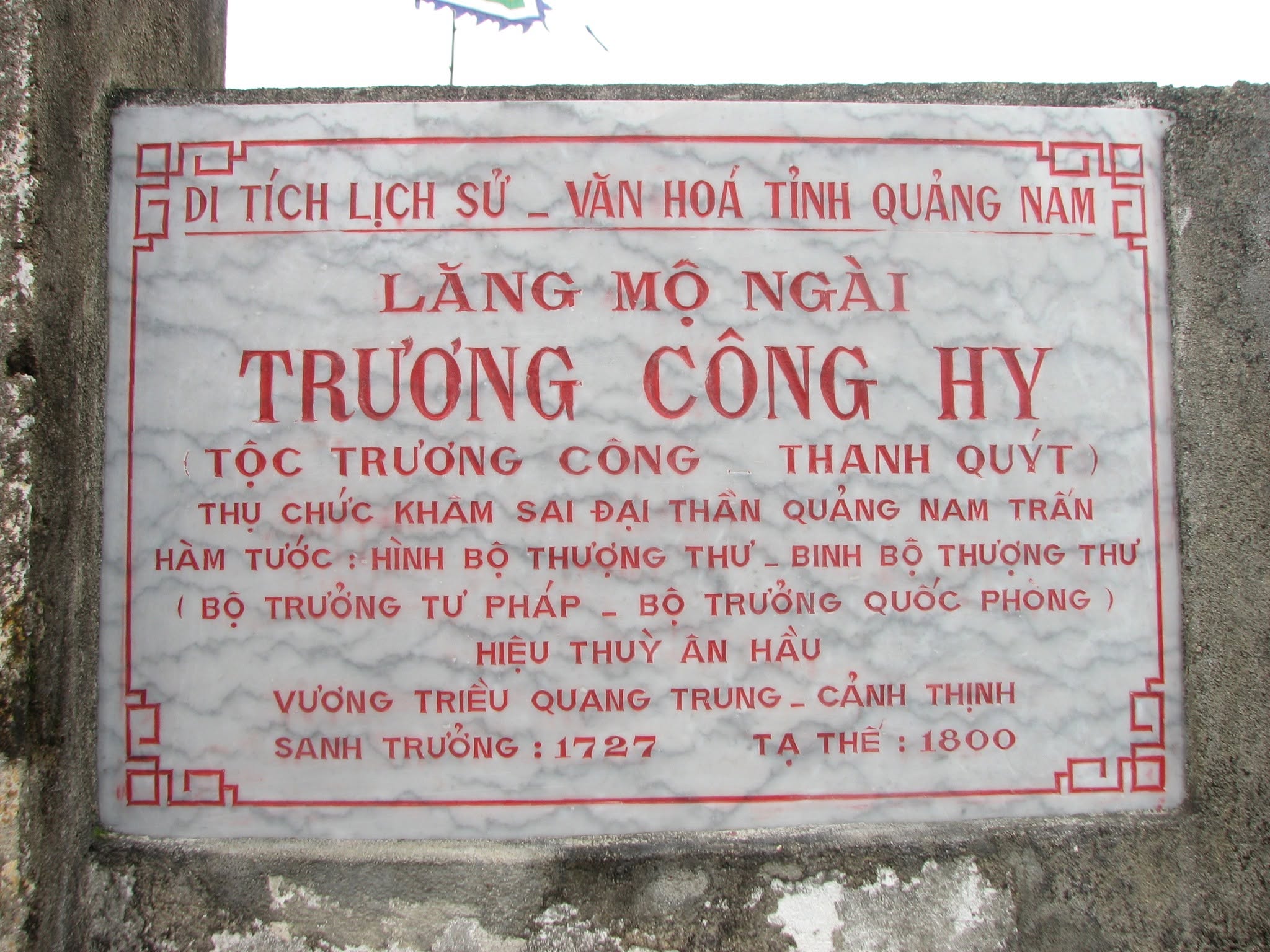
The Tomb of Trương Công Hy is a historical monument associated with the life and career of a senior official who served under both the Nguyễn lords and the Tây Sơn dynasty. Renowned for his integrity, upright character, administrative ability and concern for the people, Trương Công Hy held several important positions, including Minister of War and Minister of Justice. Despite his high rank, he maintained a modest lifestyle and remained deeply connected to his homeland.
The tomb is located in An Thắng Ward, Đà Nẵng City, Vietnam, and has been revered by local residents for generations. Beyond its architectural and historical significance, the monument is also associated with the story of how the local community protected his final resting place during periods of warfare and political upheaval.
Trương Công Hy: A Distinguished Official Under Two Dynasties
Trương Công Hy (1727–1800), who held the noble title of Thùy Ân Hầu, was a notable historical figure whose career unfolded during the political upheavals of eighteenth-century Vietnam. According to family genealogies and local historical records, he came from a family with a tradition of service to the court. His ancestor, Trương Công Kỳ, was a naval commander under the Later Lê dynasty, and this family background helped provide him with an education from an early age.
Trương Công Hy passed the Hương Cống examination, a degree comparable to a regional-level scholar qualification, during the reign of Nguyễn lord Nguyễn Phúc Khoát. He was appointed as an educational official and later served as a teacher in the Nguyễn court, educating young princes and royal descendants, including Nguyễn Phúc Dương.
When the Tây Sơn movement rose to power, Trương Công Hy continued to serve in government because of his abilities and personal reputation. He successively held the positions of Prefect of Điện Bàn and Imperial Commissioner of Quảng Nam. Under Emperor Quang Trung, he was appointed Minister of War, taking part in organizing military supplies and supporting the army while helping stabilize civilian life. He subsequently served as Minister of Justice under the reigns of both Emperor Quang Trung and Emperor Cảnh Thịnh.
Historical accounts also credit him with contributing to improvements in education and the imperial examination system, the compilation of laws and regulations, and the recommendation of talented individuals for public service. His career illustrates the role of an official who participated in state administration while remaining attentive to social welfare during a turbulent period in Vietnamese history.
An Upright Official Devoted to the People
Trương Công Hy is remembered not only for his official titles but also for his integrity and close relationship with the people. According to local tradition, he was once granted 500 mẫu of farmland near the Thanh Chiêm administrative center but redistributed the land for local residents to cultivate. The fields extending toward Lai Nghi and Cẩm Hà are still associated in local memory with the name “Đồng Quan Thượng,” meaning the Senior Minister’s Fields.
After retiring to his hometown, he continued to live modestly. His property consisted mainly of ancestral land inherited from previous generations, and he set aside resources to establish a family ancestral hall. His way of life reflected the traditional principle of “tấn vi quan, thoái vi dân”: serving as an official when called upon, then returning to ordinary life among the people after retirement.
Trương Công Hy died on May 17, 1800. According to local historical records, the Tây Sơn court allocated a plot of more than 4,000 square meters for his tomb and posthumously awarded him the title of Minister of Justice. Because he had served as both Minister of War and Minister of Justice, later generations respectfully referred to him as “Lưỡng bộ Thượng thư,” meaning the minister who held both portfolios.
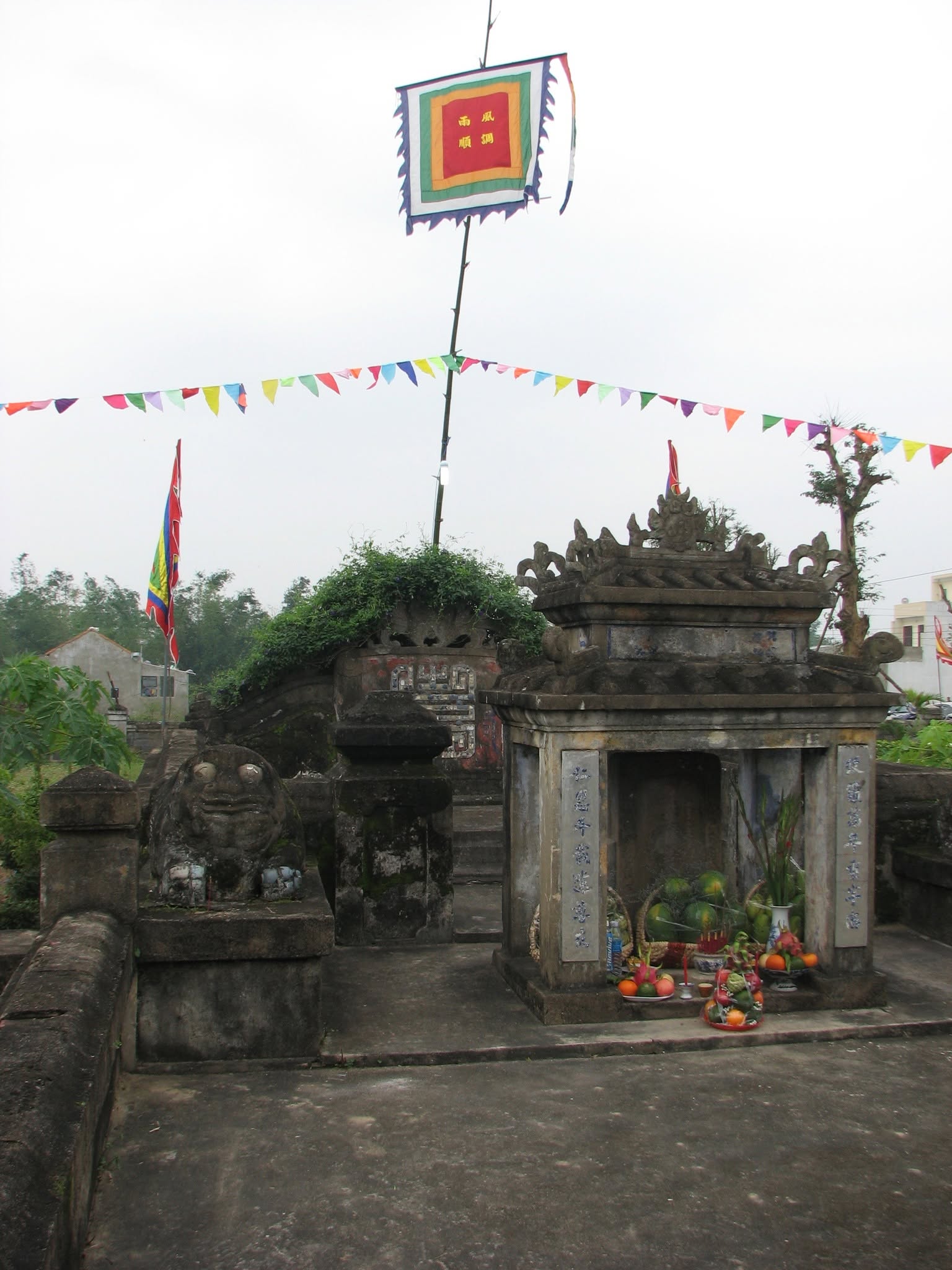
Memorial texts honoring him traditionally begin with a formal description of his official positions and achievements. Two parallel couplets preserved at the tomb also express the community’s admiration for his integrity and service.
One couplet reads:
“Hạc phi Bắc lĩnh cơ sở tráng;
Long tụ Đông hoàn dẫn nguyên trường.”
Its general meaning praises the strength of the foundations he established and the enduring prosperity of his descendants.
Another reads:
“Chánh tích vạn niên thùy vũ trụ;
Nhân ân thiên tải dĩ tôn chi.”
The couplet celebrates achievements that endure through the ages and the benevolence that later generations continue to honor.
According to oral tradition, his funeral lasted many days, attracting mourners from surrounding areas. The path leading from the village entrance to the Trương Công family ancestral hall became known locally as “Ngõ Quan Thượng,” or the Senior Minister’s Lane. The name remains part of local memory and reflects the affection residents held for him.
Architecture of the Tomb: A Legacy of the Tây Sơn Period
The Tomb of Trương Công Hy was built in an architectural style associated with the Tây Sơn period. It is considered substantial in scale compared with many tombs of its time. The outer ceremonial structure features hexagonal stone columns. At the entrance stand statues of attendants, while sacred animal figures are arranged within the complex, creating a solemn atmosphere.
The tomb survived numerous historical upheavals and was preserved by local residents. During the Nguyễn dynasty, established under Emperor Gia Long, policies were implemented toward the legacy of the defeated Tây Sơn regime. According to local accounts, the tomb endured in part because of Trương Công Hy’s reputation during his lifetime and the community’s determination to protect his resting place.
The surviving parallel couplets are important both as literary works and as expressions of how later generations viewed his achievements and moral character. They connect the tomb’s architectural features with the local tradition of commemorating distinguished historical figures.
The Tomb in Community Memory and Wartime History
The historical importance of Trương Công Hy’s tomb extends beyond the history of dynasties and its architectural features. According to accounts of the history of the Điện Thắng Party organization, during the resistance war against the United States, the tomb became a site that local residents determinedly defended against the threat of destruction during plans to construct defensive barriers.
Nguyễn Hữu Bì, a former Secretary of the Điện Thắng Commune Party Committee, recalled that local residents brought straw and lay down in front of armored vehicles and bulldozers to prevent the destruction of villages and to stop machinery from entering the tomb area.
This account illustrates Trương Công Hy’s special place in the community’s collective memory. Although he had died long before, his reputation as an honest official who served the people remained powerful enough to inspire residents to regard his tomb as an inseparable part of their homeland’s history.
The community’s actions also reveal the monument’s broader significance. The tomb is not merely a place commemorating a historical figure; it represents gratitude, communal solidarity and the determination to preserve heritage through difficult times.
Historical Significance and Heritage Recognition
Trương Công Hy occupies a notable place in the history of the Tây Sơn dynasty. According to the supplied historical material, the Institute of History once described him as a distinguished Tây Sơn official whose contributions had not been adequately represented in Vietnam’s official historical records. Further study of his life can broaden understanding of the officials, educational reforms and administrative practices of that period.
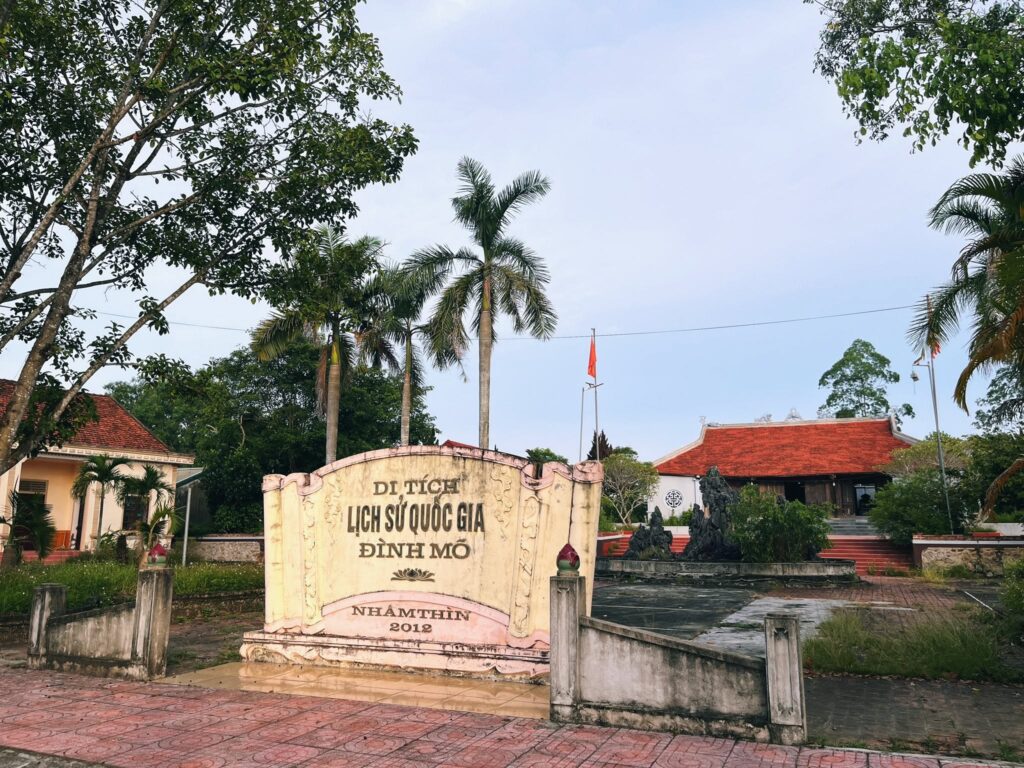
In 2005, the tomb was recognized as a provincial-level historical site by the Quảng Nam Provincial People’s Committee. On August 20, 2013, the Ministry of Culture, Sports and Tourism designated it a national historical monument. This recognition acknowledged its historical and cultural value and provided a basis for conservation and the continued promotion of its significance.
Today, the Tomb of Trương Công Hy is an important place for learning about the history of Đà Nẵng, the Tây Sơn dynasty and the local tradition of honoring integrity and public service. The monument recalls an official who held high positions yet remained respected by later generations for his honesty and enduring connection to his homeland.
Quick Information
| Item | Information |
|---|---|
| Name | Tomb of Trương Công Hy |
| Historical figure | Trương Công Hy, respectfully known as Lưỡng bộ Thượng thư |
| Birth and death | 1727–1800 |
| Current location | An Thắng Ward, Đà Nẵng City, Vietnam |
| Notable positions | Minister of War, Minister of Justice, Prefect of Điện Bàn and Imperial Commissioner of Quảng Nam |
| Architectural features | Tây Sơn-period tomb architecture, ceremonial structure, stone columns, attendant statues and sacred animal figures |
| Historical significance | Tây Sơn history, tomb architecture and the community’s tradition of honoring a distinguished official |
| Provincial recognition | 2005 |
| National recognition | August 20, 2013 |
| Recognizing authority | Ministry of Culture, Sports and Tourism |