


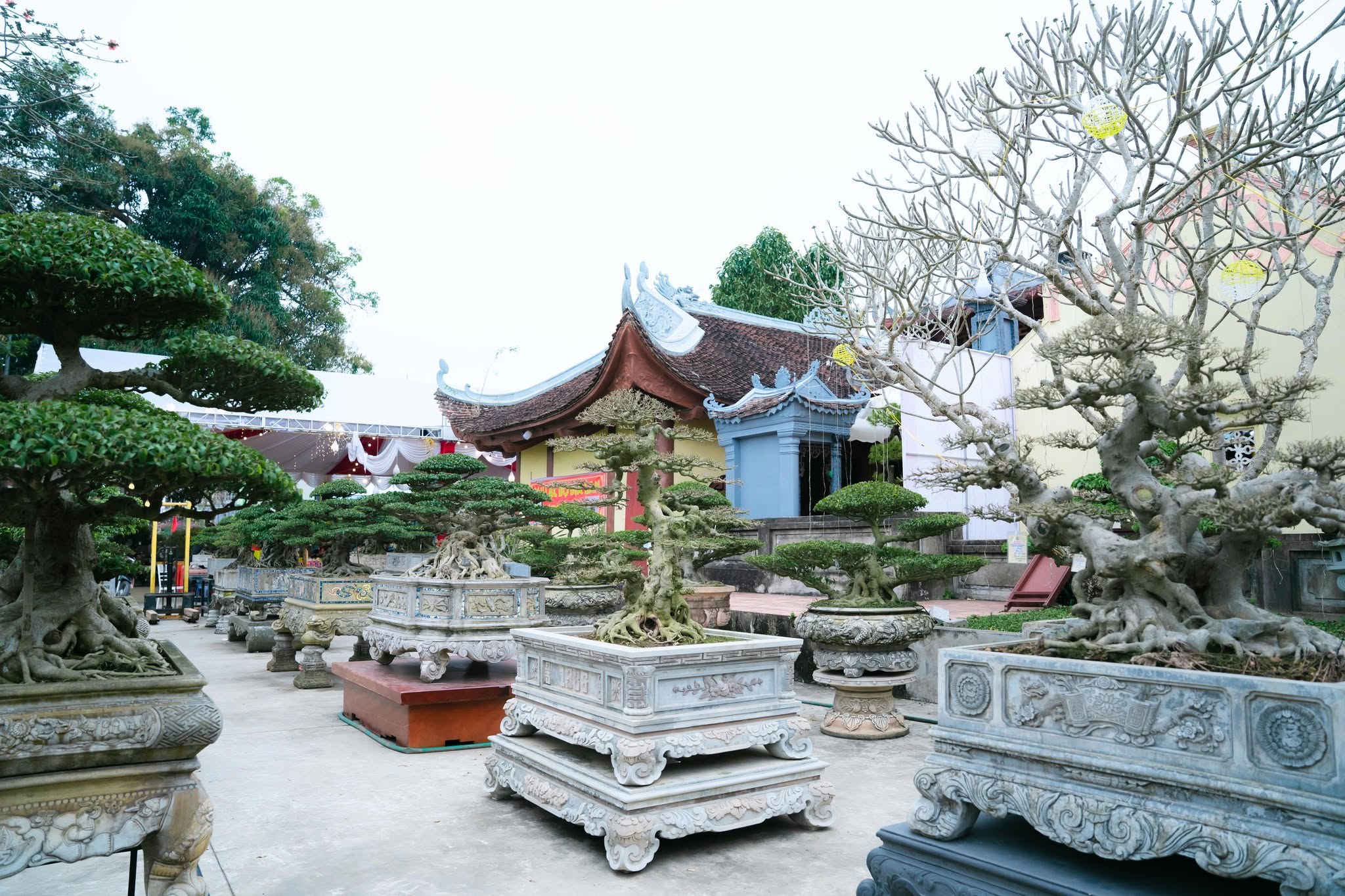
Vi Khe Flower and Ornamental Plant Village, located in Vi Khe Ward, Ninh Binh Province, is one of Vietnam’s oldest and most renowned traditional horticultural communities. With a history spanning more than 800 years according to local tradition, the village is celebrated not only for its colorful flower gardens but also for its remarkable artistry in shaping ornamental trees, where an ordinary plant can become a living masterpiece.
Situated on fertile alluvial land near the confluence of the Red River and the Dao River, Vi Khe benefits from favorable natural conditions for cultivating flowers and ornamental plants. Over generations, local residents have developed specialized skills in selecting plant varieties, shaping branches, training trunks, cultivating roots, and nurturing trees over many years. These techniques have created a distinctive horticultural tradition in Vietnam’s Red River Delta.
According to local accounts, the village’s flower-growing tradition began in 1211, associated with To Trung Tu, a high-ranking military official during the Ly Dynasty who is honored locally as the founder of the craft. What began as the cultivation of flowers and ornamental plants gradually developed into an important economic activity and a sophisticated form of traditional Vietnamese living art.
Today, Vi Khe resembles an open-air gallery of greenery, where ornamental gardens, ancient trees, bonsai, and flowering plants form an extraordinary landscape. For travelers, the village offers an opportunity to discover traditional horticulture, appreciate the art of ornamental tree shaping, and experience the everyday life of a community whose craft has endured for centuries.
History of Vi Khe Ornamental Plant Village and Its 800-Year Heritage
Vi Khe is located in the former Nam Truc area, approximately 5 kilometers from central Nam Dinh along local roads, near the confluence of the Red River and the Dao River.
Before administrative restructuring, Vi Khe belonged to Nam Dien Commune, Nam Truc District, Nam Dinh Province. Under the current administrative arrangement, the village is part of Vi Khe Ward, Ninh Binh Province.
Its riverside location has provided fertile alluvial soil and favorable conditions for cultivation. Productive gardens, nutrient-rich land, and generations of agricultural knowledge have contributed to the development of the village’s distinctive flower and ornamental plant industry.
According to local historical accounts and oral traditions, ornamental horticulture in Vi Khe began to develop in 1211, during the Ly Dynasty.
The figure honored by villagers as the founder of the craft is To Trung Tu, a prominent military official active during the final years of the Ly Dynasty.
Local tradition credits him with introducing or encouraging flower cultivation, teaching residents how to care for ornamental plants, and helping establish horticulture as a means of improving livelihoods.
From these early techniques, villagers gradually expanded their cultivation areas while developing increasingly sophisticated methods of shaping and maintaining ornamental trees.
Over generations, horticultural knowledge was passed down within families and throughout the community, creating a rich tradition of practical experience.
Some local stories also associate Vi Khe’s flower-growing heritage with the ornamental gardening preferences of the aristocracy in the historic Thien Truong region during the Tran Dynasty.
Thien Truong holds a significant place in Vietnamese history because of its close connections with the Tran royal family and its important historical and cultural sites.
Within this historical setting, carefully cultivated flowers and ornamental plants may have served decorative and recreational purposes among wealthy and aristocratic households.
However, accounts describing Vi Khe as a supplier of flowers to the Tran aristocracy are primarily part of local tradition and should be distinguished from events supported by comprehensive historical documentation.
What remains evident is that Vi Khe has maintained a longstanding horticultural culture built upon the transmission of skills between generations.
Experienced growers teach younger family members how to select seedlings, cultivate young plants, manage root systems, train trunks, shape branches, and maintain mature trees.
The village’s products gradually reached customers beyond the local area, contributing to its reputation as a center of ornamental horticulture.
From a predominantly agricultural settlement, Vi Khe evolved into a community specializing in the cultivation and trade of ornamental plants, where gardening techniques developed into a sophisticated art form.
The Art of Ornamental Tree Shaping and the Skills of Vi Khe Artisans
One of Vi Khe’s most distinctive characteristics is the ability of its growers to transform familiar trees into ornamental works of art.
For local artisans, growing a tree involves more than maintaining its health. It is a creative process of developing composition, movement, balance, and visual meaning.
An exceptional ornamental tree requires harmony between its trunk, roots, branches, foliage, and display setting.
The artisan must carefully observe each species’ natural growth characteristics before selecting an appropriate shaping technique.
Selecting and cultivating young plants is the first stage.
Trees with strong trunks, healthy root systems, stable growth, and promising natural structures are often selected for long-term cultivation.
From an early stage, growers begin guiding the tree’s development by adjusting its growing position, selecting primary branches, and nurturing its roots.
Training trunks and shaping branches are among the most important techniques.
Depending on the tree’s characteristics, artisans may use controlled bending, supports, pruning, and gradual adjustments to guide its growth toward a desired form.
These techniques must be applied carefully to avoid excessive damage or compromising the tree’s health.
For mature ornamental trees, the shaping process may continue for many years or even several decades.
Root cultivation and canopy maintenance are equally important.
A healthy, well-balanced root system supports the tree’s growth and creates a sense of stability in its overall composition.
Branches and foliage must be pruned to maintain appropriate proportions while emphasizing the natural movement and character of the trunk.
Some works combine trees with rocks, ornamental containers, and decorative elements to create miniature landscapes inspired by nature.
In traditional Vietnamese ornamental tree art, different forms often carry symbolic meanings.
The upright style (the truc) features a vertically growing trunk and is commonly associated with integrity, strength, and resilience.
The horizontal style (the hoanh) emphasizes a trunk extending sideways, producing a distinctive composition with a sense of movement.
The cascading style (the huyen) features a trunk or branches descending below the main growing position, recalling trees growing on cliffs or in challenging natural environments.
Dragon-inspired styles (the long) and other forms based on symbolic creatures often require elaborate shaping techniques and considerable artistic imagination.
Beyond these recognizable styles, many artisans create original compositions that combine a tree’s natural characteristics with their own aesthetic vision.
An important principle of ornamental horticulture is that the artist cannot simply impose a predetermined form on a living tree.
The shaping process must respect the plant’s growth habits, health, and structural limitations.
A tree with an attractive trunk but an underdeveloped root system may require years of careful cultivation before it becomes suitable for exhibition.
For this reason, Vi Khe’s ornamental tree art demands patience, observation, and the ability to imagine how a living work will develop over time.
According to local accounts, numerous Vi Khe artisans have created valuable ornamental trees that have been exhibited and recognized at horticultural exhibitions.
Certain mature specimens may attract valuations ranging from hundreds of millions to billions of Vietnamese dong, depending on their age, artistic quality, rarity, and market demand.
These exceptional valuations should not be interpreted as typical selling prices, as the village produces ornamental plants across a wide range of sizes and price categories.
Alongside collectible artistic specimens, Vi Khe growers cultivate flowers and ornamental plants for homes, gardens, landscaping projects, and seasonal celebrations.
The combination of commercial horticulture and long-term artistic tree shaping allows the village to serve a diverse market while preserving its traditional expertise.
Vi Khe’s Horticultural Economy and Traditional Village Festival
Flower and ornamental plant cultivation plays a central role in Vi Khe’s economic and cultural life.
According to previously published local information, the village once had more than 700 households, with most families involved in growing, maintaining, or trading flowers and ornamental plants.
Some earlier reports suggested that approximately 95% of local residents were connected to horticultural activities, illustrating the importance of the craft within the community.
These figures reflect conditions at the time they were recorded and should not be treated as current population or employment statistics for the expanded Vi Khe Ward.
The ornamental plant industry creates employment beyond the cultivation of trees and flowers.
Residents may work in seedling production, plant care, artistic shaping, container supply, transportation, horticultural materials, landscaping, and related services.
Some skilled growers and artisans also travel to other provinces to maintain, restore, or shape ornamental trees in private gardens and public landscapes.
Through these activities, Vi Khe’s horticultural knowledge has spread beyond the village itself.
In many households, children become familiar with gardening activities from an early age.
By observing and practicing alongside older family members, younger generations gradually learn how to select suitable plants, understand their growth characteristics, and perform basic maintenance techniques.
For experienced artisans, creating a beautiful ornamental tree is not simply a commercial activity but also an expression of creativity and personal dedication.
This family-based transmission of skills has helped sustain the village’s identity over many generations.
Alongside its economic activities, the Vi Khe Traditional Village Festival is an important part of local cultural life.
According to the village’s customary festival schedule, celebrations generally take place from the 12th to the 16th day of the first lunar month.
The festival honors To Trung Tu, who is revered locally as the founder of the village’s flower and ornamental plant craft.
It also provides an opportunity for artisans, garden owners, collectors, and ornamental plant enthusiasts to meet, exchange knowledge, and present notable works.
Exhibitions of flowers and ornamental trees, together with traditional cultural activities, contribute to a lively atmosphere during the early spring season.
Carefully shaped trees, some cultivated over many years, become focal points of attention for visitors and collectors.
For horticultural enthusiasts, the event offers opportunities to discuss tree-shaping techniques, cultivation methods, and the preservation of mature ornamental specimens.
The festival celebrates the village’s traditional craft while introducing Vi Khe’s horticultural heritage to visitors from different regions of Vietnam.
However, the exact dates, program, and scale of activities may vary from year to year. Travelers should check official local announcements before planning a visit.
Beyond its cultural importance, the festival also supports commercial activities by providing opportunities for growers to showcase their products and connect with potential customers.
The close relationship between horticultural production and traditional festivities has created a distinctive village identity, where ornamental plants represent both a livelihood and a source of community pride.
Exploring Vi Khe Gardens and the Future of Horticultural Tourism
Today, Vi Khe is an appealing destination for travelers interested in ornamental plants, Vietnamese bonsai, and traditional rural culture.
Unlike conventional resort destinations, the village’s charm lies in its working gardens, where visitors may observe the cultivation, maintenance, and artistic shaping of living plants.
Along village roads, many gardens display ornamental trees in a remarkable variety of sizes and styles.
Some are small potted specimens suitable for homes and courtyards, while others are substantial artistic works cultivated for many years for landscape decoration or exhibition.
Certain gardens combine trees with rocks, water features, and ornamental structures, creating green spaces that reflect the aesthetic preferences of local artisans.
For visitors interested in Vietnamese culture, exploring Vi Khe offers an opportunity to understand the difference between ordinary gardening and the artistic cultivation of ornamental trees.
At gardens that welcome visitors, travelers may observe how artisans select branches, prune foliage, adjust tree structures, and care for mature specimens.
Where arrangements can be made, visitors may also speak with growers about the symbolic meanings of different tree styles and the creative process behind individual works.
Stories of trees maintained by successive generations or specimens requiring decades of careful shaping can offer a deeper appreciation of the art.
The best time to visit Vi Khe depends on the traveler’s interests.
Spring, particularly during the traditional village festival, can be a lively period with cultural activities and ornamental plant exhibitions.
Other times of the year can also be suitable for exploring gardens, observing horticultural production, and learning about plant care.
For photography enthusiasts, ornamental gardens offer distinctive compositions featuring weathered trunks, carefully arranged foliage, decorative containers, and traditional village settings.
Visitors are encouraged to contact garden owners in advance if they wish to arrange detailed visits, learn about specific techniques, or take photographs within production areas.
Not every garden is regularly open to tourists, and visitors should respect private property and ongoing commercial activities.
In addition to the historic Vi Khe village, the wider Vi Khe Ward is now associated with the ornamental plant-growing traditions of Nam Phong, particularly the cultivation of decorative kumquat trees for the Vietnamese Lunar New Year, or Tet.
The combination of ornamental tree production, bonsai cultivation, flower growing, and seasonal kumquat farming contributes to the area’s broader horticultural economy.
According to development objectives presented for the 2025–2030 term of the Vi Khe Ward Party Committee, the locality has set targets of approximately VND 275 billion in budget revenue and VND 150 million in average annual income per person by 2030.
These figures represent future development targets rather than economic results already achieved.
As interest in green tourism and experiential travel grows, Vi Khe has opportunities to develop tourism activities connected with its traditional craft.
Potential experiences include guided garden visits, meetings with artisans, demonstrations of ornamental tree shaping, and exhibitions of distinctive horticultural products.
Tourism development should nevertheless be balanced with environmental protection, the preservation of working gardens, and respect for the community’s traditional knowledge.
In the longer term, Vi Khe could be connected with historical sites, cultural attractions, and other traditional craft villages in the former Nam Dinh region, helping diversify tourism experiences across Ninh Binh Province.
With a heritage spanning more than 800 years according to local tradition, Vi Khe’s flower and ornamental plant craft has become a symbol of creativity, patience, and a deep appreciation for nature. From young seedlings to carefully shaped trees cultivated over decades, local artisans have transformed gardening into a distinctive form of living art. As Vietnam continues to modernize, Vi Khe preserves the skills and cultural identity of its ancestors while creating opportunities for sustainable horticulture, green economic development, and cultural tourism.
Quick Information
| Item | Details |
|---|---|
| Craft village | Vi Khe Flower and Ornamental Plant Village |
| Vietnamese name | Làng nghề trồng hoa cây cảnh Vị Khê |
| Current location | Vi Khe Ward, Ninh Binh Province, Vietnam |
| Former administrative location | Nam Dien Commune, Nam Truc District, Nam Dinh Province |
| Geographical setting | Near the Red River and Dao River, in the former Nam Dinh region |
| Craft type | Traditional flower and ornamental plant cultivation |
| Traditional history | More than 800 years, according to local tradition |
| Traditionally recognized founding year | 1211 |
| Honored craft founder | To Trung Tu |
| Main specialties | Flower growing, ornamental plants, bonsai, and artistic tree shaping |
| Representative products | Artistic ornamental trees, mature shaped trees, bonsai, flowers, and decorative plants |
| Traditional techniques | Plant selection, seedling cultivation, trunk training, branch shaping, pruning, root care, and canopy formation |
| Common tree styles | Upright, horizontal, cascading, dragon-inspired, and other artistic forms |
| Historical community participation | Approximately 95% of residents, according to some earlier local reports |
| Traditional festival | Usually from the 12th to the 16th day of the first lunar month |
| Festival activities | Honoring the craft founder, ornamental plant exhibitions, artisan exchanges, and cultural events |
| Cultural significance | Preservation of traditional horticultural knowledge and Vietnamese ornamental tree art |
| Economic activities | Flower and ornamental plant production, trading, landscaping, and tree maintenance services |
| Related horticultural area | Nam Phong ornamental plant and Tet kumquat-growing area |
| Tourism potential | Garden visits, bonsai appreciation, artisan encounters, and horticultural experiences |







